In the dynamic world of real estate, many topics spark conversation, from market trends to property values. Yet, one subject consistently remains cloaked in a veil of discretion: how real estate agents earn their living. While tales of bizarre property showings or intricate negotiations might grab headlines, the reality of agent commissions and their intricate splitting mechanisms often remains the most taboo, and frequently misunderstood, aspect of the industry. The general public often harbors misconceptions about agent compensation, largely due to a lack of transparency and a focus on gross figures rather than net earnings.
This article aims to demystify the financial structure behind real estate professionals’ income, shedding light on the often-complex journey from a home sale to an agent’s take-home pay. We’ll explore the various business models, the multi-layered commission splits, and the significant overhead expenses that define a Realtor’s financial reality. Understanding these elements is crucial for both aspiring agents and consumers seeking clarity on the value proposition of their chosen real estate expert.
Understanding Real Estate Commission Structures and Emerging Business Models
The real estate industry is continually evolving, with new business models emerging to meet changing consumer demands and technological advancements. However, for the majority of real estate professionals, particularly those operating in established markets like Dallas-Fort Worth and working with larger brokerages, the traditional commission-based compensation model remains prevalent. Unlike salaried employees, these agents function as self-employed contractors, meaning their income is directly tied to successful transactions rather than a fixed wage.
This 100% commission structure presents both significant opportunities and inherent risks. On one hand, it allows for a potentially highly lucrative career, with earning potential often exceeding that of many salaried positions. On the other hand, it means agents operate without the safety net of job security or a guaranteed paycheck. They invest considerable time, effort, and personal capital into marketing properties, showing homes, negotiating deals, and guiding clients through complex transactions, all without receiving any compensation until a sale is officially closed. This can mean working for weeks or even months without pay, while still incurring substantial monthly expenses regardless of their sales volume.
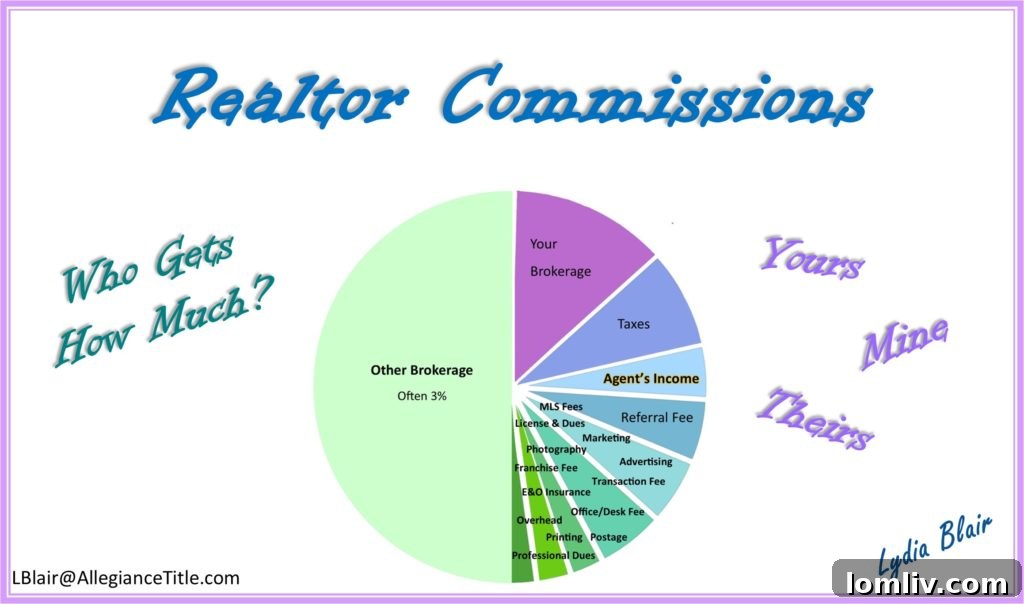
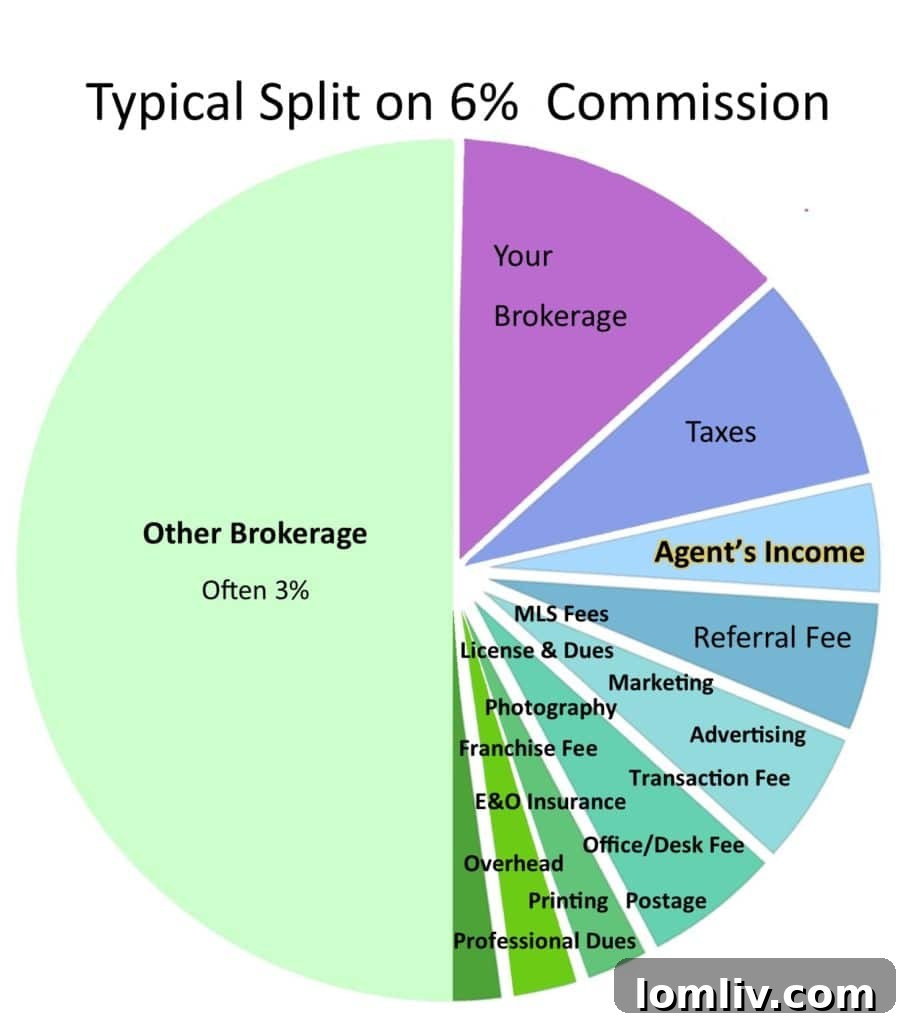
To illustrate the basic concept, consider a typical home sale. If a property sells for $300,000, and the agreed-upon total commission rate is 6%, this generates a gross commission of $18,000. This figure, however, is merely the starting point. The journey from this gross commission to an agent’s actual take-home pay involves a series of splits and deductions that often surprise those unfamiliar with the industry’s inner workings. While the 6% rate is common, it’s important to note that commission percentages can vary based on market conditions, property type, and negotiation between the seller and their listing agent. Furthermore, the real estate landscape has seen the rise of alternative models such as flat-fee services, discount brokerages, and even salaried agent models offered by companies like Redfin. These models often offer different pricing structures to consumers, which in turn affect how agents are compensated, sometimes involving lower commission rates or different fee structures for specific services. Nevertheless, the traditional percentage-based commission remains the backbone for the vast majority of transactions.
Deconstructing the Multi-Layered Commission Split: A Deeper Dive
The initial $18,000 commission from our $300,000 sale is rarely, if ever, paid directly to a single agent. The first and most significant split occurs at the brokerage level. Typically, this total commission is divided between the seller’s brokerage and the buyer’s brokerage. In our example, assuming an equal split, each brokerage would receive $9,000. This allocation compensates the firms for their overhead, brand reputation, legal support, and the resources they provide to their agents.
This is where the concept of “a percentage of a percentage” truly comes into play. The individual agent does not receive the full $9,000 allocated to their brokerage. Instead, they earn a percentage of that amount. This agent-brokerage split can vary widely, ranging anywhere from 50 percent for newer agents or those requiring significant brokerage support, to 95 percent or even 100 percent for highly experienced, high-producing agents or those operating under specific business models. For instance, an agent with a 70% split would receive $6,300 from the $9,000 brokerage share.
Several factors influence an agent’s commission split. Experience is a primary determinant; seasoned agents with a proven track record often command higher splits. The annual number of transactions an agent closes also plays a crucial role, as many brokerages implement tiered split structures designed to reward higher production. Furthermore, the level of support and resources provided by the brokerage can affect the split. A brokerage offering extensive training, marketing support, lead generation, and administrative assistance might offer lower splits, while a brokerage with a more hands-off approach, requiring agents to be highly self-sufficient, might offer more favorable splits. Some brokerages even offer a “cap” model, where once an agent pays a certain amount in commission to their brokerage within a year, they then keep 100% of their commission for the remainder of that year, usually in exchange for a higher monthly fee or transaction fee.
Beyond the Gross: The True Cost of Doing Business for a Real Estate Agent
Even after the brokerage split, the agent’s portion is far from pure profit. As independent contractors, real estate agents bear the full responsibility for their operating expenses, which can be substantial. These costs are incurred regardless of whether a sale closes, making proper financial management and a robust business plan essential for survival and success in the industry. The commitment required means agents pay for most, if not all, of their business operations directly out of their earnings. Here’s a breakdown of the typical expenses faced by an individual agent:
- MLS Access: Membership and access to the Multiple Listing Service (MLS) are non-negotiable. The MLS is the central database for property listings, crucial for both finding homes for buyers and marketing properties for sellers. These fees typically involve quarterly dues and annual membership fees to local Realtor associations, which grant MLS access.
- Lockbox and Scheduling Fees: To facilitate property showings, agents rely on electronic lockbox systems (like SentriLock or Supra) that provide secure, trackable access to listed homes. Associated scheduling services streamline showing appointments, but both come with recurring fees.
- Property Marketing: Effective marketing is paramount for selling homes quickly and for top dollar. Agents often invest heavily in professional photography, virtual tours, drone footage, and staging services. They also cover costs for online advertising, social media campaigns, print advertisements, property signage, and open house materials. These efforts directly impact a property’s visibility and appeal.
- Association and License Fees: To operate legally and ethically, Realtors must maintain active licenses and often hold memberships in local, state, and national real estate associations (e.g., National Association of Realtors – NAR). These memberships come with annual dues and mandatory continuing education courses to ensure agents stay updated on industry regulations, ethics, and best practices.
- Franchise Fee/Desk Fee: Many agents working under a larger brand or brokerage pay a monthly franchise fee or desk fee. This covers access to office space, shared supplies, administrative support, and sometimes even Errors and Omissions (E&O) insurance, which protects agents against claims of professional negligence.
- Car and Gas: A real estate agent’s vehicle is more than just transportation; it’s a mobile office and often a crucial part of their professional image. Agents spend countless hours driving clients to showings, attending inspections, meeting with other professionals, and placing signage. Fuel costs, vehicle maintenance, and insurance represent significant ongoing expenses.
- Referral Fee: Agents often receive leads through referrals from other agents, past clients, or online lead generation services. When a referral leads to a closed transaction, the agent typically pays a percentage of their commission (often 20-35%) back to the referring source.
- Transaction Fee: Some brokerages, particularly those offering higher commission splits (like 100% commission models), charge a per-transaction fee instead of, or in addition to, a monthly desk fee. This fee covers the administrative cost of processing each sale.
- Phone, Internet, Computer, Software: Modern real estate demands robust technological infrastructure. Agents must invest in reliable smartphones, internet service, computers, customer relationship management (CRM) software, digital signature platforms, and other industry-specific tools to manage their business, communicate with clients, and streamline operations.
- Self-Employment Income Tax, Health Insurance, etc.: As independent contractors, agents are responsible for paying self-employment taxes (covering Social Security and Medicare), which are significantly higher than payroll taxes for W-2 employees. They must also secure their own health insurance, disability insurance, and plan for retirement, all of which represent substantial out-of-pocket expenses that significantly reduce their net income.
Considering the cumulative impact of these expenses, the financial reality for many real estate agents is far more challenging than often perceived. Industry statistics consistently show that the top 20 percent of agents typically generate the majority of the income, while the remaining 80 percent may be just getting by, actively struggling, or supplementing their income through other ventures. Depending on the source and specific market, the average gross income for a Realtor in Texas is often cited between $41,000 and $80,000 annually – but critically, this figure is *before* any of the extensive operating expenses are deducted. After factoring in all the costs of doing business, the net income can be considerably lower, often placing real estate professionals in a comparable earnings bracket to many other service-based careers, albeit with significantly higher risk and capital investment.
This comprehensive look inside the financial aspects of selling real estate reveals that there is no one-size-fits-all model. Not every brokerage operates with the same practices, agents incur varying expenses based on their business strategies and market focus, and work hours can fluctuate wildly. The Metroplex, like many diverse markets, hosts a wide array of business models, from large national franchises to boutique independent brokerages. Ultimately, success in the real estate industry is a testament to unwavering tenacity, strategic market understanding, a measure of good fortune, and, above all, an immense amount of relentless hard work, often performed behind the scenes and without immediate compensation. It underscores the value an experienced, dedicated real estate professional brings to every transaction, far beyond simply opening doors.