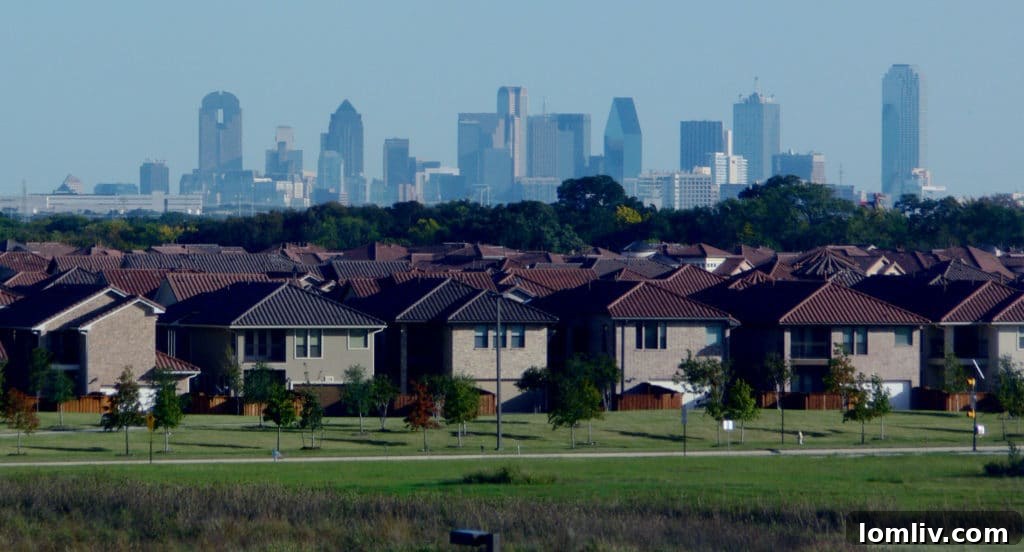
The Great Reversal: Suburban Living Surges as Major Cities, Including Dallas, See Surprising Population Shifts
For decades, the narrative was clear: urbanization was the undeniable force reshaping our societies. We were told that everyone, from young Millennials to downsizing Baby Boomers, yearned for the vibrant energy of city cores, flocking to high-density apartments and condominiums. The allure of the “high life” in bustling metropolises seemed universal, a permanent fixture in modern living aspirations.
However, recent data suggests a significant and surprising reversal of this trend. While the charm of urban living remains, an increasing number of people are reconsidering their priorities, leading to a notable shift away from central city populations and towards the suburbs. This paradigm shift has profound implications for urban planners, real estate markets, and the future of community development across the nation.
The Shifting Tides: From Urban Magnet to Suburban Sanctuary
The conventional wisdom held that cities like San Francisco, New York, and Chicago would continue their relentless growth, absorbing talent and driving economic expansion. Yet, this trajectory is now being challenged. Surprisingly, even dynamic, business-friendly hubs like Dallas are experiencing this counter-movement, raising questions about the factors driving such a significant demographic change. What could compel residents to leave the perceived excitement and convenience of city life for the quieter, often more spacious, embrace of the suburbs?
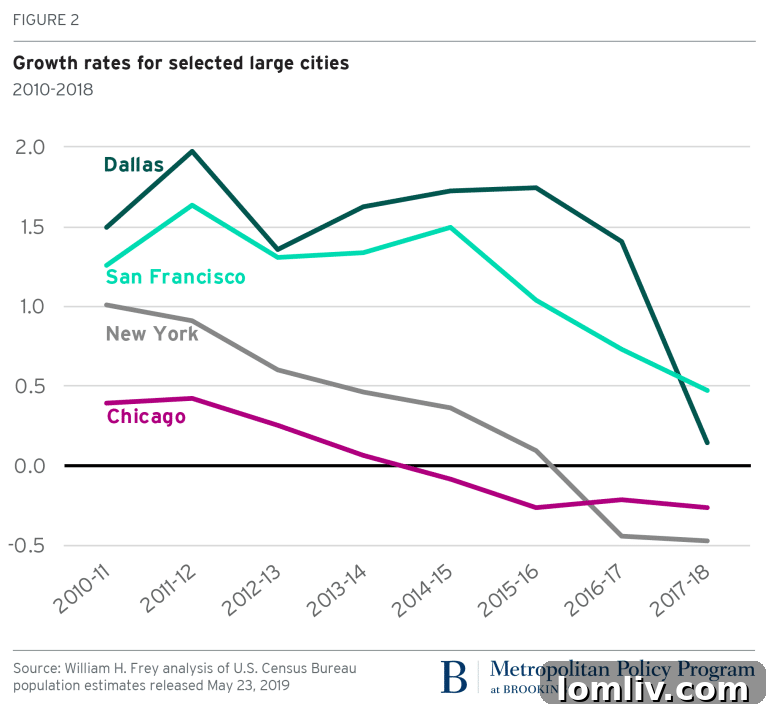
For city leaders, particularly in places like Dallas, these population charts might induce a sobering moment. As figures reveal, the City of Dallas, much like its counterparts San Francisco, New York, and Chicago, is grappling with a declining population. This trend runs counter to the long-held perception of Texas as a booming destination for growth and opportunity. Given Dallas’s strategic location in a state celebrated for its robust economy and relatively affordable living, its inclusion on this list of cities experiencing a “death spiral” begs for a deeper examination.
Why Major Metropolises are Losing Their Luster
The reasons behind this urban exodus are multifaceted, ranging from economic pressures to evolving lifestyle preferences. While some factors are unique to specific cities, many represent widespread challenges faced by large urban centers.
The Unbearable Cost of City Living
The most immediate and universal challenge for many urban dwellers is the astronomical cost of living. In places like San Francisco, where the average home price hovers around $1 million, or New York City, where an annual income of at least $200,000 is often considered a baseline for comfortable living, affordability is a constant battle. These exorbitant prices, coupled with high taxes and the everyday expenses associated with city life, begin to wear down even the most dedicated urbanites. The dream of homeownership or even stable rental accommodation becomes increasingly out of reach for many, pushing them to seek more fiscally sustainable options outside the city limits.
Quality of Life Concerns: Crime and Public Services
Beyond financial strain, concerns about quality of life are significant drivers of the suburban shift. Cities like Chicago, with its well-documented issues of crime and political corruption, often face an uphill battle in retaining residents. While personal attachment can be strong, persistent public safety concerns, coupled with frustrations over the effectiveness of local governance, can erode the appeal of city life. Similarly, perceptions (and sometimes realities) about the quality of public schools and other essential services play a crucial role, particularly for families considering where to raise children. The promise of safer neighborhoods, better educational opportunities, and a more community-oriented environment often makes the suburbs an attractive alternative.
Dallas’s Unexpected Dilemma: A Sun Belt City Defying Expectations
While the struggles of hyper-expensive coastal cities are often understood, Dallas’s inclusion in this trend is more perplexing. Texas, renowned for its business-friendly policies and vibrant job market, typically symbolizes growth. Average home prices in Dallas, though rising, have historically remained more accessible than in coastal hubs. So, what specific factors are contributing to its population loss?
Local Challenges and Changing Priorities
From my perspective, several localized issues, compounded by broader societal shifts, contribute to Dallas’s unexpected decline. These include a history of weak leadership and instances of corruption that have, at times, hampered the police force’s effectiveness. Additionally, a persistent, though often undeserved, reputation for subpar public schools weighs heavily on families considering a move. When these internal challenges are coupled with external factors, the city’s appeal diminishes.
Crucially, the rise of remote work has fundamentally altered the calculus of urban living. With fewer people tethered to a central office, the daily commute becomes less of a deterrent for living further out. This is amplified by relatively cheaper gas prices in Texas, making those extra five to ten miles of commuting seem far more manageable. Furthermore, an increasing number of jobs are actually decentralizing and relocating to the suburbs themselves, creating robust suburban employment centers that negate the need for a city address. When these elements converge – local concerns, remote work flexibility, and suburban job growth – Dallas, like many other urban cores, finds itself in a precarious position:
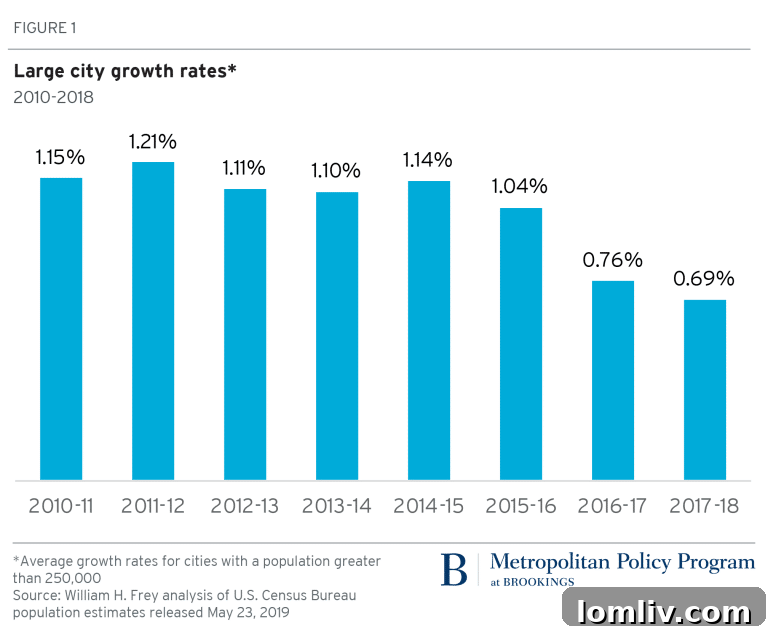
The new census statistics provide estimates for city populations annually between 2010 and 2018. They show that the average annual growth for the nation’s 87 cities with populations over a quarter million have slipped to 0.69% in 2017-2018—down from 0.76% the previous year, and from 1.21% in 2011-2012, the highest average growth since the Great Recession. Among the 87 largest metros, 66 exhibited lower growth in the last year than in 2011-2012. Among the 87 largest metros, 66 exhibited lower growth in the last year than in 2011-2012 (download Table A).
This data from the Brookings Institute clearly illustrates a nationwide deceleration in city growth. The robust expansion observed in the immediate aftermath of the Great Recession is waning, with the vast majority of large metropolitan areas experiencing a significant slowdown in their population increase. This isn’t merely a stagnation but a tangible reduction in growth rates, signaling a widespread recalibration of where Americans choose to live and work. The implications for urban planning and resource allocation are immense, requiring cities to adapt and find new strategies to attract and retain residents.
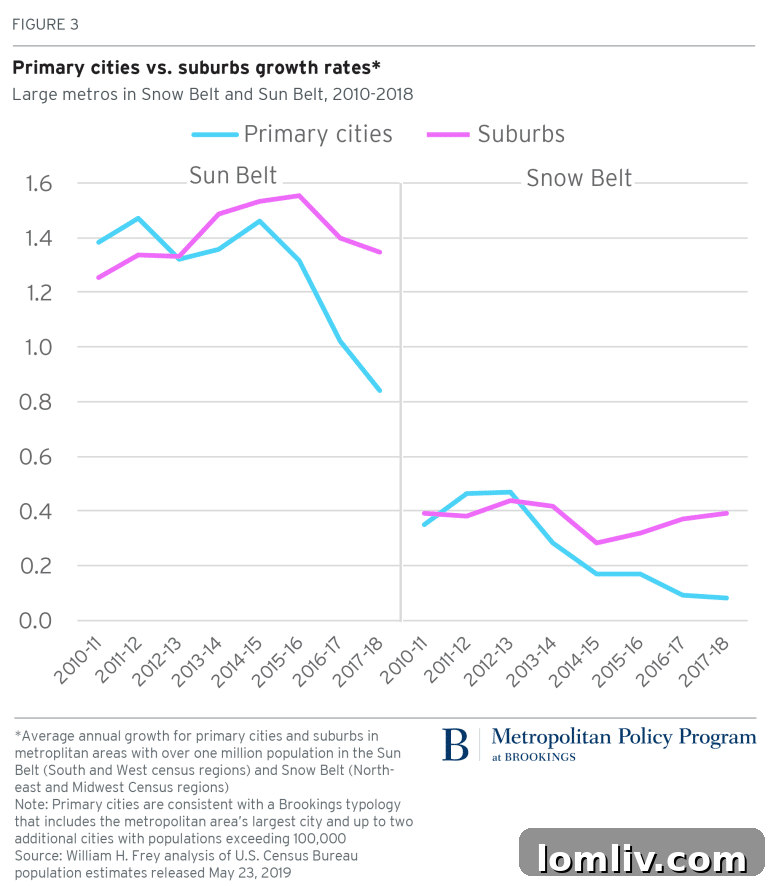
The Broader Trend: Slowing Growth Across America’s Largest Cities
The Brookings Institute’s analysis further highlights that not only are the nation’s formerly fastest-growing cities experiencing a deceleration, but an increasing number of urban centers are following suit. This widespread phenomenon suggests a systemic shift rather than isolated incidents. The slowdown is particularly pronounced among the largest cities. Out of 22 major cities, all but two—Jacksonville, Florida, and Fort Worth, Texas—recorded lower growth rates last year compared to 2011-2012. Twelve of these cities reported their lowest growth figures since 2010, encompassing a diverse range of urban landscapes:
These slowdowns were especially pronounced in the biggest cities. Among the largest 22, all but two (Jacksonville, Fla. and Fort Worth, Texas) showed lower growth last year than in 2011-2012. Twelve of the cities displayed their lowest growth since 2010, including northern cities like New York City and Boston but also other pricey coastal cities like San Francisco and Sun Belt growth centers like Dallas. Chicago, the nation’s third largest city, has now registered four straight years of population loss. In addition to Chicago, New York City and San Jose were other cities with populations over one million to register losses last year.
Even traditionally fast-growing cities, often seen as bastions of continuous expansion, are now cooling off. San Antonio, for instance, saw its enviable growth rate of 1.38% in 2017-2018 represent a dip from its previous rate of approximately 2% earlier in the decade. Similarly, Charlotte, which once boasted growth exceeding 2% per year, registered a 2017-2018 growth rate of 1.53%. These figures underscore a broader trend of decelerating urban expansion across various regions. Conversely, a handful of cities continued to record growth, including Sacramento, California; Tucson, Arizona; and Henderson, Nevada, a rapidly developing suburb outside Las Vegas. These exceptions often represent cities with comparatively lower costs of living, burgeoning local economies, or unique geographical advantages that continue to attract new residents.
New York City: A Bellwether for Urban Reversal
The extent of this urban reversal is perhaps best epitomized by New York City’s significant population losses. The city that once seemed perpetually to draw people from all corners of the globe is now witnessing a substantial outflow:
In 2017-2018, as in the year before, 20 of the 87 big cities lost population (download Table B). New York City led all cities in losses at -39,500, the second straight year with a major loss. In some respects, New York epitomizes the reversal from beginning of the decade city magnetism. For the first three years of this decade, New York—by far the nation’s largest city—led all others in population gains at levels of 50,000-80,000 per year. In fact, in 2011-2012, only four of the 87 big cities—Detroit, Toledo, Cleveland, and Buffalo—showed population losses.
The sheer volume of people departing New York City is striking, representing a stark contrast to its earlier growth. This dramatic shift highlights how quickly urban fortunes can change. The report characterizes the city growth dominance observed in the early part of this decade as an “aberration,” a temporary surge influenced by unique societal and economic circumstances. These included the lingering effects of the Great Recession, which made it harder for young people to establish financial independence, and the Millennial generation’s delayed entry into family life due to college debt and economic uncertainty. Many Millennials, saddled with financial burdens, stayed in cities longer, delaying traditional suburban moves. Now, as economic conditions improve and Millennials reach prime family-forming years, the trend appears to be reverting to more traditional patterns.
The Resurgence of the Suburbs: A Return to Traditional Patterns?
The current suburban resurgence seems to signal a return to long-established demographic patterns: individuals often gravitate towards urban centers during their early careers or before starting families, then relocate to the suburbs once they seek more space, better schools, and a quieter environment for raising children. This pattern, temporarily disrupted by economic upheavals and generational shifts, now appears to be reasserting itself with renewed vigor. The promise of larger homes, private yards, a perceived increase in safety, and access to highly-rated public school districts remains a powerful draw for families.
While the 2020 census will likely show greater city growth in the 2010-2020 period compared to the previous decade (2000-2010 was notably a down decade for cities), this is largely a reflection of the growth surge witnessed in the early 2010s, a surge that is now demonstrably falling off. The current trend suggests that the immediate post-recession period was an anomaly, and we are now observing a normalization towards suburban preferences.
Fort Worth and Jacksonville: Beating the Trend
Amidst the widespread urban slowdown, Fort Worth, Texas, and Jacksonville, Florida, stand out as notable exceptions, continuing to experience robust growth. Fort Worth, often overshadowed by its larger neighbor Dallas, has managed to maintain a strong appeal, likely due to a combination of factors including relatively lower costs of living, a distinct local identity, and successful urban planning that has fostered a welcoming environment. Similarly, Jacksonville benefits from its coastal location, growing job market, and a more affordable housing landscape compared to many other major Florida cities, positioning it as an attractive destination for new residents.
Conclusion: Navigating the Future of Urban and Suburban Development
The current demographic shifts present a critical juncture for urban and suburban development. The narrative of universal urbanization is giving way to a more nuanced understanding of population movement, driven by economic realities, lifestyle choices, and the lasting impact of remote work. Cities like Dallas, once seen as unstoppable growth engines, must now adapt to changing resident preferences, addressing issues such as affordability, public safety, and educational quality to retain and attract populations. Meanwhile, suburbs are poised for continued growth, evolving into self-sufficient hubs that offer a compelling blend of community, space, and economic opportunity.
The future likely holds a more balanced landscape, where both urban centers and their surrounding suburbs continue to play vital, yet evolving, roles in the American mosaic. Understanding these intricate dynamics is crucial for policymakers, developers, and individuals alike, as we collectively shape the places we call home.