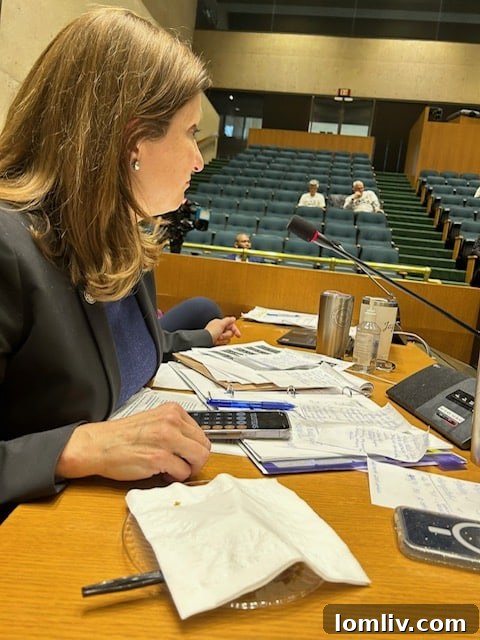
The intricate and often contentious debate surrounding short-term rentals (STRs) in Dallas reached a critical juncture recently as the Dallas City Council convened for a marathon seven-hour meeting. This extensive session, held on a Tuesday, underscored the deep divisions and complex challenges the city faces in regulating these popular yet controversial lodging options. The discussions were far-reaching, covering everything from neighborhood preservation to economic impact, ultimately revealing that a definitive resolution remains elusive. For those unable to delve into the full proceedings, this report aims to distil the key takeaways, providing a clear overview of the current status and future outlook for STR regulations in Dallas.
While an exhaustive summary of such a lengthy and detailed discussion is challenging, the consensus among city officials and staff points to the need for further deliberation. The city’s leadership expressed significant reservations about the readiness of the proposed ordinance for an immediate vote, signaling a cautious approach to avoid unforeseen complications. This pause reflects a commitment to crafting a policy that is not only effective but also equitable and enforceable across Dallas’s diverse communities.

City Manager T.C. Broadnax provided a candid assessment, articulating that despite extensive staff efforts and public input, more work is required before the Dallas City Council can confidently cast a vote on the proposed short-term rental ordinance. Broadnax emphasized that while he operates under the council’s direction, the current draft still contains “some vagueness on the zoning aspect, particularly as it relates to how it would be administered.” This lack of clarity, he warned, could lead to significant enforcement challenges that would fall short of community expectations.
Broadnax underscored concerns voiced by departments like Code Compliance and Development Services (DPD), stating, “I’d be remiss if I did not repeat the statements you heard from Code or DPD that the ordinance as written … there are going to be challenges and expectations of enforcement that will not be met at the level that I believe the community would expect.” He further elaborated on the arduous nature of rectifying non-compliant uses, noting, “It’s a long process to eliminate illegal uses.” Given these complexities and the absence of a clear majority pushing for an immediate vote, Broadnax confirmed that city staff would return to conduct further due diligence. Another comprehensive briefing for the council, incorporating the latest feedback and refined proposals, is anticipated as swiftly as possible.
The earliest possible date for a vote on the Dallas short-term rental ordinance is now projected for April 26, following the next regularly scheduled council briefing on April 19. This timeline provides a crucial window for city staff to address the identified ambiguities and develop more robust enforcement mechanisms, aiming for a solution that truly serves the long-term interests of Dallas residents and property owners alike.
Navigating Code Enforcement, Land Use, And Zoning for Dallas STRs
The city’s pursuit of effective STR regulation is deeply intertwined with its existing framework for code enforcement, land use planning, and zoning. Following a substantial public comment period, where over 50 speakers presented arguments both for and against STRs – indicating a near-even split in community sentiment – city staff presented a detailed plan. This presentation focused on a new registration ordinance and an implementation strategy, both requested by the City Council last year to bring structure to Dallas’s burgeoning STR market.
Key figures from city departments, including Assistant Director of Planning and Urban Design Andreea Udrea, Code Compliance Director Chris Christian, and Code Compliance Assistant Director Jeremy Reed, meticulously reviewed critical aspects. Their presentation delved into proposed zoning changes, the existing registration process for short-term rentals, new regulatory proposals, and the essential resource needs for effective oversight. This comprehensive review aimed to equip council members with the necessary information to make informed decisions that balance community concerns with property owner rights.
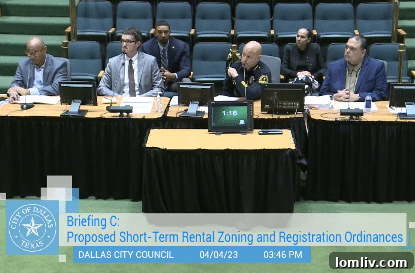
A significant proposal, known as the “Keep It Simple Solution” (KISS), gained traction and was approved by the City Plan Commission in December. This solution fundamentally redefines STRs as a lodging use. The implication of this reclassification is profound: it would effectively remove approximately 95 percent of existing registered STRs from residential areas, as they would no longer comply with the specific zoning requirements designated for lodging establishments. This approach aims to restore the residential character of neighborhoods by limiting commercial activity, but it also raises significant questions for current STR operators.
District 1 Councilman Chad West articulated a nuanced perspective, revealing that a survey of his constituents showed 45 percent favored a compromise rather than an outright ban on STRs. West explained his mandate: “I saw my charge from my constituents is to figure out a solution that lets our good operators survive and shuts the bad ones down.” He stressed the urgency of the situation, adding, “We need regulations now, without delay, and we need to shut down the party houses once and for all.” His comments highlight the dual goal of protecting responsible property owners while aggressively combating problematic STRs that disrupt neighborhood peace. West also pointed out that while much of the public feedback centered on single-family neighborhoods, the multi-family sector had been “thrown in with this” without sufficient tailored consideration. Furthermore, he raised important considerations for STRs used for corporate purposes or those providing accommodations for families needing to stay near hospitals during a loved one’s medical treatment. Addressing these specific use cases will be critical for a truly comprehensive and fair policy. Assistant Director Udrea noted that the Zoning Ordinance Advisory Committee (ZOAC) had discussed capping the number of STRs in a multi-family dwelling at 10 percent, suggesting a potential pathway for specific regulation in these building types.
Understanding the Landscape: How Many STRs Actually Operate in Dallas?
One of the persistent challenges in developing effective STR policy is obtaining accurate data on their prevalence and impact. Councilwoman Gay Donnell Willis provided crucial statistics, revealing that Dallas has 1,774 registered, tax-paying STRs. However, the estimated number of properties identified as potential STRs is considerably higher, at approximately 3,100. This disparity highlights a significant enforcement gap, with many STRs operating outside the official registration and taxation framework. The impact of these unregistered operations on public services and neighborhood quality of life is a major concern for the city.
Further illuminating the issue, a 911 administrator presented alarming data: out of the 3,100 identified potential STR properties, there were 7,700 calls related to major disturbances or reports of violence over a 27-month period, from January 2021 through March 2023. This translates to a staggering statistic: 46 percent of these 3,100 addresses generated at least one 911 call. Additionally, about 49 percent received a 311 call across ten different nuisance categories, with half of these calls requiring the attention of the Dallas Police Department. These numbers paint a clear picture of the strain that unchecked STR activity places on emergency services and community resources, extending beyond simple noise complaints to include more serious issues.
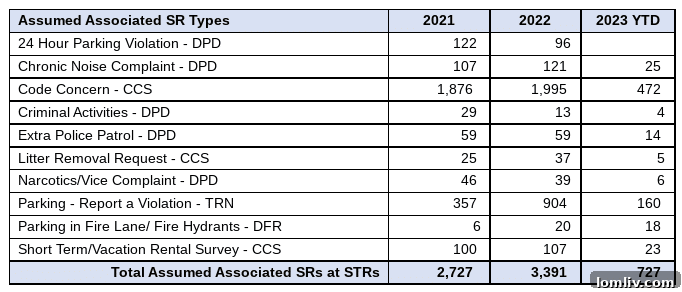

Councilwoman Willis directly addressed a common misconception, stating, “I just wanted to call that out because we’ve had a lot of folks quote the ‘88 percent have never had a 311 or 911 call,’ and that was about 2 percent nuisance-oriented criteria.” She emphasized that this widely cited statistic often misrepresents the full scope of problems, adding, “There’s a whole dimension of this that we have not examined. It’s not perfect; we haven’t had a lot of time to scrub it, but I think it’s cause for concern.” This highlights the critical need for a more granular and comprehensive analysis of STR-related incidents. Chief Data Officer Brita Andercheck further contributed to this understanding with a white paper filed on November 10, compiling extensive data to inform the council’s decision-making process.
Police Chief Eddie Garcia underscored the severe resource limitations faced by the Dallas Police Department (DPD), revealing that the force is “incredibly short-staffed,” with approximately 244 officers fewer than required for patrol duties. This significant personnel deficit directly impacts DPD’s capacity to take the lead on STR enforcement. “At this time, I wouldn’t recommend us being the head or the lead of this type of enforcement,” Garcia stated, clarifying that while DPD is the “24-7 department” that responds to all calls, their role is often to “handle the problem and then unfortunately we have to move on to the next call,” rather than proactive, sustained enforcement of STR ordinances. He acknowledged that serious crimes, including murders and human trafficking, have occurred in STRs, but he also pointed out that such incidents are not exclusive to short-term rentals, also occurring in hotels and owner-occupied residences. Chief Garcia emphasized his empathy for residents affected by problematic STRs, but stressed the importance of presenting credible and complete data. He admitted the data is still “incomplete,” noting that out of 1.38 million calls, only 2.5 percent were related to STRs. Crucially, he added, “Of those calls, we don’t know how many are duplicate calls. I don’t know yet at what point those individual addresses became a problem, before or after they became STRs.” This data deficiency highlights the complexity of attributing causality and the need for more sophisticated tracking systems before definitive policy decisions can be made.
Next Steps in Adopting an STR Ordinance: Debates and Delays
As Tuesday’s protracted meeting drew to a close, a clear division emerged among council members regarding the urgency of a vote. Some council members expressed a strong desire to proceed with a vote as initially planned on April 12, even if it was primarily to affirm the City Plan Commission’s recommendation of defining STRs as a lodging use. This faction believed that immediate action was necessary to stem the tide of issues stemming from unregulated short-term rentals, particularly those impacting the character and safety of residential areas.
District 12 Councilwoman Cara Mendelsohn articulated this concern passionately, stating, “The biggest problem is the gutting of our communities that is changing neighborhoods into commercial areas.” Her remarks encapsulated the sentiment of residents who feel that the proliferation of STRs is eroding the residential fabric of their neighborhoods, transforming quiet streets into transient commercial zones. This perspective advocated for decisive legislative action to protect the long-term integrity of Dallas’s residential districts.
Echoing a desire for immediate progress, District 6 Councilman Omar Narvaez suggested a phased approach: the council could approve a zoning change now and then return later to refine the broader ordinance. “Let’s get something passed and then we can start to massage and see what will work and what won’t work as we collect some real data,” he proposed. This strategy aimed to address the most pressing zoning concerns swiftly, providing a foundational legal framework upon which more detailed regulations could be built. However, city staff quickly countered this approach, warning that merely approving a zoning change without a comprehensive ordinance would create immediate and significant problems. They explained that once STRs are reclassified as lodging uses, many existing operations in residential areas would instantly become illegal. Code Compliance officials estimated that it would take approximately one year to implement the necessary staffing, training, and monitoring software required to effectively enforce such a sweeping ordinance.
City Manager Broadnax further highlighted the financial implications, stating that a mid-year budget amendment would be necessary to fund the essential monitoring software and additional staff needed to implement a neighborhood STR ban. He cautioned that while the city might be able to absorb these costs in the next fiscal year if additional revenue becomes available, doing so “would get in front of enhancements and other things the council has requested us to do next year.” Moreover, staff pointed out the legal complexities: if the council moves forward with the KISS solution, and an STR is found operating in an area not zoned for lodging, the city would likely have to file a lawsuit, a process that could potentially drag on for up to three years for resolution. This underscores the need for an ordinance that is not only legally sound but also practically enforceable with available resources.
District 7 Councilman Adam Bazaldua introduced an alternative proposal, dubbed “KISS 2.0,” designed to empower neighborhoods directly. This plan would allow communities to petition for a specific zoning overlay if they wished to ban STRs in their particular district. Bazaldua articulated his vision, arguing, “Essentially our council is faced with a decision to legislate lazily with governing overreach to address one population’s concern or to legislate pragmatically and provide a solution.” He advocated for a policy that is “thoughtful, inclusive, and equitable,” drawing a historical parallel by warning that irresponsible policy-making in the past led to practices like redlining, contributing to Dallas becoming “arguably one of the most segregated cities in America.” While Bazaldua’s proposal resonated with principles of local control and equitable governance, it ultimately did not gain significant traction. This was primarily because it had not undergone the necessary vetting and consideration by the council’s appointed recommending bodies, such as the Zoning Ordinance Advisory Committee (ZOAC) and the City Plan Commission (CPC).
District 2 Councilman Jesse Moreno highlighted the disproportionate concentration of STRs in his district and District 14, which together account for over 40 percent of the city’s short-term rentals. Moreno expressed his commitment to removing “bad actors” from the STR landscape but echoed the call for more comprehensive data and information before a vote. Concluding the session, he acknowledged the ongoing challenges, stating, “Obviously we have more homework and lingering questions. We’ve got a lot of work to do.” This sentiment reflects the broader consensus that while the need for STR regulation in Dallas is clear, the path to a truly effective, equitable, and enforceable solution requires continued diligence, robust data analysis, and careful consideration of all community impacts.