

Navigating the Unsettled Terrain of Modern Real Estate
In an era defined by rapid change and unprecedented economic shifts, understanding the forces shaping our communities and financial futures is more critical than ever. Esteemed urbanist and author Joel Kotkin consistently offers invaluable insights into these complex dynamics, particularly concerning urban development and real estate. His perspective often resonates deeply, providing clarity amidst the cacophony of current events.
The landscape of writing, much like the economy it often describes, demands considerable dedication. Contrary to popular belief, blogging and thoughtful analysis are far from quick or effortless endeavors. Crafting compelling content requires significant time and meticulous research, a reality underscored by the commitment seen in prolific writers like Kotkin, who dedicates himself tirelessly to his craft.
We find ourselves in a peculiar moment, grappling with how the turbulent political arena impacts the tangible world of real estate. The daily drama emanating from our nation’s capital, coupled with the intensity of upcoming elections, creates a climate of uncertainty that directly affects economic confidence and housing market stability. From fiercely contested gubernatorial races in states like Texas, where a former Dallas County Sheriff faced scrutiny over property taxes while campaigning, to high-profile Senate battles, the political polarization is undeniable. These races often pit candidates with starkly opposing ideologies against each other, reflecting a broader national trend. The era of centrist politics, embodied by figures like John McCain, appears to be a fading memory.
This political divisiveness raises pressing questions: What trajectory is our nation on, and what will be the ripple effects on the housing market, which is already reeling from recent legislative changes? The answers, according to leading analysts, point towards profound transformations.
The New Tax Law: A Game Changer for Homeowners
The implications of the new tax law are far-reaching, particularly for homeowners. Key provisions, such as limiting the mortgage interest deduction to $750,000 worth of debt and capping the state and local tax (SALT) deduction at $10,000 annually, have directly impacted household finances. For many, especially in regions with high property values and taxes – such as a $700,000 home in Dallas where a $10,000 deduction cap is easily met – these changes diminish the traditional financial benefits of homeownership. This shift could potentially prompt more individuals to reconsider selling their homes and opt for renting instead, catalyzing a significant demographic and economic transition.
Dallas: A Microcosm of National Real Estate Trends
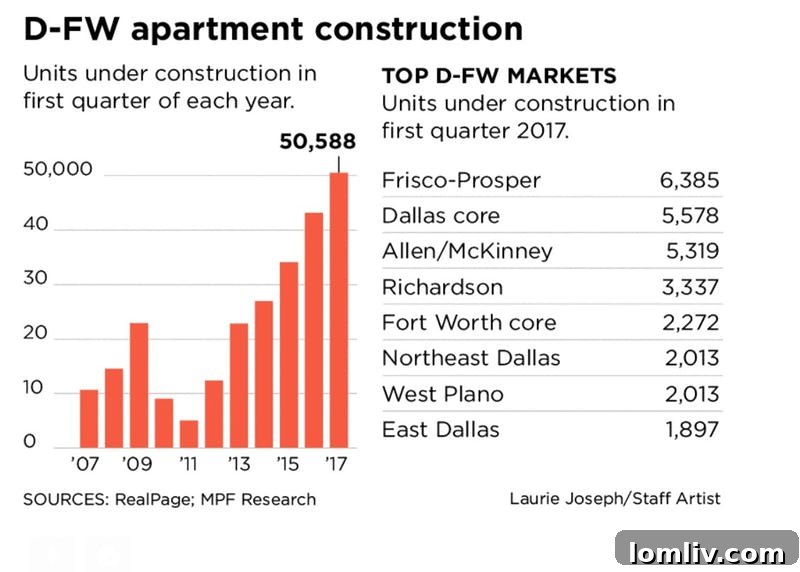
Dallas, for instance, stands as a prime example of this evolving real estate narrative. Ranking second only to New York City in apartment starts, the city saw an influx of 30,000 new units in a single year (2017), with over 50,000 more under construction. This surge in supply has begun to temper rental prices, with Dallas rents showing signs of recession. The market is witnessing the emergence of stunning luxury apartment complexes, previously unseen in the region, which offer an attractive alternative to traditional homeownership. Simultaneously, while the luxury home market experiences price adjustments, properties under $500,000 continue to perform robustly, indicating a bifurcated market with distinct demand drivers. This creates a perplexing scenario: luxury residences lowering prices to sell, while more affordable segments remain highly competitive. Where is this disparity leading us?
Unpacking “Oligarchical Socialism”: Joel Kotkin’s Provocative Vision
Joel Kotkin offers a compelling framework for understanding these seemingly disparate trends: “Oligarchical Socialism.” This concept posits a societal structure that enables an ever-growing concentration of wealth and power within a select few – notably tech and financial moguls. Simultaneously, it seeks to mitigate the harsh realities of increasing poverty, stagnating social mobility, and mounting indebtedness among the broader population. Crucially, this amelioration is not achieved by challenging or dismantling the power of these oligarchs, who would fiercely resist such attempts. Instead, it relies on a massive expansion of state taxpayer support, essentially subsidizing the social safety net while the elite continue to accrue unprecedented wealth.
This insight rings true, providing a powerful lens through which to view contemporary socio-economic shifts.
The Tech Titans and the Widening Wealth Gap
Kotkin’s analysis highlights the extreme polarization of our society and the shrinking middle class, fundamentally rooted in the colossal wealth disparities we are witnessing. The financial might of these modern oligarchs is so immense that traditional mechanisms of control often seem inadequate. Consider the striking example of Amazon and its founder, Jeff Bezos.
Amazon and the Billionaire Paradox

Amazon’s ascent to a market value of $1 trillion (a figure that itself challenges comprehension) underscores the scale of this phenomenon, following Apple’s similar achievement. Amazon’s dominance is profound, capturing nearly half of every e-commerce dollar spent in the U.S. With over 550,000 employees and annual revenues exceeding $178 billion, its economic footprint is staggering. Yet, the personal wealth of its founder, Jeff Bezos, reportedly surpassed the combined fortunes of Bill Gates and Warren E. Buffett – a level of affluence that is truly mind-boggling. This extreme wealth stands in stark contrast to the reality for many of Amazon’s workers, with half of its vast workforce earning around $28,000 annually.
Senator Bernie Sanders has forcefully articulated this paradox, pointing out that Bezos’s wealth reportedly increases by $260 million every single day simply by existing. Sanders argues passionately:
“The taxpayers in this country should not be subsidizing a guy who’s worth $150 billion, whose wealth is increasing by $260 million every single day,” said Sanders. “That is insane. He has enough money to pay his workers a living wage. He does not need corporate welfare. And our goal is to see that Bezos pays his workers a living wage.”
Sanders’s concern stems from the belief that many Amazon employees, earning meager wages, are forced to rely on public assistance programs like Medicaid, food stamps, or public housing, effectively making taxpayers subsidize corporate profits. This concern is not merely rhetorical; it underpins his legislative efforts to ensure that mega-corporations pay their employees a living wage, reducing the burden on public coffers. It’s a striking commentary on modern capitalism when a tech publication like TechCrunch covers a senator’s call for corporate accountability more prominently than traditional news outlets.
This reliance on public assistance for employees of incredibly wealthy corporations forces us to ponder the societal cost of such economic models. Why should communities enthusiastically welcome companies like Amazon if the very presence of their operations strains local social services?
The Oligarch’s Playbook: Market Control and Tax Avoidance
Kotkin’s Labor Day editorial further elaborated on this dynamic, suggesting that subsidies are precisely the path forward: the rich will remain rich, not despite, but because of their immense wealth. Their fortunes allow them to navigate and even circumvent tax laws through loopholes, powerful lobbyists, or, as facetiously suggested for Bezos, by contemplating ventures to new planets. Some are so wealthy they command their own private islands. These oligarchs, rather than being traditional anti-tax billionaires, often view massive government spending as a necessary evil to keep social discontent at bay, a means to avoid the proverbial “pitchforks.” While they might fund philanthropic endeavors, they largely remain impervious to higher taxes.
The Future of Work and Housing: A Gig Economy Reality
Kotkin paints a stark picture of the future, shaped by the tech oligarchy’s vision. Historically, liberals championed policies that fostered middle-class independence, such as homeownership and entrepreneurial ventures. However, the dominant tech firms, run by this new class of oligarchs, hold a vastly different, less egalitarian outlook. Research suggests that these founders anticipate an increasing share of economic wealth being generated by a small, highly talented segment of the population. The majority, conversely, will increasingly subsist on a combination of part-time “gig work” and government aid.
The Rise of the Gig Economy and its Implications
This vision is embraced by prominent figures like Mark Zuckerberg, Pierre Omidyar (eBay founder), Elon Musk, and Sam Altman (Y Combinator founder), who champion concepts such as a “guaranteed wage,” typically ranging from $500 to $1,000 monthly. This approach positions government spending as a crucial tool for social stability, especially as the “gig economy” continues its rapid expansion. The gig economy, incidentally, encompasses a wide array of independent contractors, including real estate agents, highlighting its pervasive nature.
Rethinking the American Dream: From Homeownership to Rental Dependence
Kotkin warns of a future where “handouts, including housing subsidies,” might secure for the next generation “a future not of owned houses, but rented small, modest apartments.” This implies a scenario where property ownership becomes increasingly unattainable, leaving individuals to subsist in rental accommodations, often consumed by digital entertainment. The prevalence of new, often luxurious, apartment complexes, sometimes even condominiums on smaller lots, aligns perfectly with this prognosis. The dwindling tax incentives for homeownership further solidify this shift, eroding a cornerstone of the traditional American Dream.
Another casualty of this evolving economic model is employer-based benefits. The gig economy places the onus on individuals to secure their own benefits, with healthcare consistently topping the list of concerns for many, including independent professionals like real estate agents. This underscores a systemic challenge where the benefits of a robust economy are disproportionately distributed.
Reimagining Housing Policy: Past, Present, and Future
The oligarchs of today, Kotkin argues, show little interest in their workers ascending to homeownership or moving up the socio-economic ladder. Their agenda, instead, favors “forever-denser, super-expensive rental housing” for their largely young, often transient workforce. This contrasts sharply with historical U.S. government policy, such as the post-World War II initiatives that offered government-backed loans to returning GIs, significantly expanding homeownership and fostering what many consider the golden age of the American Dream. The homeownership rate, which stood at 62.1 percent in 1960, has since faced challenges, and with escalating home prices, particularly in coastal regions, experts predict a continued decline.
The San Francisco Precedent and Local Echoes
The stark reality of this trend is exemplified in regions like the San Francisco Bay Area, where an annual income of $333,000 is now required to afford even a modest home. This extreme unaffordability has fueled calls for more interventionist policies, such as stronger rent controls and subsidized housing – concepts that, astonishingly, are now gaining traction in unexpected places like North Texas. This suggests that what was once considered a radical approach in high-cost urban centers is becoming a pragmatic discussion across a wider spectrum of communities.
The Social Fabric Under Strain: A Call for Reflection
There is, indeed, a compelling, albeit unsettling, logic to “oligarchical socialism.” It permits tech moguls and financial elites to amass wealth beyond imagination, while their allies in progressive circles and an increasingly consolidated media establishment – often owned by these very oligarchs – chastise others for their aspirations. The middle and upwardly mobile working classes, meanwhile, are left to bear an ever-increasing tax burden, watching as their children potentially slide into a state of dependence, relying on handouts and subsidies for survival.
This phenomenon is observable even at a local level, such as in the City of Dallas, where the affluent northern sector often serves as the economic engine supporting the southern sectors. Some attribute this enduring imbalance to the preferences of established local power brokers. Kotkin’s analysis thus provides a potent framework for understanding not just global or national trends, but also the intricacies of local socio-economic structures.
Joel Kotkin’s insights into this emerging economic paradigm are undeniably sharp and thought-provoking. His articulation of “oligarchical socialism” forces a crucial re-evaluation of our economic trajectory, the future of homeownership, and the implications for social mobility and equality. It’s a perspective that demands serious consideration as we navigate an increasingly complex and rapidly changing world.