Dallas, Texas – The city of Dallas is grappling with a profound sense of unease following a tragic shooting at Preston Center in District 13 on May 19, which resulted in the death of a dedicated security guard. This devastating event occurred less than three weeks after the harrowing massacre at Allen Premium Outlets, an incident that claimed eight lives and left seven injured. While North Texans have long been accustomed to the frequent occurrence of car break-ins within the parking lots and garages of shopping centers, these recent tragedies underscore a far graver public safety crisis. The alarming reality that individuals are now losing their lives in what were once considered safe havens has ignited a fervent demand for increased security and accountability across the community.
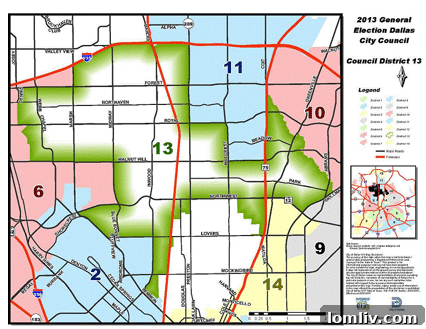
The incident at Preston Center West has particularly resonated within District 13, an affluent area known for its upscale shopping and residential communities. The district is represented by Council Member Gay Donnell Willis. Despite the severity of the event and the palpable anxiety gripping her constituents, Willis has remained notably silent, declining requests for an interview from daltxrealestate.com and refraining from issuing any public statement regarding the security guard’s fatal shooting. This lack of public engagement comes shortly after her successful re-election earlier this month, where she secured 67.1 percent of the vote against political newcomer Priscilla Shacklett, following her previous role as CEO of the Turtle Creek Conservancy.

Understanding Crime Trends in Dallas District 13
Analyzing local crime statistics is crucial for understanding the evolving safety landscape, yet the Dallas Police Department’s crime dashboard has not been updated since May 3. This critical delay stems from a cyberterrorist attack by a group named Royal, which hacked the city’s servers, disrupting various municipal services. Consequently, the most recent and tragic events, including the Preston Center West shooting, are not reflected in the publicly available data, creating a gap in understanding the current reality of local crime.
The Preston Center West shooting unfolded when a security guard confronted an individual breaking into a vehicle. The suspect then shot the guard before fleeing the scene. The victim, 34-year-old Adalberto Santiago, tragically succumbed to his injuries at the hospital. Police later located the getaway vehicle, a gold Toyota Camry, in a parking lot on North Cockrell Hill Road, but the gunman remains at large. Dallas Police Det. Jonequia Acrond, the lead investigator on the case, also did not respond to requests for additional information, further shrouding the incident in a veil of official silence that concerns residents.

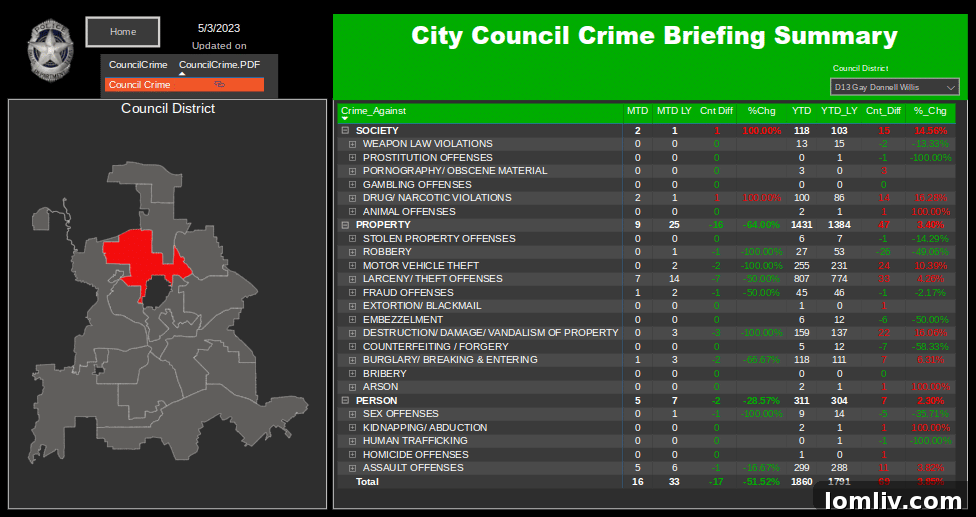
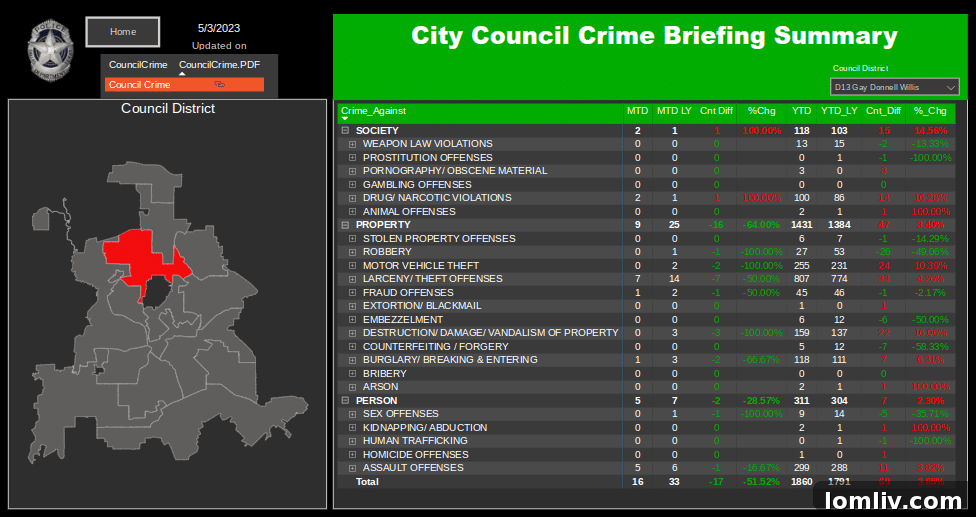
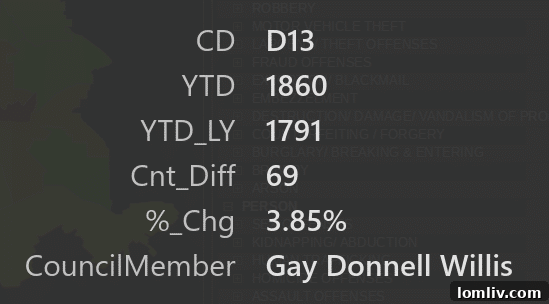
Based on the available, albeit dated, statistics from May 3, 2022, to May 3, 2023, District 13 has experienced notable shifts in crime patterns. Increases were observed in several categories: drug violations rose by 16.3 percent, motor vehicle theft by 10.4 percent, destruction of property/vandalism by 16 percent, and assault by 3.82 percent. While property crimes like car break-ins have long been a concern, the rise in drug violations and assaults points to a broader spectrum of criminal activity that demands attention. Disturbingly, the district recorded one homicide thus far in 2023, compared to zero reported during the same period last year, signifying a critical escalation in violent crime.

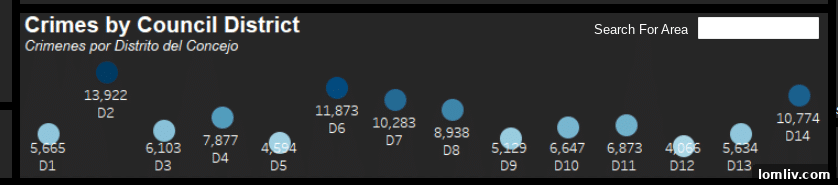
Conversely, the same timeframe saw significant decreases in other crime categories within District 13, including robberies (down 49 percent), sex offenses (down 35.7 percent), and forgery (down 58 percent). These reductions offer a mixed picture, suggesting that while some types of crime are decreasing, others are escalating, particularly those involving violence or significant property loss. Historically, the Preston Hollow area, which encompasses much of District 13, has maintained one of the lowest crime rates among Dallas’ 14 districts, experiencing an overall decrease of almost 4 percent compared to last year. It typically ranks just slightly above Districts 9, 5, and 12 in terms of crime frequency, reinforcing the perception of it as a relatively safe community. However, recent events challenge this long-held perception.
Preston Center Safety: A Community Under Scrutiny
The perceived safety of Preston Center and surrounding areas has been a topic of growing discussion among residents. In her March District 13 newsletter, Council Member Willis highlighted a success story from the Dallas Police Department, announcing the apprehension of a habitual offender targeting victims at the Preston Royal shopping center. The unnamed individual faced charges for burglary of a motor vehicle, theft, credit card abuse, and evading arrest. This incident, alongside several other crime reports detailed in the same newsletter—the most recent published by the councilwoman—serves as a stark reminder that even affluent neighborhoods are not immune to criminal activity. The narrative that “bad things can happen in good neighborhoods” is increasingly becoming a reality for District 13 residents.
The emotional toll of these incidents is evident in community reactions. Following the May 19 security guard shooting, one Twitter user lamented, “I used to joke that I grew up on the mean streets of Preston Center. Rode bikes throughout all the alleys and parking lots. It’s starting not to sound like a joke anymore.” Other residents voiced their immediate concerns and frustrations, with comments such as, “I’m done with that shopping center” and “Have they caught the guy?” These sentiments reflect a broader loss of trust and a heightened sense of vulnerability among a populace that once felt largely protected.
Unfortunately, the Preston Center gunman remains at large, and the story, despite its severity, appears to have faded from the immediate public spotlight. The Allen Premium Outlets shooting, while not within Dallas city limits or District 13, involved a significantly higher number of victims and witnesses, reigniting an ongoing national debate about gun violence. Yet, the underlying fear experienced by residents in both areas is disturbingly similar: Why can families no longer feel safe taking their children shopping in broad daylight, in clean, well-lit areas, even in the “good part of town”? This question underscores a fundamental challenge to the fabric of urban life and community safety.
This ongoing series on crime by council district has previously explored whether there is a correlation between crime rates and socioeconomic status or race. While data can often be interpreted to support various narratives, it unequivocally demonstrates that crime is a pervasive issue affecting all parts of Dallas, transcending traditional demographic boundaries. According to U.S. Census data, District 13 is one of only two Dallas City Council districts with more than 50 percent White residents (District 14 being the other), with approximately 25 percent Hispanic, 9 percent Black, and 7 percent Asian residents. This demographic composition further illustrates that safety concerns are not confined to specific populations but rather are a city-wide challenge impacting a diverse urban tapestry.
Dallas Police Department’s Summer of Safety and New Strategies
In response to increasing crime rates and a critical staffing shortage, the Dallas Police Department (DPD) has announced new strategies aimed at optimizing resources and enhancing public safety, particularly through its “Summer of Safety” initiative. A significant change involves a new approach to crime reporting, designed to free up patrol officers for higher-priority calls and proactive policing efforts.
Following the ransomware attack that incapacitated city webpages and dispatch centers for nearly a week, residents are now actively encouraged, and in some cases required, to utilize online reporting for certain non-emergency criminal offenses. These include incidents like shoplifting, accidents without injuries, and car break-ins where the suspect is no longer present at the scene. This shift aims to streamline the reporting process for less urgent matters, allowing officers to focus on more immediate and dangerous situations.
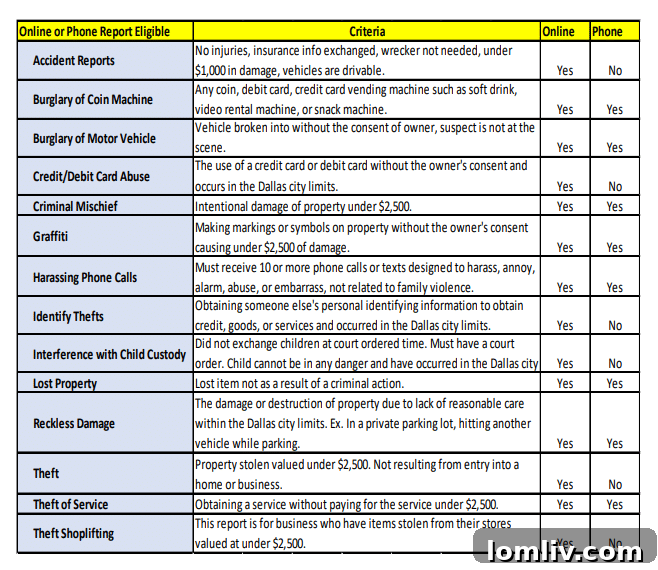
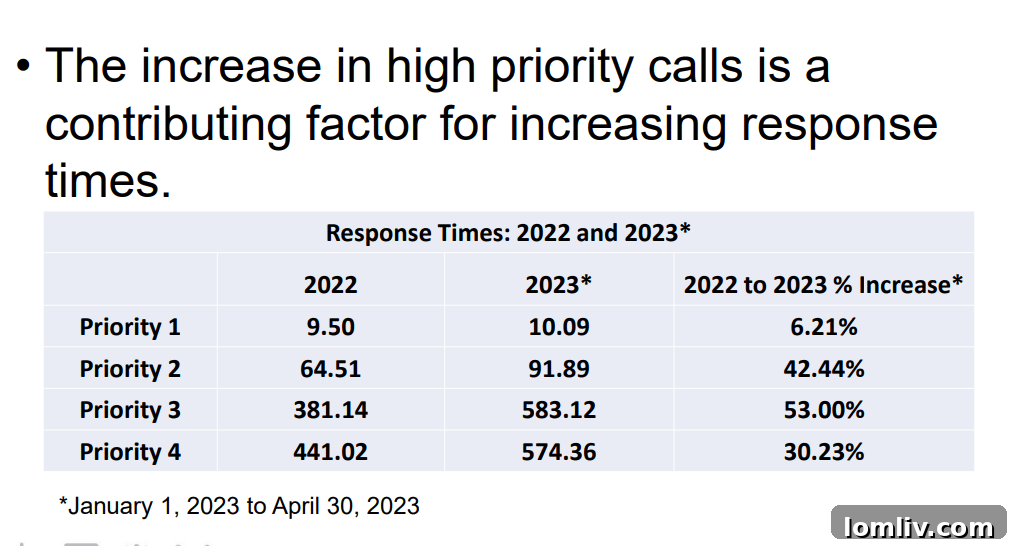
Assistant City Manager Jon Fortune, in a May 12 memo to the Dallas City Council, clarified that the use of the Dallas Online Reporting System (DORS) is now a mandatory requirement for specific non-emergency offenses, rather than merely an optional choice. This policy change is not unique to Dallas; during a presentation to the council’s Public Safety Committee, 911 Administrator Robert Uribe highlighted that several other major cities, including Houston, Austin, and Fort Worth, employ similar strategies to manage their emergency services more efficiently. The implementation of DORS is projected to yield substantial benefits for the DPD. Fortune estimates that this change could free up approximately 135,000 patrol hours annually, an equivalent workload to that of 65 full-time sworn officers. This significant reallocation of resources is intended to enhance police visibility, reduce response times for critical incidents, and allow for more proactive crime prevention initiatives.
Beyond restructuring reporting mechanisms, the DPD, in collaboration with Mayor Eric Johnson’s office, has launched its second annual “Summer of Safety” campaign. This comprehensive initiative aims to provide free and low-cost activities for youth during their time off from school. The program’s core objective is to offer engaging and constructive opportunities that encourage young people to “stay safe while keeping cool, staying active, and expanding their knowledge,” thereby reducing their susceptibility to negative influences and involvement in criminal activities. By offering positive outlets and educational experiences, the city hopes to proactively address the root causes of some crimes and foster a safer environment for its younger generation.
The recent events in Preston Center serve as a stark reminder that public safety remains a dynamic and evolving challenge in Dallas. While the DPD and city officials are implementing new strategies to combat crime and optimize resources, the community’s trust and sense of security require continuous and transparent engagement. Addressing the profound fear instilled by these incidents, especially in areas once perceived as immune to serious crime, will demand a concerted effort from law enforcement, city leadership, and the residents themselves. The path forward involves not just apprehending criminals but also rebuilding confidence, ensuring accountability, and fostering a shared commitment to a safer Dallas for everyone.
This is the 12th installment in our series on neighborhood crime by Dallas City Council district. Have you been the victim of a crime in a Dallas neighborhood or shopping center? We encourage you to share your experience with us at [email protected] to contribute to our ongoing coverage of these critical community issues.