Unveiling the Hottest U.S. Real Estate Markets of Mid-2015: A Deep Dive into Demand and Speed
In the dynamic landscape of the American housing market, June 2015 marked a pivotal period, showcasing remarkable regional variations and compelling national trends. While some major metropolitan areas like Houston experienced slower activity, others, particularly in Texas, California, Colorado, and Michigan, were heating up at an astonishing pace. This detailed analysis, originally conducted by Realtor.com’s chief economist, Jonathan Smoke, delved into the forces driving these vibrant markets, revealing where buyer demand was highest and homes were selling fastest. It highlighted a housing recovery that, while national in scope, was deeply localized in its intensity.
National Housing Trends: A Snapshot of June 2015
The first three weeks of June 2015 provided crucial insights into the overall health and trajectory of the U.S. housing market. The data, meticulously compiled and analyzed by Realtor.com, painted a picture of a market gaining momentum, though not without its challenges.
- Median List Price Surge: The median list price for a U.S. home reached an impressive $233,000. This represented a significant 7% increase year-over-year and a 2% rise over May 2015, indicating strong appreciation and growing confidence among sellers.
- Steady Days on Market: Homes, on average, spent 66 days on the market. While this figure was flat month-over-month, it showed a notable 7% decrease compared to the previous year, suggesting that properties were moving off the market more quickly than before.
- Inventory Growth Challenges: Despite the positive price and sales velocity trends, inventory remained a key concern. While listings inventory was growing faster, seeing a 4% increase over May, it was still down compared to the previous year. This tight supply, especially in high-demand areas, contributed to competitive bidding environments and upward price pressure.
These national statistics provided a foundational context for understanding the market. However, the true story of the 2015 housing market lay in its regional hotspots, where demand and supply dynamics created exceptionally favorable conditions for sellers and challenging ones for buyers.
The Realtor.com Hotness Index: Methodology Behind the Rankings
To identify the nation’s most competitive and sought-after markets, Jonathan Smoke and his team developed a rigorous analytical framework: the Realtor.com® Hotness Index. This exclusive analysis combined two critical dimensions of market activity:
- Demand Measurement: To gauge buyer interest, the team reviewed the number of listing views relative to the total number of listings available within the 300 largest U.S. markets. A high ratio indicated strong buyer engagement and intense interest in available properties.
- Speed of Sales Indicator: To understand how quickly homes were selling, they examined the median number of days homes spent on the market. Markets where properties sold significantly faster than the national average were deemed “hot” in terms of transaction speed.
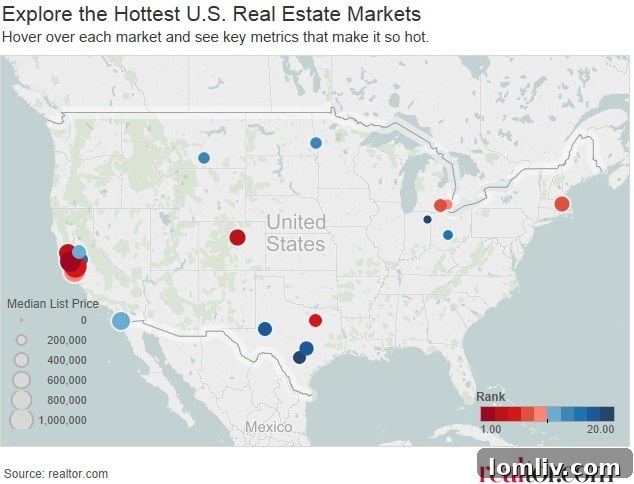
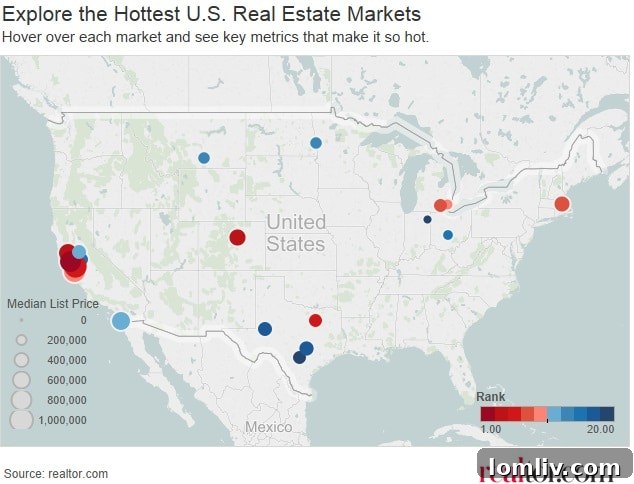
By integrating these two metrics, the Hotness Index provided a comprehensive snapshot of market vitality, pinpointing the 20 medium-sized to large U.S. markets where buyers were most eagerly seeking homes and sales were closing with exceptional speed. This methodology ensured that the rankings reflected not just high prices, but actual market dynamism and consumer engagement.
“More and more Americans are spending time searching for the perfect home, our data show. On realtor.com, traffic and searches continue to set new highs in June,” Smoke said. “Unique users for the month are now on pace for at least 40% growth year over year, he found, while visits and searches are expected to be up more than 50% and 30%, respectively.”
This surge in online activity underscored the robust demand building up across the nation, translating directly into the localized market heat observed by the Hotness Index.
Regional Dominance: A Closer Look at the Hottest Markets
The Realtor.com Hotness Index revealed distinct geographic patterns, with certain states consistently featuring multiple top-ranking cities. The underlying economic conditions, population shifts, and inventory levels in these regions were key to their exceptional performance.
California’s Unmatched Market Heat
California once again dominated the list of hottest markets, claiming almost half of the country’s top 20 spots. This unparalleled performance was driven by a powerful combination of factors:
- Extremely Tight Supply: Decades of underbuilding relative to population growth had created a severe shortage of available housing. This limited inventory, especially in desirable coastal areas, intensified competition among buyers.
- Robust Economy and Job Growth: The state’s powerful economy, particularly fueled by the booming technology sector in Silicon Valley and strong industries across other metropolitan areas, generated high-paying jobs. This attracted a steady influx of residents, further escalating demand for housing.
- High-Value Cities: San Francisco, renowned for its tech industry and vibrant urban culture, captured the coveted No. 1 spot, dethroning Denver. Other California cities like Vallejo and Santa Rosa also made it into the top five, demonstrating broad-based strength across various price points and sub-regions within the state. These markets, often seen as more affordable alternatives to the most expensive hubs, experienced spillover demand from buyers priced out of cities like San Francisco and San Jose.
Texas: Resilient and Diversified Economies Fueling Growth
Texas showcased remarkable strength, with four cities making it onto the hot markets list. The state’s economic diversification played a crucial role in its resilience, especially in a period of lower oil prices:
- Midland’s Unique Tightness: Midland, ranking at No. 17, stood out. Despite the dip in oil prices that typically impacts energy-dependent economies, Midland’s real estate market remained exceptionally tight on inventory. This inherent supply shortage meant that even a slight reduction in demand due to oil price fluctuations barely registered, keeping the market fiercely competitive.
- Dallas/Fort Worth Leading the Charge: Dallas secured the No. 5 spot, highlighting its strong, diversified economy which includes major corporate headquarters, a growing tech presence, and robust trade sectors. The DFW metroplex continued to attract businesses and residents, fueling consistent housing demand.
- Austin’s Appeal: Austin, at No. 18, continued its trajectory as a popular destination for tech companies and young professionals, driven by its vibrant culture and rapidly expanding job market. Its consistent appeal ensured ongoing buyer interest.
- San Antonio’s Steady Growth: San Antonio, ranked No. 19, benefited from its stable military presence, growing healthcare sector, and strong tourism industry, providing a diversified economic base that supported a healthy housing market.
Unlike Houston, which was more heavily impacted by the oil price declines due to its larger energy sector concentration, these Texas markets demonstrated that economic diversification was key to sustaining housing market health.
Colorado’s Sustained Momentum
Colorado’s capital, Denver, remained a perennial hot spot, securing the No. 3 position. Denver’s housing market benefited from:
- Strong Job Market: A thriving economy spanning tech, aerospace, and natural resources attracted a continuous flow of new residents.
- Lifestyle Appeal: The city’s desirable outdoor lifestyle and vibrant cultural scene made it an attractive destination for many, leading to high demand for housing.
- Diversified Economic Base: Similar to the thriving Texas cities, Denver’s diversified economy provided a buffer against sector-specific downturns, ensuring its real estate market remained robust.
Michigan’s Remarkable Comeback Story
Michigan offered a compelling narrative of recovery, with two cities — Ann Arbor (No. 7) and Detroit (No. 9) — climbing significantly in the rankings. This resurgence was attributed to a confluence of factors:
- Economic Recovery: The state, and particularly the automotive industry, was experiencing a strong rebound after the 2008 financial crisis. This brought jobs back and restored consumer confidence.
- Exceptional Affordability: Following significant depreciation in home prices during the recession, homes in Michigan offered strong affordability compared to national averages. This attracted buyers looking for value, making it an appealing market for both first-time homebuyers and investors. Detroit, in particular, presented unique opportunities for those willing to invest in its revitalization.
Key Factors Driving Market Heat in 2015
The patterns observed in the hottest markets of June 2015 highlight several recurring themes that contribute to robust real estate activity:
- Job Growth and Economic Diversity: Markets with strong, diversified economies and consistent job creation were able to attract and retain residents, ensuring a steady stream of potential homebuyers. This was particularly evident in California, Texas, and Colorado.
- Tight Housing Inventory: A persistent shortage of homes for sale relative to buyer demand was a primary driver of competition and rapid price appreciation. This dynamic was a hallmark of California’s market and contributed to the resilience of Midland, Texas.
- Population Migration: Regions experiencing significant inbound migration, driven by economic opportunities or quality of life, naturally saw increased demand for housing.
- Affordability (Relative): While the hottest markets often saw rising prices, some, like those in Michigan, demonstrated that strong affordability (often due to previous price corrections) coupled with economic recovery could ignite demand and sales velocity.
- Buyer Sentiment and Confidence: The overall improving economic outlook post-recession, combined with low interest rates, boosted buyer confidence, leading more Americans to actively search for and invest in homes.
These factors coalesced to create specific conditions where homes were not just attracting views but also quickly translating into closed sales.
Implications for Buyers and Sellers in Hot Markets
For individuals navigating these hot markets in mid-2015, the dynamics presented distinct challenges and opportunities:
- For Buyers: Hot markets meant intense competition, often leading to bidding wars, offers above asking price, and rapid decision-making. Buyers needed to be pre-approved for mortgages, make strong offers, and be prepared to act quickly. The limited inventory often meant fewer choices and potentially compromising on some desired features.
- For Sellers: These conditions were highly favorable. Sellers could often expect multiple offers, achieve higher-than-expected sale prices, and experience significantly faster closing times. The market leverage was firmly on their side, allowing for more stringent conditions or quicker transitions.
The contrast between the national trends and the localized “hot spots” underscored the importance of understanding specific market conditions rather than relying solely on broad national averages.
The 2015 Market in Perspective: A Foundation for Future Growth
The mid-2015 housing market, as illuminated by Realtor.com’s Hotness Index, represented a significant phase in the post-recession recovery. It showcased a housing sector that was steadily gaining strength, marked by rising prices and accelerating sales in key regions. The insights from Jonathan Smoke underscored that while national trends provided a general direction, the true vigor and unique characteristics of the housing recovery were best understood through the lens of individual, thriving local economies.
The trends identified – the dominance of California, the diversified strength of Texas and Colorado, and the affordability-driven comeback in Michigan – laid a foundation for continued growth in the years that followed. These markets served as bellwethers, demonstrating the powerful interplay of economic health, supply constraints, and buyer demand in shaping real estate fortunes across the United States.