The Shifting Landscape: Is Facebook Becoming the New MLS in Dallas Real Estate?
The real estate industry is a landscape of perpetual transformation, continually reshaped by technological advancements and the evolving demands of buyers and sellers. In vibrant, competitive markets such as Dallas, a profound shift is underway, challenging the long-established traditions of property listings and sales. This significant evolution recently came into sharp focus through the insights of industry leader Rob Hahn, founder and managing partner of 7DS Associates. His firm, a specialized management consulting group, offers expertise in corporate strategy, product management, and strategic marketing specifically tailored for the real estate and allied sectors. Rob Hahn is widely recognized as one of the nation’s most influential voices advocating for fundamental change in real estate, pushing for the modernization of the Multiple Listing Service (MLS) and its embrace of cutting-edge technology.
“The MLS industry needs focus and strong leadership to turn its attention away from the noise and concentrate on the serious challenges it faces. It needs a plan of action, one that contains some new and perhaps radical (at least by traditional conservative thinking) ideas. It needs to focus on that plan, execute on that plan, daily – not just once or twice each year at convention time.”
Hahn’s powerful message underscores a critical turning point for the MLS. He argues that its future relevance hinges on its ability to adapt and implement forward-thinking strategies, moving beyond incremental adjustments. This calls for a fundamental reassessment of its operational framework and value proposition in an increasingly digital and interconnected world. This perspective is particularly pertinent as we delve into how alternative platforms are now not just influencing, but actively facilitating, a substantial portion of real estate transactions.
The Rise of Social Media in Real Estate: How Facebook is Disrupting Tradition
A surprising, yet increasingly undeniable, trend identified by Rob Hahn highlights Facebook’s burgeoning role as a major player in the real estate listing arena, especially within the dynamic Dallas market. Recent discussions initiated on social media revealed a compelling observation: “Learning that at least in Dallas area, Facebook might be the new MLS…”
This revelation extends far beyond casual sharing among social connections. As Hahn clarified, the core of this phenomenon lies in “Facebook Groups and Facebook Business Pages, where agents post their listings #pocketlistings.” This distinction is paramount: it’s not merely individual agents informally circulating properties, but rather organized, often private, communities and professional pages that actively cultivate a market for off-MLS properties. These “pocket listings” or “pre-MLS” properties are rapidly becoming a significant force, effectively bypassing the conventional listing channels altogether.
Dallas’s Hidden Market: The Scale of Off-Market Transactions
The sheer magnitude of this trend is remarkable. A leading Dallas agent, identified as Erin, disclosed to Hahn that “One-third of sales in Dallas last year was off-MLS, so they’re ‘pre-MLS’ or ‘pocket listings’. Comps can’t be reliable.” This isn’t merely an isolated statistic; it represents a profound shift in how properties are being bought and sold. The assertion that one-third of all real estate transactions in a major metropolitan area like Dallas are occurring outside the traditional MLS system provides undeniable evidence of a parallel, robust market that has firmly taken root.
This insight confirmed a long-held suspicion within the real estate community and among market observers. For several months, discussions had circulated regarding the escalating influence of various private Facebook groups. These weren’t limited to highly specialized, well-managed platforms like Devin Rambie’s “Legacy Title” group, but encompassed a myriad of similar online communities. The evidence is now conclusive: an increasing number of homes are being transacted through these digital ecosystems. Rob Hahn’s recent confirmation solidifies this understanding: a substantial portion—potentially one-third—of real estate transactions are now taking place via these alternative, social media-driven channels, entirely independent of the formal MLS framework.
Understanding the Appeal: Why Facebook for Real Estate?
The organic ascent of Facebook as a real estate marketplace is, in many respects, a logical progression. The platform has effectively evolved into the contemporary “water cooler”—a digital nexus where individuals with shared interests naturally convene, exchange information, and conduct various forms of business. For real estate professionals, it offers an immediate, highly targeted conduit for new listings. In today’s intensely competitive market, characterized by persistently low inventory, a property shared within a specialized Facebook group can garner immediate attention, generate rapid interest, and even be sold before it ever reaches the wider public market. What began as informal networking groups have swiftly matured into essential avenues for discovering and acquiring properties.
Furthermore, this trend extends beyond agent-to-agent transactions. Intriguingly, individual homeowners are also leveraging Facebook to sell their properties directly, circumventing the need for a real estate agent. This phenomenon highlights the platform’s accessibility and its efficacy in directly connecting buyers and sellers, posing a direct challenge to the traditional role of real estate intermediaries.
The Evolving Role of the Realtor: From Information Gatekeeper to Network Navigator
For aspiring homebuyers, gaining access to these exclusive Facebook groups presents a unique hurdle: “Consumers ask me all the time: how do I get into these groups to find a home? Well, you can’t. But your Realtor can.” This statement underscores a pivotal paradigm shift for real estate agents. In an era where information is abundant and accessible, an agent’s true value lies less in simply providing listings (which are increasingly found off-MLS) and more in their robust connectivity and networking prowess. It has become more critical than ever to collaborate with an agent who is deeply “hooked, tuned, and plugged in to the networks” of the digital real estate world.
Indeed, the most effective Realtors today may not be those who allocate substantial budgets to glossy magazine advertisements or other conventional marketing channels. Instead, their genuine strength may stem from the breadth and quality of their Facebook connections and their active, engaged participation in influential social networking groups. A highly relevant question for any prospective client to pose to their agent is: “how many social networking groups are you plugged into? Answer should be at least FIVE!” This serves as a tangible metric for assessing an agent’s digital reach and their potential to unearth valuable off-market opportunities that might otherwise remain unseen.
The Fundamental Question: Can Facebook Truly Replace the MLS?
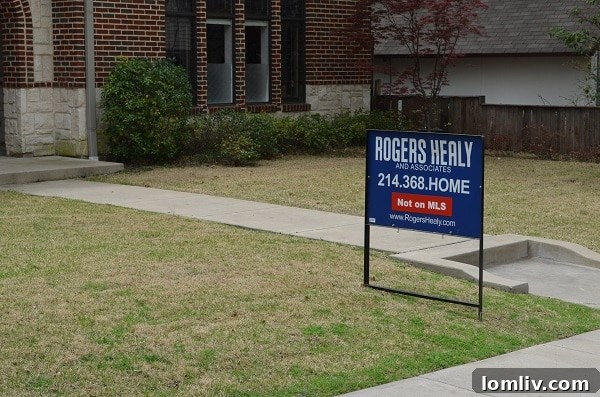
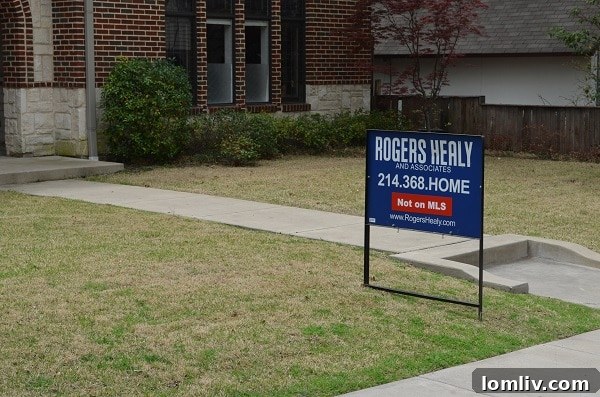
The rapid proliferation of off-MLS transactions inevitably brings forth a profound and critical question: will Facebook ultimately usurp the traditional Multiple Listing Service? Rob Hahn’s observations further underscore the scale of this disruption: nearly one-third of real estate transactions in Dallas were completed off MLS—these were private sales for homes that never formally entered the standardized system.
Challenges to Market Transparency and Accurate Valuations
This burgeoning trend introduces substantial challenges, particularly concerning market transparency and the accuracy of property valuations. The motivations driving sellers to bypass the MLS are multifaceted. Some prioritize enhanced privacy, preferring to keep their sale prices out of the public record, especially now that such data is often mandated for inclusion in the MLS. Others prioritize speed, leveraging the direct and efficient nature of social media transactions in a highly competitive and fast-paced market. Regardless of the underlying reasons, the net result is a fragmented data landscape that poses significant hurdles.
With “one-third of Dallas sales off MLS, how in the hec do we get decent comps? And is that leading to appraisal issues?” This is a paramount concern for appraisers, mortgage lenders, and ultimately, both buyers and sellers. Without a comprehensive and centralized database of all sales data, establishing reliable comparable sales (comps) becomes extraordinarily difficult. This deficit in data integrity can lead to significant discrepancies in property appraisals, potentially impacting mortgage approvals, increasing lending risks, and even distorting property tax valuations. The opacity introduced by a large volume of off-market sales risks undermining the very foundation of an efficient, equitable, and transparent real estate market.
Conversely, one might contend that the sheer momentum and buoyancy of a surging market could temporarily obscure these inconsistencies. When these off-MLS sales are eventually recorded, do they merely contribute to an overarching upward trend that masks deeper data challenges? Or does the market’s current strength simply elevate all property values, making appraisal issues less immediately apparent until a more significant market correction eventually occurs?
The Dallas Real Estate Market: A Hotbed of Unprecedented Activity
Despite, and perhaps in part due to, these evolving transaction methodologies, the Dallas real estate market continues to demonstrate exceptional vigor and resilience. Veteran appraiser Brian Hagan, associated with D.W. Skelton & Associates, offers a clear and confident assessment: “The market is increasing, and there’s no sign of a slow-down.” He projects that “If it stabilizes, it will be in the 3rd or 4th quarter of 2015.” This forecast emphatically underscores the current environment of unprecedented demand and intense competition.
Key Indicators and Desirable Dallas Neighborhoods
Hagan consistently observes an upward trajectory in pricing with every new listing across Dallas’s most prominent and sought-after neighborhoods. Areas like Park Cities, Devonshire (which he describes as “smokin’ hot”), Preston Hollow, Bluffview, and Lakewood are experiencing significant and sustained appreciation. These districts, celebrated for their prestige, premium amenities, and top-tier school systems, are driving much of the market’s growth. Illustrative examples abound, such as a remarkable $2.2 million transaction for a single acre on Alva Court, nestled within the highly coveted “honeypot” of Preston Hollow. Other high-profile sales include multiple properties along Strait Lane, and agent Erin Mathews’ recent closing of the “Wildwood” estate in Bluffview. These transactions are clear indicators of a truly buoyant market, exceeding even the record-setting performance of the previous year. Both January and February 2014 sales figures surpassed those of 2013, demonstrating consistent robust activity. For prospective buyers, this translates into a highly competitive landscape where sellers frequently receive full-price offers, and often even above asking, across various price ranges.

Understanding Price Points and Market Nuances
Delving deeper into specific price points, Hagan identifies the most active segment for buyers as the “$700K to $1.5M” range, where demand is strongest and market activity is most vigorous. However, for properties commanding prices exceeding “$2.3M,” the pool of potential buyers diminishes, leading to a less buoyant market in the ultra-luxury segment. This dynamic is perfectly exemplified by the Wildwood property (pictured above), which, despite its inherent grandeur, saw its price strategically adjusted from $9.75 million to $8,995,000 before ultimately securing a buyer. This illustrates that even within a fiercely hot market, strategic pricing remains a crucial factor at the highest echelons of the luxury segment.
Ryan Streiff with Dave Perry Miller offers another layer of valuable insight, observing that family homes built approximately ten to fifteen years ago, typically in the 6,000-ish square foot range—especially in Preston Hollow east of Preston Road—are now facing direct competition from newer builder homes. While these more contemporary constructions are consistently fetching full price, there is discernible “some price softening on those older McMansions.” This suggests a discerning market that increasingly favors modern amenities, contemporary design aesthetics, and perhaps improved energy efficiency, even within the premium and luxury market segments.
Conclusion: Dallas Dirt Remains Gold Amidst a Evolving Real Estate Frontier
The Dallas real estate market undeniably presents a land of significant opportunity, characterized by robust demand and consistently appreciating property values. The prevailing consensus among Dallas real estate insiders is unequivocal: “Dallas dirt is gold again, and will remain so for at least one more year.” However, this optimistic prognosis is intrinsically linked to, and set against, a backdrop of fundamental and transformative shifts in how real estate transactions are being conducted.
The rapid emergence of Facebook as a pivotal platform for off-market listings, spurred by influential industry voices like Rob Hahn, represents far more than a fleeting trend. It unequivocally signals a permanent evolution in the real estate landscape, directly challenging the traditional MLS to innovate, adapt, and redefine its core value proposition. While the conventional MLS continues to fulfill an essential role by providing comprehensive data and broad market exposure, the increasing prevalence of pocket listings, facilitated by the powerful reach of social media, necessitates a new, adaptable approach from agents, buyers, and sellers alike.
For real estate agents, success in this evolving environment hinges directly on digital savviness and the cultivation of a robust, well-connected network. For prospective buyers, a technologically adept and well-connected Realtor becomes indispensable for accessing exclusive, off-market opportunities. For the market as a whole, the central challenge lies in meticulously balancing market transparency and data integrity amidst a dual system of formal and informal listings. The Dallas market, with its relentless growth trajectory and unique blend of traditional luxury alongside modern digital transactions, serves as a compelling prime example of this complex, exciting, and perpetually changing real estate frontier. As the industry continues to navigate this profound transformation, adaptability, foresight, and strategic engagement with emerging platforms will prove paramount for all stakeholders involved.