Navigating Paradise: A Deep Dive into Hawaii’s Real Estate Market and Unique Challenges
As my flight back to Dallas approaches, it’s time to reflect on a truly enlightening journey through the Hawaiian Islands. This trip wasn’t just about tropical beaches and serene sunsets; it was an immersive exploration into Hawaii’s fascinating and often complex real estate landscape, a narrative I’ve meticulously chronicled for SecondShelters.com. What started as a simple inquiry blossomed into a comprehensive understanding of what makes this island paradise a unique, and at times perplexing, market for both residents and prospective buyers.
My journey began with a pivotal interview with Tracey Bradley, President of Berkshire Hathaway HomeServices in Hawaii. This conversation was particularly timely, following the fresh news of Allie Beth Allman’s recent acquisition by Berkshire. I sought to understand the strategic value and unique offerings a global powerhouse like Berkshire Hathaway brings to a distinct and culturally rich market like Hawaii. Their entry signals a growing interest from larger entities, potentially reshaping the local real estate dynamics and offering new avenues for investors and homebuyers.
A significant revelation came from a report released by the State of Hawaii, detailing the demographics of those investing in Hawaiian real estate. The findings were surprising, revealing a notable trend: 10.5% of mainland US buyers hail from Texas, accounting for a substantial 2.3% of all Hawaiian transactions. While California still holds the top spot, a fact unsurprising given its proximity and historical ties, Texas’s strong presence underscores a broader investment appeal. This influx of buyers, particularly from states like Texas, is driven by various factors, including the pursuit of vacation homes, retirement plans, or simply a desire for a different lifestyle, further fueling demand in an already competitive market.

The perpetual question for many aspiring homeowners is timing: “Is now the right time to buy?” To address this, I delved into thirty years of median sales prices for both condominiums and single-family homes across the islands. My analysis concluded that while the market is dynamic, it is not “bad” in the traditional sense. Given the prevailing prices and mortgage rates, a significant decrease in cost is unlikely. Hawaii’s limited land supply, continuous demand from both local and international buyers, and its enduring appeal as a premium destination collectively contribute to a robust, albeit high-priced, market. For serious investors or those dreaming of island life, understanding these long-term trends is crucial, suggesting that opportunities, while costly, often retain their value.
Beyond market analytics, one fascinating aspect I explored, though not initially included in my detailed reports, is the unique socio-political environment that shapes Hawaii. While many might compare it to the quirks of other states, Hawaii possesses a distinct brand of administrative fluidity – where few decisions ever truly feel “done-done.” This characteristic can present both cultural integration challenges and significant hurdles for development projects, leading to what I playfully call “Hawaii crazy.”
The “Hawaii Crazy” Chronicles: When Paradise Meets Bureaucracy
The “Hawaii crazy” phenomenon highlights a series of instances where approved projects faced unexpected reversals, often after substantial investment, due to legal challenges, environmental concerns, or strong local opposition. These cases are not just anecdotal; they offer critical insights into the risks and complexities of development in the islands, emphasizing the profound influence of community and environmental stewardship.
Crazy One: The Big Island Development Saga. Over a decade ago, a luxury housing development on the Big Island received all necessary building permits. Agricultural land was successfully upzoned for residential use, and the developer proceeded to invest heavily in essential infrastructure, including plumbing, electricity, and roads. Lots were sold, and construction began. However, with a majority of lots already purchased, a lawsuit emerged, eventually reaching the state Supreme Court. In a shocking decision, the court effectively un-permitted the development, leaving the developer and lot owners in a precarious position. It took years of intricate legal battles and countersuits to regain the necessary approvals, allowing the project to eventually proceed. This incident underscores the inherent unpredictability of development permits in Hawaii, even when initially granted, and the immense financial and emotional toll on all parties involved. While one can debate the merits of the initial permit or the subsequent lawsuit, the principle that “what’s done is done” often seems absent in Hawaii’s legal landscape.
Crazy Two: The Rise and Fall of the Superferry. Another striking example involves an independent company introducing the Superferry to Hawaii. This innovative service, designed to provide commuter transport for passengers and cargo between islands, promised to revolutionize inter-island travel. It gained state approval, leading to an investment exceeding $160 million in two vessels, alongside state-funded retrofitting of docks. Passengers could load their cars, offering unprecedented freedom to explore other islands. Yet, despite operating successfully for over a year without a single incident, the Superferry faced a lawsuit, primarily from environmental groups concerned about potential whale strikes from the fast-moving ships. Despite the state’s intervention and the project’s proven safety record, the Supreme Court once again intervened, effectively killing the Superferry. The lingering question of its demise often points to underlying influences, with some speculating that a company holding a monopoly on inter-island barge traffic may have played a role in stifling competition. Even years later, polls showed over 80% of Hawaiians desired its return, highlighting a lost opportunity for improved connectivity and economic activity.
Crazy Three: The Molokai Ranch Dilemma. In 2007, Molokai Ranch, a major landowner and the largest employer on the island of Molokai, proposed an ambitious development plan. It sought to build 200 luxury homes on 500 acres at La’ae Point. In exchange, the Ranch committed to constructing 1,100 affordable homes on another 500 acres, renovating the Kaluakoi Hotel to create jobs, and placing 51,000 of its 60,000 acres—nearly one-third of the entire island—into a permanent land trust for conservation or agriculture. This was a complex proposal aimed at balancing economic development with significant environmental and social benefits. However, strong opposition from the local population, deeply protective of Molokai’s unique character and cultural identity, ultimately led to the deal’s collapse. Frustrated by mounting losses, Molokai Ranch ceased all its operations for nearly six years. This devastating closure impacted numerous local businesses, including the Molokai Lodge, Kaupoa Beach Village, Kaluakoi Golf Course, Maunaloa gas station, and Maunaloa Town Cinemas, leaving Molokai residents without their primary employer and essential services. They even attempted to abandon their utilities, which provided water to a third of the island, before state intervention. Ranch operations only tentatively restarted in 2013, a stark reminder of the delicate balance between external investment and community values.
Crazy Four: The Mauna Kea Telescope Controversy. The controversy surrounding the Thirty Meter Telescope (TMT) on Mauna Kea on the Big Island embodies the ongoing tension between scientific advancement and cultural reverence. In 2007, plans for a new 30-meter telescope, intended to join other world-class observatories on the mountain, were met with fervent opposition. Native Hawaiians consider Mauna Kea a sacred place, and many viewed the new telescope as a desecration of their ancestral lands. Protests, often prolonged and passionate, effectively halted construction. Despite state approval, the project was once again brought before the Supreme Court, which subsequently stopped its development. This highly publicized dispute pitted cutting-edge astronomy against deeply held cultural beliefs. The irony is not lost on observers that ancient Hawaiians were master navigators, using the very stars studied from Mauna Kea as their guides. The outcome, largely influenced by a coalition of protestors, including notable figures like actor Jason Momoa, highlights the powerful role of cultural preservation and community activism in Hawaii, even over projects deemed vital for scientific progress.
Crazy Five: Oahu’s Light Rail Project. Currently under construction on Oahu is the state’s first commuter train project, an ambitious undertaking aimed at alleviating Honolulu’s notoriously congested traffic. This project has been plagued by years of bickering, delays, and staggering cost increases. While eventually approved and now visibly taking shape, it continues to face persistent opposition. Critics tirelessly seek ways to halt or dismantle it, questioning the billions already spent and demanding assessments of the cost to remove what has been built. The ongoing debate underscores the deep divisions within the community regarding infrastructure development. Given the history of Hawaiian projects, one cannot help but wonder about its long-term viability. My personal prediction remains cautious: if it ever fully opens, it faces a significant risk of being shut down, abandoned, or even removed within a few years. Such is the enduring, unpredictable nature of large-scale public works in Hawaii.
These “Hawaii crazy” stories, while distinct from the “Texas crazy” or “Florida crazy” narratives often heard on the mainland, reveal a deeply ingrained cautiousness and a powerful emphasis on local control and environmental protection. It’s a comforting kind of crazy, perhaps, if you appreciate slow progress and profound community influence. But enough about political quirks for now.
Exploring Hawaii’s Diverse Real Estate Offerings: From Luxury Estates to Accessible Condos
My exploration next turned to the more tantalizing aspects of real estate – what I affectionately call “real estate porn.” This included an exclusive look at Oahu’s most extravagant homes. First, I delved into The $20-Million Club, showcasing properties that redefine luxury living. This was quickly followed by an exposé on The $30+-Million Club, featuring estates that truly command awe. These segments highlighted not just opulent residences but also expansive vacant lots with storied pasts, sprawling hillside estates, and breathtaking oceanfront properties so desirable one might consider drastic measures to acquire them. Each property represents the pinnacle of Hawaiian luxury, offering unparalleled views, architectural grandeur, and exclusive amenities that cater to the most discerning buyers.
Moving from aspirational to attainable, I then focused on more accessible second homes and condominiums – properties that readers beyond the likes of Mark Cuban could consider. In Hawaii, “affordable” often translates to “under-$1-million.” I began at the more modest end, exploring options in the $200,000 to $400,000 range. These typically included smaller units, sometimes without direct views, but offering a genuine foothold in the Honolulu market. Progressing to the middle tier, I featured properties in the $400,000 to $700,000 bracket, where options expanded to include larger units, better amenities, and occasionally partial views. Finally, I covered the $700,000 to $1,000,000 category, revealing fairly spacious units with intriguing stories and increasingly desirable locations. This segment offered a practical guide for diverse buyers, from those seeking a compact city pied-à-terre to families looking for a more substantial island retreat.
Amidst my real estate deep dive, I had the pleasure of attending a vibrant holiday charity gala co-hosted by Honolulu’s premier furniture showroom, C. S. Wo, and Neiman Marcus. This marked their 16th year collaborating for a noble cause, a testament to their commitment to giving back to the community. The evening was a delightful blend of elegance and conviviality, with guests enjoying champagne and an array of exquisite Asian appetizers while mingling amidst the showroom’s stunning displays. A particular highlight was meeting Amos Kotomori, a clothing and bedding designer whose work I admire. It remains a mystery why his unique creations are exclusively available at the Honolulu Neiman’s – a strong hint for any NM Menswear buyers out there!
My series, in some respects, circled back to its origins from earlier this year, with an updated focus on the transformative redevelopment in Honolulu’s Kaka’ako area. Visiting in person allowed for a far more impressive appreciation of Howard Hughes’ Ward Village vision. The progress here is palpable, showcasing a thoughtful creation of a high-rise neighborhood with modern amenities and a vibrant community atmosphere, often surpassing the efforts of other developers in the vicinity. Kaka’ako stands as a beacon of urban renewal, blending contemporary living with Hawaii’s unique charm.
No Hawaiian roundup would be complete without a touch of local intrigue. While on the islands, I couldn’t help but pick up on the persistent local rumors surrounding the President’s post-White House abode. It seems to be an open secret among islanders that the iconic Magnum P.I. estate, purchased earlier this year by friends of the Obama family, will likely serve as at least a part-time residence for the former First Family. This speculation adds another layer of celebrity allure to Hawaii’s already captivating real estate narrative.
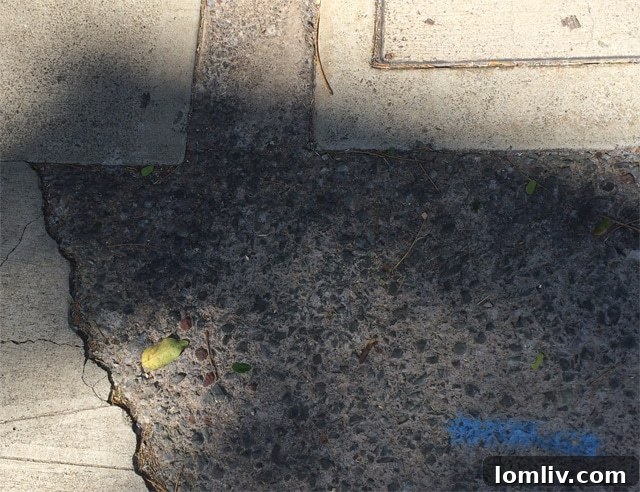
Still not convinced of Hawaii’s unique charm and its intricate blend of tradition and modernity, practicality and paradox? Just observe this seemingly random concrete pattern, a subtle talisman often found on the islands. It’s a whimsical reminder of the unexpected discoveries and hidden connections that define the Hawaiian experience. I rest my case!
Aloha until next year, when I hope to uncover even more layers of this enchanting and challenging paradise!
Engage With Us: Do you have an intriguing HOA story, a fascinating piece of high-rise history, or a unique real estate listing you’d like to showcase, perhaps one in need of renovation or a dazzling success story? Realtors, we invite you to feature your properties! Or, perhaps you’re interested in hosting a Candy’s Dirt Staff Meeting? We even accept marriage proposals (they’re legal now)! Feel free to reach out to Jon via email: [email protected]. We look forward to hearing from you!