Preserving Dallas’s “House of the Future”: The Bianchi House’s Urgent Call for Restoration
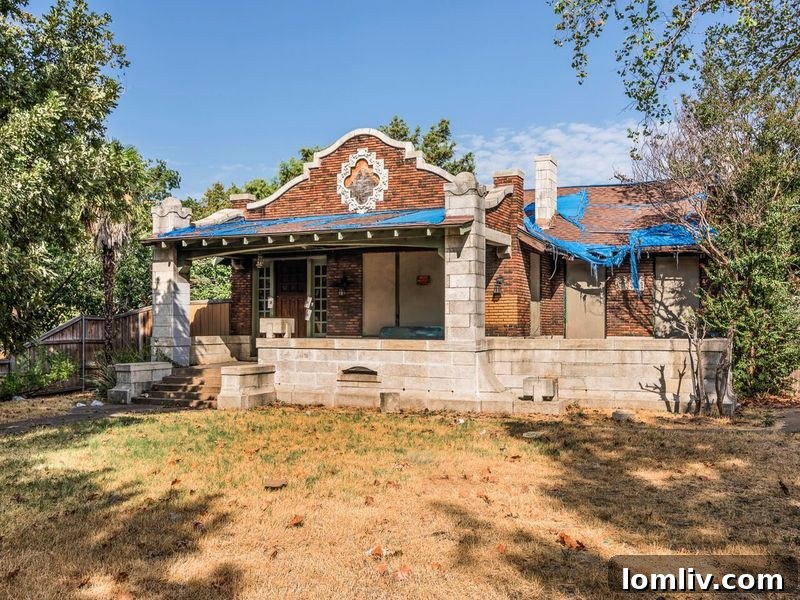
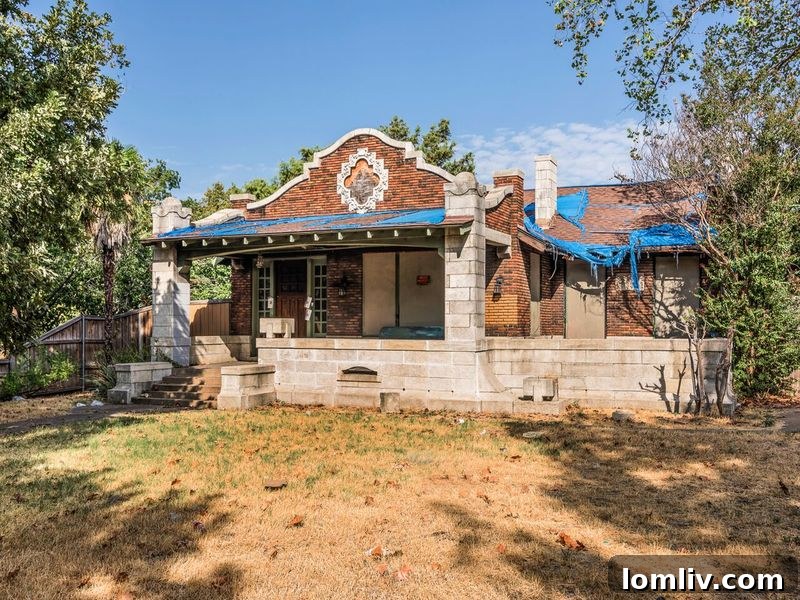
The venerable Bianchi House, a century-old architectural marvel situated at the prominent corner of Carroll and Reiger in East Dallas, has been granted a reprieve, at least for the immediate future. This iconic 104-year-old residence, designed by the celebrated firm of Otto Lang & Frank Witchell and famously displayed as the “House of the Future” at the 1936 Texas Centennial Exposition, successfully navigated a crucial Dallas Landmark Hearing on Monday afternoon. This significant step marks a hopeful beginning for the diligent efforts aimed at the comprehensive preservation and restoration of this truly unique and historic property, a beacon of early 20th-century innovation now teetering on the brink of irreversible decay.
A Glimpse into the Present: A Tarnished Gem in Urgent Need
Despite its rich history and undeniable architectural pedigree, the current state of the Bianchi House paints a stark picture of profound neglect. Robert Wilonsky of the Dallas News aptly described it as an “Airbnb for the homeless,” a grim reality underscored during a recent, sobering visit. Lisa Marie Gala, founder of DEEP (Dallas Endowment for Endangered Properties, Inc.), and I personally encountered a gracious but undeniably dispossessed individual camping out on the porch, a poignant and disturbing testament to the building’s severe vulnerability and abandonment.
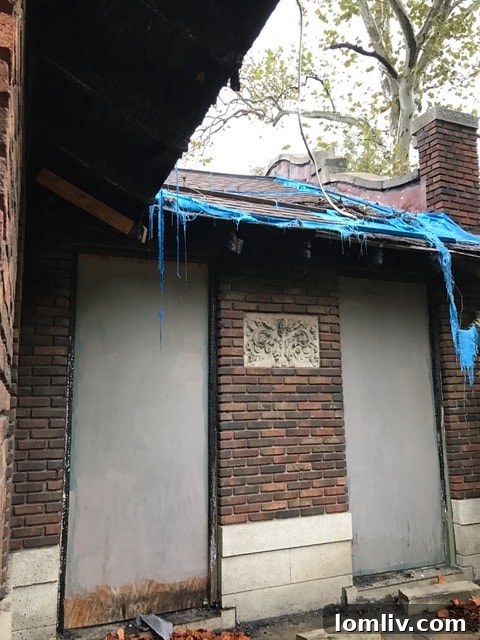
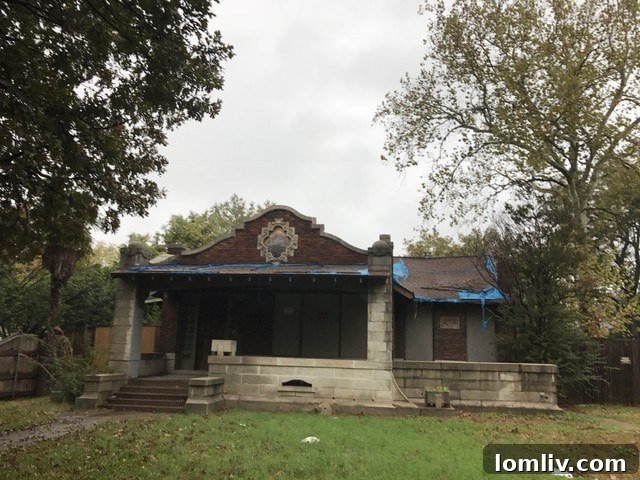
The house bears the unmistakable scars of time and sustained neglect: an attic fire, having occurred nearly three years ago, has severely compromised, if not entirely destroyed, a significant portion of its roof, now grotesquely covered by tattered strips of blue tarp. Its windows are haphazardly boarded up, obscuring the once-grand interiors and preventing natural light from illuminating its historical spaces. Outside, weeds proliferate wildly, reclaiming the grounds with unchecked abandon, symbolically mirroring the house’s descent into disrepair. Adding to the immense complexity of its precarious situation, the current owner, Rick Leggio, a former Dallas Plan Commissioner, has proven virtually unreachable. This unfortunate communication barrier severely impedes any discussions regarding much-needed repairs or a potential sale, leaving this invaluable historic property in a frustrating and critical state of limbo.
The Urgent Plea for Preservation: Rescuing a Dallas Landmark
The Bianchi House stands in dire need of immediate intervention and meticulous care. A growing chorus of impassioned preservationists unequivocally advocates for the home’s meticulous restoration and safeguarding, fervently opposing any plans for demolition. This stance is particularly critical given the city’s unfortunate propensity to raze properties burdened with extensive lists of code violations and visible signs of disrepair, such as the conspicuous tarp currently covering a damaged section of the roof. To allow such a significant landmark to be lost would be to erase a tangible piece of Dallas’s architectural and cultural narrative.
Since September 2015, the Bianchi House has been a prominent fixture on Preservation Dallas’s critically important “most-endangered list,” a stark warning sign for its future. Its roof, a grim indicator of its struggles, is adorned with tattered strips of blue tarp – a makeshift and insufficient repair following an attic fire that occurred almost three years prior. Further evidence of its pervasive decay is tragically visible where a substantial concrete section of the house has dislodged and now lies swallowed by the surrounding overgrowth, a testament to its deteriorating structural integrity.
Despite these alarming and visible signs of advanced decay, an intriguing and somewhat perplexing detail persists: the property taxes for the Bianchi House continue to be paid, either by Mr. Leggio himself or by an undisclosed party. This fact, while seemingly minor, adds another layer of complexity to the ongoing efforts to secure the future of this unique Dallas landmark, raising questions about ownership intentions amidst the ongoing deterioration.
DEEP’s Commitment: A Beacon of Hope for Dallas’s Architectural Heritage
As the intricate process to determine and secure the long-term fate of the Bianchi House unfolds, the Dallas Endowment for Endangered Properties, Inc. (DEEP) has stepped forward with unwavering commitment and a clear vision. DEEP has pledged to diligently monitor this crucial journey and to actively fundraise towards the ambitious and essential goal of acquiring or purchasing the home. Their ultimate vision involves its complete and sympathetic restoration, the implementation of vital deed restrictions to protect its historical integrity indefinitely, and ultimately, a responsible re-sale to a new steward committed to honoring and maintaining its legacy. This comprehensive approach ensures that once saved, the Bianchi House will continue to thrive for generations to come, contributing significantly to the fabric of East Dallas.
The “House of the Future”: A Visionary Design for 1936
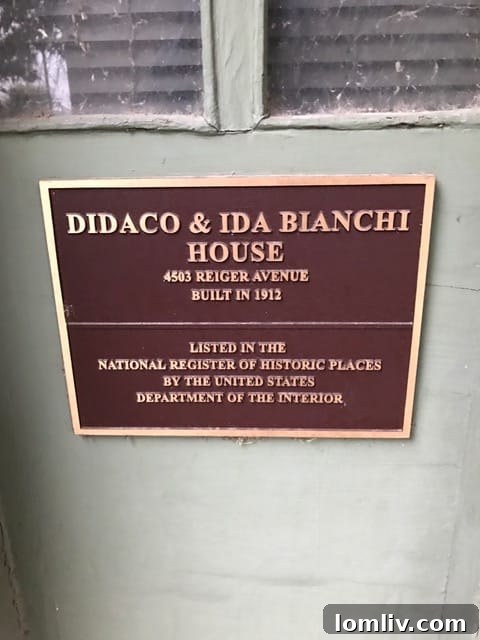
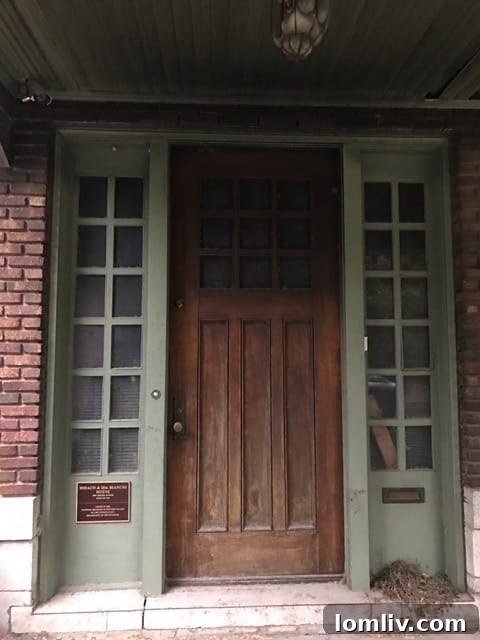
The Bianchi House, located at 4503 Reiger, earned its illustrious moniker as the “House of the Future” during the seminal 1936 Texas Centennial Exposition at Fair Park. This designation was far from merely symbolic; it reflected truly cutting-edge innovations that set audacious new standards for residential design and comfort. The home boasted advanced ventilation and plumbing systems, features that were considered highly sophisticated and progressive for their time, dramatically improving indoor living conditions.
Perhaps even more remarkably, it included novel conveniences that are commonplace today but were groundbreaking then: dedicated closets in every room. This design element was so revolutionary and luxurious for its era that it was considered a monumental achievement in domestic architecture. Today, we often take such amenities for granted, demanding not just closets but multiple bathrooms and smart home features; however, in 1936, the mere inclusion of a dedicated closet in each bedroom was a genuine statement of modern living and forward-thinking design, emphasizing convenience and organization.
Further demonstrating its truly futuristic ethos, the Bianchi House incorporated automated lighting – a precursor to modern smart home technologies. Lights would come on automatically upon the opening of a closet door, an ingenious and incredibly innovative feature for the era that showcased a profound understanding of user convenience and technological integration into daily life. Such details solidify its place as a truly visionary residence that pushed the boundaries of what a home could be.
The Masterminds Behind the Vision: Lang & Witchell and Didaco Bianchi
Otto Lang & Frank Witchell: Architects Who Defined Dallas’s Skyline
Otto Lang and Frank Witchell were not merely architects; they were pivotal figures whose firm played an instrumental role in shaping the very identity and urban landscape of Dallas during a period of rapid growth and transformation. Their extensive portfolio comprises an impressive array of iconic city landmarks, each leaving an indelible mark on its urban fabric. Among their many celebrated designs are the imposing Dallas Power & Light Building, a testament to industrial modernity; the distinguished Lone Star Gas Company Headquarters, reflecting corporate grandeur; the opulent Sanger Bros. Department Store, a hub of commerce and fashion; and the magnificent Music Hall at Fair Park, a cultural cornerstone. Their work consistently combined architectural grandeur with functional innovation, earning them a well-deserved reputation as visionaries of their time, responsible for some of Dallas’s most enduring structures.
Didaco Bianchi: Sculptor, Builder, and Artisan of Enduring Beauty
The Bianchi House itself was a deeply personal project, meticulously built by and for the esteemed Italian sculptor, Didaco Bianchi, who also served as a highly skilled general contractor for Lang & Witchell. Bianchi’s profound expertise extended far beyond conventional construction; he was also a part-owner of the Southwest Architectural Cement Stone Company. This specialized company focused on producing high-grade concrete, often enriched with exquisite marble chips, which was then meticulously used for intricate architectural elements such as pilasters, capitals, and delicate inlays. These premium materials graced many prominent buildings of the era, though sadly, many of those grand structures, like Dallas’s Tabernacle Church and Oriental Hotel, no longer stand, making the Bianchi House an even more precious survivor.
Bianchi’s direct and personal involvement in the construction of his own home unequivocally explains its unique blend of architectural styles and profound artistic flourishes. While outwardly presenting as a classic Mission Revival house, its interior reveals exquisite decorative plasterwork, ornate pilasters (which he meticulously cast himself with the precision of a sculptor), and an astonishing mantelpiece cast from a single, seamless piece of concrete. This deeply personal touch and artistic commitment highlight his unparalleled mastery of both construction and sculpture, culminating in a residence that was truly a living, breathing work of art, designed to both inspire and endure.
This remarkable craftsmanship, particularly Bianchi’s innovative and expert use of concrete, also explains the enduring strength and sculptural beauty that defines the house. Even after suffering a devastating fire, the stone elements impressively retain their artistic interest and structural integrity, and the deep red bricks remain sharply defined, a powerful testament to the superior quality of materials and the exceptional construction techniques employed. Didaco Bianchi’s formidable legacy continued through his family; his devoted widow raised their two sons in the house until her passing in 1979, preserving its familial history for decades.
An enduring anecdote, shared by Bianchi’s son, Teddy, with Rick Leggio, speaks volumes about the home’s exceptional and foresightful construction. When Didaco Bianchi laid the piers for the house a remarkable 17 feet deep – an extraordinary depth for residential foundations – concerned neighbors, mistakenly believing he was constructing a commercial structure in a residential area, sought an injunction to halt construction. This extraordinary foundation is precisely why the home remains exceptionally “rock solid” to this day, a fortress of durability. An article about Leggio and the house in the *Advocate*, published in 2000, further attests to the house’s incredible resilience and meticulous craftsmanship, noting that the impressive concrete mantel still remains “as smooth as satin.” Such profound details underscore the unparalleled quality, innovative design, and engineering foresight embedded in its original creation, making its preservation all the more critical.
DEEP’s Mission: Securing Dallas’s Architectural Future for Generations
The Dallas Endowment for Endangered Properties (DEEP) is not merely a reactive organization responding to crises; it represents a proactive and deeply innovative approach to historic preservation within our vibrant city. We at DEEP are passionately committed to moving beyond mere advocacy, actively working to acquire and physically save vital and worthy endangered structures across Dallas, preventing the irreplaceable loss of our collective heritage. The concept of an endowment fund was thoughtfully identified as the most effective and sustainable mechanism to generate the necessary capital to fulfill this ambitious mission, providing long-term financial stability for preservation efforts.
DEEP was, in fact, the visionary brainchild of the late, greatly esteemed Neil Emmons, whose profound dedication to preserving Dallas’s architectural heritage continues to inspire our work every single day. His enduring legacy lives on through every effort we make to save significant properties like the Bianchi House. We recognize the profound cultural, historical, and aesthetic value these structures hold, and we firmly believe that their loss represents an irreplaceable diminishment of our collective identity and a void that can never truly be filled. Our commitment is to ensure these treasures stand as testaments to Dallas’s rich past, informing and enriching its future.
For those passionate about safeguarding Dallas’s architectural treasures and contributing directly to the vital restoration of properties like the Bianchi House, we extend a heartfelt invitation to learn more about our critical mission and tangible impact. Please visit DEEP – Dallas Endowment for Endangered Properties, Inc. or make a direct, secure contribution through our dedicated donation website: www.endowdeep.com. Your generous support is absolutely crucial in ensuring that Dallas’s extraordinary “House of the Future” truly has a future worth living, celebrated, and preserved for all.