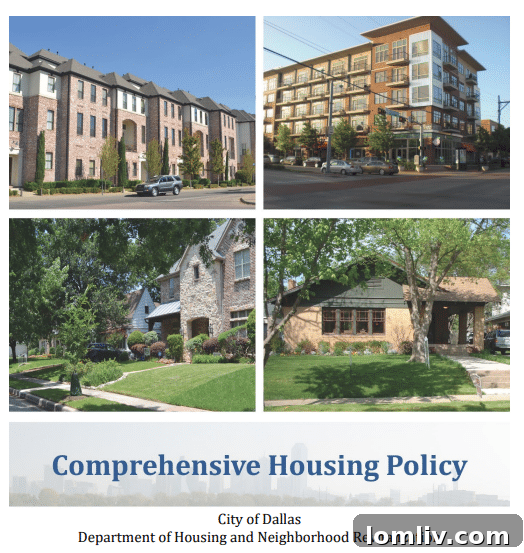
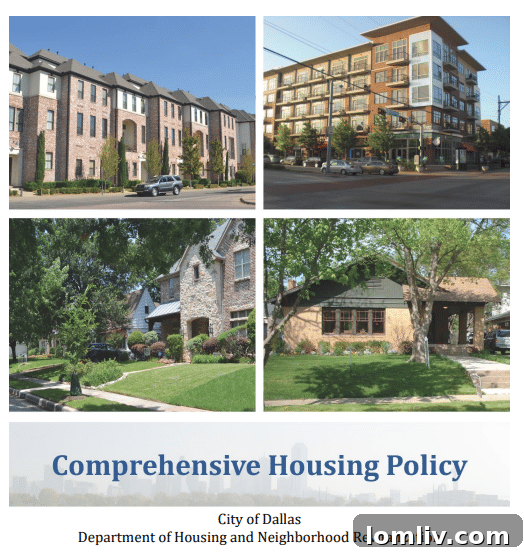
The quest for equitable and accessible housing remains a pressing challenge for many rapidly growing urban centers, and Dallas is no exception. The city is once again embarking on a critical endeavor: developing a refined strategy to address the pervasive issues of mixed-income and affordable housing. While the blueprint for change is taking shape, its ultimate success hinges not merely on policy documents but on the active participation of private investors, the robust buy-in from the community, and an unwavering commitment from the city council to elevate housing to its rightful position as a top priority. This ambitious undertaking aims to bridge the significant gaps in housing accessibility, ensuring that Dallas remains a city where diverse populations can thrive.
At the forefront of these vital discussions is District 1 Councilman Chad West, whose constituents in Oak Cliff grapple daily with the complexities of the evolving housing market. Councilman West has been a vocal advocate, posing incisive questions and diligently gathering insights from various stakeholders. His objective is to foster a deeper understanding between the development community and the numerous residents who aspire to live and contribute to Dallas but are increasingly priced out of the market. His efforts highlight the urgent need for practical, implementable solutions that resonate with both economic realities and community needs.

Recognizing the immense scope and inherent complexities of crafting a truly effective Comprehensive Housing Policy (CHP), Councilman West has advocated for a more specialized and streamlined approach to policy development. In a recent communication to city staff, he emphasized, “The scope and complexity of what is needed in a new [Comprehensive Housing Policy] is so large that [Housing and Homelessness Solutions] cannot provide sufficient council feedback during agenda-filled monthly meetings.” To counter this, West proposed the formation of a dedicated advisory committee. He suggested a 12- to 15-member CHP advisory committee, composed of subject matter experts, housing thought leaders, and neighborhood representatives. This body, he argued, should function similarly to the highly successful Economic Development Task Force, allowing for focused discussions and expert input. Such a committee, West believes, would not only enhance the quality of the final policy but also significantly accelerate its development and implementation, ensuring that the city’s housing strategy is both robust and responsive.
As of the time of this report, there has been no official confirmation regarding the establishment of such a vital task force. However, the city is moving forward with planned community engagement. A two-day strategy session is scheduled for October, specifically designed to gather broad community input and perspectives on the new housing plan. This will be followed by a crucial briefing to the city council in December, where findings and preliminary recommendations will be presented, marking key milestones in the policy’s progression.
The Evolving Comprehensive Housing Policy (CHP)
The city of Dallas first established its Comprehensive Housing Policy (CHP) in 2018, a foundational document designed to guide its housing initiatives. Recognizing the dynamic nature of urban development and housing needs, the policy was revisited and amended earlier this year, in May, to ensure its continued relevance and efficacy. To assist in developing the next, even more robust iteration of this pivotal policy, the city has enlisted the expertise of TDA Consultants, a firm specializing in strategic planning and urban development.

The overarching purpose of the CHP is multifaceted yet clear: to strategically create and meticulously maintain a diverse range of available and affordable housing options across all neighborhoods of Dallas. Beyond mere construction, the policy aims to actively promote greater fair housing choices, dismantle historical patterns of segregation, and mitigate concentrations of poverty. This is achieved through a carefully calibrated system of incentives for developers who align with the city’s goals and stringent requirements that ensure equitable housing practices. The policy seeks to create a more inclusive urban landscape where housing access is not dictated by income or background.
David Noguera, the dedicated director of housing and neighborhood revitalization, elaborated on the core principles guiding the CHP. He explained that a key intention behind the policy was to strategically direct the development of affordable housing into high-opportunity areas – neighborhoods characterized by access to quality schools, jobs, public transportation, and amenities. Simultaneously, it aimed to introduce unrestricted, or market-rate units, into high-poverty areas. This dual approach is designed to foster economic integration and prevent further spatial isolation based on socioeconomic status. “It was also intended to redevelop some of our blighted communities,” Noguera added, emphasizing the policy’s role in urban renewal and revitalizing neglected areas. He further clarified the financial philosophy underpinning the CHP: “Much of the funding that was allocated through the housing policy was offered on a repayment basis with the intention that we would be able to recycle the funds and use them moving forward,” highlighting a sustainable financial model for continuous investment in housing.
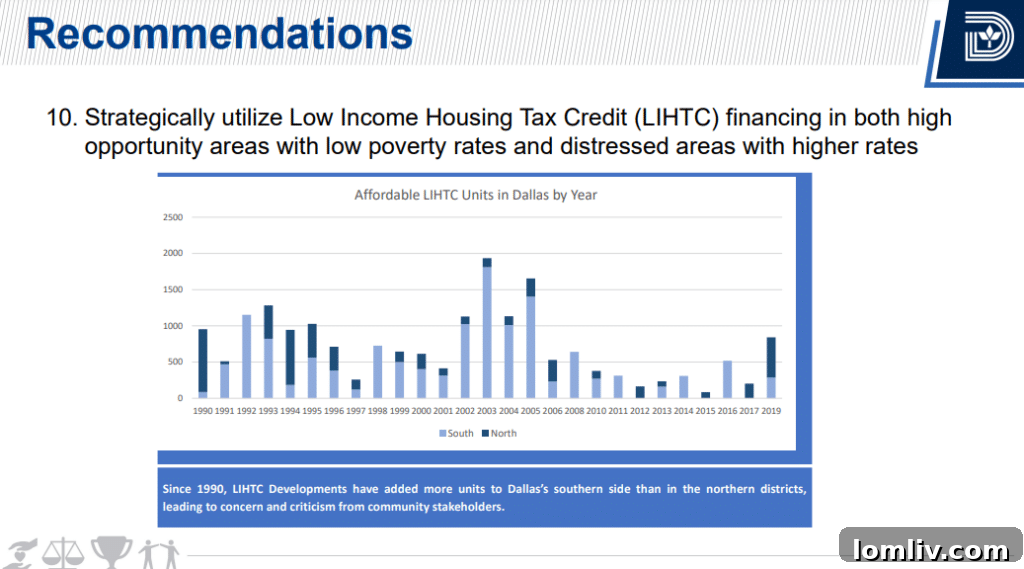
Since its inception four years ago, the CHP has demonstrably leveraged various financial and regulatory tools to bolster affordable housing development. Noguera pointed to significant achievements, noting that the city has successfully utilized tax credit resolutions and density bonuses to stimulate construction. Specifically, a pipeline of more than 5,600 units has been developed through density bonuses, which allow developers to build more units than typically permitted in exchange for including affordable housing. Additionally, over 4,300 units have been created through the Low-Income Housing Tax Credit Program, a crucial federal initiative that provides incentives for private developers to build and rehabilitate affordable rental housing. While these numbers represent substantial progress, the persistent demand for affordable housing underscores the ongoing need for innovative and aggressive strategies.
Ambitious Goals for an Inclusive Future
City officials candidly acknowledge that building and restoring public trust is an indispensable component of any successful housing strategy moving forward. This understanding forms the bedrock upon which the updated Comprehensive Housing Policy (CHP) will be built. To guide this process, the city has meticulously outlined a series of ambitious yet critical goals, which are slated for in-depth discussion at the forthcoming strategy workshop in October. These goals reflect a holistic approach to housing, addressing not only the physical structures but also the social, economic, and historical contexts that shape housing inequities in Dallas:
- Reimagine Community Engagement: This goal seeks to move beyond traditional public meetings to create more inclusive, accessible, and impactful ways for residents to participate in the planning process, ensuring that community voices genuinely shape policy.
- Embrace the History of Dallas’ Struggles with Race and Ethnicity: Recognizing the historical legacy of discriminatory housing practices and systemic inequalities, this goal aims to confront past injustices head-on and integrate equitable solutions into future planning.
- Measure Housing Needs: To create effective solutions, it is crucial to accurately assess the full spectrum of housing needs across all income levels and demographics, utilizing robust data and comprehensive analysis.
- Invest in Housing Development: This involves allocating sufficient financial resources and creating attractive incentives for both public and private sector partners to construct new, diverse housing options, including mixed-income and affordable units.
- Preserve Affordable Single-Family and Multi-Family Housing: Beyond new construction, strategies are needed to protect existing affordable housing stock from demolition, conversion, or rising costs that could displace current residents.
- Expedite Service Delivery: Streamlining bureaucratic processes and accelerating the delivery of housing-related services, permits, and assistance programs is essential to meet urgent needs and maintain developer interest.
- Cultivate Nonprofit Capacity: Strengthening the operational and financial capabilities of local nonprofit organizations dedicated to housing is vital, as they often serve the most vulnerable populations and can implement programs with greater community trust.
- Eliminate Infrastructure Deficit: Adequate infrastructure, including water, sewer, roads, and utilities, is fundamental for housing development. This goal aims to address existing deficits, particularly in underserved areas, to support new construction.
- Dedicated Revenue Stream: To ensure the long-term sustainability of housing initiatives, the city aims to establish a consistent and reliable funding source, reducing dependence on intermittent grants or one-time allocations.
- Anti-Displacement Strategy: As areas undergo revitalization, there is a risk of gentrification displacing long-term residents. This goal seeks to implement proactive measures to protect existing communities and ensure they benefit from new investments.
Navigating Formidable Challenges
Despite the ambitious goals and dedicated efforts, Dallas’s pursuit of comprehensive housing solutions is fraught with significant challenges. One primary hurdle is the inherent “lack of market flexibility,” which refers to market conditions that make it difficult for developers to create and sustain affordable housing without substantial public subsidies or innovative financial models. Additionally, there has been a notable “lack of community-led strategies,” meaning that too often, housing plans are conceived without sufficient input and leadership from the very communities they are intended to serve. This can lead to solutions that do not adequately address local needs or garner community support.
Adding to these complexities is the “high bar for developers” interested in creating mixed-income housing in Dallas. As David Noguera explained, developers must possess a proven track record of successful projects within the city and present well-funded proposals to even qualify for consideration. While this standard aims to ensure project quality and financial viability, it can inadvertently exclude smaller, potentially more community-focused developers who may lack extensive prior experience in Dallas or access to large capital pools, thus limiting the diversity of development approaches.
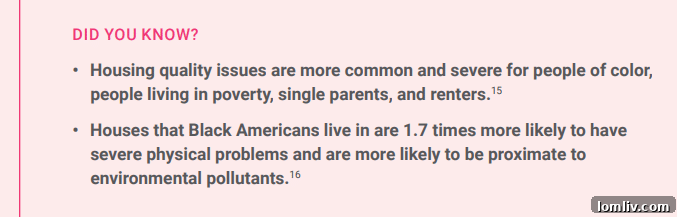
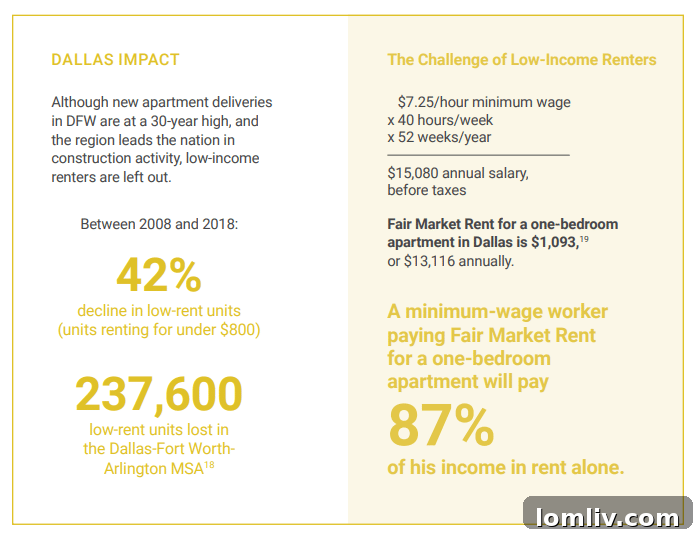
Compounding these operational challenges is the stark reality of shrinking housing affordability, a crisis that disproportionately affects Black and Latino households in Dallas. This critical finding is not merely anecdotal but is consistently highlighted across various authoritative reports, including the city’s own CHP report. Further corroboration comes from Dallas’s recently-adopted Racial Equity Plan and the comprehensive housing report by the Child Poverty Action Lab. These documents collectively underscore the deep-seated systemic inequalities that perpetuate housing disparities, making it imperative for the new housing policy to embed racial equity at its core.
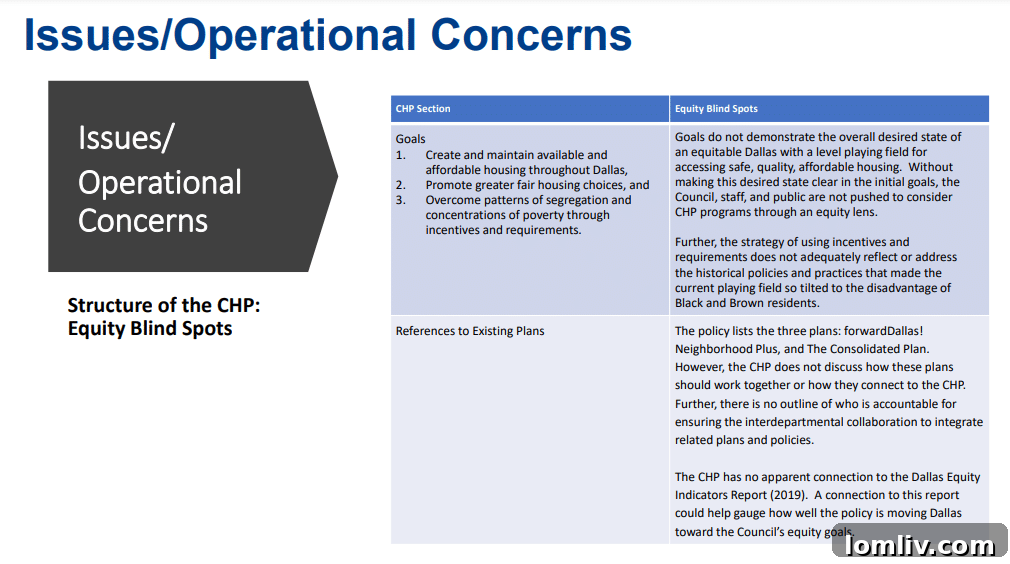
Despite the comprehensive nature of the plan, Councilman West has voiced significant concerns, contending that the current iteration “lacks vision.” He criticized a preliminary vision statement presented in a May meeting of Housing and Homelessness Solutions, which simply stated, “Every resident in all 14 districts has affordable, quality housing.” West deemed this statement “inadequate, vague, and generic,” arguing that it fails to inspire or provide clear direction. He further expressed a desire for the plan to comprehensively address all housing needs, spanning the entire spectrum from the lowest area median income (AMI) segments – those in dire need of deeply affordable options – to market-rate housing, ensuring a truly inclusive approach that caters to diverse economic situations.
West also pinpointed a critical, long-standing systemic issue impacting the city’s ability to implement past housing plans effectively. “The primary reason for the city’s inability to successfully implement past housing plans is because it lacked the staff, and the expertise to do so,” West asserted, highlighting a persistent organizational deficiency. He lamented, “That appears not to have changed,” suggesting that without addressing these internal capacity issues, even the best-intentioned policies could falter. His critique extended to the city’s perceived inability to mobilize adequate public and private funding for housing programs. He drew comparisons to other progressive cities like Austin, Atlanta, and Seattle, which have successfully established new public revenue sources and adeptly harnessed private-sector investments to achieve their housing equity goals. “The private sector in Dallas has not been engaged in scaling up and leveraging the impact of CHP programs,” West observed, emphasizing the need for a paradigm shift. He concluded that “the only way to reverse course is to engage with private sector leaders as true partners,” advocating for collaborative strategies that move beyond mere financial transactions to genuine, shared commitment.
Forging Connections Through Community Engagement
The coming months are slated to be a period of intensive stakeholder and community engagement, a crucial phase in the development of Dallas’s refreshed Comprehensive Housing Policy (CHP), as highlighted by David Noguera. Consultants advising the city have stressed the imperative for the new plan to be “sustainable for several years,” underscoring the need for a robust framework that can withstand evolving economic conditions and housing demands. This sustainability requires not just innovative policies but also enduring partnerships and a consistent commitment from all sectors.
Encouragingly, initiatives from the private sector are already complementing the city’s efforts. For instance, Bank of America has introduced a targeted initiative offering zero-down mortgages specifically to Black and Latino households in Dallas, addressing historical barriers to homeownership for these communities. The city is also proactively engaging with a broader array of private-sector stakeholders, seeking to leverage their capital, expertise, and innovative solutions to significantly expand housing options. This collaborative approach aims to create a powerful synergy between public policy and private investment.
Noguera emphasized the critical importance of incorporating diverse perspectives into the policymaking process. “We’re also looking at ideas coming from the community,” he stated, highlighting a commitment to bottom-up solutions. He recounted a recent meeting where “one of the key messages there was community outreach.” Acknowledging the complexity of the issue, he humbly added, “I feel like I’m a pretty sharp person, but I know I don’t have all the answers. I want to make sure that whatever recommendations I’m bringing forward are not just from my own experience, but those from the community and what they see as being most important to being articulated in the programs and initiatives that we bring forward.” This statement reflects a genuine desire for participatory planning, ensuring that the final policy truly reflects the needs and aspirations of Dallas residents. Furthermore, city leaders are proposing a significant 2024 bond package that would allocate an impressive $300 million to housing infrastructure over the next decade. This substantial investment would support crucial underlying infrastructure necessary for housing development, such as utility upgrades, transportation access, and land acquisition, laying the groundwork for future growth and affordability.
Rectifying Past Missteps and Ensuring Integrity
The current iteration of the Comprehensive Housing Policy (CHP) represents a significant step forward, particularly in prioritizing housing investments. Assistant City Manager Majed Al-Ghafry, in an August 18 memo to city council members, outlined the strategic approach: the CHP initially prioritizes investments in Dallas’s strongest real estate markets, primarily those located north of Interstate 30. The underlying expectation is that the catalytic effect of this development will, over time, gradually spread to the city’s neediest neighborhoods, fostering broader revitalization.

The memo also sheds light on the challenging circumstances under which the original CHP was formulated. It explicitly states, “Dallas’ CHP was developed at a time when the city was managing more than $50 million in noncompliance audit findings.” This period was further compounded by serious allegations, as the memo reveals, “At the time, certain individuals working on housing projects were being investigated for bribery charges relating to the act of wasting city resources.” These revelations underscore a past marked by significant financial mismanagement and a lack of accountability, creating a profound need for systemic reform.
Against this backdrop of past malfeasance, the CHP emerged as a critical safeguard. The memo proudly asserts that the policy “created a compliance framework that has effectively deterred ‘bad actors’ who would otherwise misuse city resources.” This framework introduces stringent oversight, transparent processes, and robust accountability mechanisms designed to prevent corruption and ensure that public funds are utilized ethically and efficiently for their intended purpose. To further solidify its integrity, the city’s 13 housing programs and their associated rules and guidelines are all meticulously maintained within the CHP document itself. Al-Ghafry emphasized that these critical provisions “cannot be changed without city council approval,” ensuring a vital layer of checks and balances that prevents arbitrary alterations and maintains the policy’s consistency and fairness. Spanning an extensive 153 pages, the CHP serves as a detailed blueprint, articulating the city’s ambitious housing goals and providing a comprehensive roadmap for their achievement, reflecting a deep commitment to rectifying past mistakes and building a more transparent and equitable housing future for all Dallas residents.