North Texas Forges Ahead: Pivotal Development and Infrastructure Decisions in Fort Worth and Dallas
North Texas continues to be a hotbed of growth and economic activity, with both Fort Worth and Dallas facing crucial decisions that will shape their landscapes for decades to come. On Tuesday, city officials in both metropolitan centers deliberated on significant development agreements and infrastructure overhauls, underscoring the region’s relentless expansion and the strategic efforts to manage it. From a sprawling master-planned community poised to expand Fort Worth’s footprint to critical urban revitalization and multimodal transportation upgrades in Dallas, these discussions highlight a proactive approach to accommodate a burgeoning population and enhance urban living.
The sheer pace of population and corporate relocation to the Dallas-Fort Worth metroplex necessitates continuous investment in housing, transportation, and public services. The projects on Tuesday’s agenda are not merely isolated developments but integral components of a broader vision for sustainable, inclusive, and connected urban environments. They represent a complex interplay of private investment, public planning, and community engagement, all aimed at fostering vibrant and functional cities.
Fort Worth’s Future Frontier: The Shelton Ranch Master-Planned Community
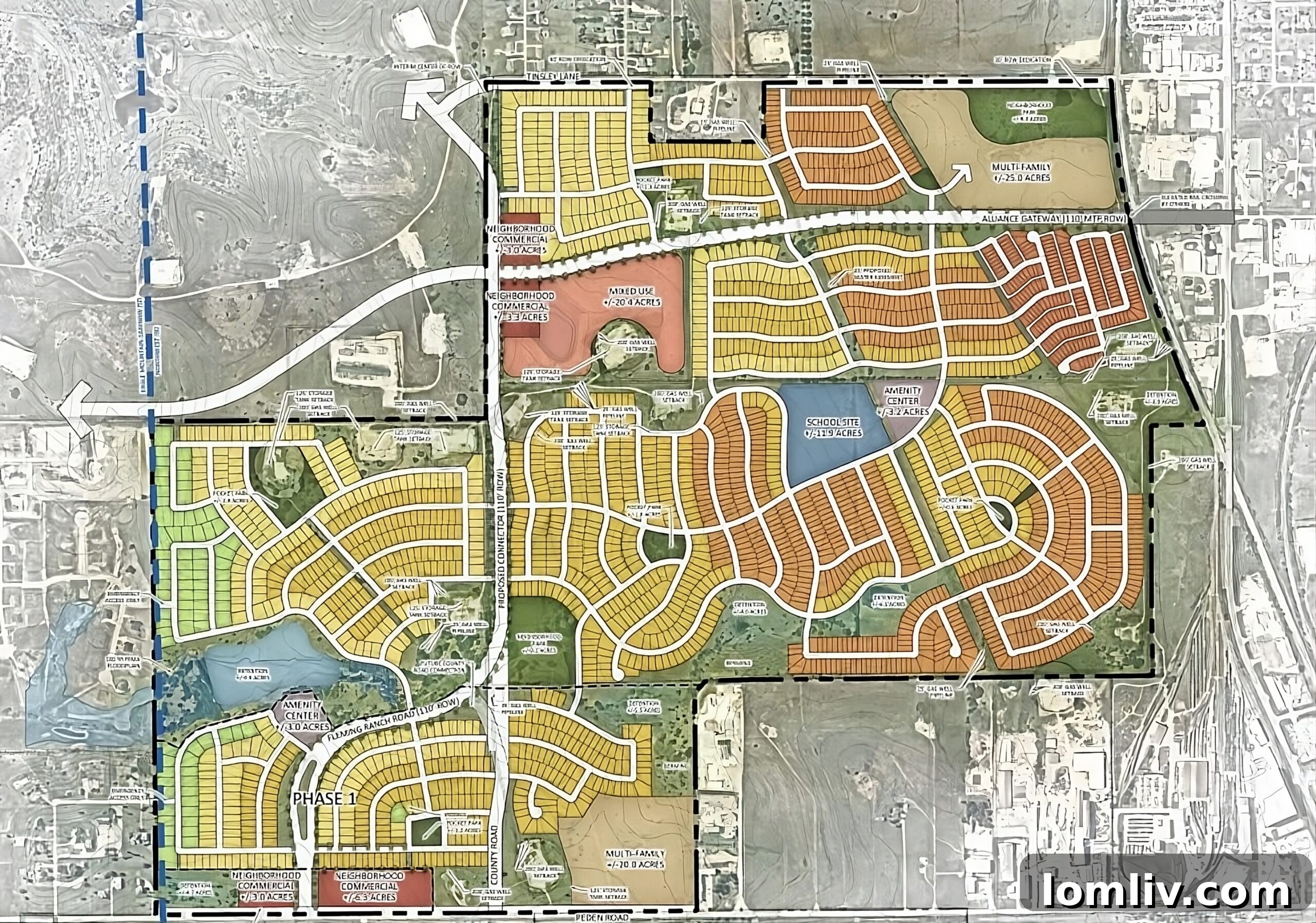
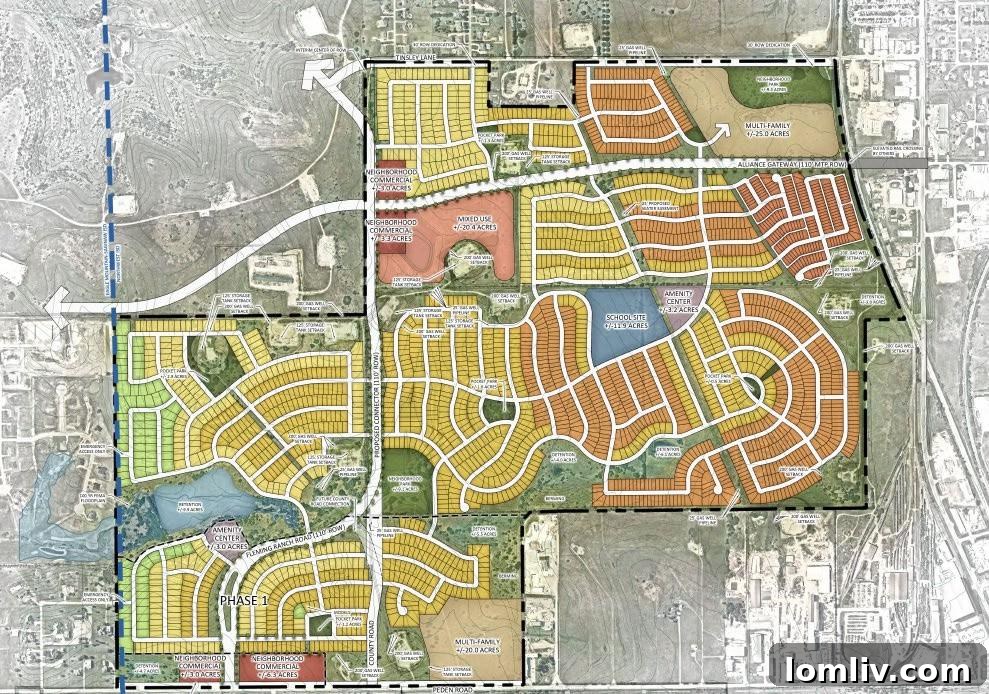
A cornerstone of Fort Worth’s future expansion strategies is the proposed 858-acre Shelton Ranch master-planned community. The Fort Worth City Council convened at 10 a.m. at City Hall to consider an agreement with Green Brick Partners, a prominent developer, for this ambitious project. Located just beyond the current city limits within Fort Worth’s extraterritorial jurisdiction (ETJ), the development signifies a strategic move to guide suburban growth and integrate new communities into the city’s service framework.
Strategic Land Use and Financing
According to comprehensive city documents, the Shelton Ranch development is meticulously planned to create a diverse and self-contained community. The proposal outlines a strategic allocation of land:
- Residential Housing: A substantial 505 acres are earmarked for single-family homes, catering to the strong demand for owner-occupied housing in the region.
- Multi-family Dwellings: 45 acres are designated for apartments, providing diverse housing options and contributing to a balanced community demographic.
- Community Amenities: Additional space will be allocated for essential public services, including schools, expansive parks for recreation, and commercial uses that will provide local amenities and job opportunities.
The financial model for this extensive development is equally significant. Green Brick Partners proposes the formation of a Municipal Utility District (MUD). MUDs are governmental entities authorized by state law to provide water, sewer, drainage, and other services within a defined area. This mechanism allows developers to finance the significant upfront infrastructure costs through bonds, which are then repaid by residents within the district through property taxes. In return, the City of Fort Worth would play a crucial role as the retail provider of water and sewer services, ensuring adherence to municipal standards and seamless integration with existing city utilities.
Implications of ETJ Development and Master Planning
Developing within the ETJ offers both opportunities and challenges. It allows Fort Worth to influence growth patterns beyond its current boundaries, preparing for potential future annexation while ensuring new developments meet city standards. Master-planned communities like Shelton Ranch are designed with a holistic approach, integrating residential areas with commercial spaces, schools, and green infrastructure from the outset. This often leads to well-organized, aesthetically pleasing neighborhoods with a high quality of life, but also requires careful consideration of long-term impacts on traffic, public services, and environmental sustainability.
The fact that this item was placed on the consent agenda suggests a general consensus among city officials, potentially signaling smooth approval with minimal debate, reflecting a shared understanding of the need for structured growth to meet housing demands.
Fort Worth’s Urban Heartbeat: Revitalizing Evans and Rosedale Urban Village
Beyond new suburban frontiers, Fort Worth is also intensely focused on revitalizing its existing urban core, particularly the Historic Southside. The City Council was also set to vote on a revised funding structure for the Evans and Rosedale Urban Village project. This development, spearheaded by Milwaukee-based Royal Capital Group, aims to breathe new life into a historically significant area, fostering a vibrant, mixed-use environment.
Key Details of the Revitalization Project
The project is envisioned to include 184 residential units, providing much-needed housing diversity, alongside strategically placed commercial spaces designed to serve both new residents and the existing community. A notable change in the revised agreement involves the Fort Worth Housing Finance Corp. taking ownership of the land. This strategic move often facilitates the development of affordable housing components and provides a stable, public-sector foundation for long-term community benefits.
Financial commitment to the project is robust, combining federal and local resources:
- HUD Forgivable Loan: A significant $2.5 million forgivable loan from the Department of Housing and Urban Development (HUD) underscores the project’s alignment with federal goals for community development and often includes provisions for affordable housing.
- TIF District Funds: An additional $7 million in Tax Increment Financing (TIF) district funds will be allocated to the developer in two distinct phases. TIF districts are powerful tools for urban redevelopment, allowing future property tax revenues generated by new development to be reinvested into the area to fund infrastructure and other improvements, effectively catalyzing economic growth where it’s most needed.
Impact on the Historic Southside and Urban Planning Principles
The Evans and Rosedale Urban Village project is more than just a development; it’s a critical piece of Fort Worth’s broader strategy for equitable urban growth. The Historic Southside has a rich cultural heritage and this project aims to honor that legacy while introducing modern amenities and opportunities. The “urban village” concept promotes walkability, mixed-income housing, and local businesses, creating self-sufficient, dense neighborhoods that reduce reliance on vehicular transport and foster a stronger sense of community. By integrating affordable housing and public-private partnerships, Fort Worth aims to ensure that revitalization benefits all residents, preventing displacement and promoting inclusive growth in its historic core.
Dallas’s Commitment to Connectivity: The West Davis Street Project
Meanwhile, across the metroplex in Dallas, city staff are actively engaging the community on vital infrastructure upgrades. A public meeting was held to present new details and gather public feedback on proposed improvements for a three-mile stretch of West Davis Street in the vibrant West Oak Cliff neighborhood. This project is currently in its early design phases, emphasizing a collaborative approach to urban planning.
Enhancing Mobility and Safety in West Oak Cliff
The core focus of the West Davis Street project revolves around enhancing safety and accessibility for all modes of transportation. Key proposed improvements include:
- Safer Walking and Biking: Plans aim to create more dedicated and protected pathways for pedestrians and cyclists, potentially including wider sidewalks, new bike lanes, and improved crosswalks. This aligns with modern “Complete Streets” principles, which advocate for street designs that safely accommodate drivers, transit users, pedestrians, and bicyclists.
- Enhanced Streetscape: Possible additions to the corridor include strategic landscaping to improve aesthetics and environmental quality, along with better sidewalk lighting to enhance safety and visibility, particularly during evening hours.
- Traffic Calming Measures: While not explicitly stated, such projects often consider elements like narrower lanes, speed humps, or improved signal timing to manage traffic flow and reduce speeds, making the street safer for vulnerable road users.
Residents were invited to review “preferred options for potential roadway alignments” at a public meeting scheduled for 5:30 p.m. at Saint Cecilia Catholic School. Public input at this early design stage is critical, allowing residents to voice concerns, suggest modifications, and ensure the project truly serves the needs of the local community.
Aligning with the West Oak Cliff Area Plan (WOCAP)
This critical transportation project is a direct component of the city’s broader West Oak Cliff Area Plan (WOCAP), a comprehensive strategy that the Dallas City Council approved in 2022. WOCAP’s overarching goals are multifaceted:
- Improve Quality of Life: By addressing infrastructure, public spaces, and community amenities.
- Help Existing Residents Remain: Counteracting gentrification pressures by ensuring that development benefits long-term residents and offers diverse housing affordability.
- Preserve Neighborhood Character: Guiding new development to respect and enhance the unique cultural and historical identity of West Oak Cliff.
- Promote Equitable Development: Ensuring that investments and opportunities are distributed fairly across the community.
The West Davis Street project, by improving connectivity and safety, directly supports WOCAP’s vision for a more accessible, equitable, and vibrant West Oak Cliff. A definitive timeline for construction has not yet been established as the city continues its crucial phase of gathering public input, emphasizing a community-driven approach to infrastructure development.
The Broader Landscape of North Texas Growth
These individual projects in Fort Worth and Dallas collectively paint a picture of a region actively engaged in managing explosive growth. North Texas continues to attract businesses and individuals from across the country, drawn by its robust economy, lower cost of living compared to coastal cities, and abundant opportunities. However, this rapid influx also brings challenges:
- Infrastructure Strain: Existing roads, water systems, and public transit are often tested by increased demand.
- Housing Affordability: While relatively affordable, housing costs are rising, making projects like the Evans and Rosedale Urban Village crucial.
- Traffic Congestion: A common byproduct of population growth, necessitating projects like the West Davis Street improvements.
- Environmental Impact: Balancing development with green spaces and sustainable practices becomes paramount.
By investing in large-scale master-planned communities, revitalizing urban centers, and upgrading critical transportation corridors, both Fort Worth and Dallas are laying the groundwork for a future that aims to be prosperous, sustainable, and inclusive for all residents. The decisions made today are not just about concrete and asphalt; they are about building communities, fostering economic opportunity, and ensuring a high quality of life for the millions who call North Texas home.
Conclusion: Shaping a Resilient and Connected Future
Tuesday’s agenda in Fort Worth and Dallas underscored the dynamic nature of North Texas’s urban development. From the strategic expansion into the extraterritorial jurisdiction with the Shelton Ranch project, demonstrating Fort Worth’s foresight in managing suburban growth, to the revitalization of the Historic Southside through the Evans and Rosedale Urban Village, highlighting a commitment to urban renewal and affordable housing, Fort Worth is building for a diverse future.
Simultaneously, Dallas’s engagement with the West Davis Street project in West Oak Cliff exemplifies a dedication to multimodal safety, community-centric planning, and the broader goals of the West Oak Cliff Area Plan. These projects, distinct in their locations and immediate objectives, are unified by a common thread: a concerted effort to create resilient, connected, and thriving communities in one of the nation’s fastest-growing regions. As North Texas continues its impressive trajectory, thoughtful planning and strategic investment remain paramount to navigating the complexities and seizing the opportunities of rapid urbanization.