Fort Worth, Texas, often surprises newcomers with its unique blend of Western heritage and sophisticated urban charm. It’s a city that consistently reminds its residents and visitors alike of its distinctive character, a quality that fosters deep-rooted affection. Nowhere is this more evident than in its wonderfully preserved historic neighborhoods, and among them, Mistletoe Heights stands out as a true gem. This venerable Southside enclave offers a captivating journey back in time, boasting a rich history that dates back to the late 19th century and an architectural integrity that is increasingly rare in modern urban landscapes.
The story of Mistletoe Heights begins in 1890, when the visionary landowner Harvie C. Lawrie first laid out the ambitious plans for what would become one of Fort Worth’s most esteemed communities. With an astute eye for prime real estate, Lawrie marked the sprawling 640-acre plot using simple two-inch oak wagon spoke stakes, defining the future streets and building sites. What made this location truly exceptional then, as it does now, was its dramatic positioning on bluffs that offered breathtaking, panoramic views overlooking the serene Clear Fork of the Trinity River. This natural elevation provided not only picturesque vistas but also a desirable sense of grandeur and separation from the bustling city below. Construction of homes began around 1910, ushering in an era of distinctive architecture and solid community development that has largely remained untouched for over a century.
One of the most remarkable aspects of Mistletoe Heights, and indeed Fort Worth as a whole, is its steadfast commitment to historic preservation. Unlike many major American cities that succumbed to the pressures of rapid urbanization and rezoning efforts aimed at increasing property tax revenue – often at the expense of tearing down historic structures to make way for new developments or denser housing – Fort Worth largely resisted this trend. This deliberate and conscious decision to protect its architectural heritage has left the city with an enviable and diverse collection of intact neighborhoods, primarily dating from the early twentieth century. This commitment to maintaining the original character and charm of its districts is a testament to Fort Worth’s deep appreciation for its past and its understanding of the intrinsic value that historic properties bring to a community. You would be hard-pressed to find any new builds or significant modern intrusions in this cherished neighborhood, preserving a truly authentic and consistent historical aesthetic.
Historic preservation isn’t just a policy in Fort Worth; it’s an ingrained impulse, a default setting that has shaped its identity. This philosophy has cultivated a rich tapestry of neighborhoods, each with its own story, contributing to a unique urban fabric that blends historical gravitas with a vibrant, contemporary lifestyle. This dedication ensures that homes like the one we’re about to explore are not just isolated relics but integral parts of a living, breathing historical narrative.
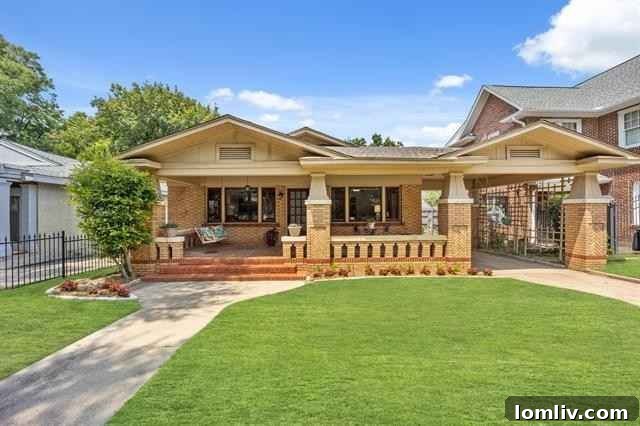
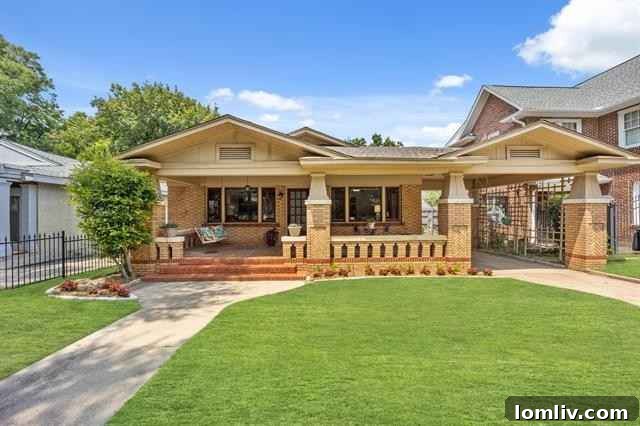
It is in this spirit of preserving timeless beauty and architectural integrity that we introduce 2312 Mistletoe Boulevard, a truly fetching residence nestled within this coveted historic district. This charming 1,500-square-foot bungalow, featuring two bedrooms and one bath, stands as a remarkable example of early 20th-century craftsmanship, boasting an interior and exterior that remain in near-original condition. Built in 1923, this home embodies an era when quality construction and thoughtful design were paramount, offering a unique opportunity to own a piece of Fort Worth’s living history.
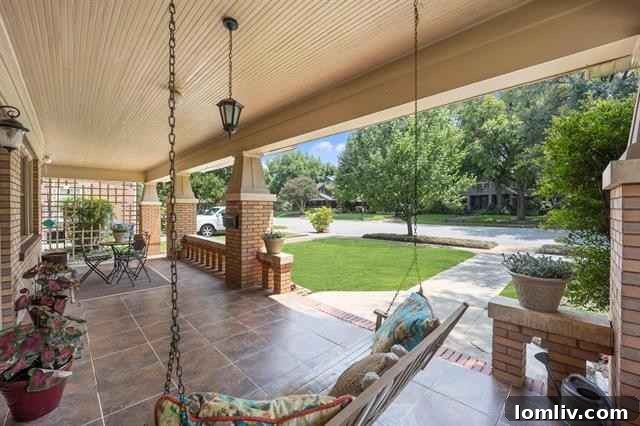
The exterior of 2312 Mistletoe Boulevard presents a captivating display of sophisticated simplicity, a hallmark of its Craftsman architectural style. The home masterfully employs an offset symmetry, immediately drawing the eye to its distinctive features. Low incline gables gracefully adorn each end of the house, with one particularly notable gable elegantly capping the porte-cochère – a charming architectural element that provides a sheltered entrance for vehicles, a nod to both practicality and design flair of the period. The prominent front elevation is further enhanced by four sturdy brick piers, each crowned with tapered pyramid tops, which provide robust support to the beam spanning the entire width of the house. This particular arrangement of brickwork and structural support is an absolutely unmistakable calling card of quintessential Craftsman design, emphasizing natural materials, strong lines, and a grounded aesthetic. Adding to its inviting curb appeal, the civilized front porch has been meticulously tiled, creating a welcoming approach, while a neatly installed bead-board ceiling overhead adds a touch of classic charm and texture, inviting residents and guests to relax and enjoy the serene surroundings.
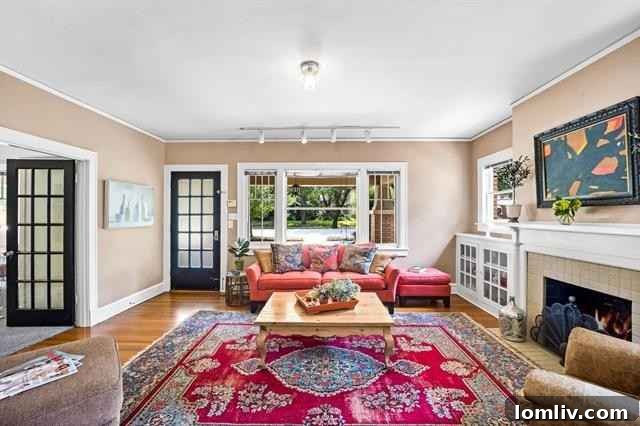
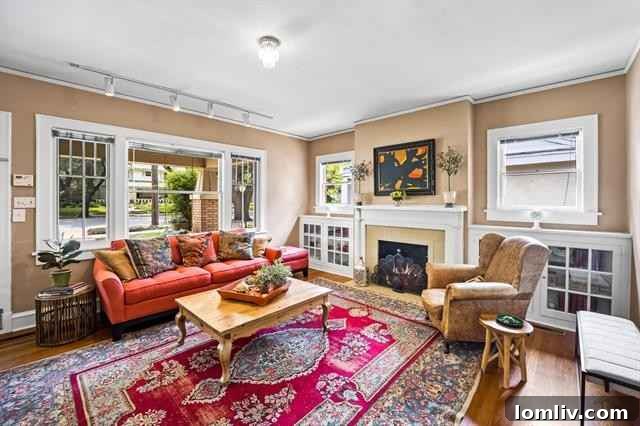
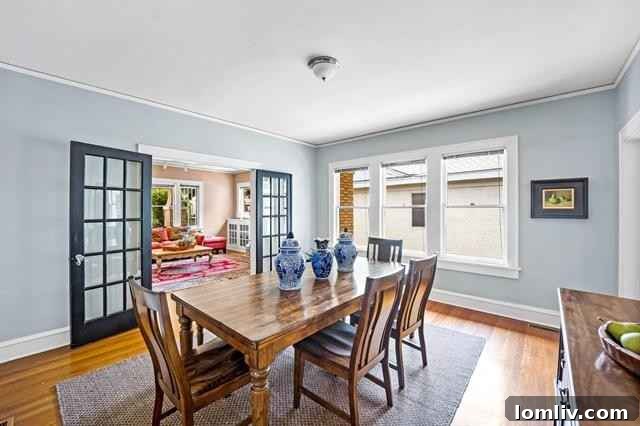
Stepping inside, the immaculate and impeccable interior reveals a reverence for its past, where most of the original elements have been meticulously maintained and thoughtfully retained, showcasing a true commitment to historical accuracy and enduring quality. The rich, gleaming hardwood floors, for instance, are one such stunning example. They stretch throughout the main living areas, their warm tones and classic appeal serving as a constant reminder of the home’s heritage, having gracefully withstood the test of time. Further enhancing the historical authenticity and functional beauty are the original windows, which bathe the rooms in natural light, and the exquisite, glazed built-in bookcases that elegantly flank the gas log fireplace. These built-ins are not merely decorative; they speak to the era’s emphasis on craftsmanship and utility, providing both storage and a sophisticated focal point for the living space. The generous nine-foot ceilings throughout the cottage are a significant architectural feature, contributing immensely to the airy and expansive atmosphere that belies the home’s square footage. This heightened ceiling not only creates a sense of openness but also allows for larger windows, enhancing the flow of light and ventilation. Just beyond the main living area, through a set of classic French doors, lies a sizable dining room, perfectly positioned for both intimate family meals and larger gatherings, offering a distinct and elegant space for entertaining.
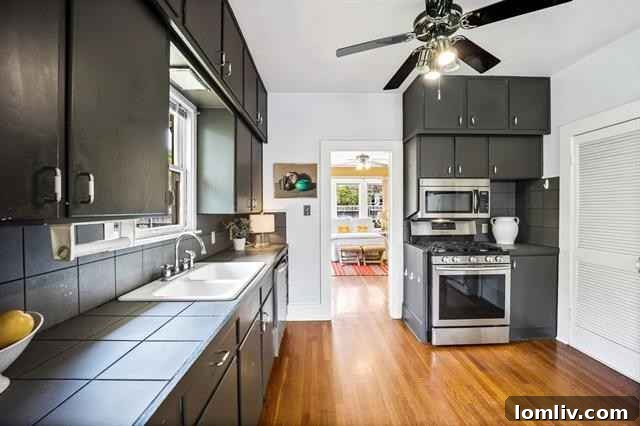
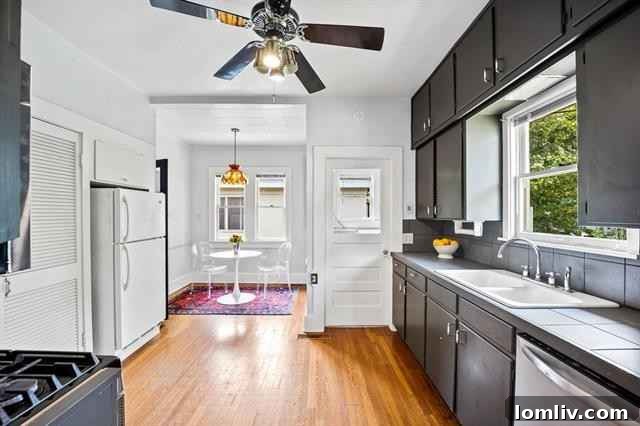
The kitchen, while embracing modern functionality, has been given a rather straightforward yet highly effective update that respects the home’s overall aesthetic. It features floor-to-ceiling cabinets, painted in a contemporary dark slate gray, offering ample storage and a sophisticated contrast to the traditional elements of the house. The inclusion of a modern gas range ensures that culinary endeavors are met with efficiency and style, blending contemporary convenience seamlessly with the historic charm. At one end of this well-appointed kitchen, a cozy breakfast room provides a delightful spot for casual morning meals or a quiet cup of coffee, benefiting from natural light and a practical layout. This thoughtful renovation demonstrates how modern updates can enhance a historic home without sacrificing its intrinsic character.
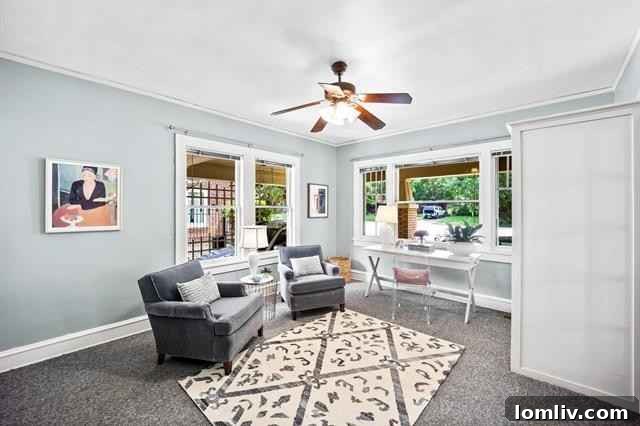
The home’s two bedrooms offer comfortable and inviting private spaces. At the front of the house, a versatile bedroom is currently utilized as a cozy den, making it an ideal flex space for a home office, a reading nook, or an additional guest room. Painted in a pleasing pastel blue, this room exudes tranquility and calm, offering a serene escape. The soft hue complements the natural light streaming through its windows, creating an inviting atmosphere that is both refreshing and comforting. This room showcases the flexibility of the bungalow’s floorplan, adapting to various lifestyle needs.
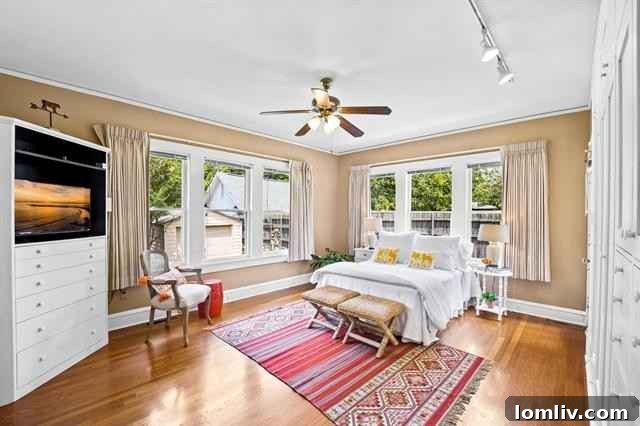
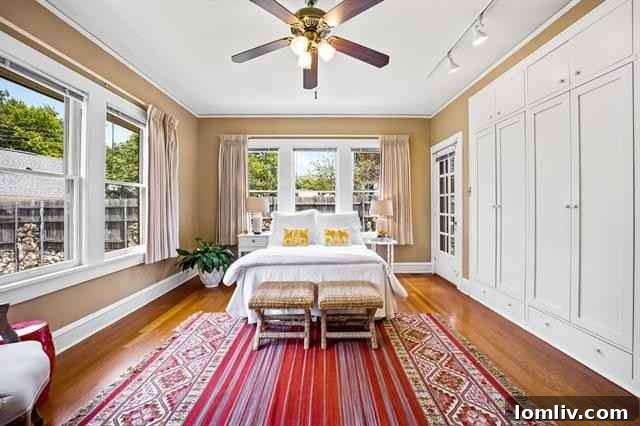
The largest bedroom, strategically located at the back of the house, serves as a private sanctuary. Like the main living areas, it features original hardwood floors that lend a sense of warmth and continuity. This spacious room retains its authentic charm with original built-in cupboards, providing charming and practical storage solutions that are integral to the home’s historic fabric. Generous fenestration, characterized by multiple windows, floods the room with an abundance of natural light, creating a bright and airy ambiance. These windows not only illuminate the space but also offer picturesque views of the surrounding garden, connecting the interior with the beauty of the outdoors.
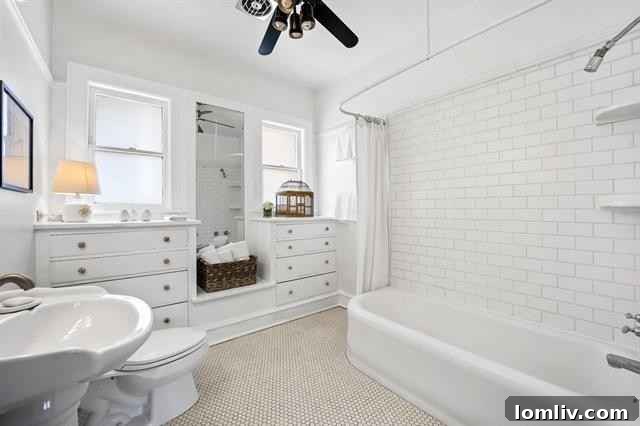
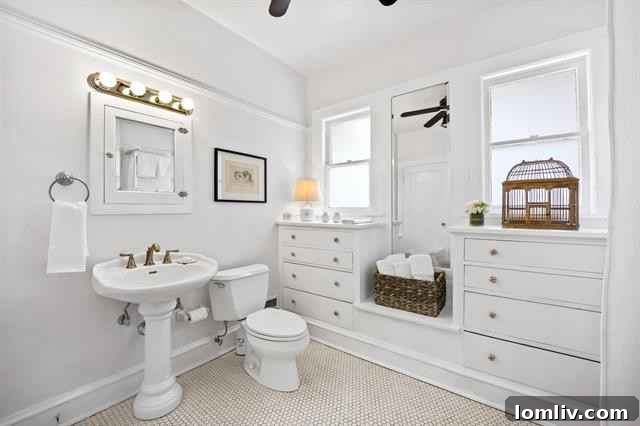
The “charm offensive” of this delightful bungalow seamlessly continues into its sole bathroom, a space that masterfully blends period details with practical modern updates. While the pedestal sink and toilet are thoughtful replacements, this is indeed a positive change; the original fixtures were likely standard-issue, often prone to rust and wear, and lacked the elegant functionality of their contemporary counterparts. These newer fixtures provide both improved aesthetics and enhanced usability, perfectly complementing the vintage style. The floors are adorned with classic Dal Tile porcelain hex tiles, a timeless choice that echoes the home’s early 20th-century origins, offering durability and an authentic touch. Crucially, the original built-in cabinets remain, providing essential storage while preserving the bathroom’s historical character and craftsmanship. Adding a touch of luxurious comfort is the elegant, long corner tub, a feature that invites relaxation and contributes significantly to the bath’s overall sophisticated yet inviting ambiance. This bathroom exemplifies how careful updates can preserve the essence of a historic home while enhancing its livability for modern residents.
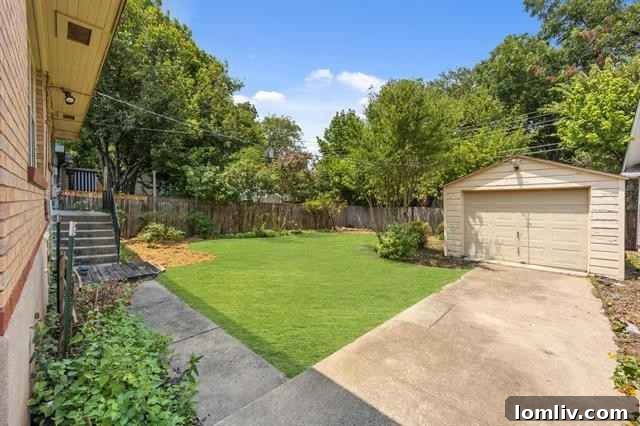
With its thoughtful layout and a single, well-appointed bathroom, this charming bungalow is ideally suited for a single individual seeking a tranquil urban retreat or a couple desiring a cozy and character-filled home. Its central location within Fort Worth’s vibrant Southside offers unparalleled access to cultural attractions, dining, shopping, and green spaces, making it a highly desirable address. Combined with an affordable price point for such a historic and well-maintained property, 2312 Mistletoe Boulevard emerges as a perfect candidate for a starter home, offering a unique opportunity to own a piece of Fort Worth’s architectural legacy without breaking the bank. Alternatively, for those looking to downsize without compromising on charm or quality, this home provides a dignified and elegant solution, offering manageable spaces filled with historical grandeur. Functionality is further enhanced by a detached one-car garage located at the back of the property, providing secure parking or additional storage. For a second vehicle, the existing porte-cochère offers convenient sheltered parking, adding another layer of practicality and period authenticity to this remarkable residence. This home is more than just a dwelling; it’s an invitation to embrace a lifestyle steeped in history, community, and the enduring charm of Fort Worth.
For those captivated by the unique allure of historic Fort Worth real estate, Ivey Ramsey of Williams Trew Real Estate has expertly priced this exceptional property. Don’t miss the opportunity to explore 2312 Mistletoe Boulevard Fort Worth, TX 76110 at an attractive $385,000. This is a rare chance to own a meticulously preserved Craftsman bungalow in one of Fort Worth’s most cherished and historically significant neighborhoods.