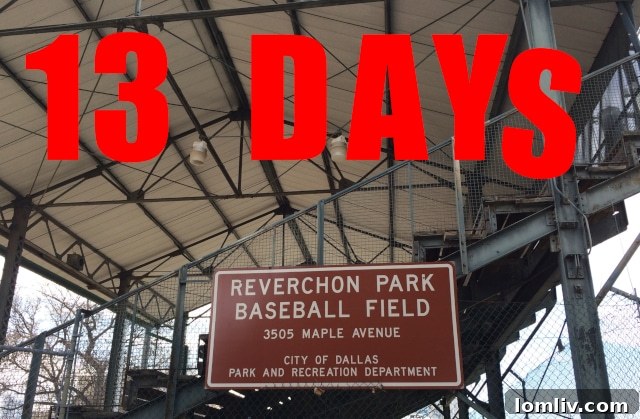
The fate of Reverchon Park, one of Dallas’s most cherished and historic green spaces, hangs precariously in the balance. For over eight months, the proposed redevelopment of the park’s century-old ballfield by Donnie Nelson’s Reverchon Park Sports and Entertainment LLC has remained in limbo. While the Dallas City Council’s January vote initially seemed to pave the way for a transformative project, it merely granted the Parks Department the authority to negotiate a contract based on the initial Request for Proposal (RFP). Almost nine months later, the anticipated agreement remains unsigned, raising serious questions about the project’s viability and the future of this vital community asset. For those seeking a deeper dive into the origins of this saga, background information is available here.
The prolonged delay points to significant underlying challenges that Nelson’s group appears unable to overcome. Chief among these are the fundamental requirements of securing adequate financing and forging binding agreements with owners of surrounding parking facilities. The ambitious proposal to quintuple the size and scope of the ballfield and entertainment space, naturally, necessitates a massive increase in visitor traffic – a logistical hurdle that has proven insurmountable thus far.
Reverchon Park Redevelopment: The Unresolved Parking Predicament
From the outset, the issue of parking has been a critical concern for the proposed Reverchon Park redevelopment. Envisioning a significantly expanded venue capable of drawing thousands of attendees for a multitude of events each year, the original plan hinged on securing substantial off-site parking. The sheer scale of the proposed entertainment complex, designed to host major events, starkly contrasts with Reverchon Park’s existing, extremely limited on-site parking capacity – a mere 30 spaces. This disparity created an immediate and glaring logistical challenge that has plagued negotiations from day one.
The contract negotiations explicitly outlined a reliance on parking provisions from several key commercial properties in the vicinity, including the Scottish Rite, Parkside Tower (the former Heritage Auctions building on Maple Avenue), and the Balfour Beatty building located off McKinnon Street. However, despite months of discussions and the pressing need for these commitments, it appears that none of these crucial agreements have been successfully secured. This lack of concrete parking solutions represents a foundational flaw in the redevelopment plan, without which the project cannot realistically proceed.
The reluctance of commercial building owners to commit their properties to a 40-year agreement to provide the bulk of their parking for Reverchon Park during off-hours is entirely understandable from a business perspective. Such a long-term commitment could encumber their properties, limit future flexibility, and potentially interfere with their own operational needs, even during non-peak business hours. Companies like Lincoln Property and Harwood International, owners of some of these vital properties, have remained unresponsive to inquiries regarding these parking agreements, further underscoring the impasse. This silence strongly suggests that a satisfactory resolution to the parking dilemma remains elusive, casting a long shadow over the entire redevelopment initiative.
The Unacceptable Katy Trail “Cut-Through” Controversy
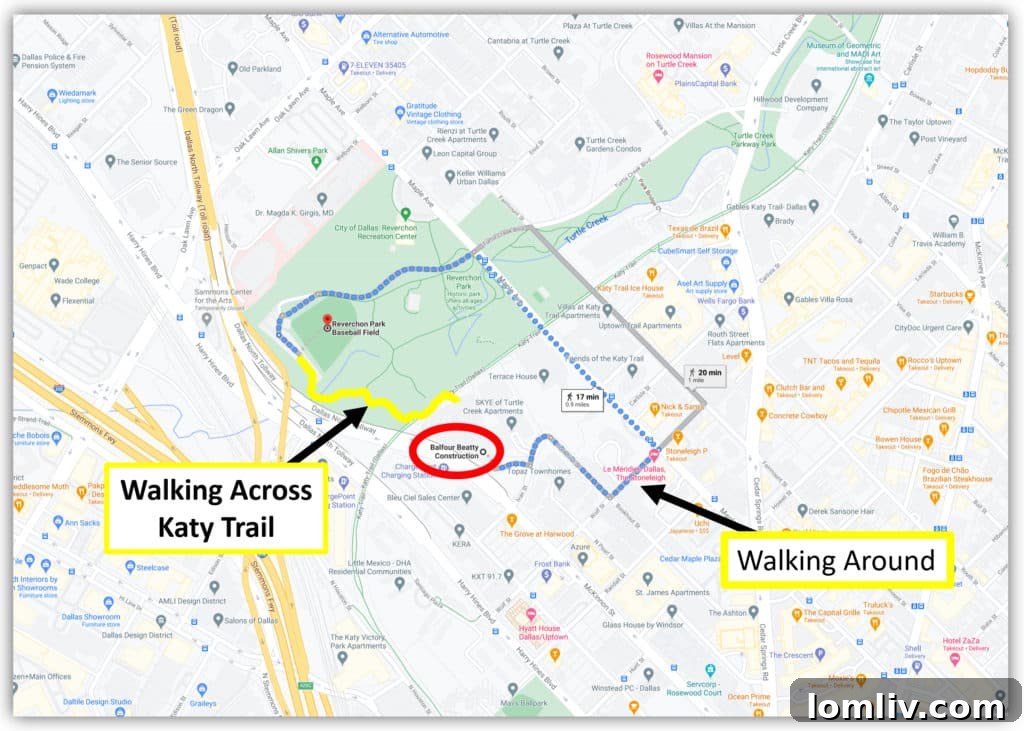
Beyond the lack of secured parking, the proposed solution for accessing some of the more distant off-site lots presented another contentious issue: the infamous “cut-through” across the beloved Katy Trail. For instance, the Balfour Beatty building, earmarked as a potential parking hub, is nearly a mile’s walk from Reverchon Park. To mitigate this distance, the plan suggested patrons would simply “cut-through” the Katy Trail, a cherished urban greenway and recreational corridor.
The prospect of thousands of event-goers trampling across the Katy Trail for 100-plus events annually raises a multitude of environmental, safety, and quality-of-life concerns. The increased foot traffic, combined with potential litter and noise, could significantly degrade the trail experience for its regular users, impact its delicate ecosystem, and necessitate extensive maintenance. The Friends of the Katy Trail, an organization dedicated to preserving this urban oasis and an initial supporter of the redevelopment deal, have yet to comment on this contentious aspect, highlighting the sensitivity and potential backlash associated with this proposed access route. The idea of sacrificing the integrity of the Katy Trail for the convenience of a commercial entertainment venue is a bitter pill for many residents and environmental advocates to swallow.
Political Pressure and Missed Deadlines for Reverchon Park
The protracted delays have not gone unnoticed by local leadership. Councilmember David Blewett (D14) has been a vocal advocate for resolving the situation, pushing Nelson’s group since May to either finalize the agreement or withdraw their proposal. Throughout May, June, and July, Blewett consistently pressed for a signed contract, emphasizing the urgent need for clarity and progress. Following the council’s summer recess, and with still no contract in early August, Blewett intensified his efforts, urging the Parks Department to establish a firm deadline. He advocated for a decisive move: either secure the contract or cancel it outright.
On August 10, Nelson’s group finally responded to the increasing pressure, only to request a 60-day extension on August 20. In a rare display of firmness, the Parks Department staff, on August 31, granted a more limited 30-day extension, setting a final deadline for the end of September to execute the contract. This concession, though shorter than requested, still drew criticism.
Councilmember Chad West (D1), commenting on the situation, expressed widespread frustration: “Even with the city generously adjusting for COVID-19, it’s been too long.” His sentiment reflects a growing impatience among city officials and residents alike, underscoring the feeling that the project has been granted an excessive amount of leeway.
Persistent Financing Woes Plague Reverchon Park Project
Beyond the logistical nightmare of parking, the financial viability of the Reverchon Park redevelopment has consistently been a major stumbling block. Reports indicate that attempts to secure the necessary financing for the project are encountering significant resistance, falling on deaf ears within the financial community. This is not a new problem; the very first RFP for the ballfield’s redevelopment similarly failed to secure adequate funding. What makes the current situation even more challenging is the added burden of a pending lawsuit and the broader economic uncertainties introduced by a global pandemic – factors that were not present during the initial funding attempts.
The author of this piece, like many concerned citizens, expresses profound frustration regarding the granting of any extension whatsoever. Eight months without a signed contract is, by any measure, an extraordinarily generous timeframe. Furthermore, it is reasonable to assume that Nelson’s group had been meticulously assembling the components of their deal well before they even submitted their response to the June 26, 2019, RFP. This suggests that the group has had over a year to solidify their plans and secure commitments. Viewed in this light, the recent extension appears not merely excessive, but frankly egregious, prolonging an already stalled process and tying up a valuable public asset.
Councilmember Blewett’s position aligns with this sentiment. “We gave them [Reverchon Park Sports and Entertainment] every opportunity to complete the contract, but after eight months the city has to have closure,” he stated, emphasizing the need for decisive action. Councilmember Paula Blackmon (D9) echoed this frustration, articulating her initial support and subsequent disappointment: “I voted for and supported the project and was excited by what was proposed. It’s unfortunate that’s not happening, but nine months is nine months and deadlines are deadlines.” Despite reaching out to a representative of Reverchon Park and Entertainment LLC for an update, no response was received by press time. All indicators suggest that the end of September deadline looms as a critical juncture, potentially marking the project’s demise, hence the stark phrasing: “So we wait for death to come in 13 days.”
A Better Way Forward: Resisting a Third RFP for Reverchon Park
The ongoing saga of the Reverchon Park redevelopment has ignited a broader discussion about the optimal path forward for this cherished community space. Following five months of frustrating delays, Councilmember Blewett has consistently pushed for a definitive resolution – either the contract’s execution or its termination. His stance marks a notable evolution in his perspective. Initially, in December, he opposed the project, citing insufficient financial benefits for the city and poor public access to the proposed new ballfield and facilities. By January, he believed he had secured a “better deal,” leading to his vote in favor. However, the subsequent months of stagnation and unresolved issues have clearly prompted another reevaluation.
This series of events has inadvertently led to considerable public dissatisfaction, particularly among residents who feel marginalized by the city’s opaque process across two RFPs. Their primary concern has been the sheer scale of the proposed redevelopment: a stadium designed to accommodate 3,500 seated attendees, with capacity potentially surging to 5,000 for special events, all situated in a park with a minuscule 30 on-site parking spaces. Such a massive influx of people would undoubtedly unleash catastrophic levels of traffic congestion, incessant noise pollution, and an unprecedented amount of refuse directly into the surrounding residential neighborhoods. These concerns highlight a fundamental disconnect between the developer’s grand vision and the park’s urban context and the community’s quality of life.
In a significant and widely welcomed shift, Councilmember Blewett now publicly supports the neighborhood’s proactive approach to charting its own course for Reverchon Park. This pivot represents a potential win-win scenario for residents, offering a more community-centric and sustainable vision for the park’s future. It acknowledges that the large-scale commercialization envisioned by the failed RFP processes may not be the best fit for Reverchon Park or its surrounding community.

Community-Driven Solutions: The “Come Fund Me” Approach for Reverchon Park
The city of Dallas, like many municipalities, frequently grapples with budget constraints that impact its ability to maintain and enhance public infrastructure. The likely consequence of Nelson’s group failing to meet its obligations will be yet another Request for Proposal, a third attempt at redevelopment, unless a more innovative and community-focused approach is adopted. This recurring challenge prompts the need for creative funding mechanisms.
Drawing on an idea previously proposed in May, Dallas could explore “GoFundMe” style initiatives for critical urban projects. This model would empower citizens and various community groups to directly donate to specific, well-defined projects, fostering a sense of ownership and collective investment. Such an option could have potentially mobilized the neighborhood surrounding Reverchon Park to raise the necessary funds to refurbish its historic ballfield, ensuring its preservation and enhancement without the controversial elements of large-scale commercial development.
Intriguingly, Councilmember Blewett has independently articulated a remarkably similar vision. While the author jokingly suggests he might have influenced this idea, the convergence of thought underscores the growing appeal of grassroots solutions. Blewett is now a proponent of a neighborhood group taking the lead in raising the capital required to refurbish and endow the ballfield, crucially maintaining its existing footprint and seating capacity. This approach champions preservation over radical transformation, aligning with the community’s desire to keep Reverchon Park a neighborhood asset rather than a regional entertainment hub.
“The city has tried twice and failed when they should have been talking with the neighborhood all along,” Blewett remarked, acknowledging past missteps in public engagement. He continued, emphasizing the urgency: “If the neighborhood wants to avoid a third RFP, they have to take the ballfield’s refurbishment into their own hands, something I am happy to lead the charge on.” This proactive stance from a key city official is a significant boost for local empowerment. Councilmember West shares this perspective, stating, “Projects that are neighborhood driven are critical. The winning solution will come from the neighborhood.” This collective sentiment from city leadership signals a pivotal shift towards genuinely collaborative urban development.
This community-led initiative might also unlock previously allocated resources. There’s a lingering hope that some of the 2006 bond monies, which have been “whittled away” over the years and ostensibly earmarked for park improvements, could finally be directed towards the Reverchon Park ballfield. However, it is imperative that any new neighborhood group avoid the pitfalls of past organizations. The controversial “Friends of Reverchon Park,” for instance, allocated a significant sum – $187,250 – in 2015-2016 to the Trinity Nature Conservancy, rather than investing it directly into the park for which they were named. This historical misstep underscores the need for clear accountability and a laser focus on Reverchon Park itself for any future fundraising efforts.
Building on this momentum, area resident and former Trammell Crow chairman and CEO Don Williams has already expressed strong support. “When this deal is dead, the neighborhood is ready to raise funds for the restoration of the Reverchon Park ballfield, matching City bond funds already appropriated for Reverchon Park – it’s what’s right for the park and the neighborhood,” Williams affirmed. His commitment, along with that of other potential donors, could provide the crucial financial backbone for a neighborhood-driven restoration. With such backing, Councilmember Blewett and other council members have indicated their full support for this outcome, presenting a true win-win for both the park and its surrounding community.
Councilmember Blackmon further solidified this evolving consensus, adding her support: “I would work with any group wanting to better the park and welcome the opportunity to move forward.” For those keeping a tally, this marks three influential council members who, having initially supported the large-scale redevelopment deal in January, have now changed their minds in favor of a community-led approach. The question now becomes: will more city leaders follow suit?
The recent global pandemic has undeniably underscored the profound and irreplaceable value of urban green spaces like Reverchon Park. Their importance for mental health, physical activity, and community gathering has never been more apparent. This renewed appreciation for accessible public parks further strengthens the argument for a restoration that prioritizes local use and ecological preservation over commercial development.
Councilmember Blewett’s deep personal investment in this issue stems from a clear understanding of his constituency. While the park itself may technically fall within Councilmember Medrano’s district, Blewett succinctly articulated his unwavering commitment: “The park may be in Medrano’s district, but the nearby residents are in mine.” This statement powerfully encapsulates the local imperative behind his advocacy, ensuring that the voice and needs of the immediate community remain at the forefront of decisions regarding Reverchon Park’s future.