

The words and actions of visionary billionaire Elon Musk often send ripples through various markets, from cryptocurrency to automotive stocks. His past influence on Tesla’s stock prices is well-documented, demonstrating the significant impact a single prominent figure can have. Now, as Musk and his enterprises become increasingly synonymous with the vibrant city of Austin, Texas, a compelling question emerges: Could the Tesla CEO’s influential opinions and strategic business decisions directly shape and accelerate the already dynamic Austin housing market?
This question gained significant traction following a podcast interview last month, where Musk, speaking with Joe Rogan, boldly declared Austin’s potential to be the “biggest boomtown that America has seen in 50 years.” Such a declaration from a figure of Musk’s stature is more than just an opinion; it’s a powerful statement that captures national attention and can influence perception, investment, and migration patterns. Given Austin’s existing appeal as a growing tech hub and cultural center, Musk’s endorsement acts as a powerful amplifier, drawing further scrutiny and excitement to the city’s economic landscape.
Austin’s Unstoppable Rise: A Confluence of Factors Driving the Boom
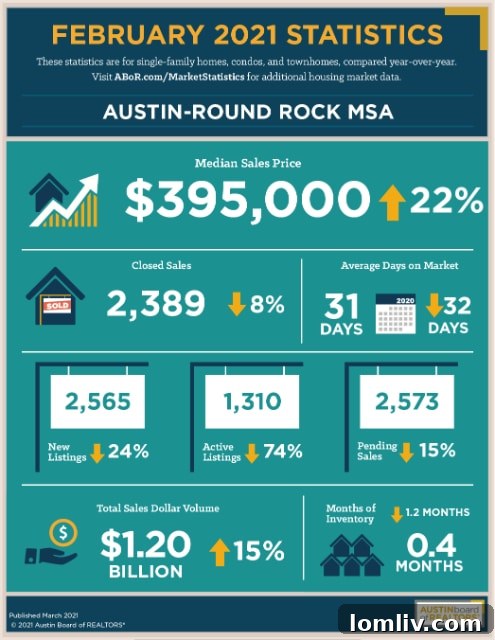
Musk’s pronouncement about Austin’s future as a boomtown appears to be unfolding with remarkable speed. Indeed, hot on the heels of his interview, reports emerged that Austin proper has recorded its highest median home price ever. According to the comprehensive Austin Board of Realtors Central Texas Housing Report, the local real estate market is experiencing an unprecedented surge in demand and value, transforming the city’s housing landscape.
It’s crucial to contextualize this rapid appreciation. While Musk’s statements undoubtedly contribute to a heightened sense of excitement and urgency around Austin, the city’s housing market was already primed for significant growth. Like many other attractive metropolitan areas in Texas and across the Sun Belt, the Austin area’s soaring property values are fundamentally driven by a persistent and widening gap between housing supply and burgeoning demand. This imbalance is a powerful force, pushing prices upward irrespective of any individual’s pronouncements, though a “Musk effect” can certainly amplify existing trends, adding a layer of celebrity validation to an already robust economic narrative.
The city’s allure stems from a combination of factors: a thriving tech industry, a lower cost of living compared to coastal tech hubs (though this is rapidly changing), a business-friendly environment with no state income tax, and a vibrant cultural scene. These elements have created a potent magnet for talent and capital, laying the groundwork for the current real estate boom long before Musk’s explicit endorsement. The recent surge, therefore, is a culmination of sustained growth, accelerated by an intense period of corporate migration and remote work trends during the pandemic, further emphasized by high-profile endorsements.
A Seller’s Paradise, A Buyer’s Challenge in the Austin Real Estate Market
For prospective homebuyers in the Austin area, these record-breaking prices present considerable challenges, transforming what was once a relatively affordable major city into an increasingly competitive and costly environment. The median home price within Austin city limits reached an astonishing $491,000 in February, marking a substantial 24.3 percent increase compared to February 2020. This year-over-year leap underscores the incredible pace of market acceleration, indicating that homes are not only selling faster but at significantly higher valuations. For many local Austinites and first-time buyers, this rapid escalation makes homeownership an increasingly distant dream.
Expanding beyond the immediate urban core, the median home price across the five-county Travis County region also hit an all-time high of $395,000, illustrating the widespread nature of this housing boom. This regional growth suggests that the demand pressure extends far beyond the city center, impacting suburban and even exurban areas as buyers seek more affordable options, further tightening inventory across the broader metropolitan area.
Conversely, for current homeowners and those looking to sell their properties, the current Austin real estate market conditions are exceptionally favorable. Strong buyer demand, often fueled by out-of-state migration with significant purchasing power and an influx of tech wealth, ensures properties sell quickly and frequently above asking price. This dynamic creates a seller’s paradise, characterized by multiple offers, waived contingencies, and rapid transactions. While beneficial for sellers, this fiercely competitive environment simultaneously exacerbates the affordability crisis for many long-time residents and makes the market particularly daunting for those trying to enter it.
Austin: A Magnet for Tech Giants and Innovation
Austin’s transformation into a major tech and innovation hub is a primary driver of its real estate boom. The city has steadily attracted an impressive roster of technology titans, further cementing its reputation as “Silicon Hills.” The most significant recent addition to this impressive list is Tesla’s colossal $1.1 billion manufacturing plant, known as Gigafactory Texas, which is currently under construction. This monumental investment promises to bring thousands of high-paying jobs to the region, drawing a new wave of talent and further intensifying housing demand as employees relocate to be closer to their workplaces.
Tesla is not alone in recognizing Austin’s strategic advantages. Oracle, a global leader in enterprise software, made headlines with its decision to relocate its corporate headquarters from California to Austin. This move signifies a broader trend of major corporations seeking more business-friendly environments, lower operational costs, and access to a growing talent pool that Austin abundantly offers. This exodus from traditional tech strongholds to more economically viable locations like Austin has profound implications for regional economies and labor markets.
Beyond these high-profile relocations, other industry giants such as Apple, Amazon, Samsung, Facebook, and Google have all significantly expanded their operations and presence in the Austin area. This concentration of tech powerhouses creates a robust ecosystem of innovation, collaboration, and economic opportunity, drawing startups and ancillary businesses, thereby amplifying the city’s growth trajectory. The steady stream of highly skilled and well-compensated professionals drawn to these companies directly contributes to the heightened demand and escalating prices in the Austin housing market.
Mary Anne McMahon, a distinguished broker/owner of RE/MAX Posh Properties in Austin, articulated the market’s current reality when she told theAustin American-Statesman, “Austin continues to draw out-of-town buyers with big budgets who are competing in the housing market against local Austinites.” This observation highlights a key challenge: the influx of affluent individuals and families, often relocating from more expensive coastal cities, drives up prices and makes it incredibly difficult for existing residents and those with more modest incomes to compete for housing, leading to concerns about gentrification and displacement.
The Elon Musk Factor: Validation and Acceleration for Texas’s Boomtown
One of those high-profile out-of-town buyers, or at least a new Texan, is indeed Elon Musk himself. He confirmed rumors in December that he was making the significant move from Los Angeles to Texas. While his exact residential location within the vast state remains undisclosed, Austin is a strong contender, given his major investments and presence there. In anticipation of his move, we previously offered three personalized suggestions for potential housing options in Austin, reflecting the widespread speculation and excitement surrounding his arrival.
Musk’s personal relocation to Texas, combined with his public endorsement of Austin as a “boomtown,” acts as both a validation and an accelerator for the city’s growth trajectory. His presence not only brings significant capital and job creation through Tesla and other ventures but also generates immense publicity and interest. This “Musk effect” can inspire other entrepreneurs, investors, and highly skilled professionals to consider Austin as their next destination, creating a virtuous cycle of growth and innovation that feeds into the city’s economic expansion and real estate demand. His ability to draw attention and resources is unparalleled, making his move a strategic asset for Texas.
Real estate experts have lauded Musk’s move as a perfect fit for Texas. Ernie Carswell, a superstar agent from Beverly Hills, Calif.-based Ernie Carswell & Associates, shared his perspective, stating, “I do think he’s the perfect incoming Texan — free with his thoughts, adventurous, intelligent, visionary, and loves life and ‘the next thing.’” Carswell, who began his distinguished real estate career in Highland Park back in the 1980s, understands the appeal of Texas for dynamic individuals. His sentiment underscores how Musk’s innovative spirit aligns seamlessly with Texas’s ethos of opportunity, economic freedom, and forward-thinking development, further solidifying Austin’s image as a land of opportunity.
Navigating the Austin Real Estate Landscape: What’s Next for This Rapidly Growing City?
Austin’s rapid evolution from a quirky state capital to a global tech powerhouse presents both incredible opportunities and significant challenges. The influx of corporations and talent has undeniably fueled economic prosperity, job growth, and a vibrant cultural scene. However, it has also severely strained existing infrastructure, increased traffic congestion, and most notably, led to a severe affordability crisis in housing. Managing this growth sustainably will be critical for Austin’s long-term success, ensuring that the benefits of this boom are shared by all residents and that the city retains its unique character and quality of life.
For those considering a move to Austin or contemplating real estate investments, understanding the multifaceted dynamics of this market is paramount. The interplay of strong economic fundamentals, strategic corporate relocations, a desirable lifestyle, and the influential endorsements from figures like Elon Musk creates a unique and highly competitive environment. While the immediate outlook suggests continued appreciation and robust activity in the Austin housing market, market fluctuations, and the city’s proactive efforts to address housing supply, infrastructure development, and affordability will ultimately shape its future trajectory and sustainability as a boomtown.
In conclusion, Austin’s journey to becoming America’s next great boomtown is a complex narrative shaped by organic growth, strategic corporate decisions, and the powerful personal and professional influence of figures like Elon Musk. His pronouncements, coupled with Tesla’s substantial investment and the city’s undeniable appeal, are not merely coincidental to Austin’s record-breaking real estate market; they are integral components of a dynamic story that continues to unfold, positioning Austin as one of the most dynamic and closely watched urban centers in the nation. The city stands at a pivotal moment, balancing the excitement of unprecedented growth with the imperative of sustainable development.