Dallas, a rapidly expanding metropolis, is currently at a crucial juncture regarding the future of its urban recreational facilities. A significant proposal is taking shape: a half-million-dollar skate park, carefully planned for integration within the vibrant Glencoe Park neighborhood. This ambitious project is set to potentially feature on the highly anticipated 2024 bond election ballot, and its emergence has already sparked intense public discourse, drawing strong opinions from both passionate advocates and concerned residents across the city.
At the heart of this evolving debate lies a fundamental question of urban planning and community integration: the chosen location. The proposed Glencoe Skate Park would be situated directly amidst a residential community. This specific placement has become the primary point of contention, igniting extensive discussions about the balance between providing modern recreational amenities and preserving the character and tranquility of established neighborhoods. It underscores a broader challenge for Dallas in developing public spaces that cater to diverse needs while ensuring harmonious coexistence within its many distinct communities.
Addressing Dallas’s Significant Shortfall in Skate Park Facilities
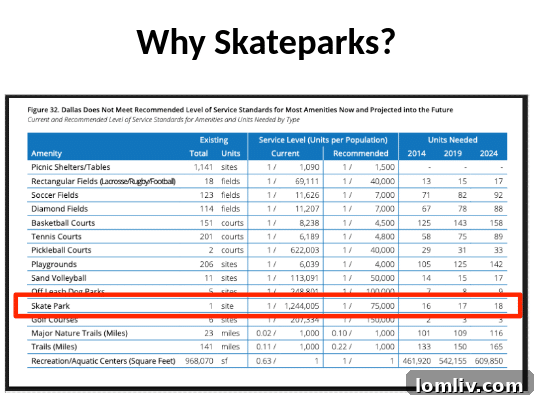
Despite its prominence as a major U.S. city, Dallas starkly trails its peers in providing adequate infrastructure for its enthusiastic and growing skateboarding population. A large and increasingly vocal pro-skate community within Dallas has been actively campaigning for more dedicated, safe, and accessible spaces. Currently, the city operates just one public skate park. While two additional projects are underway—one at Bachman Lake, anticipated to open its gates in 2024, and another under construction in the Oak Cliff area—these additions still represent a significant gap when compared to other major urban centers.
The disparity becomes particularly evident when benchmarking against other cities. Houston, for instance, boasts eight skate parks, while Austin offers three. On the national stage, Los Angeles, a renowned hub for skateboarding culture, provides an impressive thirty-one. This stark contrast highlights a critical unmet need within Dallas. Investing in these facilities is not merely about recreation; it’s about acknowledging a legitimate and growing sport, providing safe environments for youth, fostering community engagement, and ensuring Dallas offers a comprehensive and equitable recreational landscape for all its residents.
Navigating Community Concerns and Dispelling “Skater Stereotypes”
The proposition of a new skate park, particularly in a residential zone like Glencoe Park, naturally generates concerns among local residents. Primary anxieties revolve around the potential for increased noise and traffic within the neighborhood. Beyond these practical considerations, District 14 Park and Recreation Board member Rudy Karimi has observed a prevalence of what he terms “the skater stereotype”—an outdated and often prejudiced perception that unfairly links skateboarding culture with illicit activities such as drug use, vandalism, and graffiti. Such stereotypes, Karimi notes, can unfairly bias public opinion and overshadow the numerous positive aspects of modern skate parks.
Karimi, a strong proponent of the Glencoe project, has dedicated efforts to address these fears and correct misinformation. Speaking to daltxrealestate.com, he highlighted a common misconception that the proposed facility would be a “giant amenity that will take over the park.” He emphasized that his objective is not to persuade, but to inform and ensure an accurate understanding of the project’s scope and potential impact.
Confronting Noise, Traffic, and Property Value Myths
“The major concerns are undeniably coming from the immediate neighbors,” Karimi acknowledged, “and the legitimate concerns are noise and traffic.” However, he provided evidence-based counterarguments. “Skate parks are actually quieter than pickleball,” he stated, challenging a pervasive misconception about noise pollution. Modern skate park construction prioritizes smooth, high-quality concrete surfaces that significantly reduce abrasive sounds, making them far less disruptive than many other popular park amenities.
Addressing traffic concerns, Karimi detailed a diversified user access strategy. “Teenagers might get dropped off, or they might skate in or ride in from a nearby neighborhood,” he explained, indicating localized, low-impact transit. Crucially, he pointed out the accessibility via Dallas Area Rapid Transit (DART) rail, which could bring users from North or South Dallas, thereby reducing reliance on private vehicles and minimizing traffic congestion directly around the park. This multi-modal approach aligns with sustainable urban planning principles.
Karimi drew a clear distinction between “rational concerns” and fears “rooted in the unknown.” He unequivocally stated, “There’s nothing out there that says a skate park brings crime or a skate park will lower your property value.” Extensive research and empirical data from established skate parks worldwide consistently demonstrate that these facilities, when well-designed and integrated, contribute positively to community well-being, offer constructive outlets for youth, and do not negatively impact property values or local crime rates. Instead, they often foster vibrant, active public spaces.
The Vision for Glencoe Skate Park: An Inclusive Community Space
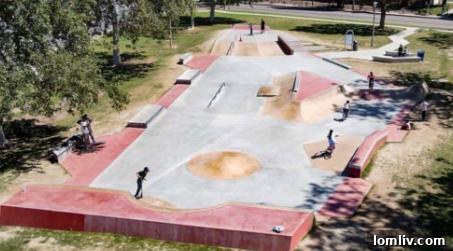
The Glencoe Park proposal envisions a thoughtfully designed 7,000-square-foot structure nestled within the much larger 14-acre park. This modest footprint ensures the skate park will integrate harmoniously with existing park features, rather than dominating the landscape. A key practical advantage highlighted by Karimi is the significantly lower maintenance costs associated with a skate park compared to more traditional amenities like soccer or baseball fields. This makes it a financially prudent investment, maximizing public benefit while minimizing ongoing operational expenses.
“It’s an extension of the playground,” Karimi clarified, emphasizing its role as a complementary recreational offering for a broad demographic, from young beginners to more seasoned riders. He stressed, “This isn’t Tony Hawk’s Dream World,” reinforcing that the plan is for a community-oriented facility, not an extreme sports competition venue. Modern skate parks are engineered for inclusivity, providing diverse terrain suitable for various skill levels, thereby promoting physical activity, fostering skill development, and encouraging positive social interaction within a safe, supervised environment.
Beyond Recreation: The Broader Benefits of Skate Parks for Urban Communities
The establishment of skate parks offers benefits that extend far beyond simple recreational opportunities. These facilities are vital for urban communities as they provide safe, structured spaces for youth, diverting them from potentially less constructive activities. They actively promote physical fitness, coordination, and mental well-being. Furthermore, skate parks cultivate a strong sense of community and belonging among participants, often becoming cultural hubs that celebrate a sport recognized globally and now even featured in the Olympic Games.
For Dallas, a city characterized by its youthful and diverse population, providing such modern amenities is crucial for holistic urban development. It signifies a progressive commitment to supporting a wide array of interests and ensuring that public spaces are dynamic, inclusive, and responsive to the evolving recreational needs of all citizens, moving beyond traditional sports to embrace emerging cultural and athletic pursuits.
The Core of the Opposition: Focus on Location, Not the Concept
While the overall concept of skate parks enjoys broad support, much of the resistance specifically targets the proposed Glencoe Park site. Dallas resident Molly Jambor eloquently articulated this distinction, explaining that the opposition is not against skate parks in principle but rather questions the suitability of this particular location. “It’s the location itself that is facing the opposition,” Jambor wrote on social media, echoing widespread concerns about urban planning practices and the localized impact on neighborhoods.
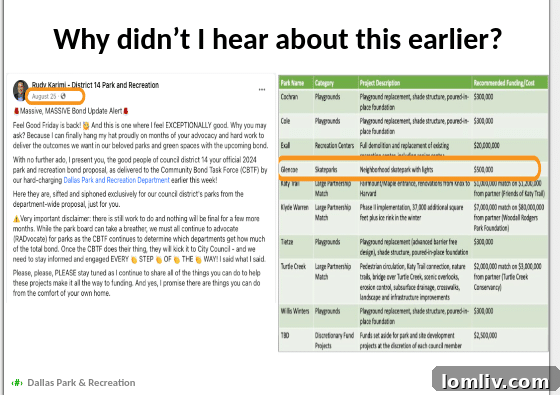
Jambor raised critical questions about the planning process: “What other sites were explored in addition to Glencoe and was a Plan B also proposed? Shouldn’t there be a win-win where the city gets a needed amenity AND the surrounding neighbors express a consensus of support?” These inquiries highlight a community desire for greater transparency, more exhaustive site evaluation, and a genuinely collaborative approach that seeks solutions balancing city-wide recreational needs with specific neighborhood preferences, ultimately striving for outcomes that garner broad community consensus.
Strategic Advantages of the Glencoe Site
Karimi readily acknowledges that a future skate park does not necessarily *have* to be at Glencoe Park. However, he passionately defends the strategic advantages of considering this specific site. “It’s right smack in the middle of Dallas and it serves a very dense population,” he explained, emphasizing its unparalleled central accessibility to a wide cross-section of the city’s residents. He further highlighted its excellent connectivity: “There are two trails. It’s near the DART rail.” This multi-modal accessibility is crucial for promoting sustainable transportation options and reducing car dependence, making the park easily reachable for many without adding significant vehicular traffic.
Addressing the critical concern of neighborhood integration, Karimi pointed to a unique geographical buffer: “It’s in a neighborhood, but that neighborhood — one side of it — is a highway.” He elaborated on this crucial detail: “Out of all my neighborhood parks in District 14, I can look you square in the eyes and tell you more vehicles drive by Glencoe than all of my other neighborhood parks combined because it’s next to U.S. 75.” This proximity to a major highway provides an inherent benefit: “You’ve got some white noise from the highway to drown out what literally is smooth wheels skating on smooth surfaces.” This natural sound attenuation could significantly mitigate noise concerns for immediate residents, offering a unique environmental advantage that many other potential urban park sites might lack.
Public Engagement: Town Halls Reflect Diverse Dallas Sentiments
To ensure robust public input and foster direct dialogue, Rudy Karimi spearheaded two essential town hall meetings regarding the Glencoe Skate Park proposal. The initial meeting was meticulously organized to specifically engage residents from the immediate neighborhoods encircling Glencoe Park. Attended by approximately 90 individuals, this gathering revealed a strong current of local opposition, with about 80 percent of participants expressing firm disapproval of the project. The remaining attendees were either supportive or undecided. Karimi noted, “This meeting was really inclusive of just the neighborhoods surrounding Glencoe,” acknowledging it as a crucial indicator of “how the immediate neighbors felt.” He promptly conveyed these findings to Council Member Paul Ridley, ensuring that localized voices were duly reported at the city’s highest legislative levels.

Less than a week later, on November 1st, Karimi hosted a second town hall, significantly broadening the invitation to encompass all residents of Dallas. This wider outreach attracted a different cross-section of the population and yielded a distinctly different sentiment. Roughly 60 to 70 people attended, and this time, approximately two-thirds voiced their support for the skate park. “At this point, nobody was undecided,” Karimi observed, indicating a clearer, albeit polarized, city-wide opinion. He candidly admitted, “I had hoped for 80 percent to be for it,” yet remained unwavering in his commitment to transparency, stating, “Again, I reported it to [Councilman Ridley] and I was brutally honest.”
Karimi’s balanced approach exemplifies the complexities inherent in public service—the challenge of weighing localized opposition against broader city-wide support. He stressed his dedication to an inclusive process: “I like to hear from people on both sides of the issue.” While clarifying that this is not his personal “passion project,” he underscored his commitment to empowering and supporting the advocates who have invested considerable time and effort in campaigning for these facilities. “I support our skate parks because our advocates have been loud and proud and I support our advocates, but at the same time, you’ve got to hear from the community too,” he articulated, emphasizing the indispensable role of comprehensive community input. His direct message to Dallas residents is clear: “You love the project, let us know. You hate the project, let us know twice.” This open invitation actively encourages robust civic participation from all perspectives.
Reflecting on the potential outcomes, Karimi offered a philosophical perspective on the democratic process: “If this happens at Glencoe, I’m going to say, ‘This was the process working itself out.’ If this fails at Glencoe I’m going to hold my chin up saying we failed being bold and daring. We didn’t fail being cowards for our skate advocates.” His words convey a profound dedication to an open, democratic journey, acknowledging that both success and setbacks are integral parts of a larger civic narrative, transcending individual victories or defeats.
The Critical Phase: The Dallas Bond Election and Funding Allocations
The ultimate fate of the Glencoe Skate Park, alongside a myriad of other crucial urban development projects, now rests with the Dallas City Council. The Community Bond Task Force has diligently fulfilled its mandate, compiling an extensive set of recommendations for the upcoming bond election. These recommendations, which notably include a substantial allocation of $350 million earmarked specifically for parks and recreation initiatives, are scheduled to be formally presented to the Dallas City Council on December 6th.
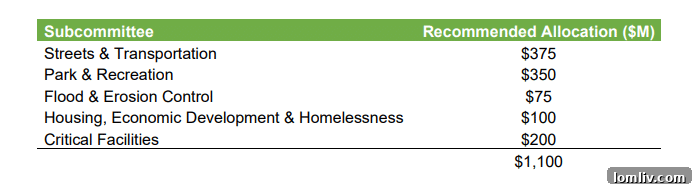
This period initiates a critical and often intense phase within the city’s legislative process, colloquially known as “horse trading.” As Karimi vividly explains, “Council will start slicing and dicing. Some council members will say $350 million is too much for parks.” This dynamic environment inevitably leads to rigorous negotiations and potential adjustments, which could see the initial allocation for parks and recreation reduced. “That will come back to the Park Board and we’re going to have to start slicing and dicing $350 million down to $300 million or whatever it is,” he added, illustrating the fluid and often challenging nature of municipal budget allocation, where competing priorities vie for finite resources.
Safeguarding Essential Skate Park Funding
Amidst these intricate financial deliberations, a crucial assurance has been extended by Dallas Park and Recreation Director John Jenkins. He has committed to the board that skate parks will not be entirely eliminated from the budget, offering a measure of stability for skate park advocates. “He will perhaps relocate a skate park, but he will keep a total of $2.5 million for skate parks,” Karimi confirmed. This vital commitment ensures that, irrespective of the final decision regarding the Glencoe Park site, a substantial investment in skateboarding infrastructure will remain a priority for the city. This funding could potentially support the development of multiple smaller facilities or one significant skate park in an alternative location, demonstrating a sustained dedication to the city’s skateboarding community.
Karimi concluded by underscoring his singular, fervent plea to council members as they undertake the complex task of allocating the bond money: “Do not trade away our skate parks.” His message is both clear and resolute: “The money for a skate park needs to stay for a skate park, whether that’s at Glencoe or somewhere else. Let’s deliver what the skate community needs.” This passionate appeal highlights the paramount importance of dedicated funding and a steadfast commitment to fulfilling the long-standing recreational requirements of Dallas’s skateboarding population. The decisions made in the upcoming weeks will not only sculpt the immediate future of Glencoe Park but will also establish a significant precedent for how Dallas approaches urban recreation, youth engagement, and community development for many years to come.