Spring in Dallas brings more than just blooming flowers; it heralds the much-anticipated season of historic home tours, offering a captivating glimpse into the city’s rich architectural past. Among the myriad of events, the Munger Place Wine Walk and Home Tour consistently stands out as an unmissable experience. This unique tour invites visitors to explore some of Dallas’s most charming and historically significant homes, showcasing a legacy of preservation and community spirit.
The allure of Munger Place, with its beautifully preserved 19th and early 20th-century residences, is undeniable. For enthusiasts of architecture and history, this event provides an extraordinary opportunity to step inside meticulously restored properties and appreciate the craftsmanship of a bygone era. It’s not merely a walk through houses; it’s a journey through time, revealing the stories etched into every brick and beam.
Discovering the Legacy of Munger Place: Dallas’s Historic Gem
Nestled just minutes from downtown Dallas, Munger Place is far more than just a neighborhood; it’s a living museum of American architectural history. Boasting over 250 households, this district proudly holds the largest collection of Prairie-style homes in the United States. Its story began in 1905 when visionary cotton gin manufacturer Robert S. Munger and his brother transformed into developers with a singular goal: to create “The City Man’s Home.”

To ensure a distinguished community, Munger Place was meticulously planned and established as Texas’s very first deed-restricted neighborhood. These early restrictions mandated that homes be at least two stories, cost a minimum of $2,000 to construct, and not face a side street, guaranteeing a consistent standard of elegance. The infrastructure was equally groundbreaking for its time, featuring modern amenities like sidewalks, paved streets, abundant shade trees, advanced sewer systems, gas mains, and electric street lights. It quickly became the coveted address for many of Dallas’s leading businessmen and social elite, cementing its status as a premier residential area.
This enduring vision is precisely what contributes to Munger Place’s never-ending charm and historical significance. The neighborhood stands as a testament to early 20th-century urban planning and a commitment to preserving architectural integrity, making it a pivotal area for understanding Dallas’s growth and heritage.
The Munger Place Wine Walk and Home Tour: An Exclusive Experience
The annual Munger Place Wine Walk and Home Tour offers an exclusive opportunity to immerse yourself in the beauty and history of this distinguished neighborhood. This year, the tour proudly features six exquisite homes, surpassing the traditional five, providing even more historical and architectural insights.
As an added bonus, tour attendees are invited to visit our special “under construction” 1909 History Home. This unique stop offers a behind-the-scenes look at the intricate process of restoring these timeless properties. Here, you’ll gain invaluable knowledge about the rich history of Munger Place and Old East Dallas, all while enjoying complimentary champagne and chocolates. It’s an educational and delightful experience that underscores the dedication involved in preserving these architectural treasures.
Event Details:
- Date: Saturday, April 13th
- Time: 4:00 PM to 8:00 PM (rain or shine)
- Tickets: Purchase online or at Talulah & Hess.
- More Information: Visit the official tour website for details.
Prepare to be inspired by the intricate details, captivating stories, and dedicated preservation efforts that make the Munger Place Wine Walk and Home Tour a highlight of Dallas’s cultural calendar.
Featured Homes: A Closer Look at Munger Place’s Architectural Gems
Each home on the Munger Place Home Tour tells a unique story of restoration, transformation, and enduring charm. This year’s selection highlights diverse architectural styles and showcases incredible dedication to preserving history while adapting for modern living.
5020 Victor: A Masterclass in Modern Restoration
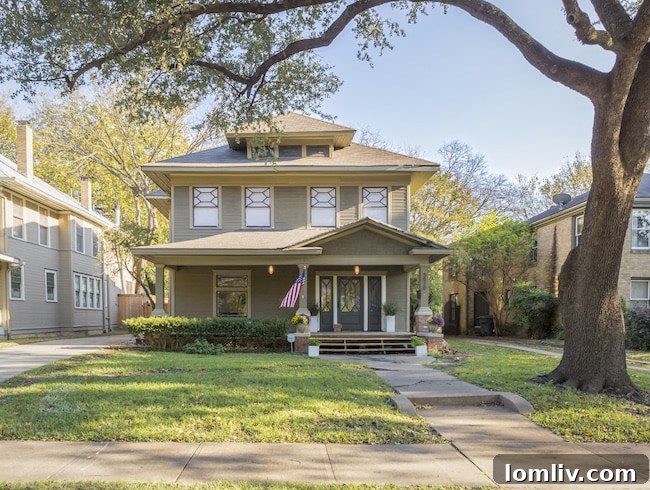
The phrase “total transformation” perfectly encapsulates the incredible journey of 5020 Victor. When design professionals acquired this home in June 2018, it presented a formidable challenge that they met with unparalleled vision and expertise. From the moment you approach, the newly laid brickwork of the front sidewalk hints at the extensive overhaul within. The entire house underwent a comprehensive renovation, including brand-new plumbing, electrical systems, and HVAC, ensuring modern comfort and efficiency.
Crucially, this transformation respected the home’s historic essence. Original features were meticulously retained or replicated. For instance, two intricate 1920s-era metal grates served as inspiration and templates for custom-made replacements used throughout the house. The original floors, now beautifully refinished with a lighter stain, radiate warmth and character. Three original pocket doors, including a magnificent wide-frame entry door, continue to function flawlessly, adding to the home’s period charm. Even the new front door and its elegant sidelights were custom-crafted to mirror the original design.
Inside, contemporary elegance blends seamlessly with historical reverence. A non-period fireplace mantle in the dining room was thoughtfully replaced with a new one that echoes the intricate design of the living room ceiling. The journey from the living room to the kitchen leads through a generous butler’s pantry, a classic touch. The expansive kitchen, creatively incorporating what was once a storage room, now basks in streams of morning sunlight, making it a bright and inviting space for culinary endeavors and gatherings.
4901 Victor: A Seamless Blend of Past and Present
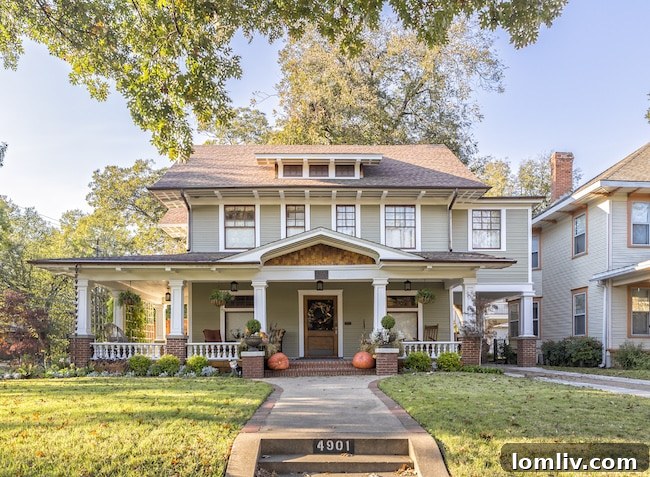
The transformation of 4901 Victor has been a multi-year labor of love, observed with keen interest and eventual delight by Munger Place neighbors. What was once a neglected property has been meticulously revitalized, demonstrating a profound commitment to architectural preservation. The exterior, adorned with charming copper gutters, classic shaker shingles, a beautifully crafted fence, and an inviting trellis that shades part of the wraparound porch, is just a prelude to the equally captivating interior.
While the current owners’ mantra was restoration, the significant disrepair of the house necessitated a thoughtful integration of old and new elements. For instance, the original floors had been sanded almost to the point of no return, leading to the installation of new oak floors downstairs that perfectly complement the home’s aesthetic. The original floorplan, dating back to 1913 (or 1909, records are delightfully contradictory), has been preserved, with a subtle new bump-out thoughtfully added to accommodate a small bathroom adjacent to the great room, enhancing modern functionality without sacrificing historical accuracy. Historical integrity is evident in the sturdy original pocket doors, though the fireplace, on the verge of collapse, was replaced with a new one that harmonizes with the home’s traditional style. The seamless flow from the kitchen to the great room exemplifies how Arts-and-Crafts traditions can be gracefully re-shaped to suit a contemporary lifestyle.
A notable addition is the entirely new “back house,” which served as the owners’ primary residence during the main house’s renovation. This separate dwelling showcases exquisite craftsmanship, featuring rich mesquite, mahogany, and ironwood elements. These are beautifully juxtaposed with highly efficient clay-plaster composite walls and unique salvaged finds, including treasures reclaimed from New York City’s historic South Street Seaport Pier, adding a layer of global history to this Dallas gem.
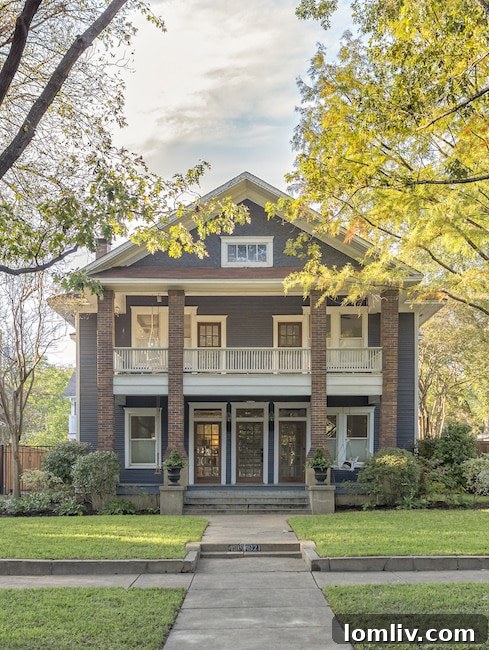
4919 Tremont: From Quadruplex to Single-Family Splendor
Stepping up to this captivating 1920 home at 4919 Tremont, visitors are immediately presented with a fascinating choice of front-entry doors. These options, alongside two distinct address numbers elegantly etched into the glass of transom windows, offer clear evidence of its intriguing past: this charming single-family residence was, until as recently as 2013, a four-plex. Given the house’s current bright, open spaces and effortless flow, it becomes a delightful challenge for visitors to imagine its former configuration as four separate compartments, turning the tour into a fun guessing game of past layouts.
The living room is graced by impressive coffered ceilings and an inviting brick fireplace, establishing a warm and elegant ambiance. Beyond the dining room, a generously proportioned galley kitchen spans nearly the entire width of the house, offering abundant counter space for culinary pursuits. Downstairs, two bathrooms provide a study in contrast: one is modern and spacious, while the other charmingly retains classic elements such as beaded board and a luxurious clawfoot tub, celebrating the home’s heritage. In the TV room, the current homeowners thoughtfully added a custom-built wall of shelving, replacing outdated racks for CDs and creating a more functional and aesthetically pleasing space.
Upstairs, custom woodwork continues to impress, notably in the boy’s bedroom with its ingenious built-in bunkbed. Not to be outdone, the girl’s bedroom offers its own unique charms, featuring both a private balcony and an elegant fireplace. The master suite is a sanctuary of comfort and style, boasting a recently remodeled bathroom, a convenient walk-through dressing room, and a versatile office space that now serves as a serene corner retreat and dedicated yoga nook, reflecting the thoughtful adaptation of historic spaces for modern living.
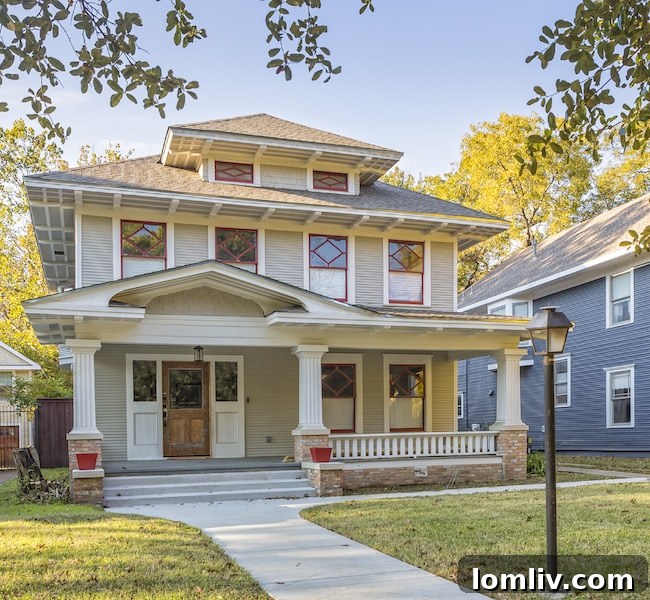
4921 Victor Street – Diane Jackson-Abel and Mark Abel: A Century of Revival
The home of Diane Jackson-Abel and Mark Abel at 4921 Victor Street embodies a truly remarkable tale of revival. When they first toured this 1910 Craftsman as prospective buyers in 2016, the house had been neglected and vacant for over a decade, with floors so compromised that one had to tread lightly to avoid seeing the visible ground beneath. It was a haven for an extended family of raccoons in the attic, a testament to its dire state. The comprehensive restoration demanded an entirely new plumbing system and a complete overhaul of the antiquated knob-and-tube wiring. Furthermore, for the first time in its long history, the house was fitted with central air conditioning, bringing modern comfort to a century-old structure.
Layer upon layer of old wallpaper was painstakingly removed—only small scraps could be salvaged without crumbling—revealing the sturdy shiplap beneath. This original shiplap has been deliberately left exposed in the breakfast nook and stairwell, offering a raw, authentic connection to the past. Similarly, glimpses of interior brickwork appear throughout the house, adding texture and historical depth. While some original pine floors had been covered with thin oak laminate, many were fortunately salvageable and have been lovingly restored.
Given its past as a multi-family dwelling, the home once had a surplus of front doors. These have been inventively repurposed within the house; a former pocket door now hangs barn-door style in the family room, and two repurposed screen doors in the kitchen cleverly conceal a pantry and a laundry room. The kitchen itself is a tribute to period accuracy and modern functionality, featuring a vintage O’Keefe and Merritt stove, elegant soapstone counters, and a pine-topped island. To accommodate a large family, the floorplan was thoughtfully reconfigured, with former back porches enclosed to create a modern master bath downstairs and an airy, versatile general-purpose room upstairs. From windows and doors to walls and floors, almost every aspect of this classic Craftsman has been laboriously rehabilitated, breathing vibrant new life into a home that has sheltered many over more than a century.
A Glimpse into the Past: History of 4921 (and sometimes 4923) Victor Street
Constructed between 1910-1911, this home was originally built for William F. Miller, a collector for John Hancock and Co. In 1919, the Joseph J. Holliday family briefly resided here. Mr. Holliday and his son, both realtors, were likely the “house flippers” of their era, actively buying, living in, and selling several homes in the neighborhood. Later that year, Ettie and Oscar Hill True purchased the home for $11,500, making it their residence with their two children until at least 1930. Oscar was the Secretary Treasurer for Dallas Service Stations and Treasurer for Parkmoor, businesses focused on “automobile garage storage, washing, tires, oils, gasoline, batteries, etc.”
By the mid-1930s, the home had undergone partitioning, reflecting a common trend in a block of Victor that consistently included multi-family dwellings. From 1943 until 1950, Bennie Wyatt of Wyatt Metal and Boiler Works owned and lived in part of the home, renting out the other side of what was then a duplex. By 1956, the property had been further divided into three distinct apartments. This rich history underscores the cyclical nature of urban living and the constant evolution of historic properties, ultimately leading to its current residents acquiring it in the summer of 2016 after it had been vacant for at least a decade.
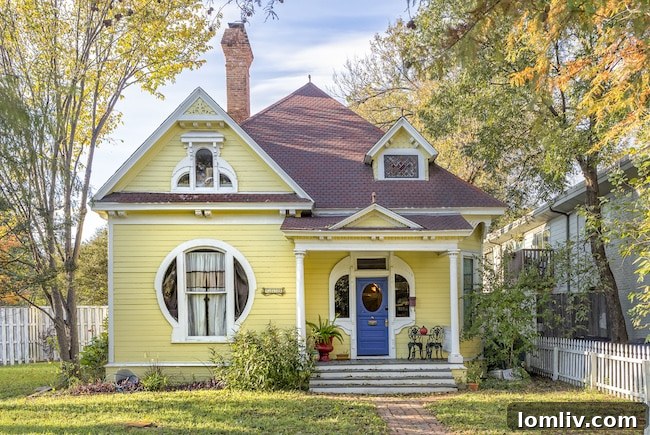
4909 Reiger Avenue – Dawn McMullan and Clyde Thompson: A Victorian Anomaly
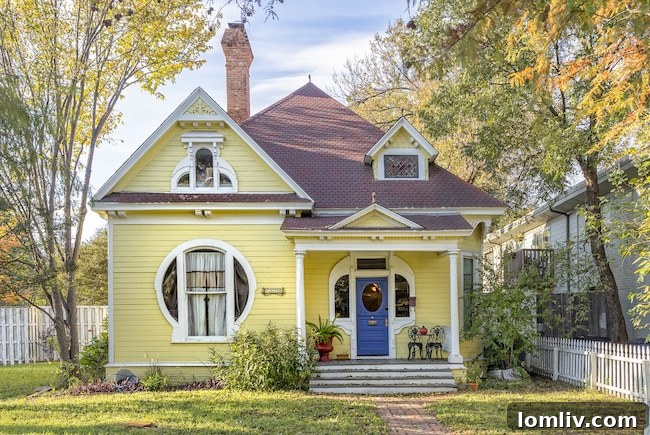
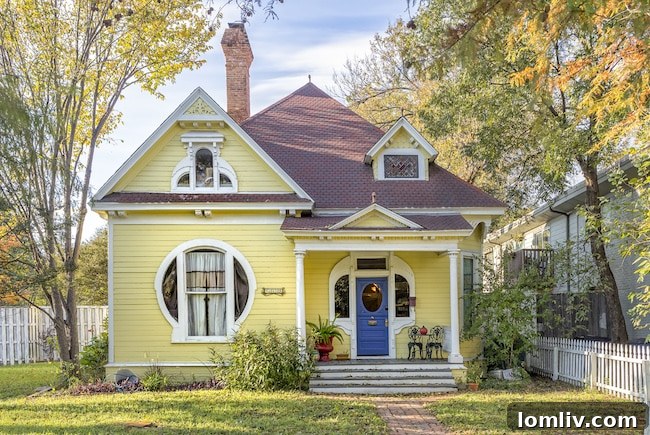
Standing as one of only three Victorian-era homes within the predominantly Prairie-style Munger Place Historic District, the residence of Dawn McMullan and Clyde Thompson at 4909 Reiger Avenue, along with its immediate neighbor, captivates with its distinctive colors and almost whimsical architectural style. What makes this home even more unique is its intriguing journey: both houses were moved to their current locations, albeit at different times, with this particular residence reportedly originating from the historic Lawther Farm on White Rock Lake. While straight lines and right angles define the Prairie-style and Arts-and-Crafts homes typical of the neighborhood, 4909 Reiger embraces circles, ovals, and rounded arches, contributing to its unparalleled character.
The interior echoes these geometric elements, with beautiful stained glass, ornamental transoms, and unique window designs creating a cohesive aesthetic. Few structural changes have been made to the two front rooms, though the fireplace frame and mantle likely date from a slightly later period. The heart-pine floors throughout the house are presumed original, including the meticulously restored flooring in the very recently remodeled kitchen. Downstairs, the layout has seen minor, thoughtful adjustments: a doorway connecting to the stairs and what is now the master bedroom was widened, and the master suite was reconfigured to optimize space, reducing an oversized bathroom and cleverly incorporating novel, post-Victorian features: closets.
The upstairs, however, underwent a more significant transformation. Until 2006, it was a single, open living space. After serving as the family bedroom for eight years, the current owners wisely walled off separate areas to create distinct bedrooms, a comfortable sitting room, and an efficient office. Outside, a deep and inviting back porch overlooks a spacious yard featuring an appealing stone-and-crushed-rock patio, perfectly suited for large outdoor gatherings and reflecting the home’s blend of historical charm and modern liveability.
A Historical Footnote: The Journey of 4909 Reiger
The 4900 block of Reiger Avenue predates the formal establishment of Munger Place by several years, with seven now-demolished houses built here in 1903. When Munger Place was formally designated an historic district, this block contained only six other historic structures, some of which have since been lost. This particular home, believed to have been built in the 1880s, was moved onto this block from White Rock Lake, likely from the Lawther Farm. Interestingly, while the neighboring house at 4903 Reiger shares many architectural features, it was moved from a different site in 1977. An old ordinance even indicates that a third Victorian house was intended to be moved to the lot between the two, a plan that ultimately never materialized. Despite its unique story and striking presence, little other specific historical information about this particular house has been discovered, adding to its mystique.
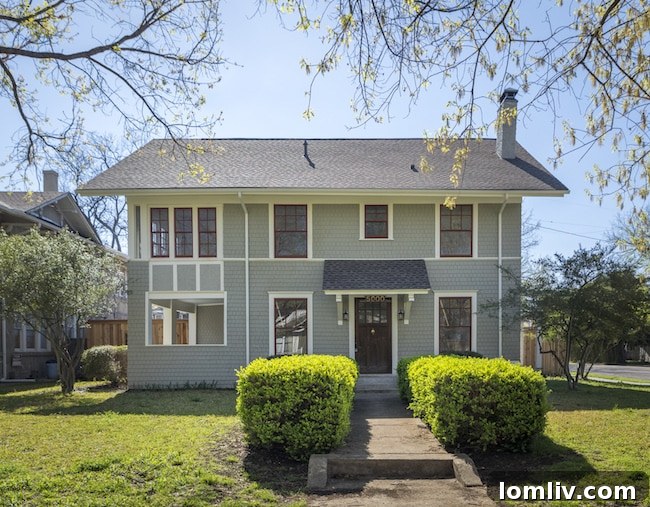
5000 Worth – Munger Place Wine Walk Work in Progress: The Art of Unfinished Dreams
For many owners of historic homes, the journey is often described as a perpetual project – a labor of love that is never truly finished. The house at 5000 Worth, modestly situated on the corner of Collett and Worth, embodies this sentiment beautifully, serving as this year’s “Work in Progress” feature. It was once the site of a decades-long ambition by a couple who dreamed big, meticulously collecting materials and embellishments, slowly preparing the canvas for their grand vision. However, as time wore on, the immense undertaking proved too much, and their drive eventually waned, leaving the project in limbo.
This is where the story takes a new turn. A skilled local craftsman and his investment partner acquired the house, dramatically accelerating the pace of its renovation. Within the last year, almost every aspect of this structure, from its foundation to its roof, has been meticulously straightened, gussied up, refinished, refurbished, or otherwise painstakingly brought back to life. It stands as a testament to the passion and expertise required to revitalize historic properties.
At 4,000 square feet, this home is among the larger residences in Munger Place. Originally a 1909 Sears and Roebuck kit house, a “deluxe edition” classic four-square, it appears to have been expanded almost immediately by its first owners. A century later, clever engineering has allowed for a remarkably spacious new open floorplan downstairs, perfectly blending historical character with modern functionality. Two floors above, the vast dimensions of the former attic practically compelled its conversion into a configurable third-floor living space, offering incredible flexibility for future owners. This dynamic property represents the ongoing commitment to preservation and the endless possibilities within historic homes. No hardhats are required for this tour stop, but visitors will witness the final stages of a significant renovation and may even have the opportunity to meet some of the dedicated vendors who contributed to its inspiring revitalization, offering a rare glimpse into the heart of historic home restoration.
Embrace Dallas’s Heritage: The Enduring Appeal of Munger Place
The Munger Place Wine Walk and Home Tour is more than just an event; it’s a celebration of Dallas’s architectural heritage and the vibrant community dedicated to its preservation. Each home visited offers a unique narrative of history, transformation, and modern living, showcasing how these magnificent structures are lovingly maintained and adapted for future generations.
By attending this tour, you not only gain access to stunning properties but also contribute to the ongoing efforts to safeguard the unique character of neighborhoods like Munger Place and Old East Dallas. It’s an opportunity to connect with the city’s past, appreciate exquisite design, and support the community that makes these tours possible. Don’t miss your chance to explore these timeless homes and experience the enduring charm of one of Texas’s most historically significant districts.