From Neglect to Grandeur: The Dazzling Restoration of a Historic 1902 Queen Anne Victorian in Dallas
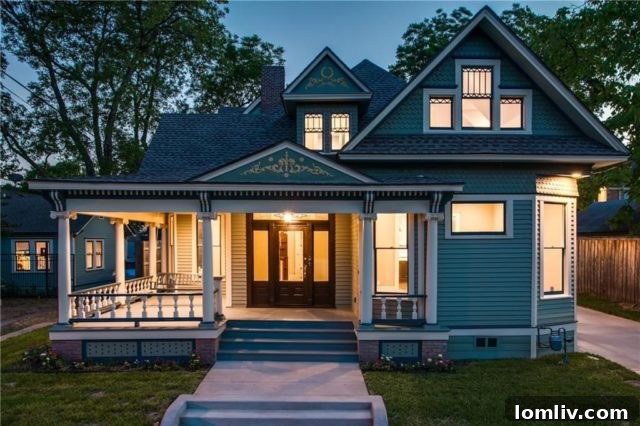
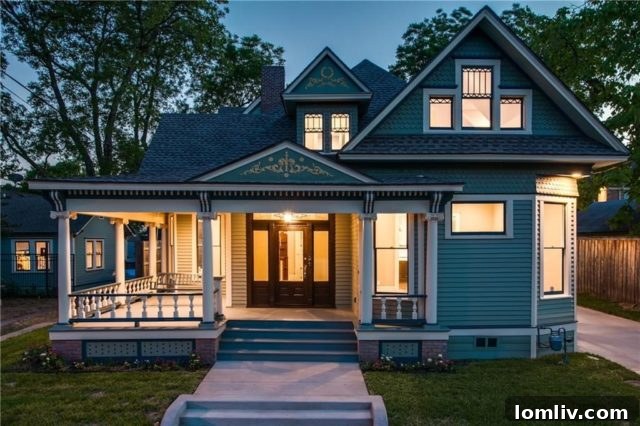
In the vibrant heart of Dallas, where historic districts tell tales of a bygone era, one couple has dedicated their passion to reviving forgotten architectural treasures. Patricia Simon, a dedicated orthodontist by profession, channels her precision and meticulous eye into restoring historic Dallas homes, often alongside her husband, Kyle. Having already breathed new life into their own residence within the revered Peak Suburban Addition Historic District, their discerning gaze fell upon a new, more ambitious project: an aging 1902 Queen Anne Victorian on Moreland Avenue. This architectural marvel, once a beacon of early 20th-century elegance, had sadly succumbed to decades of deferred maintenance and the relentless march of time, patiently awaiting its renaissance.
“It stands as one of the last remaining original Victorians in this cherished neighborhood,” Simon proudly remarked one Sunday, surveying the completed masterpiece. She elaborated on the unique history of the area, noting, “While other grand Victorians grace these streets, many — though not all — were relocated here from different parts of the city. This particular home holds the distinction of being truly indigenous to its plot.”
The Vision for a Timeless Gem: Rescuing a 1902 Dallas Victorian
The journey to restore the Moreland Avenue Victorian was not merely about renovation; it was an archaeological excavation of the past. Patricia and Kyle embarked on their endeavor by meticulously attempting to piece together the home’s original floor plan. Over its extensive history, the house had undergone several additions, each leaving its mark on the interior layout. While it was a single-family dwelling at the time of their purchase, vestiges of its past life as a multi-family residence remained, presenting a complex puzzle.
Simon, a keen historian of her chosen projects, explained the context of these alterations. “During the housing shortages of the 1930s and 1940s, it was common practice to subdivide larger homes,” she clarified. “At one point, this magnificent structure was carved into four distinct apartments, and many of those utilitarian changes were still evident, obscuring its original grandeur.” She speculated further, “It likely served as a boarding house, offering temporary lodging during those tumultuous times.”
Their initial steps involved a careful assessment: determining which elements could be painstakingly preserved and which would necessitate replacement. This delicate balance between historical accuracy and contemporary functionality became the guiding principle of their work. “Our approach is a profound nod to the past, honoring the home’s heritage, but we also acknowledge the necessity of living comfortably in the present,” Simon articulated, reflecting on the harmonious outcome of their extensive efforts.
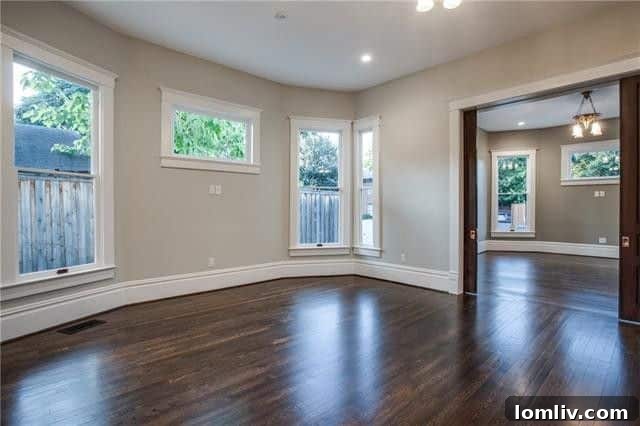
Sourcing authentic period-appropriate elements for the original front portion of the home proved to be a treasure hunt. “What wasn’t already here, we meticulously sought out,” Simon recounted. This quest led them far and wide; the antique lighting fixtures, for instance, were carefully acquired from specialized dealers in Fort Worth and Alabama, each piece chosen to perfectly complement the home’s era. A serendipitous discovery of a hidden track for pocket doors, where French doors had once stood, prompted them to source and install a period-perfect set of pocket doors, reintroducing a charming and functional original feature.
Architectural Heritage Reclaimed: The Meticulous Restoration Process
The living room’s mantelpiece offered another testament to their dedication. Discovered tucked away in the attic, it bore the scars of a past fire. Through a combination of restoring its original parts and carefully crafting recreations where necessary, the historic fireplace was resurrected, once again becoming a stately focal point. Simon faced a particular challenge with the fireplace surround. “The original surround featured distinctive green tile, and despite extensive searching, I was unable to find an exact match,” she admitted, highlighting the common difficulties encountered in authentic historic restoration.
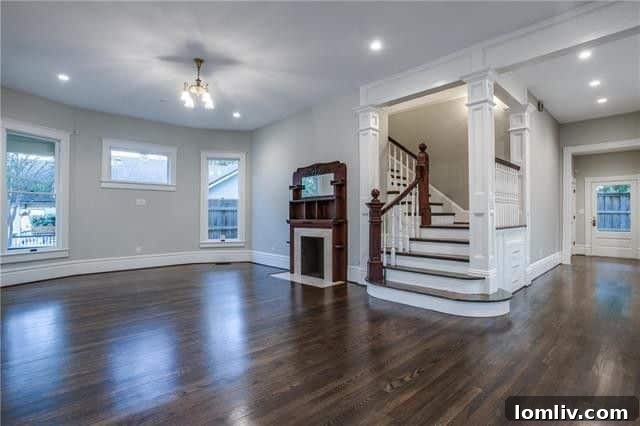
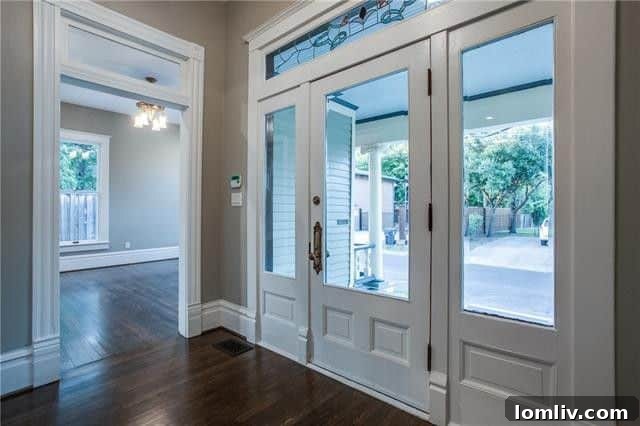
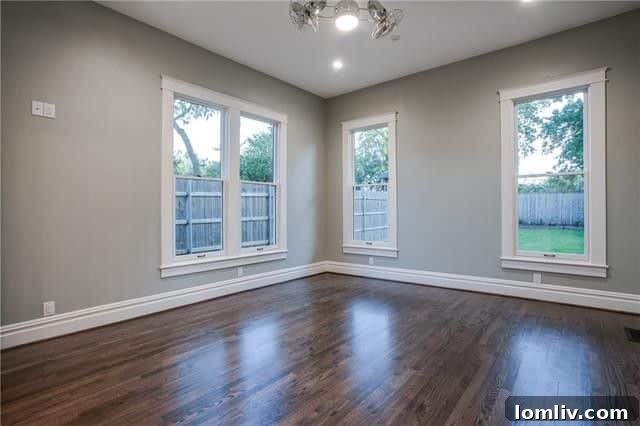
The home’s flooring revealed layers of its past. Beneath oak floors, installed sometime in the 1920s, lay the original wide-plank pine floors. The Simons chose to lovingly restore the elegant oak flooring, which now gleams, acting as a natural reflector for the abundant light streaming in through the large windows. These windows themselves are a marvel, retaining their original hardware and operating smoothly, a testament to the enduring quality of 1902 craftsmanship.
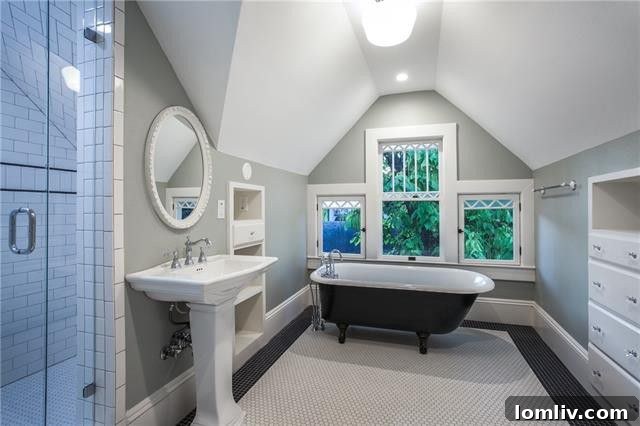
Throughout the original sections of the house, the intricate stained glass panels, characteristic of Queen Anne design, were painstakingly restored to their former kaleidoscopic glory. Similarly, the detailed original trim work, which often suffers from years of paint and damage, received meticulous attention, revealing its crisp lines and historical beauty once more. This level of detail in preserving and restoring these delicate features truly elevates the home’s authentic charm.
The Grand Staircase Reimagined: A Modern Approach to Historic Flow
Perhaps one of the most significant and surprising transformations in the home involves the grand staircase. This impressive architectural feature, which now elegantly greets visitors upon entering the front doors, was not part of the original 1902 design. “The house’s original staircase was incredibly narrow,” Simon explained, recalling the impracticality of its former layout. “I seriously doubted one could even maneuver a full-sized mattress up those stairs, let alone furniture for modern living.”
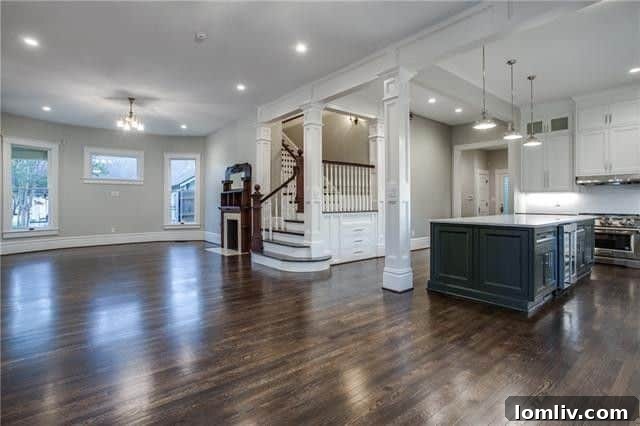
To address this major functional limitation, Patricia and Kyle made a bold decision. They strategically pivoted the staircase’s entry point, redirecting it from what is now the kitchen into the more expansive living room. Simultaneously, they widened the entire structure and repositioned the newel posts to create a more imposing and welcoming ascent. When one of the existing newel posts proved incompatible with the new configuration, their skilled contractor rose to the occasion, meticulously crafting a new one that seamlessly matched the original style and period, ensuring visual continuity.
Addressing Structural Challenges: Rooflines and Room Layouts
The home’s accumulated additions over the decades had also left the roof in a somewhat haphazard and structurally fragmented state, a jumble of disparate peaks and pitches that were both aesthetically displeasing and difficult to maintain. A significant part of the renovation involved carefully removing the old roof layers and entirely reframing the structure. This comprehensive effort resulted in a more cohesive, visually pleasing, and far more easily maintained configuration, bringing the exterior back to a state of architectural integrity.
Beyond structural improvements, the Simons dedicated considerable thought to making the home eminently family-friendly. Downstairs, a spacious master suite was thoughtfully designed with versatility in mind, easily capable of transforming into a private, comfortable mother-in-law suite, offering flexible living arrangements for multi-generational families or guests.
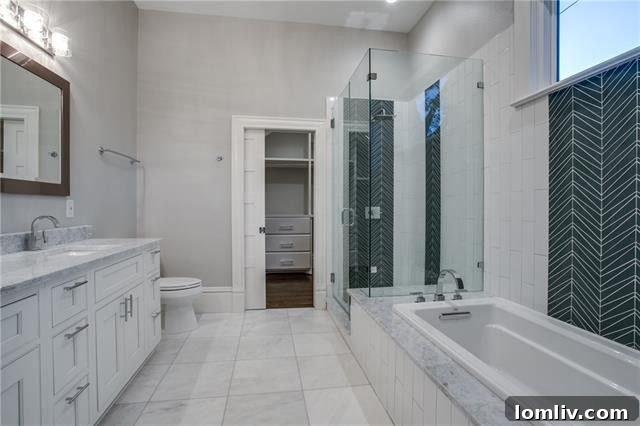
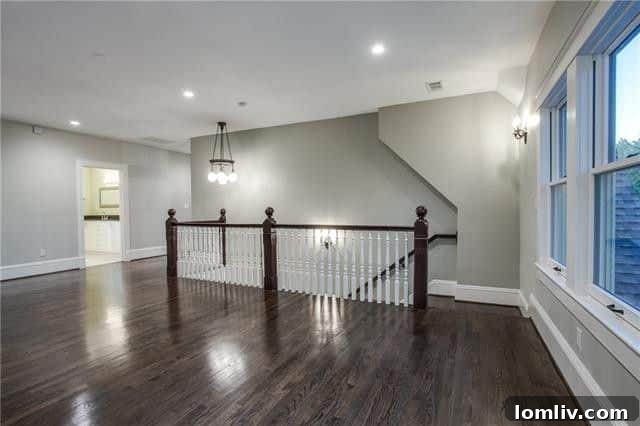
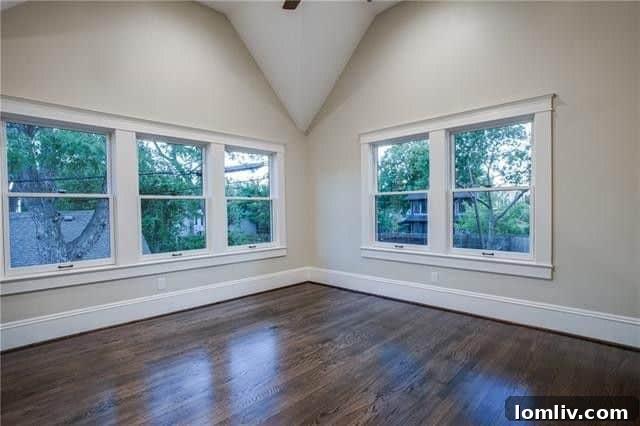
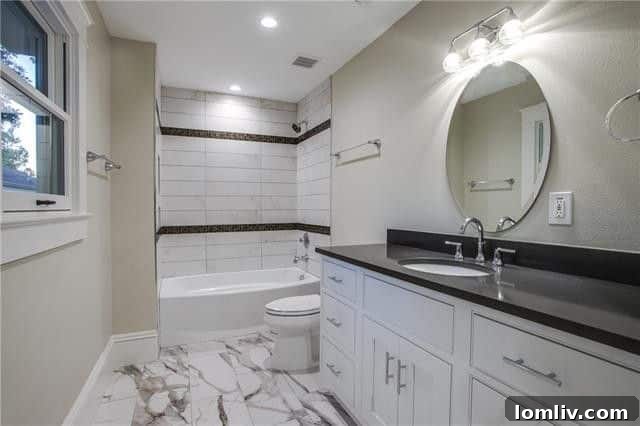
Upstairs, the sprawling landing has been ingeniously transformed into a large, inviting playroom area and a dedicated TV room, creating a dynamic central hub for children and family activities. Tucked away behind this vibrant space is another luxurious master suite, offering privacy and comfort, while additional well-appointed bedrooms and bathrooms line the perimeter of the landing, providing ample accommodation for a growing family or visitors.
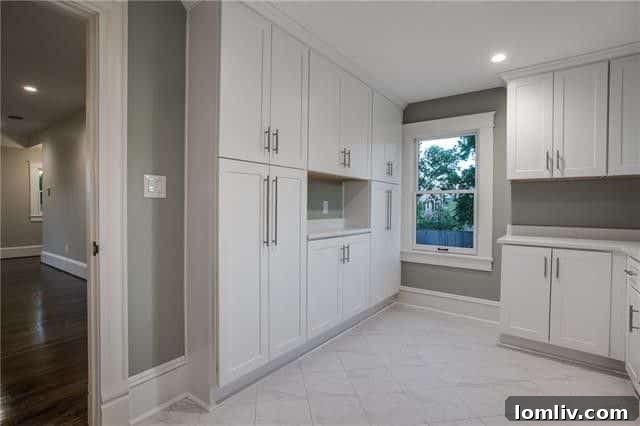
Understanding the demands of modern family life, the home now boasts two dedicated laundry rooms. A generously sized primary laundry room is conveniently located upstairs, serving the main family bedrooms. Additionally, a smaller, discreet laundry hookup has been cleverly integrated into the huge pantry adjacent to the kitchen, a thoughtful detail ensuring that kitchen linens and the laundry from the master suite occupants can be managed without the inconvenience of hauling items up and down the main staircase.
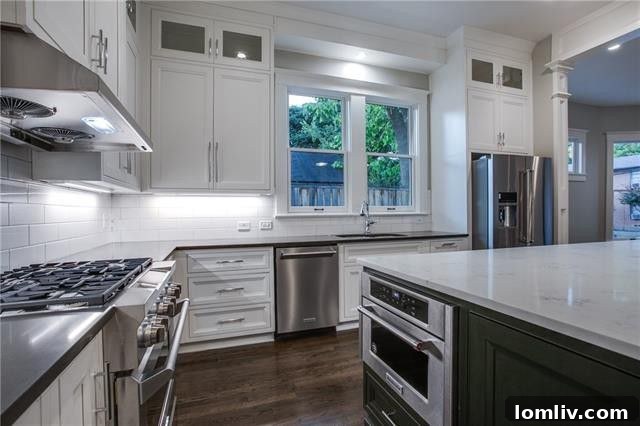
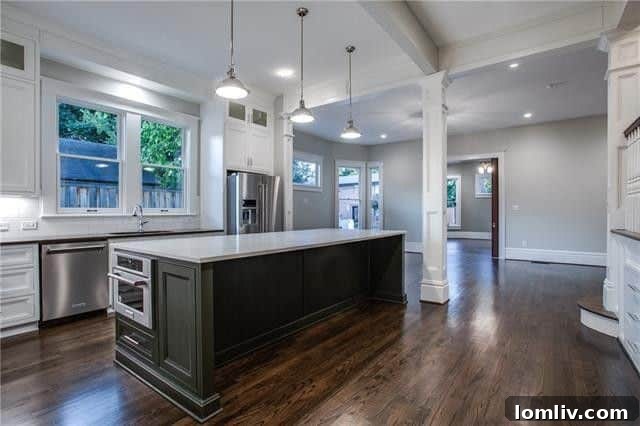
The chef’s kitchen, a true highlight of the renovation, is a masterpiece of both form and function. It features elegant quartz countertops, custom-designed cabinetry that maximizes storage and aesthetic appeal, and a full suite of gleaming stainless steel appliances. With an abundance of counter space and a thoughtful layout, this kitchen is not only a culinary dream but also an ideal hub for entertaining guests, designed to accommodate large gatherings with ease and style.
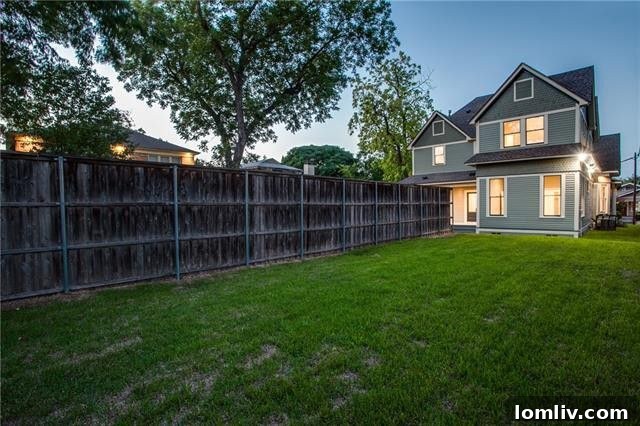
Beyond the stunning interiors, a welcoming back porch provides a tranquil vantage point, overlooking an expansive yard that offers ample space for outdoor activities and even boasts the potential for a future swimming pool, creating a perfect blend of indoor comfort and outdoor living.
Unearthing a Century of Stories: The Home’s Rich History
Patricia Simon’s commitment to the Moreland Avenue home extended far beyond its physical structure; she delved deep into its historical narrative, meticulously researching the lives of the people who called it home so many years ago. Her research uncovered fascinating details, including the surprising fact that the house at 1007 Moreland Avenue didn’t always bear that address. At one point in its early life, it actually faced the prestigious Swiss Avenue, a notable shift that spoke volumes about the area’s development.
The story began in 1902 when Harrison Self originally constructed the home. However, it was swiftly sold by 1904 to Jacob “Jake” Ullman, a German immigrant, and his wife, Nettie. It was within these very walls that the Ullmans raised their two daughters, Berniece and Selma, creating a cherished family legacy. Tragedy struck in 1913 with Jacob’s passing. Interestingly, by the time the girls completed high school, a significant event occurred: the house was physically picked up, moved to what was essentially the back of their substantial property, and ingeniously reoriented to face Moreland Avenue, marking a pivotal moment in its history.
Simon’s research suggests that Nettie and her daughters departed the home around 1920, coinciding with the girls attending boarding school. Nettie likely followed, renting homes in closer proximity to their school. “It appears that sometime between 1924 and 1925, the house was definitively pivoted from its original Swiss Avenue orientation to its current Moreland Avenue address,” Simon explained, highlighting the logistical marvel of such an undertaking in that era. She noted that the original property parcels were much larger, but were progressively sold off over time.
Further confirming the home’s evolving identity, Simon’s findings indicated that as early as 1923, city directories began to list multiple unrelated individuals residing in the house, foreshadowing its later conversion. Eventually, it explicitly appeared as four separate apartments, illustrating the growing demand for housing. Additional entrances were added to the southeast side and the rear of the house in the 1950s, utilitarian changes that unfortunately altered the original roofline, adding to the structural complexity encountered by the Simons.
“In certain sections, a hipped roof was even constructed and placed directly on top of the original roof structure,” Simon detailed, illustrating the layered history embedded within the home’s very framework. Another set of stairs was also introduced at some point during its multi-family tenure, further complicating the floor plan.
A Legacy Preserved: Ready for a New Chapter
When Patricia and Kyle Simon commenced their monumental work in 2015, the historic Queen Anne Victorian was indeed suffering from many decades of neglect, a faded echo of its former grandeur. However, through their unwavering dedication, meticulous planning, and skilled execution, the house has been magnificently transformed. It now stands as a testament to historic preservation, perfectly suited for a modern family, brimming with renewed life and a captivating blend of historical charm and contemporary convenience.
With its rich history carefully preserved and its future beautifully secured, the Simons are now ready to entrust this exceptional residence to its next custodians. This remarkable Dallas historic home, a true gem in the Peak Suburban Addition Historic District, is currently listed for $999,999 by the esteemed Robert Blackman, awaiting a family eager to write the next chapter in its storied existence.
Visual Journey: Witness the Transformation – Before & After
Curious to see the full extent of this extraordinary restoration work? We invite you to experience the dramatic transformation firsthand. Explore our comprehensive slideshow featuring compelling before and after photographs, generously provided by Patricia Simon, which truly capture the incredible scope and success of this remarkable historic renovation project.