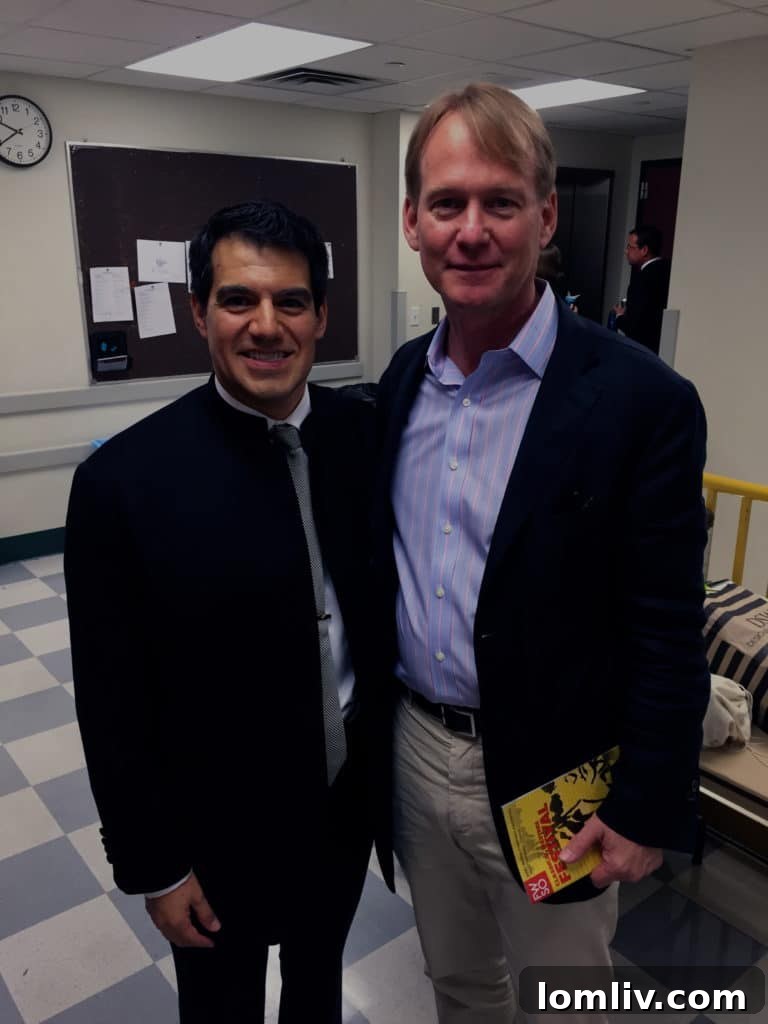
Life, in its perpetual unfolding, occasionally bestows upon us gifts of profound significance. Among these, the discovery of a new friend stands out as a rare and cherished occurrence. Even rarer, perhaps, is to forge such a connection in mid-life, especially with an individual whose spirit and passions resonate deeply across numerous facets of shared experience. It is with immense gratitude that I reflect upon finding such a friend in Maestro Miguel Harth-Bedoya, a remarkable artist and conductor whose presence enriches not only the musical landscape of Fort Worth but also the personal lives of those fortunate enough to know him.
My admiration for great conductors has been a cornerstone of my appreciation for classical music, shaping my understanding of its power and nuance. I carry fond memories of luminaries like the late Nicola Rescigno, the visionary artistic director of the Dallas Opera, whose baton guided many of Maria Callas’s most exquisite recital recordings. His legacy of passionate interpretation and dedication to operatic excellence continues to inspire. Similarly, I recall with great fortune meeting Valery Gergiev, widely regarded as one of the greatest living conductors, during his inaugural New York Kirov tour in 1992. Gergiev’s electrifying presence and unparalleled musical depth left an indelible mark. It is within this lineage of exceptional talent that Maestro Harth-Bedoya carves his own distinguished path, having even served as an assistant conductor to Gergiev, a testament to his early promise and an indicator of the extraordinary career that lay ahead.
The cultural vibrancy of Fort Worth is profoundly elevated by the presence of Maestro Miguel Harth-Bedoya. The Fort Worth Symphony Orchestra is truly privileged to share the immense talent of this energetic, Peruvian-born, Julliard-educated music director. His renown extends far beyond the borders of Texas, as he simultaneously holds the esteemed position of chief conductor of the Norwegian Radio Orchestra in Oslo, a role that sees him commute between continents, bringing his distinctive vision to diverse audiences. Indeed, the Maestro’s schedule is a testament to his global demand, frequently taking him to the world’s most celebrated music capitals. Closer to home, Harth-Bedoya also contributes significantly to the next generation of musicians, holding a distinguished guest professorship in conducting at Texas Christian University (TCU). This multi-faceted engagement highlights his commitment not only to performance but also to music education and the cultivation of future talent, firmly embedding him within the academic and cultural fabric of Fort Worth.
Last week, a delightful evening of spirited conversation and heartfelt sentiment at dinner culminated in a most generous invitation to attend the opening of the Fort Worth Symphony season. This invitation served as a poignant reminder of the rich tapestry of arts and culture that defines our city. If one ever ponders why our real estate in Fort Worth commands such audacious attention and value, the answer becomes gloriously clear by simply securing a seat at one of our symphonies. Fort Worth offers more than just a thriving economy and picturesque landscapes; it provides a deeply enriching cultural experience that enhances the quality of life for its residents. The symphony, as a cornerstone of our arts scene, is a powerful draw, reflecting a community that values beauty, intellectual stimulation, and world-class artistic expression. It’s an integral part of what makes Fort Worth an exceptional place to live and invest.
The program for the evening was nothing short of a masterclass in classical curation, metaphorically dubbed “Tafelspitz and Erdapfeln.” This delightful analogy, referring to traditional Viennese “meat and potatoes” staples, perfectly encapsulated the essence of the performance. On the surface, the selections – Haydn, Mozart, and Beethoven – might appear to be basic, familiar fare to any classical music enthusiast. However, in the hands of a true master chef, or in this case, a master conductor like Miguel Harth-Bedoya, even the most fundamental ingredients can be transformed into something exquisitely rich, layered, and profoundly satisfying. The program promised an evening where familiar melodies would be imbued with fresh perspectives and emotional depth, elevating the seemingly simple into the sublime, and it delivered spectacularly.
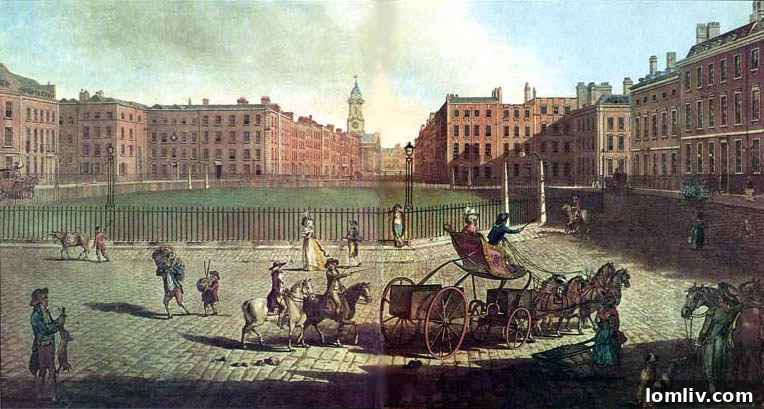
The evening commenced with Franz Joseph Haydn’s Symphony No. 96 in D Major, affectionately known as “The Miracle.” This work is a significant entry in Haydn’s illustrious “London Symphonies,” a series of twelve symphonies composed during his two highly successful visits to London in the 1790s. Symphony No. 96 first premiered at the elegant Hanover Square Rooms, also known as the Queen’s Concert Rooms, a principal music venue in London during the late 18th century, which tragically met its demolition in 1900. Its interior once boasted decorative paintings by the renowned artist Thomas Gainsborough, adding to its prestige. Maestro Harth-Bedoya’s interpretation of this classic was both robust and wonderfully buoyant. He eschewed a rigidly driven approach, instead allowing the music ample space to breathe and take its natural shape, revealing its inherent charm and wit. Passages of ravishing beauty, particularly emanating from the horns and woodwinds in the lyrical second movement, still echo in my memory, leaving an impression of delicate power and grace that truly transported the audience.
Following Haydn’s vibrant symphony, the program continued with Wolfgang Amadeus Mozart’s Clarinet Concerto in A Major, K. 622. This iconic work, composed in the same year as Haydn’s 96th, holds a special place in the hearts of many, famously featuring in the film “Out of Africa.” Maestro Harth-Bedoya thoughtfully observed, “It’s the last composition of Mozart before the Requiem,” emphasizing its poignant significance in the composer’s final creative period. He further noted that “its lyricism resembles his operatic work,” a profound insight into the concerto’s vocal quality and dramatic depth. The stage welcomed back Ana Victoria Luperi, former principal clarinet for the Fort Worth Symphony, who returned as the soloist. Her performance was a breathtaking display of technically dazzling precision, effortlessly navigating the concerto’s intricate passages with clarity and grace. Together, Maestro Harth-Bedoya and Ms. Luperi manipulated the dynamics of the music with exquisite sensitivity, crafting a deeply poignant and romantic interpretation. The well-known Adagio movement, in particular, transcended mere instrumental performance, emerging indeed like a plaintive aria, rich with emotion and human yearning, resonating deeply with every listener.
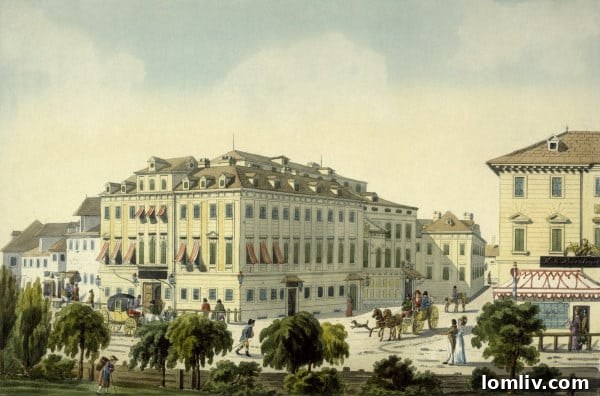
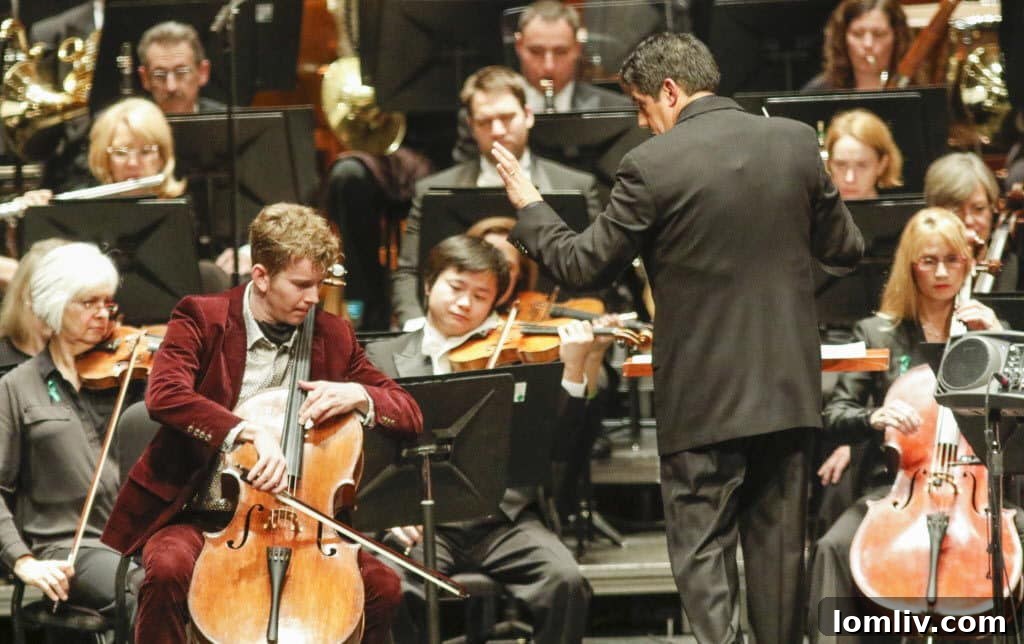
The second half of the concert opened with Ludwig van Beethoven’s Overture to Fidelio. As Beethoven’s only opera, Fidelio carries profound themes of freedom, justice, and marital love, which are powerfully encapsulated within its overture. The opera itself premiered in 1803 at Vienna’s Theater an der Wien and underwent several significant revisions before reaching its final and most recognized incarnation in 1814. The overture performed this evening dates from this definitive 1814 version, renowned for its dramatic intensity and heroic sweep. Maestro Miguel Harth-Bedoya, with his characteristic fervor and masterful control, truly set the orchestra on fire from the very first notes. He ignited a passionate energy that permeated the hall, yet simultaneously maintained an impeccably tight discipline across all sections. This remarkable balance between raw power and precise execution allowed the overture’s dramatic narrative – from its periods of intense struggle to its moments of triumphant heroism – to unfold with breathtaking clarity and overwhelming emotional impact, preparing the audience for the grand finale of the program.
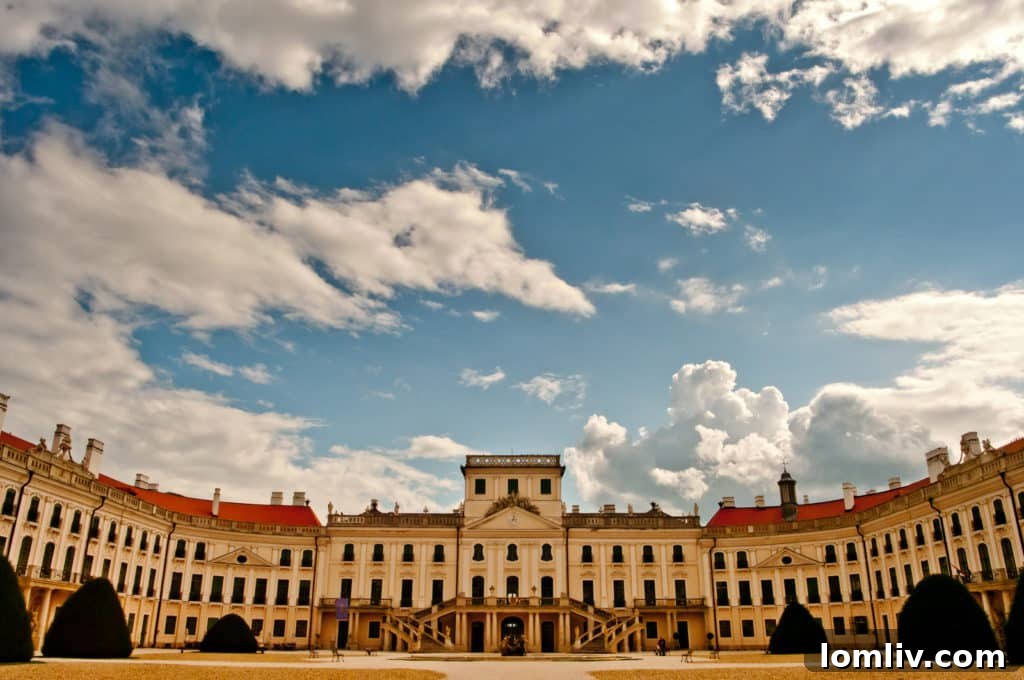
The program concluded with another masterpiece by Haydn, his Symphony No. 45 in F-sharp minor, famously known as the “Farewell” Symphony. The historical anecdote behind this work is as charming as its music is ingenious. Legend has it that Haydn composed this symphony in 1772 as a subtle, yet unmistakable, plea to his patron, Prince Esterházy. The Prince and his court had significantly overstayed their retreat at the Esterháza summer palace, and Haydn, along with his entire orchestra, were eager to return to their homes in Vienna. In the symphony’s final movement, Haydn devised a remarkably clever and theatrical protest: one by one, the musicians progressively stop playing, blow out the candle on their music stand, and quietly leave the stage, until only a few remain. It was a not-so-subtle hint to their patron that it was time to pack up and go home. Maestro Harth-Bedoya’s rendition of this iconic piece was imbued with such authoritative finesse and infectious brio that this two-hundred-and-forty-year-old musical joke, which concludes the work, felt as fresh and relevant as if it were composed yesterday. The performance beautifully captured both the symphony’s underlying seriousness and its playful, almost revolutionary, ending, leaving the audience with a smile and a profound appreciation for Haydn’s wit and the Maestro’s brilliant interpretation.
The opening weekend of the Fort Worth Symphony Orchestra season under Maestro Harth-Bedoya truly felt like a carefully curated mini-festival, an ambitious undertaking featuring three distinct programs crafted from the works of the same three illustrious composers: Haydn, Mozart, and Beethoven. This thoughtful thematic approach offered a unique opportunity to explore the depths and connections within these classical giants, revealing new layers with each performance. “We do this every year,” Harth-Bedoya remarked with a characteristic twinkle, reflecting the orchestra’s commitment to challenging and enriching its audience. He recounted, “One year we even did three Mahler symphonies,” a feat that speaks volumes about his artistic ambition and the orchestra’s capabilities. As I still try to wrap my mind around the sheer magnitude of such a Mahler cycle, my anticipation builds for what promises to be another magnificent event: Maestro Harth-Bedoya’s interpretation of Bruckner’s majestic 7th Symphony this November. It’s clear that under his direction, the Fort Worth Symphony Orchestra continues to push boundaries and offer unparalleled musical experiences, solidifying its place as a jewel in the crown of Fort Worth’s thriving arts scene.
Eric Prokesh is an accomplished interior designer whose innovative work has been featured prominently on HGTV and in prestigious publications including D Home, Southern Accents, House Beautiful, and House and Garden. In January 2005, HG magazine distinguished Eric as one of the “50 Tastemakers in America,” a testament to his influence and vision in the design world. D Home has consistently recognized his talent, including him among Dallas’ Best Designers for a remarkable ten consecutive years. After spending the majority of his life in Dallas, Eric now proudly calls Fort Worth home, bringing his keen eye for beauty and refined aesthetic to the vibrant cultural landscape of the city. He is one of our esteemed experts, offering unique insights into the beautiful essence of Fort Worth.