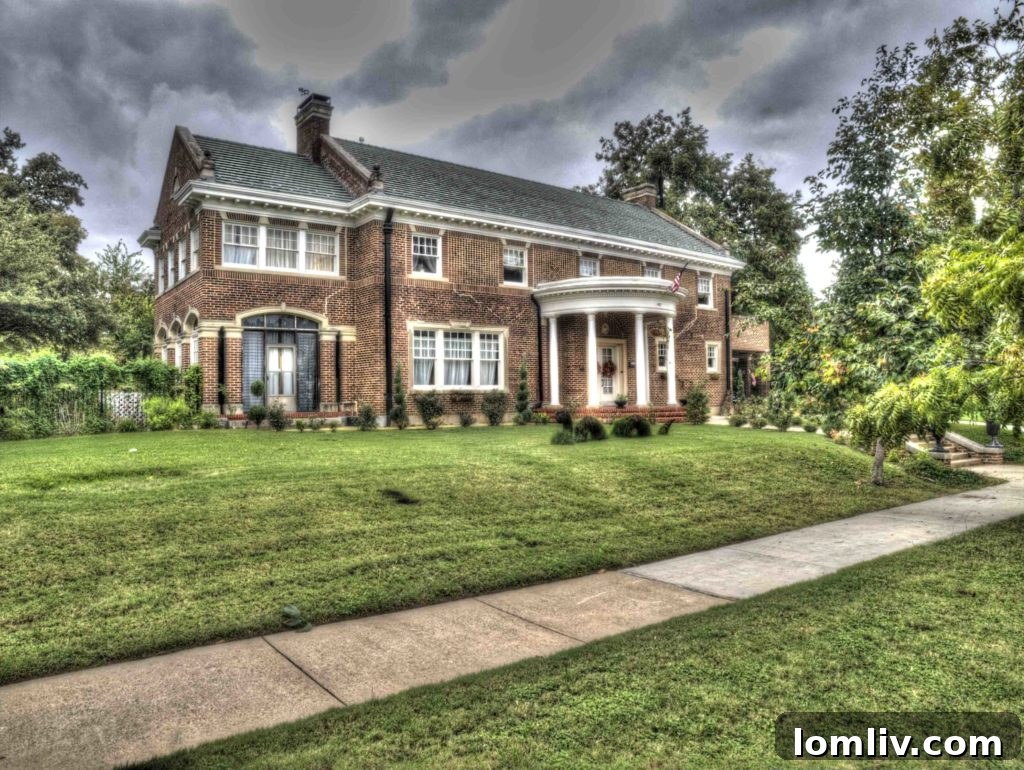
Nestled within the prestigious and historically rich Ryan Place neighborhood of Fort Worth, a true architectural marvel at 1405 Elizabeth Boulevard has long captured the imagination of residents and history enthusiasts alike. This stately, three-story Georgian Revival manse, boasting an expansive 6,300 square feet of living space, has recently emerged onto the market, drawing immediate and intense interest. With four generously sized bedrooms and five-and-a-half luxurious bathrooms, this distinguished property offers a unique blend of timeless grandeur and modern comfort. Its desirability is undeniable, as evidenced by the swift succession of two contracts within just twelve days of its official listing, following a period of quiet availability.
For those residing in Ryan Place, the chance to explore the interiors of such an iconic address is a rare privilege. The home stands as a beacon of Fort Worth’s storied past, an enduring testament to an era of prosperity and sophisticated design. Its presence on Elizabeth Boulevard, a street renowned for its magnificent architecture and deep historical roots, only amplifies its allure. This isn’t merely a house; it’s a living piece of history, meticulously preserved and awaiting its next chapter.
Steeped in Fort Worth’s Rich History: The Legacy of 1405 Elizabeth Boulevard
The distinguished Georgian Revival residence at 1405 Elizabeth Boulevard is more than just a home; it’s a profound narrative woven into the very fabric of Fort Worth’s heritage. Designed in 1920 by the legendary local architect Wiley G. Clarkson, whose influence shaped many of the city’s most iconic buildings, this property is a prime example of his masterful craftsmanship and enduring vision. Recognized and celebrated for its historical significance, the house proudly holds a listing on the National Register of Historic Places, affirming its indelible place in American architectural and social history.
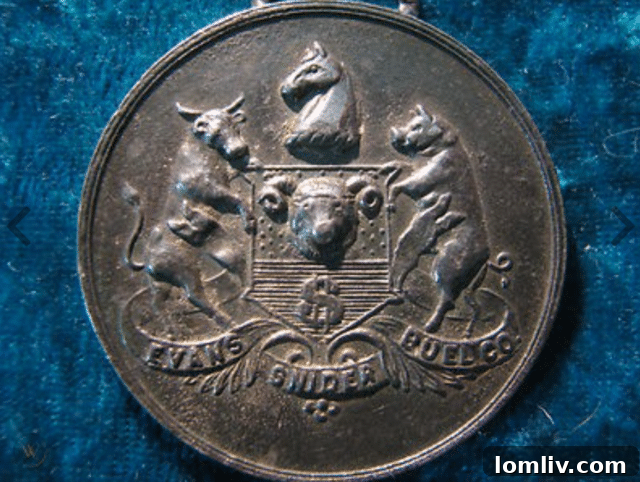
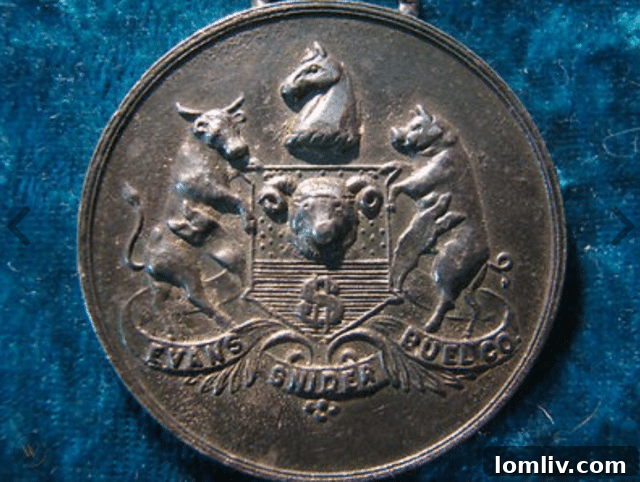
Commissioned by James Samuel Todd, a titan of industry and president of the Evans-Snider-Buel Co. and the Livestock Commission Merchants Association, the home served as a testament to his success. Todd was a pivotal figure in the burgeoning cattle business that defined Fort Worth in the early 20th century. The Evans-Snider-Buel Co. itself was an economic powerhouse, with expansive operations and offices spanning major hubs like Chicago, St. Louis, and Kansas City. Locally, their offices were strategically located within the Fort Worth Livestock Building, an imposing structure famously dubbed “The Wall Street of the West” – a moniker that vividly illustrates the immense financial influence and entrepreneurial spirit concentrated there during the cattle boom era.
James Samuel Todd, at 62 years old, alongside his wife Etta, took possession of this magnificent Elizabeth Boulevard estate as their primary Fort Worth residence. Todd’s journey to prominence began remarkably early; he had amassed a considerable fortune by the tender age of 26. By 1884, his entrepreneurial prowess was undeniable, boasting a herd of 2,000 cattle and even employing the legendary Will Rogers, then a teenager, as a ranch hand. The family’s legacy continued through his son, James Jr., who further solidified their connection to Fort Worth’s elite by marrying Jane Jarvis, the daughter of Van Zandt Jarvis, then mayor of Fort Worth, in 1935. Following James Sr.’s passing, his wife Etta remained a cherished resident of the home, living there until 1950, a testament to its enduring comfort and appeal.
Todd’s life mirrored the dynamic evolution of the American cattle business. He witnessed and actively participated in every transformative phase of the industry. Before the establishment of direct rail lines allowed for efficient cattle shipment directly to the booming Fort Worth Stock Yards, cattle were famously driven north from Texas along the iconic Chisholm Trail to railheads in Kansas. Intriguingly, Elizabeth Boulevard itself once formed a part of this historic trail, a direct link to the very roots of the cattle industry that built fortunes like Todd’s. By the time Todd commissioned his imposing Georgian Revival home, Fort Worth had firmly cemented its reputation as a major center for slaughter and packing, a thriving big business that shaped the city’s identity and economic landscape. The house, therefore, isn’t just a structure; it’s a tangible artifact of this pivotal era, standing on land that bore witness to the very beginnings of Texas’s cattle empire.
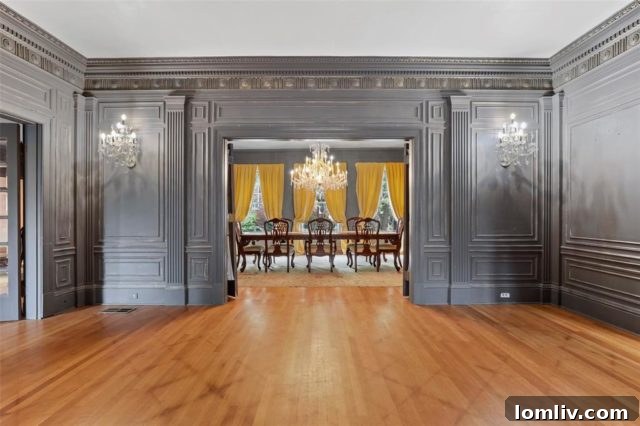
Ryan Place: A Neighborhood Preserved by Its Unique History
The adage “Venice was preserved by poverty” suggests that its economic decline after the 18th century paradoxically saved its unique architectural heritage, preventing widespread demolition or the construction of discordant modern structures. In a nuanced yet significant way, this sentiment resonates deeply with the story of Fort Worth’s esteemed Ryan Place neighborhood, where 1405 Elizabeth Boulevard proudly stands.
Ryan Place, initially a symbol of early 20th-century prosperity, flourished from the turn of the century well into the 1920s, attracting many of Fort Worth’s elite. Grand homes like the Todd residence were built, showcasing a variety of popular architectural styles. However, the devastating market crash of 1929 ushered in an era of slow decline for the neighborhood. While this period brought its challenges, it also inadvertently shielded Ryan Place from the widespread “urban renewal” movements and drastic modernizations that swept through many other historic districts in later decades. Instead of being torn down and rebuilt with contemporary designs, its beautiful residences were largely left untouched, allowing their original character and architectural integrity to remain intact.
It wasn’t until the late 1970s that Ryan Place began its slow, deliberate, and truly remarkable revival. This gradual resurgence allowed for a thoughtful and respectful restoration of its historical properties, rather than wholesale modernization. The outcome is a cherished legacy: a treasure trove of lovely, well-preserved residences, waiting for new generations to discover, admire, and passionately restore. This unique historical trajectory has ensured that homes like 1405 Elizabeth Boulevard survive as magnificent examples of their original design, offering a rare glimpse into Fort Worth’s golden age of architecture.
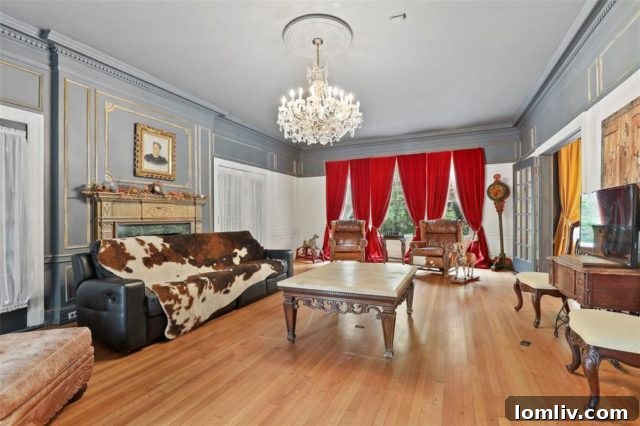
Timeless Elegance: Preserved Architectural Details
Indeed, time has been remarkably gentle to 1405 Elizabeth Boulevard. After more than a century, the home remains largely intact, a testament to its robust original construction and the thoughtful stewardship it has received. Stepping inside, one is immediately struck by the perfection of proportions found in the exquisitely painted boiserie rooms. These custom wood panelings exude a calming serenity, an atmospheric quality that even the most skillful photography struggles to fully capture. The meticulously crafted details speak volumes about the quality of workmanship from a bygone era, seamlessly blending elegance with a sense of enduring comfort.
Beyond the boiserie, a wealth of original architectural features has been impeccably preserved. Elegant cornices crown the ceilings, their intricate designs adding a layer of sophistication to each space. Detailed millwork frames doorways and windows, showcasing the artistry of early 20th-century craftsmanship. French windows allow natural light to flood the interiors, connecting the indoors with the verdant half-acre grounds. And underfoot, the original oak floors, burnished with the patina of time, whisper stories of generations past, offering a solid and beautiful foundation to every room. These preserved elements are not just decorative; they are integral to the home’s character, offering a living connection to its distinguished history.
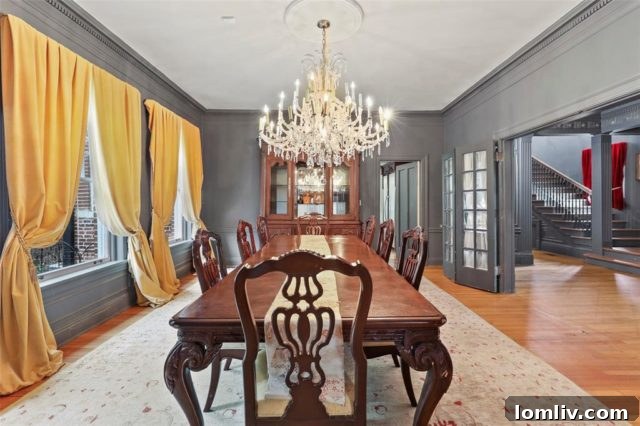
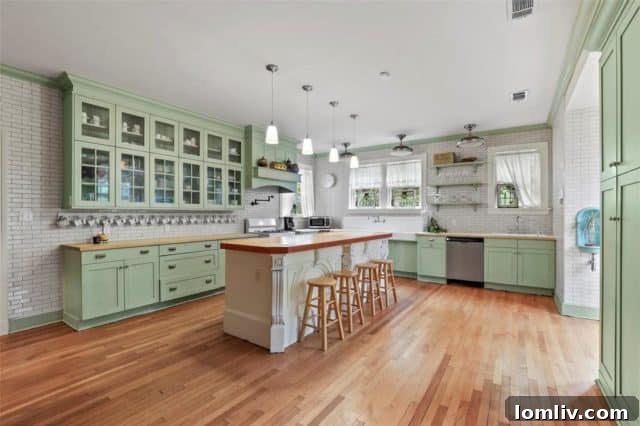
The Heart of the Home: A Grand and Functional Kitchen
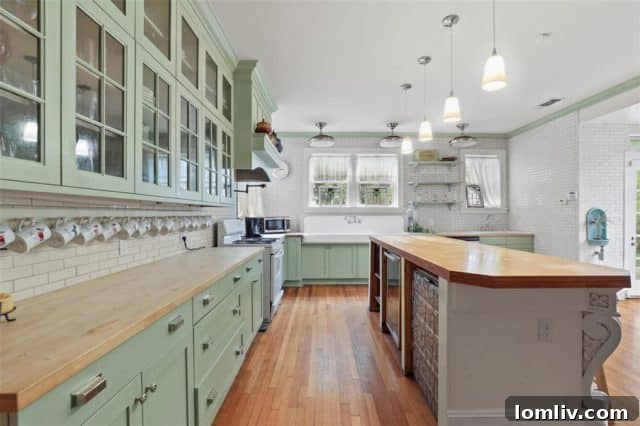
The kitchen at 1405 Elizabeth Boulevard is nothing short of astonishing, a magnificent space that effortlessly blends opulent scale with practical design. Spanning an impressive 500 square feet, this light-drenched culinary sanctuary is a dream for both avid cooks and entertainers. At its heart lies a commanding nine-foot island, providing ample space for food preparation, casual dining, and lively social gatherings. Functionality is paramount, with three distinct sinks strategically placed throughout the kitchen to enhance workflow, each served by its own faucet. That’s right – four faucets in total, a thoughtful detail designed for ultimate convenience.
The countertops, crafted from beautiful butcher block, offer a warm, natural aesthetic that deviates from the more common granite or quartz surfaces. This choice imbues the kitchen with a timeless charm and a sense of enduring quality. In surprisingly good condition, these surfaces require only a bit of sanding and oiling to bring them back to their pristine glory, promising years of use. The original farmhouse sink, a nod to classic design, is perfectly situated beneath double windows, inviting natural light and garden views. An additional divided sink is thoughtfully placed under a single window, providing even more utility. The walls are adorned with classic subway tile, extending from floor to ceiling, creating a clean, crisp, and cohesive look. Abundant custom cabinetry, featuring glazed uppers, is painted in a soothing, soft sage green, adding a touch of serene elegance and ample storage to this truly extraordinary space.
A Sanctuary of Serenity: The Lavish Master Suite
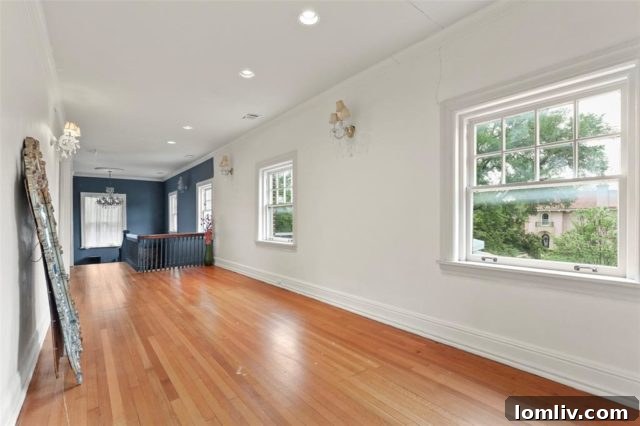
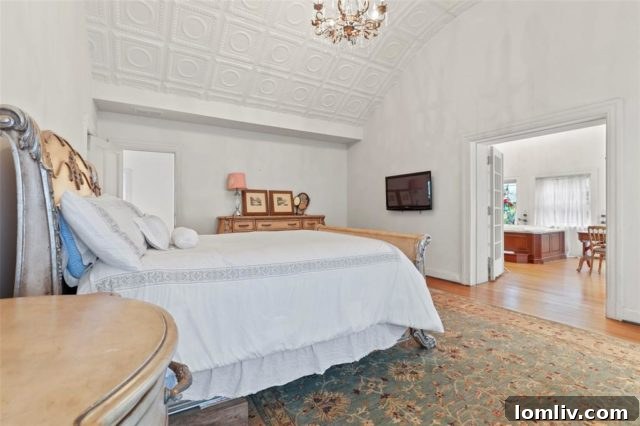
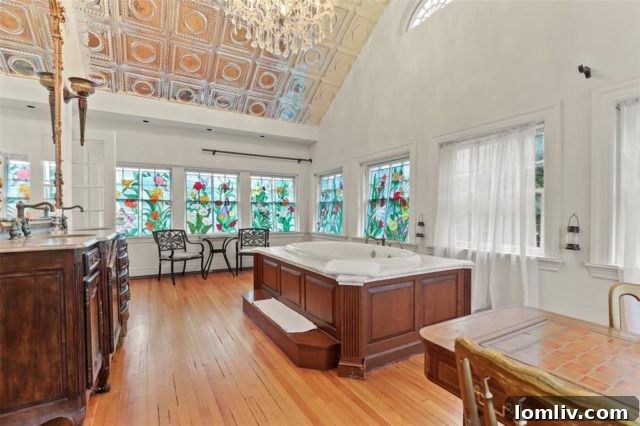
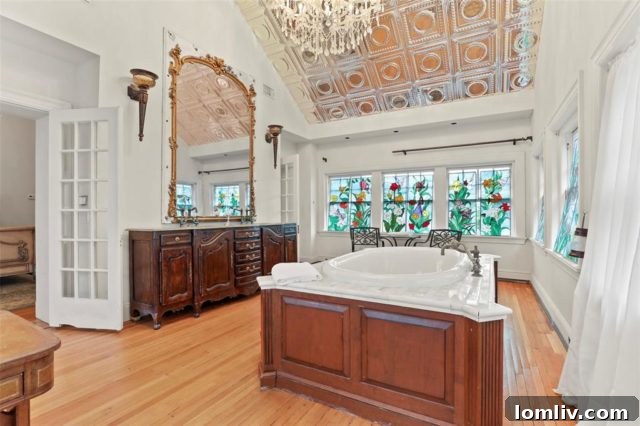
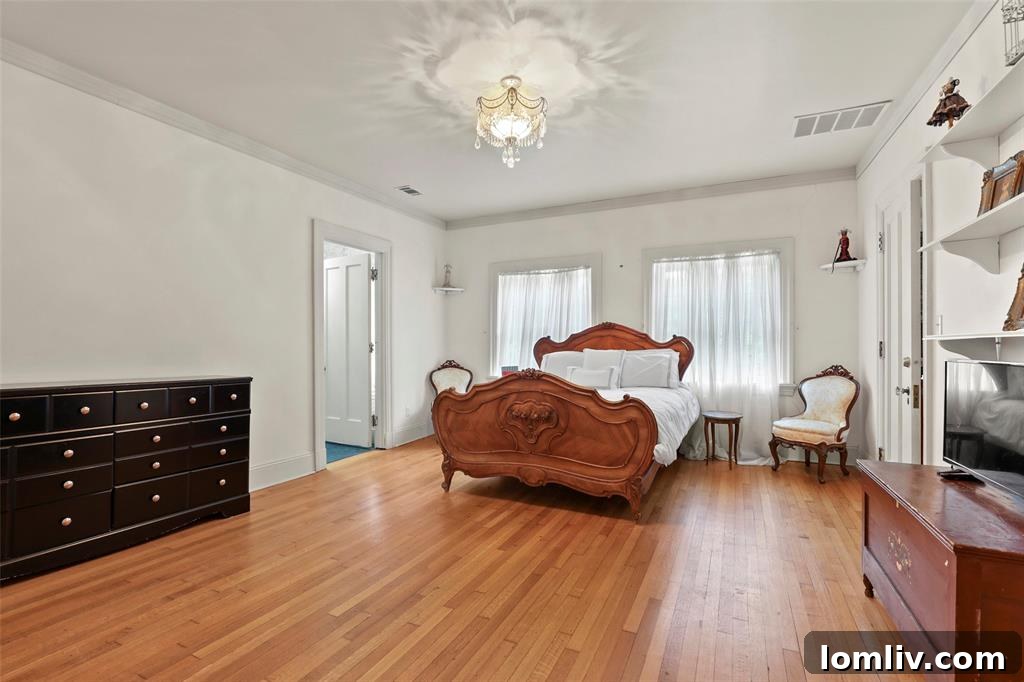
Ascending to the upper levels of 1405 Elizabeth Boulevard, guests and residents can utilize either the stately front staircase or the convenient back stairs, both leading to a grand, chasmal landing that serves as a transition point to the private quarters. The master bedroom itself is a study in luxurious comfort, distinguished by a rather ponderous yet captivating barrel-vaulted ceiling. This unique architectural feature, seemingly carved out of the attic space, extends seamlessly into the truly lavish master bath, creating a sense of continuous, flowing design and expansive volume.
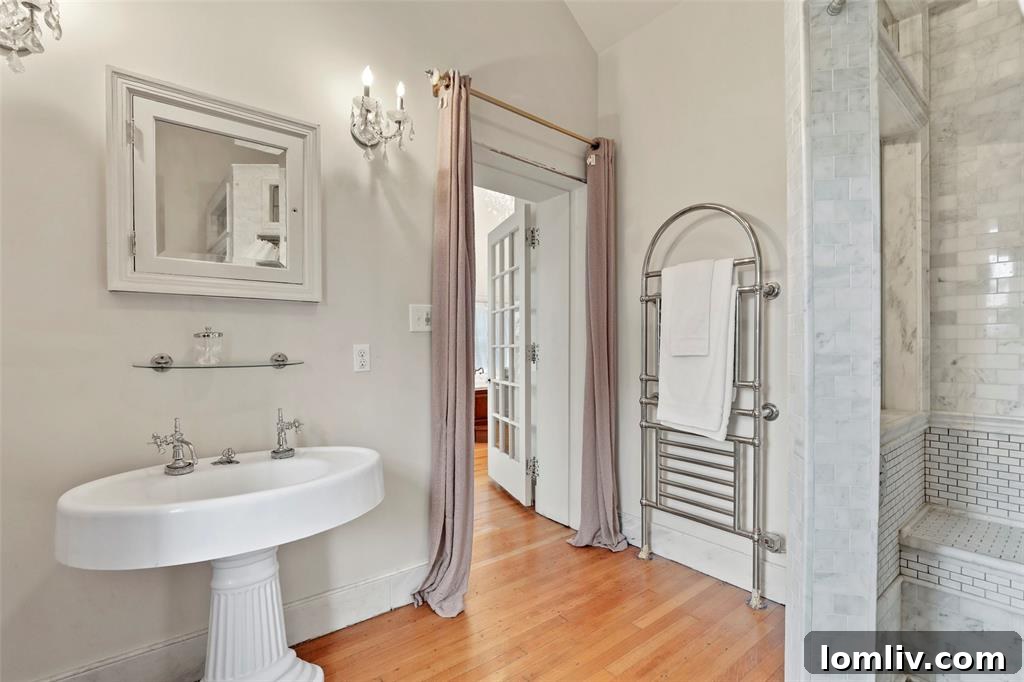
Within this indulgent private retreat, a large spa tub takes center stage, thoughtfully placed to create a focal point of relaxation and luxury. Adjacent to it, a beautifully adapted buffet cabinet houses two elegant lavatories, offering both functionality and a sophisticated aesthetic. Above these basins, a massive trumeau mirror commands attention, its ornate frame adding a touch of classical grandeur and reflecting the soft light that permeates the space. Adding to the unique charm and historical appeal of the master bath are exquisite stained glass panels, which, with their intricate designs and vibrant hues, can be detached, allowing for versatility in design and lighting. This master suite is not just a place to rest; it’s a sanctuary designed for ultimate rejuvenation and opulent living, seamlessly blending historical elegance with modern indulgence.
Exquisite Details Throughout: Bedrooms and Beyond
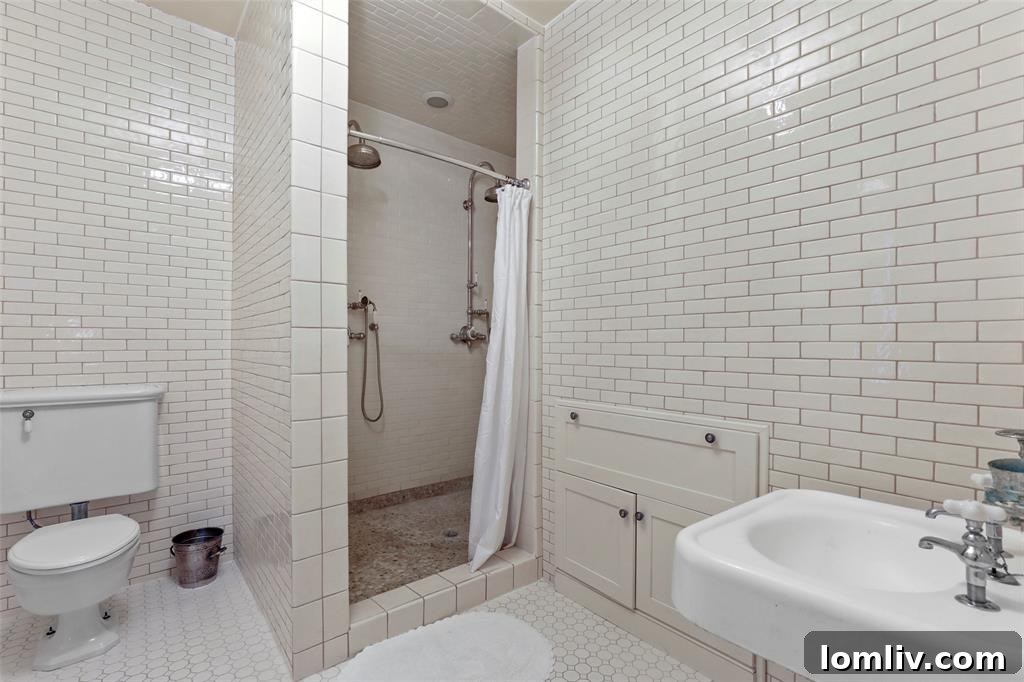
The thoughtful design and commitment to luxury extend throughout the entire residence, ensuring comfort and privacy for all. Each of the four bedrooms within this grand home boasts its own lavish en suite bath, a highly desirable feature that elevates the living experience. For those with a discerning eye for quality fixtures and hardware – indeed, if one is a self-proclaimed “fixture fetishist” – this house presents an absolute dream. It showcases a masterfully layered mixture of old and new, premium fittings and hardware, creating a harmonious blend that is both authentic and refreshed. Such is the seamless integration that it often becomes a delightful challenge to determine which elements are original period pieces and which are meticulously selected modern additions designed to complement the home’s historic character.
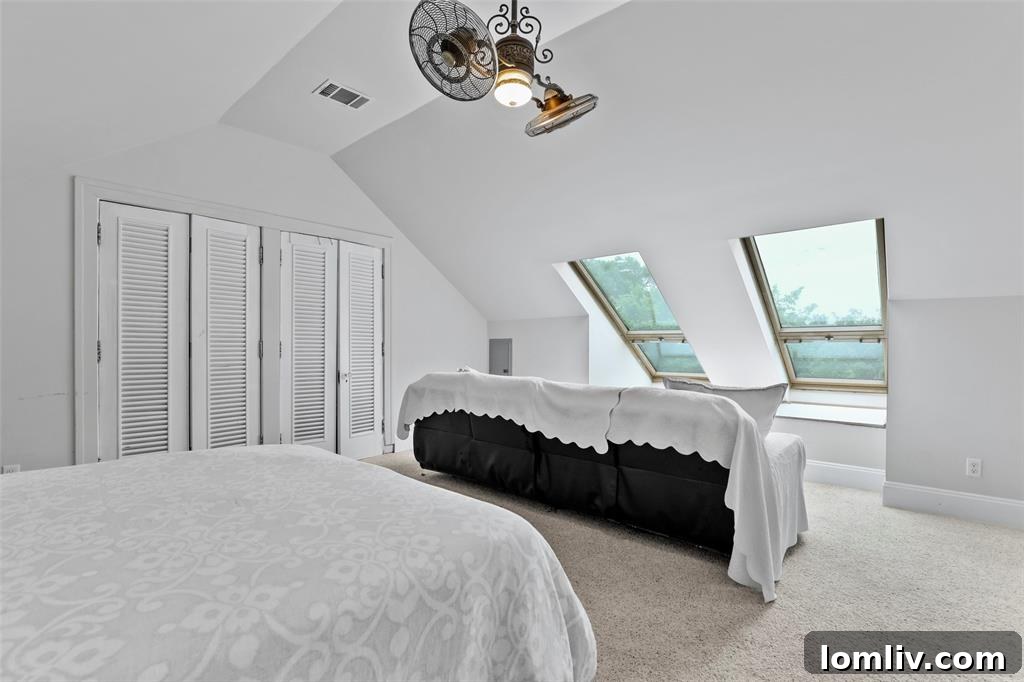
Further enhancing the home’s spaciousness and versatility, the third floor reveals yet another beautifully appointed bedroom. This unique space is distinguished by charming balcony windows that offer picturesque views, adding an airy and open feel. Adjacent to this bedroom is another stunning full bath, maintaining the consistent standard of luxury found throughout the property. This upper level provides an ideal retreat for guests, a private home office, or a tranquil studio space. Beyond the living quarters, the home also features an extensive finished basement, not pictured but comprising three additional versatile rooms. This lower level offers immense potential for a media room, home gym, wine cellar, or additional storage, further contributing to the functional luxury of this remarkable Fort Worth estate.
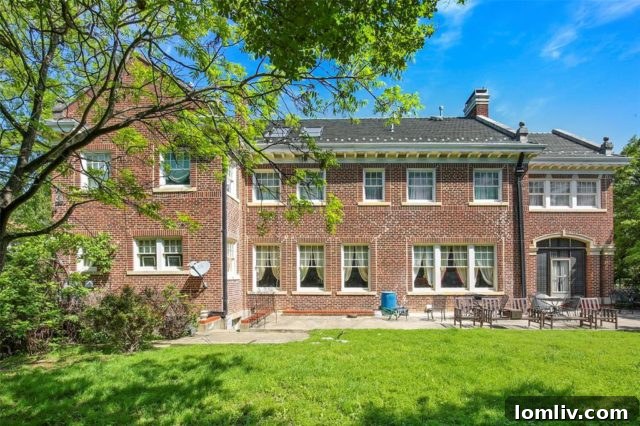
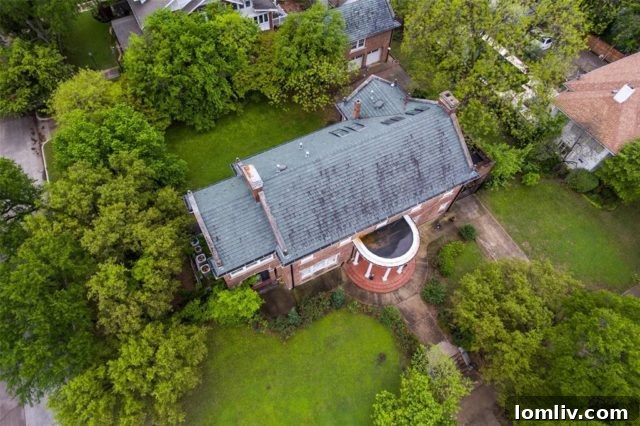
While the interiors showcase remarkable preservation and thoughtful updates, a key enhancement, in this writer’s view, would be the restoration of the ground-floor veranda to its magnificent original open state. This architectural feature, once a hallmark of Georgian Revival homes, would undoubtedly enhance the home’s curb appeal and offer a delightful outdoor living space, perfect for enjoying the serene Ryan Place atmosphere.
Situated on a generous half-acre avenue lot, the property offers ample space and a commanding presence on Elizabeth Boulevard. Currently offered for sale, the house is in remarkably good condition for its age, requiring primarily cosmetic touches and a bit of tender loving care to fully restore it to its complete splendor. What makes this historic gem an even more compelling opportunity is its appealing price point: a bargain at just $127 per square foot. This strategic pricing aligns it with another high-profile home on Elizabeth Boulevard that sold “as is” for a competitive price in less than a year. Such pricing positions 1405 Elizabeth Boulevard as an exceptional investment for buyers eager to acquire a piece of Fort Worth history with incredible potential for personalization and increased value.
This extraordinary opportunity to own a piece of Fort Worth’s architectural and historical legacy is presented by Nicole Hoover of RE/Max D/FW Associates. She is proudly offering 1405 Elizabeth Blvd. for $805,000. Given its rapid interest and historical significance, this property promises to be a cherished home for its next fortunate owner.
The author extends sincere gratitude to historian Ruth Karbach for her invaluable research and meticulous fact-checking, which significantly enriched the accuracy and depth of this article.