The latest September session of the Oak Lawn Committee offered a revealing glimpse into the intricate and often contentious world of Dallas urban planning and zoning. Observing the proceedings through a critical lens, one couldn’t help but notice the nuanced implications of each decision for the future of the vibrant Oak Lawn neighborhood. The session included two primary cases and a minor request concerning a fence. The fence modification, a proposal from Audi Dallas to replace a wooden barrier with a more architecturally congruous metal one, was a straightforward matter that raised no significant concerns.
The Fate of an Historic Dallas Home: A Zoning Conundrum
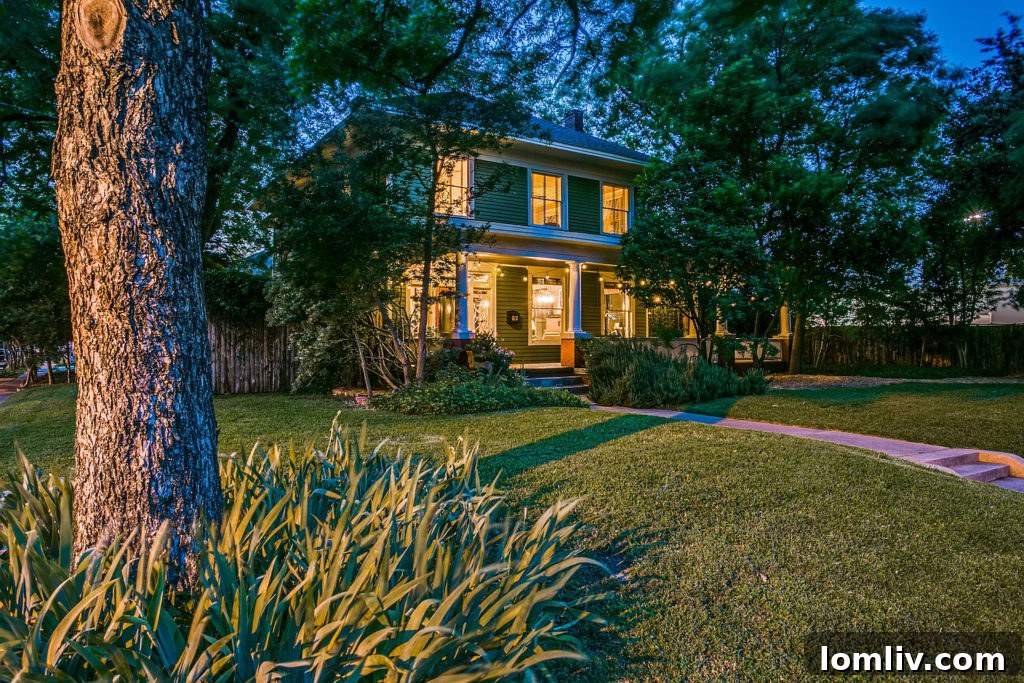
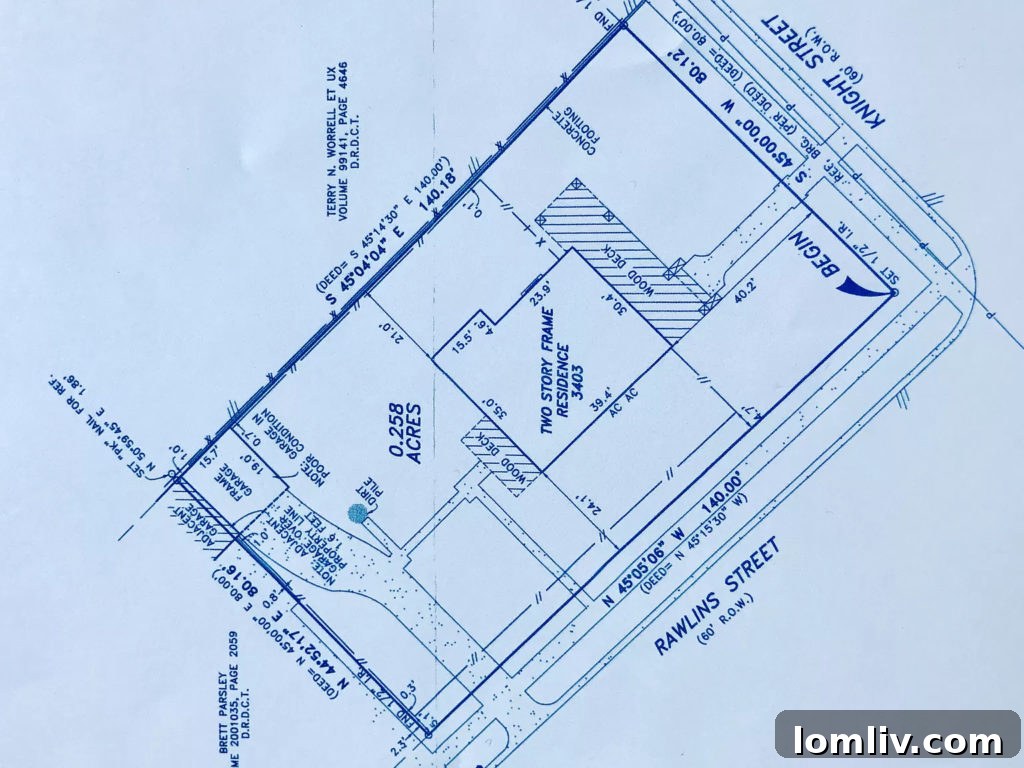
However, the first major case, involving a 1914 single-family home, presented a far more complex and troubling scenario. Situated discreetly behind the Genesis Thrift Store and the bustling Lemmon Avenue-facing Starbucks and Super Cuts, and diagonally across from Uncle Julio’s, this property’s future hangs precariously in the balance. The residence, a tangible link to Dallas’s past, currently falls under MF-2 zoning, designated for multi-family housing. Its long-term owners, after years of meticulous restoration, are now petitioning to dramatically alter its designation to either General Retail (GR) or Office-2 (O-2) zoning, depending on which document one reviews. This proposed shift isn’t just a simple bureaucratic change; it threatens to establish a dangerous precedent, potentially opening the floodgates for commercial encroachment onto interior residential streets nestled within the Lemmon Avenue block.
The Oak Lawn Committee has historically taken a firm stance against such commercial creep. One needs only recall the emphatic rejection of HEB’s ambitious proposal to construct a Central Market on the block bordered by Lemmon, Reagan, Bowser, and Throckmorton. That decisive “no” compelled Central Market to seek an alternative location, eventually gaining approval (though construction remains pending) at the prominent intersection of Lemmon and McKinney. Similarly, a few years prior, efforts to rationalize erratic zoning on Herschel Street ultimately paved the way for an assisted care mid-rise project. More recently, the controversial “fat block” rezoning enabled Streetlights Development to secure approval for a high-rise at Lemmon and Oak Lawn Avenues. These instances underscore the committee’s critical role in shaping the urban landscape and highlight the potential ramifications of inconsistent zoning decisions. Allowing commercial zoning to proliferate on these “back blocks,” traditionally residential buffers along major thoroughfares, poses a significant threat to the character and stability of the entire Oak Lawn neighborhood, eroding its residential charm and exacerbating issues like traffic and noise pollution.
Why the Upzone? The Dilemma of Over-Improvement
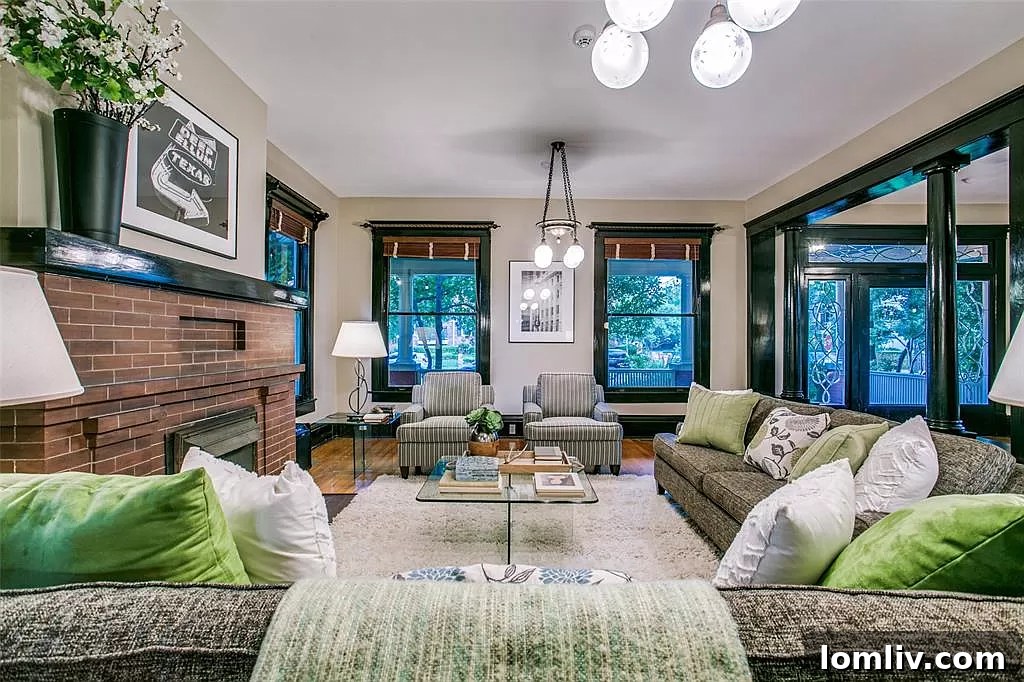
The rationale behind the owners’ request for upzoning stems from a common, yet challenging, real estate predicament. Having owned the property for nearly three decades, the current homeowners have invested considerable time and resources into painstakingly restoring the 1914 residence to an exquisite condition. It stands as a testament to historical preservation, showcasing beautiful architectural details. However, its specific location, nestled behind commercial properties yet zoned for multi-family residential, creates a unique dilemma: the home is arguably “overbuilt” for its current zoning and immediate surroundings. Evidence of this market mismatch is clear; the owners have been attempting to sell the property since November 2018, enduring twelve price adjustments—both increases and decreases—from an initial asking price of $1.25 million.
Had this magnificent home been situated a mere couple of blocks away in the highly desirable Perry Heights neighborhood, its sale would likely have been swift and uncomplicated. Yet, its current placement complicates its marketability as a high-value single-family residence. Property valuations reflect this discrepancy; the Dallas Central Appraisal District (DCAD) assesses the home at $683,310, while Zillow offers a slightly higher estimate of $848,382, with numerous captivating images showcasing its charm. For the owners, the most direct path to realizing a higher property value—one commensurate with their investment and the home’s quality—is through upzoning. However, this raises a fundamental question: Is it the responsibility of the Oak Lawn Committee, or indeed the city, to rectify individual homeowners’ real estate “mistakes” or to compensate for their choices to over-improve properties in challenging locations? The answer, unequivocally, should be no. Public zoning bodies are tasked with guided community development and preserving neighborhood character, not with maximizing private property values at the potential expense of established planning principles and community interests.
Back to The Confusion: Transparency and Committee Procedures
The handling of this upzoning request has been shrouded in a disturbing lack of clarity and transparency, oscillating between General Retail (GR) and Office-2 (O-2) zoning designations. On June 22nd, well in advance of its initial presentation to the full Oak Lawn Committee, the owners submitted a petition to the city requesting GR zoning. Yet, by August 28th, this petition had mysteriously shifted, now proposing “O-2 with volunteered deed restrictions.” This significant alteration, made prior to the public committee meeting, raises serious questions about the process. Sources close to the situation allege that the applicant engaged in discussions behind the scenes with a subset of the Oak Lawn Committee—specifically, the code compliance sub-committee, an entity whose remit seemingly has little to do with zoning requests—including officers and members, for “guidance.” Indeed, the applicant’s own presentation explicitly stated, “Representative’s primary communication has been with the OLC,” lending credence to these claims.
A series of emails reportedly circulated among this group, detailing the proposed O-2 zoning and outlining the specific restrictions that would be necessary. This list of “new” restrictions was then presented by the applicant to the broader Oak Lawn Committee at the public meeting, implying a fresh proposal. This alleged back-channel communication directly contradicts the Oak Lawn Committee’s own rules, which explicitly state: “Presentations and discussions between developers and neighbors are encouraged but no negotiation shall take place between the officers, the members of the OLC, and the applicant or their representative prior to the meeting.” Such clandestine discussions and coaching, occurring outside the purview of the general membership, undermine the integrity of the committee’s democratic process, fostering an environment where privileged access can potentially influence outcomes without broader community input. This lack of transparency erodes public trust and raises concerns about fairness. Despite reaching out to OLC President Hilda Rodriquez for comment on these procedural irregularities, no response was received as of press time, further intensifying the debate over ethical governance within urban planning bodies.
O-2 is Terrible: Unpacking the Dangers of Office-2 Zoning
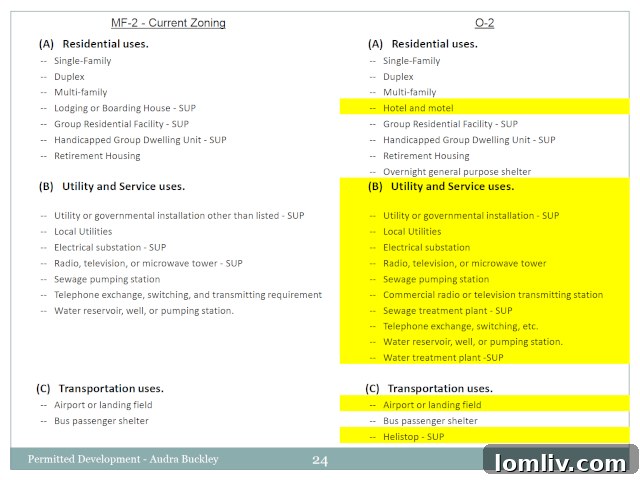
The proposed shift to O-2 zoning for this historic property is particularly alarming, as it represents an overly generous and potentially destructive zoning category for its specific location. O-2 zoning permits towering heights of up to 240 feet, significantly higher lot coverage, and substantially smaller setbacks compared to residential or even light commercial designations. Furthermore, the range of allowable uses under O-2 is exceptionally broad, spanning everything from sewage treatment facilities to post offices. While the proposed deed restrictions aim to mitigate many of these egregious possibilities, they still leave room for problematic uses, including various types of restaurants, shoe repair shops, florists, medical clinics, group residential facilities, and even “overnight general-purpose shelters.”
The fundamental question arises: why resort to such a broad, permissive zoning category only to then cripple it with extensive deed restrictions, especially when some potentially problematic uses remain? This approach seems counterintuitive and inherently risky. Nearby commercial properties on Lemmon Avenue are appropriately zoned for GR (General Retail), and even some single-story lots along Douglas Avenue, a major thoroughfare, fall under O-2. However, placing such a flexible commercial designation on an interior residential street, even with restrictions, is a profound misstep. My deepest fear is that this isolated upzone could serve as a catalyst for the assembly of this and adjacent parcels into a much larger, out-of-place development—similar to the controversial Streetlights project—that would fundamentally alter the neighborhood’s character. While deed restrictions can be potent legal tools, especially if publicly recorded, they are far from invincible. A future zoning case could potentially challenge and extinguish these restrictions, particularly if the surrounding properties, such as the aging duplex on Rawlings Street located behind this home, seek similar upzones.
The owners claim their desire is to preserve the home while repurposing it, yet the proposed deed restrictions offer no explicit guarantee of the home’s long-term preservation. After 19 months of attempting to sell the property, who can truly guarantee the intentions of the next owner? While the current owners assert they have turned down developer offers in favor of preservation, the moment the property changes hands, its fate becomes uncertain. Their suggestions for repurposing include various restaurant and small office configurations, but a critical flaw remains: the near-total absence of adequate parking. Their proposals rely heavily on counting public on-street parking, a strategy rarely, if ever, approved by the Oak Lawn Committee, which consistently demands that projects demonstrate sufficient self-contained parking solutions. It is admirable that the owners have cherished this home, resisting redevelopment into the ubiquitous townhouses that dot the area. However, as previously stated, it is not the city’s role to rectify individual real estate challenges or to subsidize personal property decisions. The widespread support from neighbors, despite these significant concerns, remains perplexing and highlights a potential disconnect between immediate desires and long-term community impact.
2401 McKinney – Truluck’s: A Redevelopment Overview
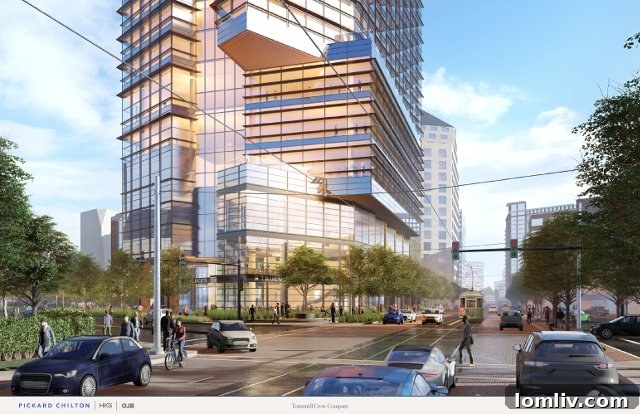
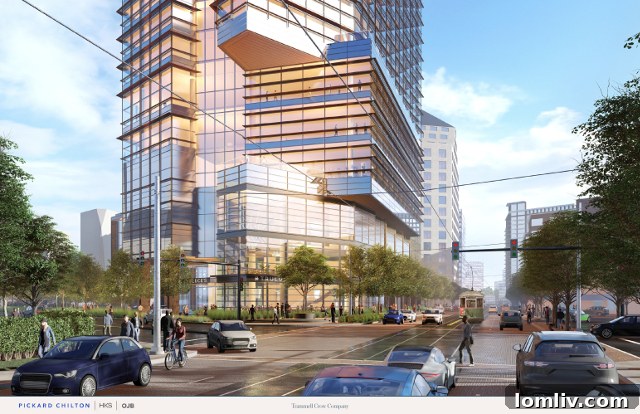
In stark contrast to the contentious historic home case, the redevelopment proposal for 2401 McKinney, encompassing the site of the current (and soon-to-be-reimagined) Truluck’s, presented a far more amicable and well-received project. Trammel Crow first unveiled their plans in June, proposing an aesthetically pleasing and highly attractive building that garnered significant positive attention. This ambitious redevelopment not only involves the demolition of the existing Truluck’s (which is slated to return in the new structure) but also encompasses several adjacent, less desirable properties, including the former Gold’s Gym. From a community development perspective, this project has consistently been viewed as a positive enhancement to the McKinney Avenue corridor.
Following its initial presentation, the Oak Lawn Committee provided Trammel Crow with a detailed list of requests for additional information. Key among these were demands for more extensive community outreach and demonstrable support, along with comprehensive traffic and shade studies. During Tuesday’s meeting, this requested information was meticulously presented. The committee expressed general satisfaction with the expanded outreach efforts, though a probing inquiry was made regarding the inclusion of apartment building tenants in their outreach—a “pernicious inquiry” given that the City of Dallas typically surveys and counts property owners, not tenants, for such matters. Setting such an unfair bar could be perceived as an attempt to dilute or discredit genuine community support. The shade study proved reassuring, demonstrating that the proposed building would cast an average of 15 percent less shade than what could legally be constructed “by-right.” Traffic impact was similarly addressed with thorough analysis. Utilizing national standards, the development is projected to add approximately 702 cars during peak hours, translating to an additional three cars per minute on Fairmount Street during rush hour. However, when actual, much lower traffic generation rates from nearby buildings like McKinney and Olive were factored in, the increase in rush hour vehicles drops to 349, or roughly two cars per minute, reflecting the growing trend of Uptown workers residing within walking or short commuting distance. The overall increase in traffic for individual streets ranged from a modest two percent for McKinney and Maple to seven percent for Fairmount, with the higher Fairmount increase attributed to the parking garage having no entrances or exits directly onto McKinney Avenue.
The Second Hurdle: Questionable Committee Conduct
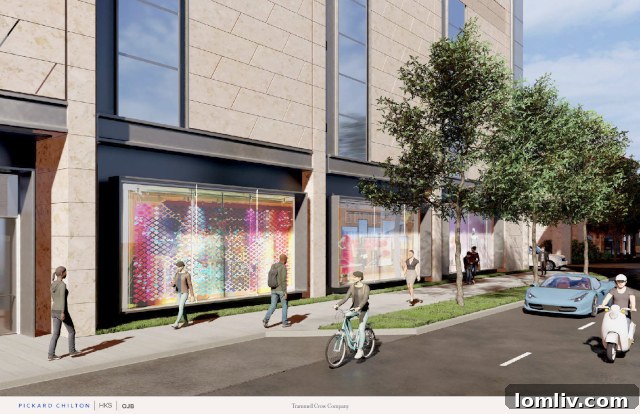
Trammel Crow’s return to the committee also included a commitment to implement 10-foot sidewalks and sophisticated stone cladding along the Fairmount side of the development. These enhancements were specifically requested by the Oak Lawn Committee, who asked Crow to prioritize these design elements—a request that, according to the Crow representative, was made outside the scope of normal, publicly recorded committee meetings. This revelation once again brings into question the operational transparency of the Oak Lawn Committee. Returning to the OLC’s own established rules, these kinds of private requests, made away from the general membership, appear to be in direct violation of the guidelines designed to ensure fairness and open deliberation.
While these privately suggested design improvements might ultimately be beneficial and even supported by the full membership, the critical issue lies in the absence of an opportunity for comprehensive discussion and debate. Without public discourse, crucial questions remain unasked and unanswered—for example, did the expansion of sidewalk width necessitate a reduction in valuable landscaping elements? This particular OLC meeting, when viewed against the backdrop of its own rules regarding communication between applicants and the committee, painted a picture of inconsistency. It was, perhaps ironically, during this very meeting that discussions were also taking place about other potential rule changes, which coincidentally prompted a re-reading and critical examination of the committee’s existing procedural guidelines. On a related note, the COVID-19 pandemic has undoubtedly streamlined and quieted the OLC agenda; a session consisting of just a fence modification, a contentious property upzone, and clarifications on shade and traffic studies for a larger development is certainly not indicative of typical, bustling urban planning committee activity in Dallas, yet it highlights the enduring importance of transparent governance in all circumstances.