


The Unpacked Truth: Are Shipping Container Homes Truly a Sustainable and Practical Housing Solution?
The concept of transforming rugged shipping containers into sleek, modern homes has captivated architects, designers, and would-be homeowners alike for over a decade. Pitched as an innovative, sustainable, and cost-effective solution to contemporary housing challenges, container architecture has garnered significant media attention and inspired numerous projects worldwide. However, as the initial novelty wears off and real-world applications multiply, a critical re-evaluation of shipping containers as a widespread residential solution is becoming increasingly necessary. My skepticism, which began surfacing when pioneering projects like PV14 emerged, has only solidified over time: the dream of shipping container housing, for many practical purposes, might just be over.
When Michael Gooden embarked on his ambitious shipping container project in Old Lake Highlands, creating a home overlooking White Rock Lake by hoisting those distinctive metal boxes into the air, a fundamental question immediately sprang to mind: In a climate like Texas, why are we opting for metal boxes as a primary building material? Anyone who has experienced a typical Texas summer knows the brutal reality of uninsulated metal structures. Step into a storage unit without climate control during July, and you’ll quickly understand the sensation of being baked alive. The thought of a corrugated metal home enduring 100-degree days throughout the summer is, frankly, unbearable. Beyond the severe climate suitability issues, the inherent dimensions of a standard container present another significant hurdle. Without extensive modification, a container is a mere 7 feet wide, hardly a spacious or comfortable dimension for human-scaled living spaces.
Despite these glaring concerns, the appeal persists. For instance, Zad Roumaya proposed an apartment development in the Cedars neighborhood of Dallas, envisioned entirely from shipping containers under the concept name “ModPod.” This raises crucial questions about economic viability. How much practical sense does it make to invest heavily in assembling and, more importantly, retrofitting these industrial boxes to meet the demanding requirements of our climate? The initial perceived affordability often dissipates under the weight of necessary modifications.
My reservations found potent validation from someone far more experienced and qualified in the field: Mark Hogan, a principal at San Francisco-based OpenScope Architects. Hogan, an architect who has even undertaken a shipping container project himself, offers a comprehensive critique that resonates deeply with the practical challenges I observed.

The Core Design and Practicality Flaws of Container Architecture
Hogan’s insights underscore several critical points that often get overlooked in the enthusiasm for container homes. His observations about the inherent limitations of these steel boxes, particularly concerning utilities and climate control, are particularly compelling:
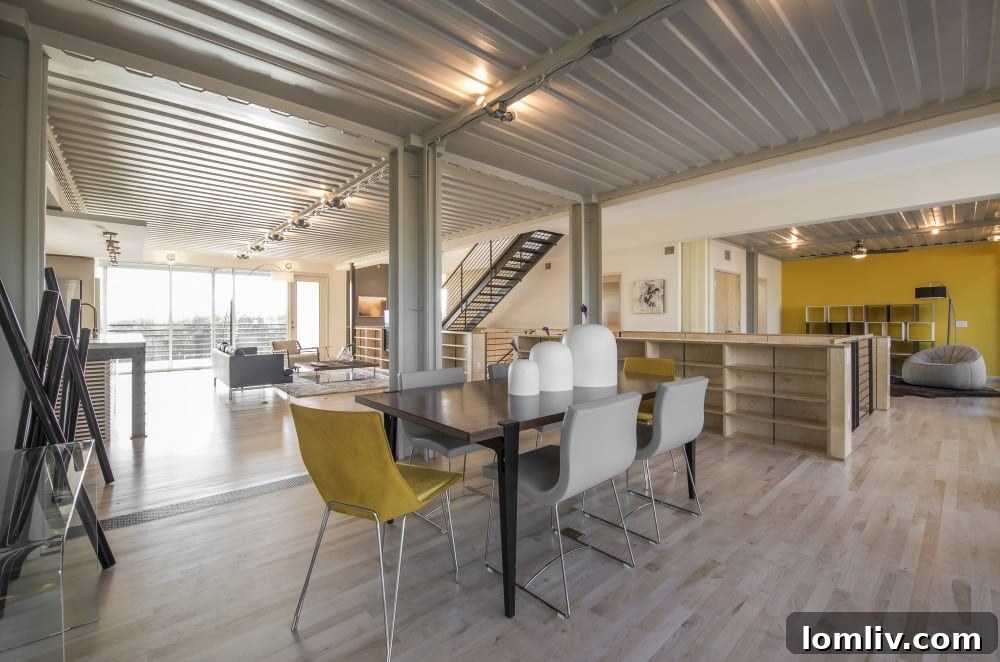
In a large building, you’ll still need a lot of space to run utilities. Because of the problems with insulation mentioned above, you will need to install a very robust HVAC system to heat and cool the building (that Mumbai tower shown above would literally be a deathtrap without cooling). You will have a hard time taking advantage of passive strategies like thermal mass if you maintain the container aesthetic. You’ll also end up with low ceilings, as even high cube containers are only 9 feet 6 inches (2.9 meters) in overall exterior height, so any ductwork or utilities start cutting into headroom.
This excerpt highlights the fundamental conflict between a shipping container’s original purpose and its adaptation for human habitation. Containers are designed for cargo, not people. Their metal shells are excellent thermal conductors, making them ovens in summer and freezers in winter without substantial, often complex, and costly insulation. This directly necessitates an oversized, energy-intensive HVAC system, negating any perceived “eco-friendly” benefits. Furthermore, the limited exterior height of containers (even “high cube” variants) means that once insulation, flooring, and especially ceiling-mounted utilities like ductwork or lighting are installed, precious headroom is severely reduced, leading to cramped interiors that feel anything but luxurious or comfortable.
The Costly Illusion of Structural Simplicity
Beyond climate control and spatial constraints, the structural integrity and modification costs are perhaps the most significant overlooked challenges. When considering projects like PV14, where containers are extensively modified by cutting away walls to create larger spaces, it begs the question: is this truly cost-effective? And what are the implications for the inherent strength of the structure? The very act of modification often undermines the container’s robust design, built specifically for stacking and enduring the rigors of global shipping.
Hogan meticulously explains the engineering paradox that arises when architects attempt to move beyond simple stacking, emphasizing the costly reality behind seemingly innovative designs:
You’ve seen the proposals with cantilevers everywhere. Containers stacked like Lego building blocks, or with one layer perpendicular to the next. Architects love stuff like this, just like they throw around usually misleading/meaningless phrases like “kit of parts.” Guess what – the second you don’t stack the containers on their corners, the structure that is built into the containers needs to be duplicated with heavy steel reinforcing. The rails at the top and the roof of the container are not structural at all (the roof of a container is light gauge steel, and will dent easily if you step on it). If you cut openings in the container walls, the entire structure starts to deflect and needs to be reinforced because the corrugated sides act like the flange of beam and once big pieces are removed, the beam stops working. All of this steel reinforcing is very expensive, and it’s the only way you can build a “double-wide.”
This passage is crucial. Shipping containers are incredibly strong, but only when loaded and supported at their corner posts, which are designed to bear immense vertical weight. The corrugated walls, while appearing sturdy, function as part of a monocoque structure, similar to an aircraft fuselage, where the skin contributes significantly to overall rigidity. Once large sections of these walls are cut out for windows, doors, or to combine containers into wider rooms (“double-wides”), that structural integrity is severely compromised. The moment containers are stacked in a non-standard configuration or have their walls modified, expensive steel reinforcement must be engineered and installed, effectively creating a new, internal steel frame. This process often negates any initial savings from purchasing the container shell and adds significant complexity and cost, making the project potentially more expensive than traditional construction.
Beyond the Hype: Hidden Costs and Environmental Considerations
The allure of container homes often stems from a perception of affordability and sustainability. However, the “hidden costs” can quickly inflate a project’s budget. Beyond the structural reinforcements and HVAC systems, consider the extensive preparation required: specialized foundations to properly support the containers, meticulous welding, professional insulation to create a habitable interior envelope, plumbing, electrical wiring (often requiring custom solutions due to the metal walls), and all the interior finishes typically found in any home. Furthermore, older containers may have been used to transport hazardous materials, necessitating careful inspection and decontamination, adding another layer of cost and complexity. The transportation of containers to the build site, often requiring specialized heavy-lift equipment, also contributes to the overall expense.
While recycling existing containers is often touted as an eco-friendly advantage, the energy-intensive processes of cutting, welding, sandblasting (to remove old paint and rust), and transporting them must also be factored into their true environmental footprint. For a genuinely sustainable approach, architects and builders might find more effective and less energy-intensive methods using locally sourced, renewable, or recycled conventional building materials.
Conclusion: Re-evaluating the Role of Container Housing
While shipping containers may find niche applications – perhaps for temporary structures, industrial sheds, disaster relief in specific contexts, or highly specialized artistic installations where their inherent limitations are embraced rather than overcome – their widespread viability as a practical, affordable, and comfortable residential solution, especially in challenging climates, remains highly questionable. The romantic notion of a cheap, sustainable home built from recycled materials often clashes with the reality of extensive modifications, significant hidden costs, and inherent design constraints that can make container homes more expensive, less efficient, and less comfortable than conventional builds.
It’s crucial for prospective homeowners and urban planners to look beyond the appealing aesthetic and perceived novelty. A thorough understanding of the engineering, climate control, and financial challenges involved is paramount. Rather than forcing a square peg into a round hole, focusing on genuinely appropriate, energy-efficient, and structurally sound building practices, whether traditional or innovative, will ultimately lead to more livable, sustainable, and truly affordable housing solutions for the future. What are your thoughts on shipping container construction and its place in modern housing?