

Embarking on the journey of homeownership is an exciting milestone, often filled with dreams of comfort and security. However, beneath the surface of fresh paint and new beginnings, a myriad of potential expenses can lurk, many of which may catch new homeowners by surprise. While a comprehensive home inspection aims to illuminate the current state of a property and mitigate these “mystery expenses” by providing critical insights into its systems and structures, the reality is that unforeseen issues can, and often do, arise. When a home repair becomes necessary – whether it’s a known issue flagged in a pre-purchase inspection report or a sudden problem that manifests years down the line – a universal question echoes in the minds of homeowners: “Will my home insurance cover that?”
Understanding the intricate world of home insurance coverage is paramount for every property owner. This week, we delve into common home inspection findings and real-world scenarios, exploring them from the vital perspective of repair and financial responsibility. By examining specific examples of property challenges encountered in the field, we aim to clarify who ultimately bears the cost and when your homeowner’s insurance policy steps in to provide crucial financial protection. Navigating these waters effectively can save homeowners significant stress and unexpected financial burdens, transforming potential headaches into manageable situations.
Stucco: The Architectural Material You Love to Hate and Insure
Stucco, with its distinctive texture and aesthetic appeal, is a popular choice for home exteriors, particularly prevalent in regions like the Southern United States and across North Texas. Its enduring popularity, however, comes with a unique set of challenges that homeowners must understand, especially concerning maintenance and insurance. Due to its specific characteristics and potential vulnerabilities, stucco often deserves a dedicated discussion when evaluating property risks. While beautiful, stucco can be susceptible to moisture intrusion, cracking, and other forms of damage if not properly installed and maintained.
For anyone considering purchasing a home with stucco siding, two critical pieces of advice stand out: First, insist on an exceptionally thorough home inspection that includes an in-depth evaluation of the stucco. A specialized stucco inspection, often involving moisture testing and detailed visual analysis, can reveal hidden defects that might otherwise go unnoticed. Second, secure a robust and appropriate home insurance policy designed to address the specific risks associated with stucco. Failing to do so could lead to significant out-of-pocket expenses when repairs become inevitable.
During routine home inspections, we frequently encounter various forms of damaged stucco, as highlighted in the accompanying video. It is crucial for prospective buyers to recognize that standard home insurance policies typically do not cover pre-existing damage. This means any stucco issues identified during your inspection – such as cracks, deterioration, or signs of moisture damage that existed before you owned the home – will not be covered by your homeowner’s insurance policy after closing. Therefore, it is imperative to address these findings directly with the seller and their insurance prior to finalizing the purchase. This often involves negotiating repairs, a price reduction, or seeking compensation from the seller’s insurance to cover the necessary remediation.
To gain further clarity on insuring stucco homes, we consulted with Joe Stransky from the Todd Campbell Agency, an authorized Farmers Insurance agent. Stransky strongly advises homeowners with stucco properties to opt for a policy that includes limited matching coverage. This specific type of coverage is invaluable because if, for instance, a portion of your stucco siding is damaged by a covered peril like hail, and the exact material or color can no longer be sourced, the policy would extend coverage to replace a larger section, or even the entire house’s stucco, with a similar, matching material. Without this clause, insurers might only cover the damaged section, leaving you with an aesthetically mismatched exterior. Furthermore, Stransky illuminated the distinction between traditional hard coat stucco and synthetic stucco (EIFS – Exterior Insulation and Finish Systems). He noted that many insurance companies express a clear preference against synthetic stucco due to its propensity for trapping moisture, which can lead to significant underlying structural damage and more complex, costly repairs. Understanding these nuances can significantly impact both your insurance premiums and your peace of mind as a stucco homeowner.
“Nothing To See Here”: The Critical Importance of a Robust Roof Inspection
“The agent said the roof is fine.” This is a common reassurance heard by many home buyers, yet it highlights a critical area where diligence is non-negotiable. While real estate agents play a vital role, their assessment of a roof’s condition is not a substitute for a professional, independent home inspection. Regardless of assurances, always insist on a thorough roof evaluation. The roof is undeniably one of the most vital components of any house, serving as its primary defense against the elements and contributing significantly to the structural integrity of the entire property. Before committing to such a significant investment, gaining a clear and accurate understanding of your roof’s age, condition, and remaining lifespan is absolutely essential.
A comprehensive roof inspection goes beyond a simple visual glance from the ground. A qualified inspector will meticulously examine the shingles or roofing material for signs of wear and tear, missing pieces, curling, blistering, or granule loss. They will also pay close attention to critical areas such as flashing around chimneys, skylights, and vents, as these are common points of water intrusion. Gutter systems, drainage, and evidence of previous repairs or patching are also carefully assessed. The goal is to identify any existing damage, potential vulnerabilities, or maintenance issues that could lead to costly problems down the road. Should the inspection reveal that the roof requires replacement or significant repairs, there is a strong likelihood that the seller’s home insurance policy may cover the costs, particularly if the damage is recent and due to a covered event like hail or wind. Conversely, if you proceed with the purchase of a home knowing that its roof already needs substantial work, your own insurance policy will almost certainly deny any claims for those pre-existing issues, leaving you solely responsible for the expensive repairs. This scenario underscores why a meticulous pre-purchase roof inspection is not just a recommendation, but a fundamental safeguard for your investment.
A Solid Foundation is Best: Protecting Your Home’s Core
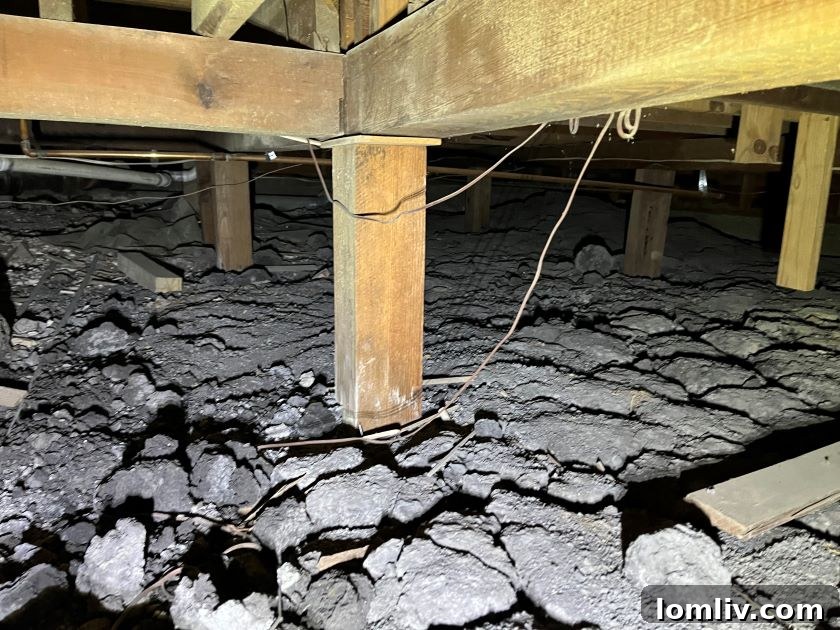
The foundation is literally the bedrock of your home; its stability and integrity are paramount to the structural health of the entire dwelling. Any compromise to the foundation can lead to a cascade of problems throughout the house, from cracked walls and sticking doors to plumbing issues and uneven floors. In the image provided, we observe a prime example of a poorly executed repair on a wood pier within a pier-and-beam foundation system. The presence of a small wood shim at the top indicates an attempt to level the structure, yet the repair itself introduces significant risks.
The primary concern here is the direct wood-to-ground contact. This condition is highly conducive to wood-destroying insects, such as termites, which can rapidly compromise the structural integrity of the pier and, by extension, the home. Furthermore, wood is inherently absorbent, and the visible water staining at the base of the pier confirms that it has been absorbing moisture from the ground. This constant exposure to moisture not only accelerates rot and decay but also contributes significantly to the pier’s instability and gradual deterioration. When this shim was installed, the appropriate course of action would have been to replace the compromised wood pier entirely with a durable concrete pier, ensuring proper moisture barriers and protection against ground contact.
The critical question for homeowners, “Will my insurance pay for that foundation repair?” typically yields an unfavorable answer in scenarios like this. Homeowners’ insurance policies generally do not cover foundation repairs that stem from wear and tear, poor maintenance, natural ground settlement, or pre-existing defects. The poorly repaired pier, characterized by wood-to-ground contact and moisture absorption, falls squarely into the category of maintenance neglect or improper repair, neither of which is a covered peril. However, there are exceptions. Foundation damage caused by specific, sudden, and accidental events – such as a burst plumbing pipe causing hydrostatic pressure or a rare, covered natural disaster like an earthquake (if included in your policy) – might be covered. In cases of pre-existing, faulty repairs, your best recourse is to obtain detailed information from the seller regarding who performed the repair. This allows you to investigate whether a warranty exists for the previous work, which could provide a pathway for remediation without personal financial burden. Neglecting foundation issues is never advisable, as they invariably worsen over time, leading to far more extensive and expensive repairs.
The journey of homeownership, while incredibly rewarding, undeniably comes with its share of complexities and potential stressors, particularly when grappling with unexpected repairs and the intricacies of insurance claims. Understanding the limits and capabilities of your home insurance policy is not just about protection; it’s about being an informed and proactive homeowner. From diligently vetting a property during inspection to securing the right coverage and understanding its nuances, every step contributes to safeguarding your investment and your peace of mind. While the thought of stucco issues, roof damage, or foundation repairs might make any homeowner feel a bit overwhelmed, remember that knowledge is your greatest asset in navigating these challenges effectively. And for those moments when the realities of home maintenance feel a little too heavy, take a moment to lighten the mood with some silly things people do in their homes – a gentle reminder that despite the serious considerations, home is ultimately where the heart (and sometimes the humor) is.