In an era increasingly defined by stark economic contrasts, the stories of global financial malfeasance and the audacious displays of wealth serve as poignant reminders of a system often perceived as rigged against the vast majority. High-profile revelations such as the Cambridge Analytica-Facebook data scandal, the widespread implications of Mossack Fonseca’s Panama Papers, Saudi Arabia’s dramatic anti-corruption crackdown, and the revealing Paradise Papers all underscore a pervasive issue: how extreme wealth is accumulated, concealed, and ostentatiously flaunted. These events, unfolding rapidly, coalesce into a narrative where monumental private residences like “The One,” a 100,000-square-foot behemoth currently under construction in Los Angeles, stand as unashamed monuments to this global economic chasm.
The issue of wealth disparity and its tangible manifestations isn’t confined to international headlines. Here in Dallas, our local real estate market provides its own insights. In 2016, a series of columns highlighted how real estate non-disclosure policies disproportionately benefit the affluent, allowing them to obscure the true market value of their luxurious homes. An analysis revealed that the top 10 most expensive homes for sale at the time were assessed by DCAD at a staggering $82 million less than their asking prices. This significant discrepancy translated into an annual tax deficit of approximately $1,904,080 for Dallas—from just these ten properties alone. This local example, though smaller in scale, mirrors the larger global issue, demonstrating how systemic loopholes are exploited to minimize financial contributions from the wealthiest segments of society, ultimately impacting public services and exacerbating inequality.
Such examples, whether on a global or local scale, are merely the tip of a much larger and more complex iceberg, revealing the intricate ways wealth is accumulated, protected, and displayed in the modern world.
The Global Phenomenon of Tax Avoidance and Concealed Wealth
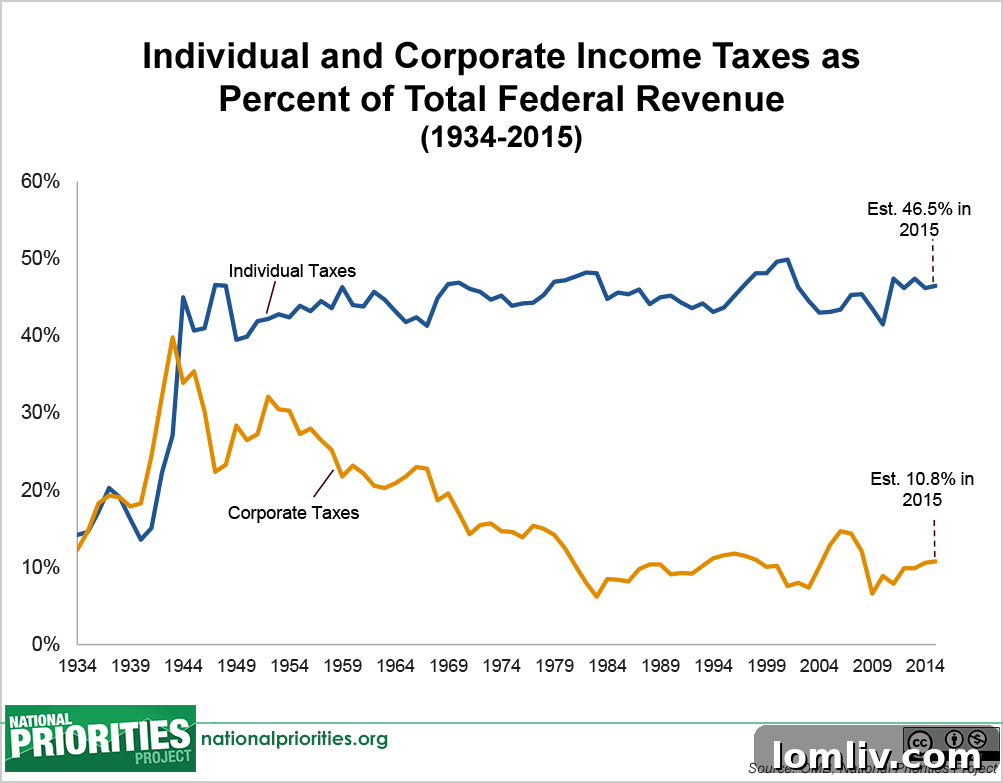
For decades, a relentless corporate drive has systematically shifted the tax burden from large corporations to individual consumers. This has been achieved through aggressively lobbying for diminished corporate tax rates and ingeniously exploiting legal loopholes, often resulting in corporations paying little to no taxes. Giants like Apple, Starbucks, Google, and Amazon, along with numerous others, have perfected strategies ranging from offshoring profits to intricate financial structures to minimize their tax liabilities. While the visible effects of this avoidance are often discussed in terms of national budgets and public services, what is less frequently highlighted is how such untaxed or under-taxed wealth manifests as unbridled opulence.
Mega-mansions, superyachts, priceless artwork, and other luxury assets suddenly valued at hundreds of millions of dollars serve a dual purpose: they are both overt declarations of immense wealth and sophisticated vehicles for its concealment. Beyond mere ostentation, these assets can be integrated into complex financial ecosystems involving offshore accounts, shell companies, and even illicit practices like bribery and money laundering. These practices are not just isolated incidents but are part of a broader “game” played by the ultra-wealthy to protect and expand their fortunes, often at the expense of equitable societal contribution.
The Age of Data Manipulation: Beyond Political Scandals
The mention of Cambridge Analytica often brings to mind its high-profile involvement in political campaigns. However, to view it solely through that lens would be to miss a much broader and more insidious trend: the rise of the surveillance economy and the alarming ease with which our thoughts, opinions, and behaviors can be mined and manipulated. Data scientists, armed with sophisticated algorithms, routinely craft narratives that exploit fears and anxieties, turning them into levers for behavioral change that ultimately enrich a select few. This phenomenon extends far beyond politics, permeating everyday life in subtle yet profound ways. From the historical invention of halitosis as a marketing problem for mouthwash to the pervasive fear-based campaigns around hand sanitizers and the contentious debates surrounding vaccinations, we have been conditioned to respond to fear, often without questioning the underlying motives or fabricated problems.
Cambridge Analytica’s notoriety, particularly concerning its use of 50 million Facebook records, overshadowed the Equifax hack of 2017, which compromised 145 million credit reports. This difference in public reaction is telling. While Equifax represented a clear instance of data theft by unknown actors for unknown ends, Cambridge Analytica carried the distinct stench of manipulation—the feeling of “you’ve been used.” This psychological impact fostered greater outrage and a deeper sense of betrayal, propelling the issue of data protection and regulation into the spotlight with unprecedented urgency. Whether this pressure will translate into meaningful, lasting change or merely dissipate over time, as has often been the case, remains a critical question. Even as Facebook’s stock saw an initial dip following the scandal, it quickly became apparent that investors largely believed the storm would pass, indicating a market resilience to ethical concerns when core business models remain robust.
“The One”: A Monument to Hyper-Luxury and Questionable Wealth
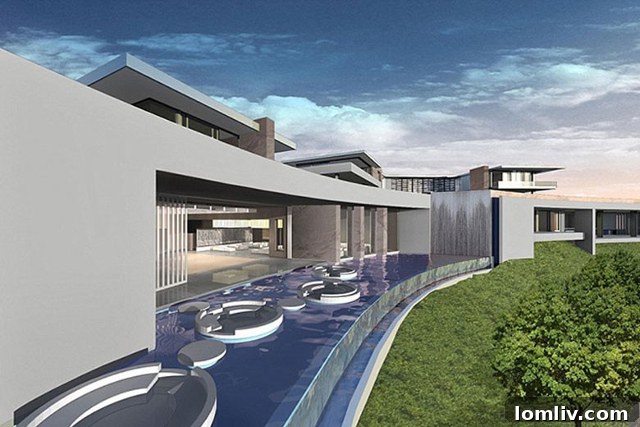
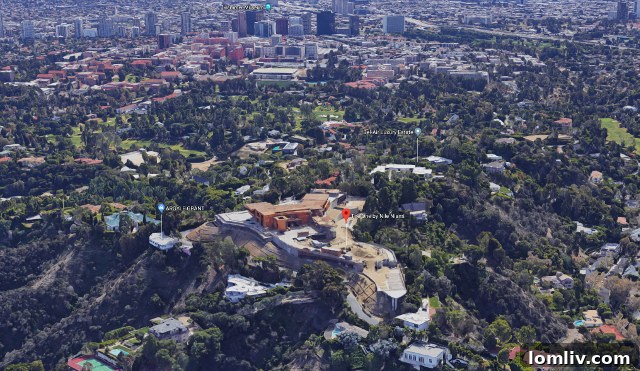
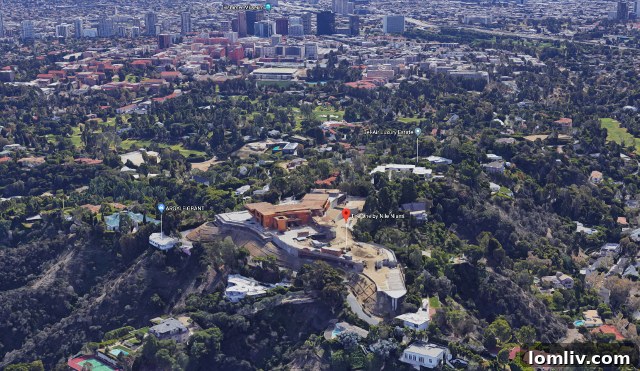
At the apex of this discussion on wealth, luxury, and societal impact stands “The One,” a spec home poised to enter the market in the coming months with an astonishing price tag of $500 million. Located in the exclusive Bel Air enclave of Los Angeles, this property redefines the very concept of a single-family residence. Spanning a sprawling four-acre lot carved from a hilltop, the estate boasts over 100,000 square feet of living space. It features an astounding 20 bedrooms, including a palatial 5,500-square-foot master suite, alongside seven dedicated staff bedrooms. The amenities list reads like a luxury resort brochure: thirty bathrooms, a thirty-car garage, five swimming pools, five elevators, and four separate residences on the property—three for guests or staff, complementing the 74,000-square-foot main residence. Further enhancing its exclusivity are a disco, a casino, a VIP room, walls adorned with jellyfish aquariums, a refrigerated flower storage room, and a private hair salon. As a final, perhaps symbolic, touch, the entire hilltop home is literally surrounded by a moat, ensuring its owner feels truly elevated above the “little people.”
Yet, the proposed $500 million price tag is widely considered to be more a publicity stunt than a realistic market valuation. To put this into perspective, the two most expensive homes ever sold in Los Angeles, the iconic Playboy Mansion and another ultra-luxury spec home, each fetched $100 million—a fifth of “The One’s” asking price. In Dallas, the historic Crespi-Hicks Estate, also known as Walnut Place, initially listed for $135 million in 2013, eventually sold to Andy Beal in 2016 for a rumored $58 million, before being acquired by Mehrdad Moayedi for a mere $36.2 million at auction. These figures suggest that “The One” will struggle to command anywhere near its ambitious half-billion-dollar valuation. Developer Nile Niami reportedly paid $28 million for the site and its existing 10,000-square-foot home. Even with an estimated construction and finishing cost of $1,500 per square foot, the total investment would likely fall around $178 million, leaving a massive gap to the asking price.
Such levels of extravagance transcend mere luxury; they border on the gauche and vulgar. But who is the intended buyer for such an unparalleled property? Niami, a former B-movie producer turned mega-mansion developer, revealed to Details Magazine, “We have a very specific client in mind. Someone who already has a $100 million yacht and has seven houses all over the world, in London and Dubai and wherever.” Promotional videos further paint a picture of a fictional owner arriving in a multi-million-dollar Ferrari, surrounded by what appear to be meticulously curated spaces and the “best women technology can conjure”—a stark and somewhat disturbing reflection of the target demographic.
The pool of potential buyers for such a property is indeed narrow, almost exclusively male, and typically comprises four distinct groups: Russian oligarchs, billionaires from the Middle East and Asia, or perhaps a rare technology titan. While Dallas billionaires like Jerry Jones and Mark Cuban could theoretically afford such a home, a significant portion of their wealth is typically tied up in sports teams and other ventures, making a cash purchase challenging. Mansion monstrosities of this scale require a buyer who can simply write a check without financial recalibration, symbolizing a level of liquid wealth almost unimaginable to most. This scenario brings to mind cynical observations from 1980s sitcoms, questioning the ethics of wealth accumulation: “If you want to know what God thinks of money, look at who he gives it to,” and the poignant exchange, “…he went to the city and made his millions.” “Honestly?” “No one makes a million honestly.” These quips, though fictional, resonate with a prevailing skepticism about the origins of immense fortunes.
The Developer and the Murky Origins of Ultra-Wealth
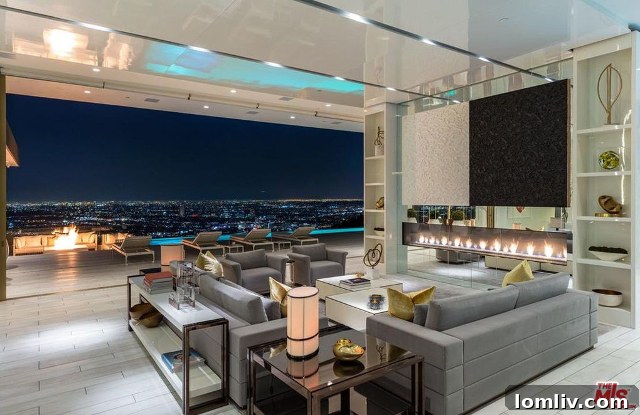
Nile Niami’s portfolio includes other significant luxury properties, such as the $77.5 million Opus mansion, complete with its own Cristal champagne room. This property sits in proximity to another of his mega-mansions, which sold for $40 million. Crucially, that particular mansion was subsequently seized by the US Justice Department as part of a continuing investigation into what has been dubbed “the biggest kleptocracy case in history”—a massive scandal involving Malaysian government officials defrauding their own citizens of billions. Niami’s reported desire to “buy it back,” raises further questions about the potential client base for such properties.
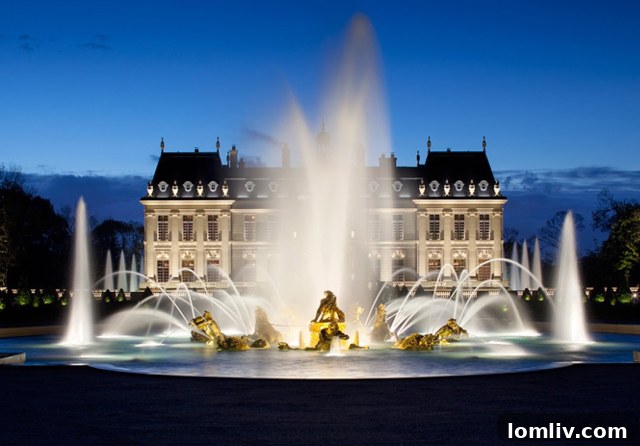
The story of these mega-mansions extends beyond any single developer. Consider the Chateau Louis XIV, a newly built property near Versailles that sold for over $300 million in 2015. Situated on 57 manicured acres, it features a moat with an astonishing underground transparent viewing chamber. This spec build was commissioned by the nephew of a billionaire arms dealer. Two years after its sale, the New York Times exposed the true owner behind the shell companies as Saudi Arabian Crown Prince Mohammed bin Salman. In the same year, the prince also acquired a $500 million yacht and a $450 million da Vinci painting. Ironically, the crown prince has since positioned himself as a leader in an anti-corruption wave sweeping Saudi Arabia, ordering the internment of prominent Saudis at the Ritz-Carlton in Riyadh in November 2017, seeking to recover an estimated $100 billion believed to have been amassed through corruption and embezzlement. The Times’ revelation of his own extravagant expenditures, published the following month, added a layer of profound irony to these events.
History Repeats: The New Gilded Age and Shifting Fortunes
Just as the “new money” titans of the original Gilded Age—figures like Vanderbilt, Carnegie, and Rockefeller—constructed opulent mansions to rival and impress the established “old money” aristocracy, so too does this latest generation of ultra-wealthy individuals seek to buy legitimacy and status through lavish displays. The fundamental difference today lies in the context: these contemporary “gilded agers,” often products of a selfie-driven, digital culture from which their wealth may have originated, primarily aim to impress themselves while simultaneously shielding their vast fortunes from government taxation and, by extension, from their fellow citizens.
It is plausible that Nile Niami’s confidence in “The One” has waned somewhat since construction began in 2013. The ongoing Saudi Arabian anti-corruption drama has undoubtedly removed a significant pool of potential buyers who might now wish to avoid conspicuous publicity. Similarly, tech billionaires, reeling from the aftermath of scandals like Cambridge Analytica, and other wealthy individuals exposed by the Panama and Paradise Papers, may also be less inclined to engage in such high-profile purchases. This confluence of factors, coupled with growing global unrest over economic inequality, creates an atmosphere where hawking the most expensive home in the country may not be ideal. While “The One” will likely eventually sell, a swift sale might indicate a buyer remarkably tone-deaf to the prevailing socio-economic climate. Many would argue that at this extreme level of wealth, ego often overshadows any moral compass, making “tone-deafness” almost a prerequisite for such an acquisition.
As you encounter stories of unbridled opulent spending, it is crucial to consistently question the origins of such immense wealth. The unwitting irony of Niami’s comment regarding “The One’s” library—”Nobody really reads books. So I’m just going to fill the shelves with white books, for looks”—serves as a powerful metaphor. Perhaps these shelves should be filled not with decorative tomes, but with volumes on the fall of ancient Rome, the French and Russian Revolutions, and indeed, the eventual end of prior Gilded Ages. History, after all, often rhymes.

About the Author: My focus areas include high-rises, homeowners associations (HOAs), and real estate renovation. However, I also possess a deep appreciation for both modern and historical architecture, viewed through the lens of the YIMBY movement. My commitment to insightful real estate commentary has been recognized by the National Association of Real Estate Editors, with two Bronze awards in 2016 and 2017, and two Silver awards in 2016 and 2017. If you have a compelling story to share or a unique perspective on the real estate world, please don’t hesitate to reach out via email at [email protected]. While you’re welcome to search for me on Facebook and Twitter, you won’t find me—my focus remains on the substance of real estate, not the digital noise.