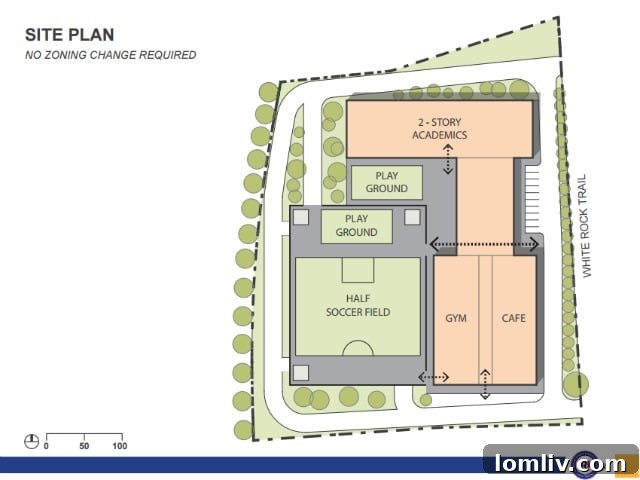
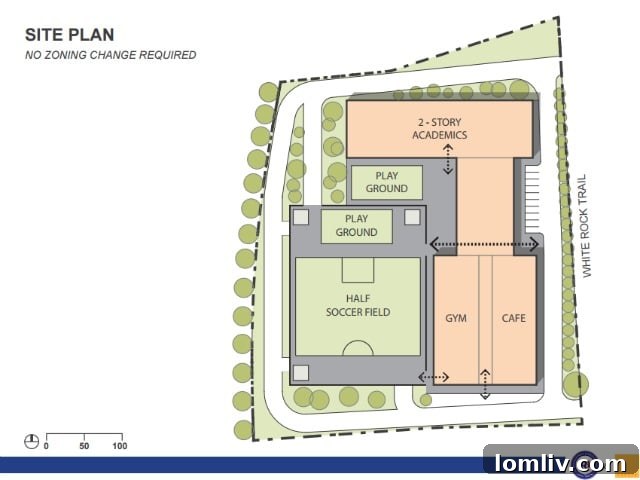
The White Rock Trail Elementary Debate: Unpacking the Proposed Site Controversy in Lake Highlands
After a brief hiatus, it’s time to delve back into the compelling and often contentious discussion surrounding the proposed site for White Rock Trail Elementary. This issue has become a significant focal point for the Lake Highlands community, sparking passionate debate and revealing the complex dynamics of urban development, educational needs, and community trust. The conversation extends beyond just a school building; it touches upon the very fabric of neighborhood planning, property rights, and the future of our children’s education within Richardson Independent School District (RISD).
In previous explorations, we heard from representatives of “We Have a Voice,” a collective of Lake Highlands residents spearheading the opposition to the chosen site, as well as from officials within Richardson Independent School District. These initial reports laid the groundwork for understanding the multifaceted nature of this local controversy. For those who wish to revisit the foundational arguments and initial perspectives, the prior discussions can be found here and here. Now, we turn our attention to the other side of the spectrum, seeking to understand the viewpoints of those who actively support the proposed school location.
Advocating for the New School: Insights from “We Need a School”
To offer a comprehensive view of the ongoing debate, we reached out to Nathan Jacks, a prominent voice within “We Need a School,” the Lake Highlands community group advocating for the proposed site. His perspective offers crucial insights into the rationale behind supporting the district’s choice and the potential implications of any delays. In the interest of full transparency and to provide an unfiltered account, his responses to our inquiries are presented below, illuminating the arguments put forth by those who believe this site is the most viable solution for the area’s growing educational demands.
Understanding Community Sentiment Regarding the Proposed Site
When asked about the extent of community support for the district’s chosen location for White Rock Trail Elementary, Jacks provided a nuanced response, challenging common assumptions about public opinion. He explained that there might be a “negative bias” influencing the perceived level of opposition. “The numbers opposing the school that emailed City Council Member McGough might not fully represent the community’s overall sentiment,” Jacks noted. He elaborated that if the planning and demolition phases are already underway, residents who support the project often feel less compelled to actively email their support. “It’s a natural human tendency to speak up more when you’re against something already in motion than when you’re in favor of it,” he explained.
Remarkably, Jacks highlighted that despite this inherent bias, approximately 15% of the emails received by Council Member McGough expressed support for the school. This figure, he suggested, is quite significant given the circumstances. He further refuted the claim that the majority of residents oppose the proposed school site. Jacks pointed to the “We Have A Voice” group’s own online map, which, he argued, inadvertently demonstrates that a minority of residents actually comprise the opposition. “The group actively went door-to-door across a large portion of the neighborhood soliciting membership, and still, only a limited number joined their cause,” he stated, suggesting that widespread opposition might be overstated.
Key Advantages of the Chosen Location for White Rock Trail Elementary
Jacks articulated several reasons why “We Need a School” is satisfied with the proposed site. Primarily, its strategic location is a significant advantage. “The new school site is centrally located within the current attendance boundaries,” he affirmed. This centrality is critical for ensuring equitable access for students across the district and maintaining cohesive neighborhood school zones. More importantly, Jacks emphasized that this site presents a tangible and available solution to the pressing issue of overcrowding at the existing White Rock Elementary.
He acknowledged the commendable efforts of the teachers and administration at WRE in managing the current, often challenging, school size. However, he pointed out that despite their dedication, overcrowding inevitably leads to negative impacts that are beyond their control. “While all schools inherently face traffic and safety concerns, these issues are undeniably exacerbated and become more pronounced in overcrowded environments,” Jacks clarified. The proposed site, therefore, is viewed as a necessary step to alleviate these burdens and create a more conducive learning environment for students.
Acknowledging Site Limitations and Considering Alternatives
While expressing satisfaction with the site, Jacks was also pragmatic about its inherent challenges. He conceded that “the proposed site does have limitations that are valid concerns.” This acknowledgment underscores a realistic approach to the development process. However, he quickly contextualized these concerns by comparing them to other hypothetical alternatives. “Many other options that I’ve heard proposed would present similar or even more significant limitations,” he suggested.
Jacks further mused on a more radical, albeit impractical, solution. He noted that “many of these named limitations would not even exist if the district were to consider eminent domain for centrally located residences.” Yet, he concluded this thought with a touch of irony, stating, “But I haven’t heard anyone volunteer their home for such a purpose yet.” This highlights the difficulty in finding a truly “perfect” site, emphasizing that all choices involve trade-offs and that the current proposal represents the most feasible compromise given existing constraints.
The Critical Implications of Delays in School Construction
One of the most profound concerns for “We Need a School” revolves around potential delays in building the new facility. Jacks expressed deep apprehension about any impediment to a long-term solution for overcrowding. “Delay of any long-term solution to overcrowding is extremely concerning,” he stated emphatically. He then elaborated on the immediate consequences of such delays, particularly the district’s interim overflow policy.
Jacks highlighted the inequitable impact of this policy, particularly on “multi-family residents.” He explained, “Historically, students residing in multi-family dwellings are disproportionately sent to schools outside their designated attendance zones.” This practice can disrupt community ties and create logistical challenges for families. Furthermore, the overflow policy can tragically split up families. Jacks shared a poignant anecdote: “One parent shared with me that he is forced to send his biological children to one school, while his foster children must attend another.” These personal stories, he explained, are what fuel his urgency: “It’s hearing those kinds of stories that makes me the most anxious for the overcrowding problem to be addressed with the utmost speed and efficiency.”
Navigating Deed Restrictions: A Test of Trust and Resolution
The issue of deed restrictions on the proposed property is a central point of contention. When asked if “We Need a School” is confident that the district can overcome these legal hurdles, Jacks expressed hope tempered with a clear expectation. “It is our hope that the school district is acting in good faith, confident they can collaborate effectively with both the city and local residents to successfully overcome the existing deed restriction,” he clarified.
His group’s stance is unequivocal: “We object to anyone, including the school district itself, who is not actively working towards a speedy and effective solution to the severe overcrowding at White Rock Elementary.” This statement underscores their commitment to addressing the educational crisis, even if it means challenging established norms or bureaucratic processes to expedite the project. The resolution of the deed restriction is seen as a crucial step towards fulfilling the educational needs of the community.
A Critical Look at Opposition Allies: The White Rock North School Perspective
Adding further context after the formal Q&A, Jacks drew attention to an intriguing alliance within the opposition. “One of the key allies for the ‘We Have A Voice’ group is Amy Adams, who heads the White Rock North School,” he revealed, noting that this is a private elementary school directly adjacent to the proposed public school site.
Jacks then highlighted what he perceives as a potential inconsistency. “The White Rock North School faces the very same traffic and safety challenges that are being raised regarding the proposed public school,” he observed. He found it noteworthy that “Amy is actively supporting a group whose primary concerns about the proposed site center around traffic and safety at that very intersection.” This observation prompts reflection on the broader motivations and potential conflicts of interest at play within the community debate.
The Opposition’s Stand: Upholding Deed Restrictions and Community Trust
On the same day we received Nathan Jacks’ responses, another significant voice from the Lake Highlands community emerged, articulating strong opposition to the proposed school site. Peggy Hill, a resident who has called Lake Highlands home for an impressive 45 years, shared her profound concerns. Her perspective delves deeply into not only the neighborhood’s rich history but also the critical issue of trust, particularly concerning zoning restrictions and, most notably, deed restrictions. For Hill and many like her, this debate transcends mere property lines; it speaks to the integrity of civic agreements and the future precedent for community planning.
The Historical Significance and Power of Deed Restrictions
Peggy Hill meticulously recounted the history behind the deed restriction on the property, emphasizing its deliberate and hard-won establishment. “The entire community worked long and hard to get that restriction placed on the property before ever allowing the necessary zoning change required to build the original office complex,” Hill explained. This crucial detail highlights that the restriction wasn’t an oversight but a fundamental condition upon which previous development was permitted. She further stressed the official nature of this agreement: “Both the City Council and the Plan Commission explicitly approved that zoning change, which critically included this very restriction as a non-negotiable component.”
Hill’s central argument then pivoted to a crisis of trust. “Are we now to assume that we cannot trust the City, the City Council, and the CPC to uphold and enforce these deed restrictions?” she questioned pointedly. Her concern extends beyond this specific site, touching upon a foundational principle of urban governance. “Why would any community bother to negotiate and secure such restrictions if they are ultimately not going to be supported or honored as a promise to the community?” she challenged. For Hill, the integrity of these restrictions is paramount to maintaining public confidence in local government.
Ramifications for Future Development and Eroding Community Trust
The implications, according to Hill, are far-reaching if this deed restriction is overturned. “If this precedent is indeed set, then it is imperative that we officially inform all neighborhoods that deed restrictions will not be enforced at a later date,” she asserted. She even suggested notifying “the real estate media that this is now the case,” underscoring the potential for widespread impact on property values and development practices.
As a long-time Realtor herself, Hill voiced a professional concern: she worries that developers will face an increasingly difficult challenge in convincing communities to allow future zoning changes. “After this, developers will struggle to secure community approval for zoning changes, with or without restrictions, simply because those restrictions will be perceived as useless,” she predicted. This loss of faith in the system could stifle responsible development and community collaboration.
Hill concluded by expressing a profound personal disillusionment. “Ordinarily, I am a trusting person when it comes to the city’s commitments,” she stated. However, the current situation has shaken her faith. “If this zoning is ultimately changed to permit a school, then my trust in the city has been significantly shaken, and I am absolutely certain that countless other residents will share this sentiment of betrayal and disappointment.” Her words highlight the deep emotional and civic stakes involved in this highly localized yet broadly impactful debate.
Fostering Constructive Dialogue in the Lake Highlands Community
The debate over the White Rock Trail Elementary site is a powerful illustration of the passion and dedication within the Lake Highlands community. With strong arguments on both sides, fueled by genuine concerns for education, property rights, and civic integrity, it is clear that this issue is far from resolved. The voices of “We Need a School” and “We Have a Voice” represent the diverse perspectives that contribute to the vibrant, albeit sometimes tumultuous, democratic process of local decision-making.
As this conversation continues to unfold, it is vital to remember the underlying shared goal: the well-being and future of Lake Highlands and its children. The decisions made today regarding school sites, zoning, and deed restrictions will undoubtedly shape the community for generations to come. Therefore, while passionate discourse is expected, we urge all participants to maintain a spirit of respectful engagement. No name-calling, no personal attacks, and no baseless accusations will move this important dialogue forward. Let us engage neighbor-to-neighbor, recognizing that we share a common community and will continue to encounter each other in our daily lives. Constructive dialogue, grounded in mutual respect, remains the most effective path toward solutions that truly serve the best interests of Lake Highlands.