Unearthing a Bold Vision: Dallas’s Mockingbird Lane Tunnel Proposal of 2000
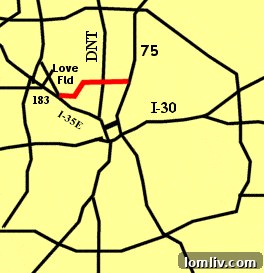
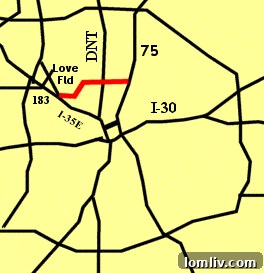
Dallas, a city known for its expansive freeways and perpetual growth, has long grappled with the challenges of urban mobility. In the year 2000, amidst rising traffic congestion and the continuous expansion of the metropolitan area, a particularly audacious proposal emerged: a plan to construct a substantial toll tunnel directly beneath Mockingbird Lane. This ambitious project aimed to create an underground cross-town expressway, offering a novel solution to connect major arteries and ease surface traffic across Dallas.
The concept was simple yet groundbreaking for its time: an subterranean route stretching from one end of the city to the other, potentially revolutionizing how commuters navigated Dallas. Imagine a swift, unobstructed passage that could bypass the usual gridlock. However, despite its potential to transform traffic flow, this visionary project received a notably cool reception, particularly from residents in the affluent Park Cities area, under which a significant portion of the proposed tunnel would run.
Community Concerns and the “Not In My Backyard” Sentiment
The public’s reaction was swift and largely defined by local apprehension. A large gathering of approximately 130 people, filling a room to standing-only capacity, convened to hear the details of the proposed six-lane tollway. This underground artery was envisioned to link the North Central Expressway with State Highway 183, traversing through segments of University Park, Highland Park, and the broader city of Dallas. For many, especially those living directly above the proposed route, the concept was deeply unsettling.
A standing-room-only crowd of about 130 people turned out to hear plans for a six-lane tollway that would connect North Central Expressway and State Highway 183 through portions of University Park, Highland Park and the city of Dallas. Many had concerns. “I don’t want a tunnel built under my house,” said Jane Wigginton, who lives in the 3600 block of Mockingbird Lane. “I don’t know another way to say it. In a lot of places it’s not a big deal to tunnel underground. Here it’s a big deal. Thinking of having people drive under my house at all hours creeps me out.”
The sentiment expressed by Jane Wigginton, a resident on Mockingbird Lane, perfectly encapsulated the widespread concern. Her direct and heartfelt statement, “I don’t want a tunnel built under my house,” highlighted the deeply personal nature of infrastructure projects that impinge on residential spaces. While tunneling might be common in some urban environments, the idea of constant traffic beneath one’s home, with its potential for noise, vibration, and perceived safety risks, was a significant psychological barrier for many Park Cities residents. This “Not In My Backyard” (NIMBY) phenomenon is a common hurdle for large-scale urban development, where the broader public benefit often clashes with localized impacts and personal comfort.
Beyond the immediate psychological discomfort, residents also voiced concerns about potential property value depreciation, the structural integrity of their homes during and after construction, and the overall disruption to their quiet, established neighborhoods. The prospect of heavy construction, followed by a permanent, albeit invisible, transportation corridor, sparked anxieties that proved challenging for the project proponents to overcome.
The Financial Model: A Private Venture Under Scrutiny
From an infrastructural and financial perspective, the Mockingbird Lane tunnel project was remarkably ambitious and intriguing. It was projected to cost $800 million, a substantial sum for the turn of the millennium, and was proposed as a privately funded initiative. The Texas Turnpike Corporation (TTC) was the driving force behind this venture, aiming to demonstrate that large-scale infrastructure could be developed without direct taxpayer burden, relying instead on private investment and toll revenues.
The financial architecture of the project was complex, involving multiple layers of funding and returns for investors. The TTC sought to establish a partnership with local municipalities, proposing the creation of a “Central Dallas Joint Transportation Authority.” This authority, bringing together the two Park Cities and the city of Dallas, would theoretically oversee the construction and subsequent operation of the tunnel. It was a model designed to share oversight while offloading the financial risk onto private entities.
A Highland Park citizens advisory committee requested the presentation, which was open to the public. The committee was recently formed to study the project and its possible effects on the community. Earlier Monday, The Texas Turnpike Corporation, which is proposing the $800 million privately funded project, presented plans to the Dallas City Council transportation committee. John Crew, president of the private toll road development corporation, asked members of the committee to consider joining the two Park Cities to form the Central Dallas Joint Transportation Authority. The authority would oversee construction and operation of the tunnel.
Mr. Crew told the committee that the cities would not assume any risk in the project. Mr. Crew said 63 investors would put up $5 million for a feasibility study. An $800 million tax-exempt revenue bond issue would follow the study. The bonds would mature in 40 years. The investors would receive an $18 million up-front payment and $6 million annually over 40 years.
Dallas council member Laura Miller, though, wondered why the investors and the Turnpike Corporation were needed at all. She suggested that the cities develop the project and keep the profits, if it is feasible. “Why do we need you guys?” Ms. Miller asked. “Why don’t the cities just do it themselves?”
During presentations to committees, including the Dallas City Council transportation committee, John Crew, president of the Texas Turnpike Corporation, emphasized that the cities involved would bear “no risk” in the project. The plan detailed how 63 private investors would contribute $5 million for an initial feasibility study. Should the study prove positive, it would be followed by an $800 million tax-exempt revenue bond issue, with bonds maturing over 40 years. The investors were promised significant returns: an $18 million upfront payment and an additional $6 million annually for the duration of the 40-year bond period. This structure aimed to attract capital by offering a stable, long-term return on investment, funded by future toll collections.
However, this private funding model, despite its promise of “no risk” for the public purse, was met with skepticism from some local leaders. Then-Dallas City Council member Laura Miller famously challenged the very premise of involving a private corporation and its investors. Her pointed question, “Why do we need you guys? Why don’t the cities just do it themselves?” cut to the heart of the public-private partnership debate. Miller’s query highlighted concerns about transparency, the allocation of potential profits, and whether private interests were superseding the public good. It sparked a discussion on whether municipalities should forgo the opportunity to develop and profit from essential infrastructure projects themselves, especially if they were deemed feasible and potentially lucrative.
A Good Idea Revisited: Lessons for Modern Dallas Infrastructure
Looking back, the Mockingbird Lane tunnel, despite its contentious nature and ultimate failure to materialize, was indeed a compelling idea. The urban sprawl and traffic woes that plagued Dallas in 2000 have only intensified with two decades of population growth. The core problem the tunnel sought to address – efficient cross-town mobility without adding to surface street congestion – remains a critical challenge for Dallas today.
A tunnel of this magnitude would have offered numerous benefits. It would have significantly relieved pressure on existing surface streets like Mockingbird Lane, allowing for faster, more predictable travel times for commuters. Beyond easing congestion, such an underground expressway could have reduced local emissions from idling traffic, enhanced the quality of life in residential areas by diverting through-traffic, and provided a resilient transportation link less susceptible to surface-level disruptions. The economic advantages, from faster freight movement to improved access for businesses, would also have been substantial.
The vision behind the Mockingbird Lane tunnel concept holds particular relevance when considering current bottlenecks in Dallas. One might ask, for instance, if a similar approach could be applied to Northwest Highway. Imagine a well-planned underground corridor running from Central Expressway to Harry Hines Boulevard, effectively bypassing some of the most congested interchanges and commercial districts in the city. Such a project could drastically improve connectivity between major Dallas employment centers and residential communities, offering a solution to current traffic nightmares without further widening existing surface roads or acquiring additional eminent domain. With advancements in tunneling technology and a renewed focus on sustainable urban development, concepts like these warrant fresh consideration.
The Mockingbird Lane tunnel project of 2000 stands as a poignant reminder of Dallas’s continuous quest for innovative traffic solutions. While community concerns, epitomized by residents like Jane Wigginton who still resides at 3635 Mockingbird Lane, played a significant role in its undoing, the underlying ambition to create a more efficient, future-proof transportation network for Dallas remains. As the city continues to grow, revisiting such bold proposals, perhaps with updated technologies and more robust community engagement strategies, could unlock the next generation of urban infrastructure that truly serves the needs of its residents and businesses.