

The allure of true crime narratives often stems from their ability to peel back the layers of seemingly ordinary lives and reveal the extraordinary darkness hidden within. Decades ago, as a burgeoning Dallas architect, Stephen Chambers embarked on a project that would inadvertently become a focal point in one of North Texas’s most chilling true crime sagas. Approached by Candy and Pat Montgomery, Chambers was tasked with designing their ideal residence, a home that would ultimately earn the moniker “the best party house” in eastern Collin County. This very structure later served as a haunting backdrop in Candy, the critically acclaimed Hulu miniseries dramatizing a brutal 1980 Dallas-area murder that shocked the communities of Wylie, Fairview, and Lucas.
The limited series meticulously reconstructs the tragic events surrounding Candy Montgomery, a popular Fairview wife and mother whose life took a sinister turn when she killed her friend, Betty Gore, with an ax. The gruesome incident occurred at Gore’s residence on Dogwood Drive in Wylie on a fateful Friday, June 13, 1980. As renewed public attention is drawn to this sensational North Texas crime through various adaptations, we delve into the real estate context that framed this international miniseries. Our unique real estate perspective aims to provide deeper insights into the home, the neighborhood, and the community—elements often overlooked but crucial to understanding the full scope of the Candy Montgomery saga. This enduring fascination with the property itself has made it another intriguing facet of a story that continues to captivate audiences and spark lively discussions.
Almost 42 years to the day of the crime, daltxrealestate.com (which has no affiliation with the parties involved) tracked down the Dallas architect who collaborated with the Montgomerys. We sought his candid recollections of working with Candy on what was intended to be the ultimate entertaining haven.

Designing Dreams: The Montgomery Home and Its Architect
Tucked away beyond the scenic, winding roads of Lucas, within the then-burgeoning community of Fairview, the Montgomerys’ residence on Arroyo Blanco Street stood out. It was a rare example of architect-designed housing in an area where custom homes were becoming more common, yet not always featuring the purposeful architecture and refined design that Stephen Chambers brought to his projects.
Chambers had established his architecture firm in 1975, a relatively new venture when, just a few years later, the Montgomerys reached out to him. “I think they just heard about our work and called us,” Chambers recalled, painting a picture of a typical client interaction from his early career. He remembers them fondly: “They were pleasant, nice people, easy to work with. They were respectful.” This initial impression sharply contrasts with the dark narrative that would later engulf their lives, highlighting the complex and often deceptive nature of human character.
The architect recounted a memorable, albeit humorous, story about Candy visiting his office. She was concerned that the blueprints depicted a home far too expansive for their needs, insisting on a reduction in square footage. “‘You’ve got to cut it!’” Chambers comically recounted her imagined shout, adding a dramatic flourish where she supposedly brandished a hatchet from her purse. This playful anecdote often elicits gasps from listeners. Chambers, however, quickly dispels the dramatic embellishment with a laugh: “No, that didn’t happen. She was nice. She was normal.” This lighthearted story serves as a stark reminder of the perception versus reality often found in sensational cases.
However, a true story exists that offers a chilling glimpse into Candy’s enigmatic persona. A reporter, seeking an interview, once knocked on Candy’s door. She answered, a knife casually held in her hand, and with a smile, reportedly stated, “Don’t worry, I’m not dangerous.” This unsettling encounter reveals the unsettling composure and underlying tension that characterized her public image.
The producers of the Hulu series heavily relied on the intricate details provided in Evidence of Love, a compelling true-crime thriller about the case penned by John Bloom and Jim Atkinson. Bloom, a Pulitzer Prize nominee, and Atkinson, a founding editor of D Magazine, meticulously researched the case, immortalizing Chambers in their book as a “chic Dallas architect.”

The specific locale chosen by the Montgomerys for their dream home also features prominently in the book, providing rich historical context. Bloom and Atkinson describe it as “simply ‘the country’—this place where the women had come with their men and children to settle.” They elaborate, “Specifically, it was eight to 10 amorphous little towns in eastern Collin County, Texas, but it really had no name. The church where the Montgomerys worshiped was located in a tiny farming community called Lucas, but most of the farming had ceased, and few of the church members lived there anyway. The church buildings sat on a slight rise, surrounded by fallow blackland wheat fields on three sides and a farm-to-market road on the fourth.” This vivid description paints a picture of a pastoral, yet evolving, landscape.
The migration to this area in the 1970s was driven by a common desire: “Most of them had come to escape something: cities, density, routine, fear of crime, overpriced housing, the urban problems their parents never knew.” This demographic shift fueled a boom in custom home building. “They came in the 1970s, just about the time the Dallas developers started buying out the farmers one by one, and they settled on pasture-size lots in homes designed exclusively for them by architects happy to get rich by satisfying their whims.” Chambers was one such architect, contributing to the distinct architectural identity of the evolving suburban landscape.
Unfortunately, Chambers no longer possesses the original plans, renderings, drawings, or any correspondence related to his project with the Montgomerys. He estimates that he has designed approximately 1,000 homes throughout his extensive career since then. Despite the lack of records, he firmly believes that the house he designed was considerably more refined and aesthetically pleasing than the one portrayed in the miniseries Candy, which was filmed on location in Georgia.
The true impact of the crime on Chambers came much later when he unexpectedly recognized his work on the evening news. “One evening I just happened to sit down in front of the television,” he recounted, tuning in to coverage of Candy’s arrest. “There was something that was going on, and the camera panned by the neighborhood. I thought, ‘I think I did that house.’” It was a profoundly disturbing moment for the architect, who has now enjoyed a distinguished 47-year career in Dallas, to see his meticulously crafted design become the unsettling backdrop for the arrest of an ax murderer.
“It was bizarre,” he mused, reflecting on the experience. “People are people, and if you work with thousands of people over a period of time, you will occasionally run into people who behave in an unusual way. [Candy and Pat Montgomery] didn’t behave badly. They were nice people.” This sentiment underscores the architect’s lasting impression of his clients, a testament to the fact that even seemingly ordinary individuals can be embroiled in extraordinary circumstances.
The Enduring Allure of the “Best Party House”
Chambers remembers the Montgomery home as featuring a distinctive open floor plan, spanning approximately 2,400 square feet. It was considered a modern marvel for that particular wooded Fairview neighborhood and the architectural sensibilities prevalent during its construction in the late 1970s. “It was pretty ‘out there’ for a person building a house in Fairview to come to an architect back then,” Chambers explained, highlighting the forward-thinking vision of the Montgomerys and the rarity of custom architectural design in that area at the time.
Pat Montgomery, an engineer at Texas Instruments, met Candy through her job as a secretary at a wrought-iron furniture manufacturing plant, where Pat’s mother and aunt crafted cushions for padded headboards and barstools, as detailed in Evidence of Love. This background provides a glimpse into their unassuming, suburban existence.
Chambers estimates that a home of the Montgomerys’ caliber would have cost around $30 per square foot in the late 1970s. Today, a comparable custom home, reflecting similar design principles and quality, could command upwards of $500 per square foot, illustrating the significant appreciation in real estate values and construction costs over the decades.
“It wasn’t like a North Dallas special,” Chambers emphasized, distinguishing it from the more opulent, traditional styles common in other affluent areas. “It was modern for that area. It had a lot of windows. It was not a really large house, but a pretty good size.” He elaborated on the shift in design philosophy from earlier decades: “In the ’60s and ’70s, all the rooms were separate rooms. It was a different era. The kitchen had a door, and rarely was the door open to the rest of the house. That’s a throwback to the period of time when people had help.” The Montgomerys’ home, with its open plan, marked a departure from these more compartmentalized layouts, embracing a new era of casual living.
Bloom and Atkinson further contextualize the architectural landscape of Collin County during this period, describing subdivisions along F.M. 1378 as “full of fantasy architecture.” They paint a vivid picture: “… houses shaped like Alpine villas, houses dolled up like medieval castles, houses as forbidding as national park pavilions or as secluded as missile bases, hidden in thickets along the shores of Lake Lavon. Juxtaposed with these personal statements were the more familiar examples of prairie architecture: trailer homes, bait shops, windowless lodge halls, an outdoor revival shelter, barns, ghost-town cemeteries. The only connection between past and present was the ubiquitous white horse fences which proliferated along the highway and around many of the brand-new houses, in inverse proportion to the number of horses needing corrals.” Amidst this eclectic mix, Chambers’ modern design for the Montgomerys stood as a distinctive statement.
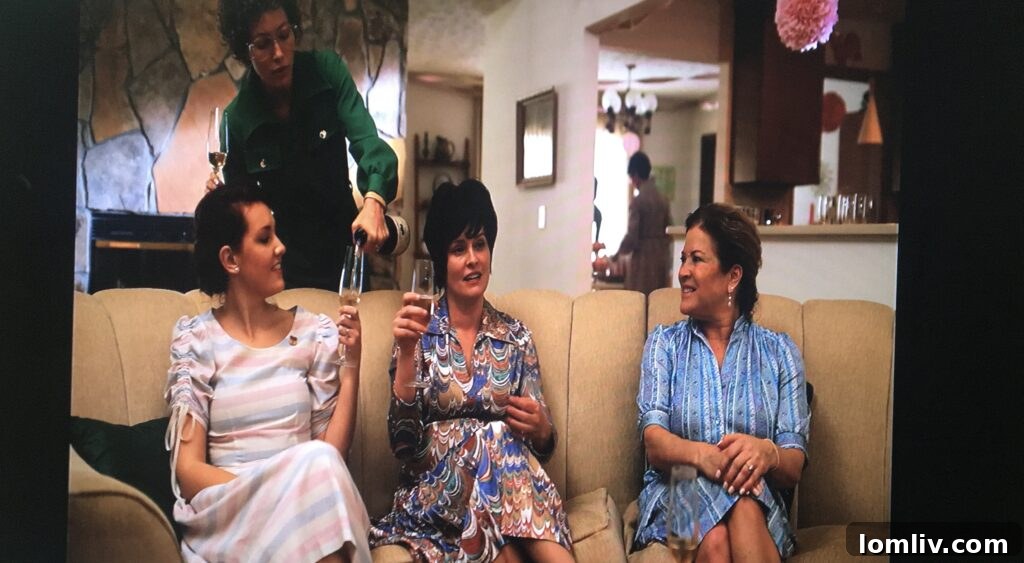
The iconic phrase “the best party house” resonates throughout the miniseries, most notably when Candy herself uses it while planning a baby shower for her friend Betty in Episode 3. This aspiration for an ideal entertaining space deeply influenced the home’s design. “Today, what makes a good party house is an open plan,” Chambers explained, a philosophy he championed even then. “The kitchen and the family room, and the dining are all open to each other. Everybody always wants to end up in the kitchen. Today, people want a more casual kind of entertaining. Even if you’ve got a caterer, people want to be in the kitchen and see what the caterer’s doing. It leads to a more flexible kind of living where the spaces are more open to each other. It’s not chopped up with a bunch of walls. You can move furniture, but you can’t move walls.” This insight into spatial flexibility underscores the timeless appeal of open-concept living.
The Montgomerys’ home also featured an open design towards the back, fostering a comfortable and seamless flow from the indoor living areas to the outside. While Chambers couldn’t specifically recall if the home included a screened porch, he noted that it is a common and highly desired element in his extensive repertoire. “People want it,” he said, describing the romantic appeal and practical utility. “Because of our climate, you can’t use much of the outside space most of the year. We have some relatively nice weather that can make it comfortable as long as you don’t have mosquitoes and flies.” These outdoor living spaces significantly enhance a home’s functionality for entertaining.
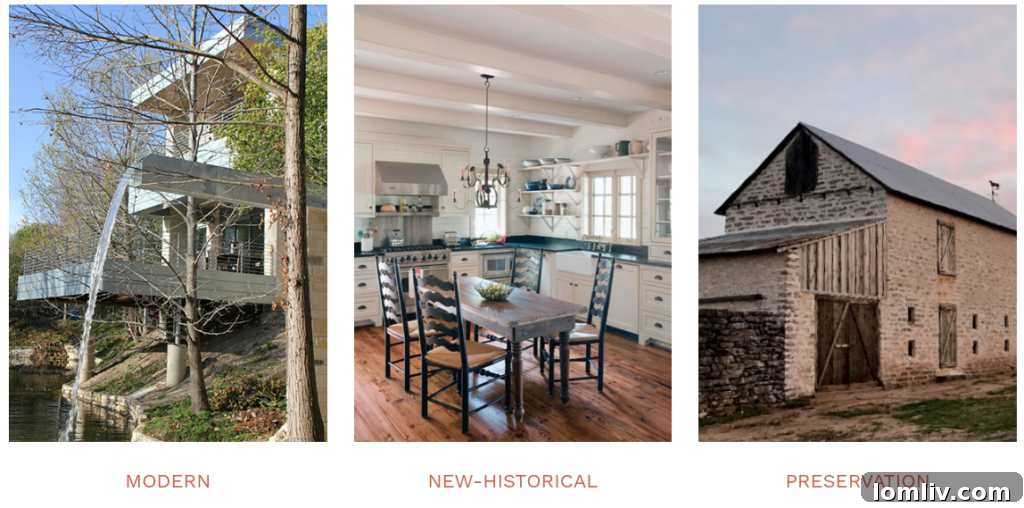
Over his decades-long career, Chambers has specialized in a diverse range of architectural styles, including ranches, new-historical designs, modern homes, and preservation projects. His firm’s philosophy, as articulated on his website, states that his homes are “a reflection of the personality of the owners, not a portrait of the architect.” This client-centric approach ensures that each design is uniquely tailored. “If you do something long enough, you might get good at it,” Chambers modestly remarked, attributing his success to sustained dedication and expertise.
In the late 1970s, it was quite unconventional for an architect to focus specifically on designing residential homes. Chambers, however, intentionally centered his practice on creating spaces that prioritized casual living, open layouts, inherent flexibility, and a lack of overly precious elements—especially for clients who loved to entertain. “People felt like they could be themselves,” he observed. When asked what truly constitutes a good party house, Chambers now considers the broader context. “I actually think more now about the topography of the land. It also has to do with the function of the house. I like the whole house on one level. It breaks up and limits the use of the space if you have step-downs. It’s actually inconvenient and slightly dangerous. Your guests are interested in talking to other people, maybe having a drink. You almost have to be there and make sure they don’t stumble. Nothing would be more embarrassing than having a guest injured. We used to change levels in houses a lot.” This evolution in his thinking underscores a commitment to practicality and safety in design.
Today, there is a greater emphasis on universal design principles, ensuring that homes are comfortable and functional for individuals of all capacities, including those with impaired eyesight or mobility challenges. “We’re starting to get away from doing houses that have precious material inside,” Chambers noted, advocating for a more resilient and enjoyable living environment. “If it’s all so precious that you can’t have guests with a glass of red wine, you don’t get to enjoy it. A house needs to be sort of fool-proofed,” a philosophy that promotes practical luxury over fragile grandeur.
Functional Space and Future-Proofing Homes
The concept of functional space is paramount in Chambers’ design philosophy. He places significant emphasis on understanding the homeowner’s immediate needs and their long-term plans for the residence. “The question is, is this your forever house?” Chambers posited. “A lot of people don’t want to talk about it, but if your house isn’t adaptable, at some point you’re going to have to go someplace special to live.” This foresight leads to the integration of universal design elements, making homes accessible and comfortable for residents across all life stages. “We’re applying more universal design. It isn’t rocket science. You have to think about how people will use the space.”
This commitment to universal design stems from a deeply personal place for Chambers. His father, a disabled World War II veteran who used a wheelchair, had a home specifically designed for him by an architect in 1952. This early exposure instilled in Chambers an understanding of adaptive architecture. The design featured slightly wider halls and lower light switches, subtle yet impactful modifications. “It was a really cool 1950s Midcentury Modern with big windows,” Chambers recalled. He shared a poignant conversation with his father in his older age: “I was talking to him and he said, ‘I just want to be carried out of here feet first.’ It’s like a light went on in my mind.” This powerful statement solidified Chambers’ belief in designing homes that can truly adapt to residents’ changing needs, allowing them to age in place comfortably. He stresses that while not every client desires this, it ultimately adds value and broadens market appeal. “Not everybody wants to do that, and the client’s the boss. It makes their house more valuable for the next person. Rarely are you excluding anyone from purchasing the house. It’s just common sense design.”
Architectural technology and consumer preferences have evolved dramatically since the construction of Candy Montgomery’s home. Today, clients frequently request larger and more numerous windows, a trend driven by advancements in material science and energy efficiency. “Houses built in Dallas in the ‘40s and ‘50s, the garage is always on the west side of the house because the sun was so intense,” Chambers explained, highlighting past limitations. “You didn’t use a lot of windows. Now, the technology of windows has changed so much. The actual building code is so much better than anything we’ve ever had. We’re doing a lot more homes that have views of the outside. You let light in, and it makes the house seem bigger.” This shift allows for more expansive glass, blurring the lines between indoor and outdoor spaces and enhancing the sense of openness.
Contemporary homeowners are also less inclined towards “a whole bunch of chopped-up rooms and more footage than they need,” the architect added. The trend is moving towards efficiency and versatility. “We see people more willing to have less space and have the ability to use one room for more than one function,” he observed. Furthermore, a growing environmental consciousness influences design choices: “We also have people now who want to have as little impact on the environment as possible,” reflecting a broader societal shift towards sustainability in residential architecture.
Ordinary Lives, Extraordinary Circumstances: The Psychology of a Crime
While Stephen Chambers remains detached from the narrative of the Hulu miniseries Candy, having only viewed still photographs and online clips due to the gruesome nature of the story, his wife, Stephanie, has delved deeply into the case. “I can’t really sit still for long periods of time, and my imagination is so vivid that I get worked up and can’t sleep,” he admitted. His wife, Stephanie, however, has watched the show, thoroughly researched the court proceedings, and even befriended author Jim Atkinson, co-writer of Evidence of Love. Her insights provide a unique perspective on the psychological complexities of the Montgomery case.
Stephanie Chambers, herself a writer who pens “family dysfunction stories” set in her native Louisiana, has extensively studied how Candy Montgomery could have been acquitted despite inflicting 41 ax wounds on Betty Gore—an act widely characterized as “overkill” by legal and psychological experts. Montgomery’s defense centered on self-defense, claiming that Betty Gore confronted her about Candy’s affair with Betty’s husband, Allan, and that Candy wrestled the ax away from Betty, assaulting her friend to protect herself.
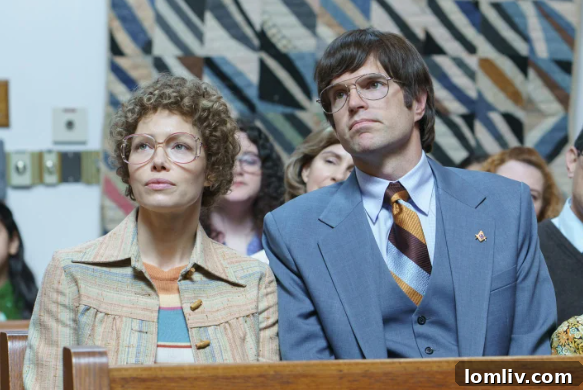
The jury, composed of nine women and three men, delivered the not-guilty verdict—a decision Stephanie Chambers believes would likely play out very differently in a contemporary courtroom. “The psychiatrist that her attorney sent her to took her back to her childhood,” Stephanie explained. “She recalls an incident where her mother was punitive and shushed her. I really do think that young children can be traumatized. The jury got that. They got the story that [Candy’s attorney] told. I’m not sure that would happen today.” This reflection highlights the evolving understanding of psychology in legal contexts and shifts in societal attitudes towards criminal defense.
Intriguingly, Candy Montgomery is now reportedly working under her maiden name, Candace Wheeler, as a mental health counselor in Georgia. This later-life career path adds another layer of complexity to a woman whose past is forever marked by extreme violence.
For Stephanie Chambers, the enduring fascination with the Candy Montgomery story lies in the profound psychological dynamics at play. It explores the descent of a seemingly “bored housewife” who initiated an affair with her friend’s husband, ultimately leading to the brutal murder of that friend, Betty Gore. “It’s like one little shoe dropped that just broke her,” Stephanie theorized, suggesting a cumulative psychological pressure. “She was walking on the edge. That, to me, is why the story is so fascinating. They’re not sensational people. They were ordinary people under duress. It’s the murder that makes all of this really sensational.” This captivating insight encapsulates the enduring appeal of the Candy Montgomery case: a chilling reminder of how ordinary lives can unravel under pressure, culminating in extraordinary and tragic circumstances that continue to intrigue and provoke discussion decades later.