The Great American Shift: Why Renting is Redefining Urban Living Across the U.S.
The housing landscape in the United States is undergoing a profound transformation, with renting emerging as a dominant trend reshaping communities and urban centers. For the first time in 55 years, the number of households choosing to rent has surged, reflecting a significant demographic and economic shift across the nation. With a staggering 43.7 million households now making a monthly rental payment, the U.S. rental market has reached an unprecedented peak, signaling a new era of urban and suburban living. This isn’t merely a fleeting trend; it’s a fundamental recalibration of how Americans choose to live, driven by a confluence of economic factors, lifestyle preferences, and evolving societal norms.
A comprehensive report by RentCafé, a leading authority in rental market analytics, illuminates this growing phenomenon by delving into granular U.S. Census Bureau data. Their extensive research identified 101 specific ZIP codes across 50 of the nation’s largest cities that have transitioned into renter-majority populations over the last decade. This shift indicates a widespread movement away from traditional homeownership models, particularly in dynamic urban environments where housing demands are high and the allure of flexible, amenity-rich living is strong.
Understanding the Nationwide Rental Boom: Data-Driven Insights
The insights provided by RentCafé are invaluable for understanding the magnitude and localized impact of this national trend. By meticulously sifting through vast quantities of U.S. Census Bureau data, they’ve managed to pinpoint the precise areas where the balance has tipped, marking a significant change in community composition. These ZIP codes are not random; they often represent burgeoning urban cores, vibrant entertainment districts, or areas experiencing rapid economic development and demographic change. The increase in rental households speaks volumes about affordability challenges, changing aspirations, and the growing appeal of a lifestyle unburdened by the responsibilities of property ownership.
The data clearly illustrates that renting is no longer just a transitional phase for many but a preferred long-term housing solution. This paradigm shift has profound implications for urban planning, real estate development, and the provision of local services. As more communities become renter-majority, the focus shifts towards creating vibrant, walkable neighborhoods with diverse housing options, accessible public transportation, and ample amenities tailored to the needs of a mobile and dynamic population. The economic ripple effects are also significant, influencing local businesses, employment rates, and the overall vitality of these trending areas.
Dallas Takes Center Stage: A Microcosm of the Rental Revolution
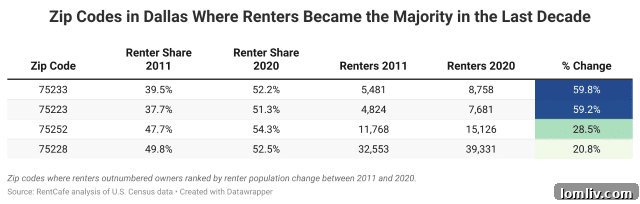
The Dallas-Fort Worth metroplex, a bustling economic hub in the heart of Texas, serves as a prime example of this national trend in action. Within the broader Dallas area, four distinct ZIP codes have been identified as experiencing a significant surge in their renter populations, becoming true renter-majority havens. This transformation reflects Dallas’s rapid growth, its appeal to diverse demographics, and its evolving urban fabric. Unlike the idyllic, detached homes often depicted in classic television shows, modern Dallas residents are increasingly embracing the convenience and community found in apartment living, mirroring a lifestyle more akin to sophisticated urban dwellers.
Deep Dive into Dallas’s Renter Hotspots
75233: Oak Cliff’s Rising Rental Appeal
Emerging as a prominent hotspot, Dallas’s 75233 ZIP code in the historic Oak Cliff neighborhood stands out, ranking among the top trending areas nationally. This zone has witnessed a remarkable surge in its renter population, increasing by an impressive 59.8 percent over the past decade. The number of rental households jumped significantly from 5,481 to 8,758, solidifying Oak Cliff’s reputation as a dynamic and increasingly renter-friendly community. Oak Cliff’s rich history, diverse cultural scene, and proximity to downtown Dallas make it an attractive location for those seeking a vibrant urban experience without the commitment of homeownership. The ongoing revitalization efforts and the proliferation of new apartment developments have further fueled this growth, drawing in a mix of young professionals, artists, and families.
75223: East Dallas’s Growing Urban Allure
Similarly, the 75223 ZIP code in East Dallas, encompassing the charming Hollywood Heights-Santa Monica area and surrounding neighborhoods, has followed a parallel trajectory. Its renter population experienced a substantial increase of 59.2 percent over the last decade, reflecting East Dallas’s enduring appeal. Known for its eclectic mix of historic homes, trendy eateries, and access to White Rock Lake, this area attracts individuals and families looking for a community-oriented lifestyle with easy access to urban amenities. The demand for rental properties here is consistently high, driven by its desirable location and the continuous development of modern, stylish apartment complexes that cater to diverse tastes and budgets.
75252: Southeast Plano’s Strategic Location
Further north in the expansive Dallas metroplex, the 75252 ZIP code in southeast Plano has also emerged as a significant renter-majority area. Strategically located south of President George Bush Turnpike and immediately east of the University of Texas at Dallas (UTD) campus, this area is a magnet for students, faculty, and professionals working in the region’s burgeoning tech and corporate sectors. The presence of a major university ensures a steady demand for rental housing, while its proximity to major highways offers excellent connectivity to job centers throughout North Texas. This blend of educational institutions and commercial growth makes 75252 a highly sought-after location for renters seeking convenience and opportunity.
75228: Northeast Dallas’s Convenient Living
Rounding out Dallas’s trending ZIP codes is 75228 in northeast Dallas. This pie-shaped area, nestled within the Interstate 635 loop, north of Interstate 30, and generally south of Garland Road, provides residents with excellent access to major transportation arteries and various amenities. Its central location makes it an ideal choice for commuters, while the availability of diverse housing options, from traditional apartment complexes to newer developments, caters to a wide spectrum of renters. The consistent demand for rental units in 75228 underscores the broader appeal of living within Dallas’s core, where convenience, accessibility, and a dynamic urban lifestyle are paramount.
Beyond these four areas, other Dallas ZIP codes have demonstrated exceptional growth in their renter populations. Notably, 75210, which encompasses a significant portion of South Dallas including the iconic Fair Park and extends southwest towards White Rock Creek, experienced a staggering 94 percent surge in renters. This phenomenal growth propelled 75210 to become the 12th fastest-growing ZIP code for renters nationwide. This rapid expansion highlights the revitalization and increasing desirability of historically underserved areas, as well as the push for more affordable housing options closer to the city center.
Furthermore, among the 24 renter-majority ZIP codes in Dallas, several stand out for their near-total renter occupancy. The 75251 ZIP code, for instance, boasts a population composed entirely of apartment dwellers, signifying a unique demographic landscape. Close behind, 75201 and 75226 also exhibit overwhelming rental dominance, with apartment dwellers accounting for 88.7 percent and 88.1 percent of their respective populations. These areas, often characterized by their dense urban development, proximity to major employment centers, and abundance of luxury and mid-range apartment buildings, exemplify the ultimate embrace of the rental lifestyle within the Dallas urban core.
The Broader National Picture: Trends and Driving Forces
The patterns observed in Dallas are reflective of a much larger national narrative. Across the 50 largest cities in the United States, renters now outnumber homeowners in 41 percent of all ZIP codes. This statistic alone underscores the pervasive nature of the rental trend, illustrating how deeply it has embedded itself into the fabric of American urban living. This widespread shift is not confined to a few isolated pockets but represents a fundamental reorientation of housing preferences and market dynamics across diverse metropolitan areas.
Looking at the national leaders in renter growth, Columbus, Ohio’s 43240 ZIP code experienced the fastest overall increase in renter numbers. Meanwhile, San Antonio’s 78215 has been crowned the nation’s top trending ZIP for renters, demonstrating an incredible tripling of its renter population within a mere decade. These examples from different regions highlight that while local factors play a role, the underlying drivers are universal.
Interestingly, the Southern United States appears to be a hotbed for this rental revolution. Three of the top five cities boasting the largest numbers of trending renter ZIP codes are located in the South. Houston leads the pack with an impressive 16 such ZIP codes, closely followed by Dallas and Miami, each with 12 ZIPs where renters now form the majority. This Southern dominance suggests a potent combination of robust economic growth, influx of new residents, and a developing urban infrastructure that readily accommodates and attracts a rental-centric lifestyle.
Why the Shift? Unpacking the Factors Behind the Rental Boom
Several interconnected factors are fueling this significant pivot towards renting across the U.S. Understanding these drivers is crucial for grasping the long-term implications of this housing market evolution.
- Affordability Crisis: Perhaps the most significant driver is the escalating cost of homeownership. Soaring home prices, coupled with rising interest rates and stringent mortgage lending standards, have made it increasingly difficult for many, especially first-time buyers, to enter the housing market. Renting offers a more accessible and often more financially manageable alternative.
- Demographic Changes: The millennial generation, now the largest segment of the workforce, and Gen Z are prioritizing flexibility, experiences, and urban living. Many are delaying marriage, family formation, and homeownership compared to previous generations. Renting aligns perfectly with a desire for mobility and a less encumbered lifestyle.
- Lifestyle Preferences: Modern renters often seek a low-maintenance lifestyle, free from the burdens of property taxes, repairs, and upkeep. Apartment communities, particularly in urban areas, frequently offer a wealth of amenities such as fitness centers, co-working spaces, and communal lounges, fostering a sense of community and convenience that appeals to today’s busy individuals.
- Economic Mobility: The ability to relocate for job opportunities or career advancement without the complexities of selling a home is a powerful incentive for many. Renting provides the flexibility needed to respond to dynamic labor markets.
- Urbanization and Density: There’s a continued draw to urban centers, which offer concentrated job markets, cultural attractions, and diverse social opportunities. As cities become denser, multi-family housing naturally becomes the predominant and most efficient housing type.
- Student Populations: Areas around major universities and colleges consistently maintain high rental populations, catering to a transient student body that requires flexible and often affordable housing options.
Implications for the Future of Housing and Urban Development
The sustained rise of the renter-majority landscape carries profound implications for the future of housing, urban planning, and community development. Cities and developers must increasingly adapt to meet the needs of a growing rental population. This means investing in diverse apartment offerings, from luxury high-rises to more affordable options, and ensuring that rental communities are integrated into broader neighborhood planning. Infrastructure, public transit, and community services will need to evolve to support denser populations and a lifestyle that often relies less on personal vehicles and more on shared spaces and public amenities.
For policymakers, understanding these shifts is critical for crafting effective housing policies that address affordability, tenant rights, and the equitable development of rental housing. The perception of renting is also changing; no longer seen merely as a temporary step, it is increasingly viewed as a viable, desirable, and often strategic long-term housing choice for a significant portion of the population. This recognition requires a societal shift in valuing rental contributions to community stability and economic vibrancy.
Embracing the Renter Identity: A New Norm
In conclusion, the American housing narrative is undergoing a remarkable evolution, with renting firmly establishing itself as a mainstream and often preferred lifestyle. The days when homeownership was the singular aspiration for all are gracefully giving way to a more diverse and adaptable approach to living. Whether driven by financial prudence, a desire for flexibility, or the appeal of urban amenities, millions of Americans are finding their ideal homes in rented apartments and houses.
So, there’s no need to be shy about where you live or your residential status. When asked for your address, proudly state your real ZIP code. Chances are, you’re part of a growing majority, riding the wave of a significant and lasting trend that is redefining modern American life. This isn’t just about housing; it’s about lifestyle, community, and the future of our vibrant cities.