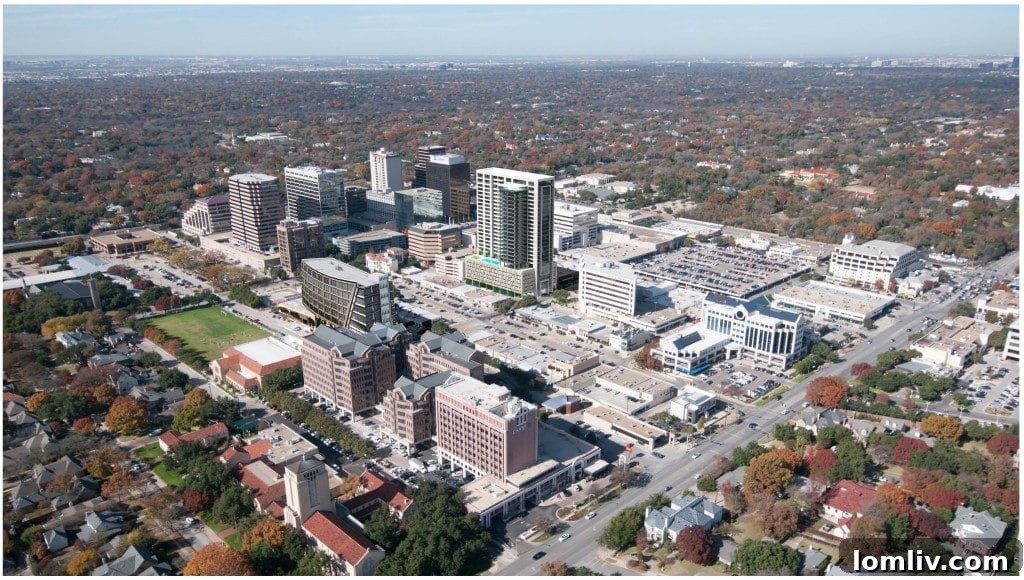
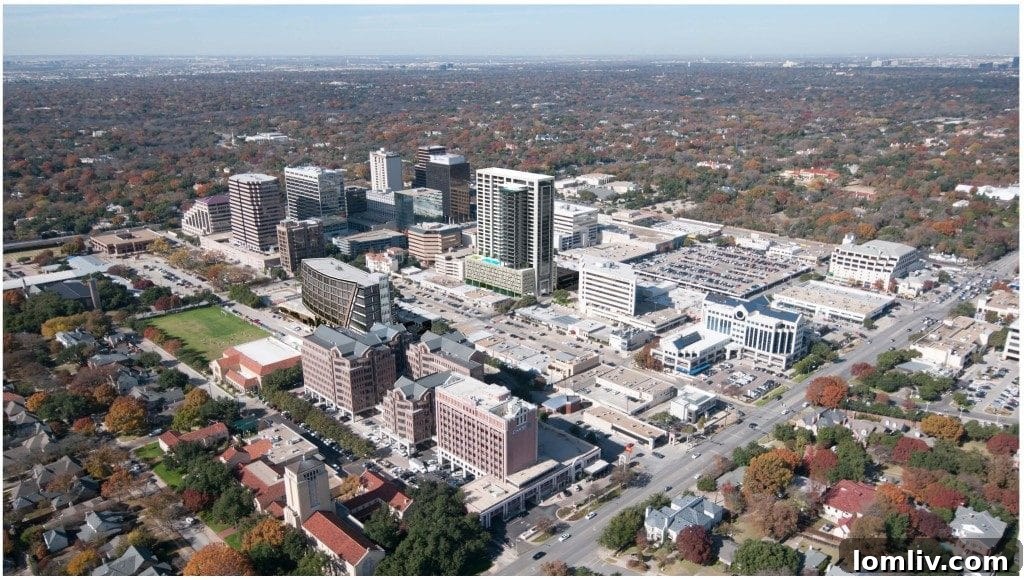
As election day draws near, all eyes in Dallas are fixed on City Council District 13, where a vibrant and complex tapestry of real estate development debates is unfolding. This district has seen the highest early voter turnout, with 17.6 percent of eligible voters casting their ballots, underscoring the deep community engagement in these crucial local issues. The future of several key Dallas neighborhoods hangs in the balance, making this election particularly significant for residents, developers, and city planners alike. From the contentious “Behind the Pink Wall” density discussions to the highly anticipated redevelopment plans for Preston Center, the stakes for urban growth and community character are exceptionally high.
One of the central controversies captivating District 13 involves the “Behind the Pink Wall” real estate quagmire. This area is home to numerous condo owners and tenants who are staunchly opposed to increased residential density as part of the proposed remaking of PD-15. PD-15, an aging city document, currently allows developers to construct buildings of unlimited height but restricts the residential footprint to a mere 60 units. This limitation was originally set to replace those lost in the tragic seven-alarm Preston Place fire over two years ago, an incident that tragically claimed a woman’s life and left the property owners with little more than a parking garage. The legacy of this fire continues to shape the debate, as residents grapple with the balance between rebuilding and preserving their community’s existing fabric.
The aftermath of the Preston Place fire has left its former owners with only a concrete parking structure. More broadly, condo owners in the immediate vicinity of Preston Place are now confronting a different kind of challenge. Their Homeowners Associations (HOAs) have reportedly postponed essential repairs on buildings, with many residents fearing these properties are destined to be acquired by developers and ultimately demolished. This situation highlights a growing concern among residents about the erosion of established communities and the relentless push for new, often higher-density, developments in prime Dallas locations. The future of these homes and the character of the neighborhood remain key issues for voters and candidates.

Moving across District 13 to Northwest Dallas, another significant real estate battle is brewing along Webb Chapel Road. Here, a group of determined homeowners is mobilizing to closely monitor the construction of a new development featuring single-family, zero-lot-line homes, each valued between $350,000 and $450,000. This development is slated for a parcel of land that previously served as the site of a church and a school, transforming a historical community space into modern residential properties. The homeowners’ vigilant oversight reflects a broader desire within the community to ensure that new constructions align with existing neighborhood aesthetics and infrastructure capabilities, preventing issues like traffic congestion or strain on public services. This localized dispute adds another layer of complexity to the real estate landscape of District 13.
However, the real estate saga with the most far-reaching implications and potential for significant transformation is centered squarely on Preston Center. The long-standing double-decker parking garage on the west side of Preston Road, often referred to as Old Preston Center’s parking garage, has historically lagged behind its more vibrant retail counterpart situated directly across Preston Road. This west side of Preston Center, anchored by the aging garage, boasts a unique and remarkably intricate real estate history. Adding to this complexity, all properties surrounding the garage have not only access to it but also exert collective control over its fate, meaning any proposed redevelopment plan requires unanimous approval from all involved property owners. This unusual arrangement has historically been a significant barrier to change, making any progress a testament to extraordinary collaboration.
The history of Preston Center itself is deeply rooted in Dallas’s past, tracing back to its origins as a sprawling dairy farm. Preston Road, a historic frontier settler route connecting Austin to the town of Preston in Grayson County, once traversed this very land as a gravel path, even into the 1930s. The pivotal moment for Preston Center’s development occurred in the mid-1930s when visionary entrepreneur Sam Lobello acquired a significant portion of this former farmland. At that time, this area was considered the outskirts of Dallas, offering a serene country living experience.
Sam Lobello, a pioneering developer, not only built some of the early homes in the area but also established Lobello’s Bar-B-Que stand, a popular eatery located where Berkshire Court now stands. This local landmark, however, closed its doors during World War II. Following the war, a new wave of investors, including Mobile Oil, recognized the potential of Preston Center and began acquiring properties. A landmark deal in 1950 saw Sam Lobello enter into a land lease with the influential Caruth family for eleven acres, which subsequently became Preston Center East. The west side of Preston Center also saw significant growth, with Sanger Brothers opening what was, in 1958, the largest suburban department store in the country (originally intended to be the Preston Theatre) where a Target store now operates. By 1961, it had rebranded as Sanger Harris, marking a significant retail anchor for the area. Yet, the west side’s development remained fragmented, with numerous individual owners contributing to its piecemeal construction, adding layers of complexity to any future redevelopment efforts.
Luke Crosland, who co-developed Berkshire Court on the southwest corner of Preston and Northwest Highway with the late Ken Hughes, now owns Berkshire Court and sheds light on the garage’s convoluted history. According to Crosland, Sam Lobello acquired the lots immediately surrounding the deck parking lot from Rhea Smith. Smith, in turn, subdivided the land and granted Sam Lobello, as the owner of Lot 1, an essential easement over the parking area and its adjacent streets. This specific easement remains embedded within the deed now controlled by Crosland. Furthermore, Rhea Smith strategically deeded the parking deck land directly to the City of Dallas, but with a restrictive easement. This shrewd move allowed Smith to avoid estate taxes on the deck parcel, inadvertently creating a legal labyrinth that has impacted all subsequent development discussions for the area.
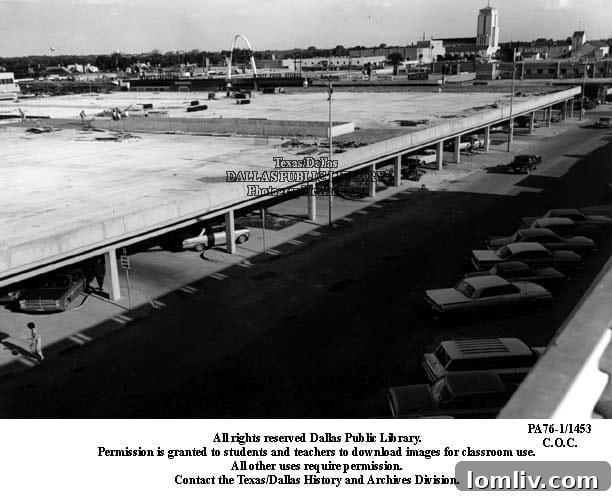
This historical and legal entanglement explains why even prominent figures, including former Mayor Laura Miller, have been unsuccessful in attempts to mandate the construction of a park atop the parking garage. Indeed, a prior attempt by former District 13 city councilman Mitchell Rasansky to sue for rights to the parking garage ultimately ended in defeat for the city. The city lost, solidifying the property owners’ control and making any externally imposed development unfeasible. This precedent highlights the formidable legal barriers and the strength of the property owners’ position in any future negotiations concerning the site.
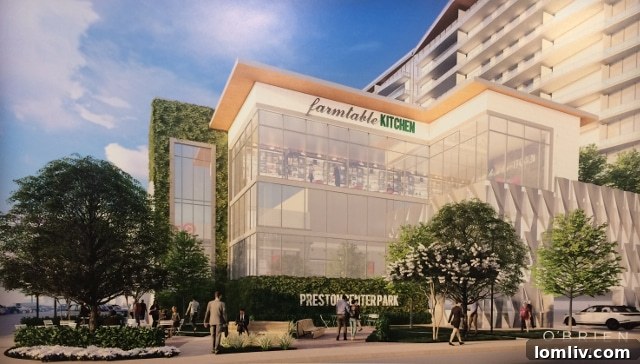
Remarkably, for the first time since Sam Lobello’s initial land acquisitions, the property owners in Preston Center have reached an unprecedented and complete consensus regarding a plan for the parking garage site. As previously reported, their unified vision is to replace the aging structure with a modern luxury apartment high-rise complemented by extensive underground parking facilities. Robert Dozier, who recently acquired the historic Sanger-Harris property, expresses strong confidence in the feasibility of this ambitious live, work, and play high-rise concept, complete with integrated parking. He emphasizes the extraordinary rarity of achieving such widespread agreement among numerous property owners in complex real estate endeavors, labeling it nothing short of a miracle in the often-fragmented world of urban development.
“Our proposed plan for the multifamily units alone would generate millions in revenue for the city,” states Dozier, who serves as president of Ramrock Real Estate. Luke Crosland echoes this sentiment, remarking, “It truly is a rare moment in time that all these owners are in agreement.” He further asserts, with no room for doubt, “But I can tell you now, there will never, ever be a park there.” This unified front from the property owners directly contradicts the recommendations of the 2017 Dallas City Council-approved Northwest Highway and Preston Road Area Plan, which specifically envisioned an underground garage topped by a vibrant street-level park. Crosland unequivocally states that while city planners may design as they wish, the property owners whose consent is essential have definitively rejected the park concept. Dozier, on the other hand, confidently declares that the luxury apartment tower proposal enjoys “100 percent approval” from the owners, making it the most sensible and viable path forward for the site.
The approved plan for the luxury residences includes a comprehensive parking solution: 1,500 public parking spaces will be constructed beneath the residential units, supplemented by surface and elevated parking options. Crucially, below-grade parking will also accommodate overflow and employee needs. Beyond parking, the vision incorporates thoughtfully designed corner parks and green spaces on the upper level, offering versatile areas that could be utilized for special events and community gatherings, enhancing the urban environment around the new development.
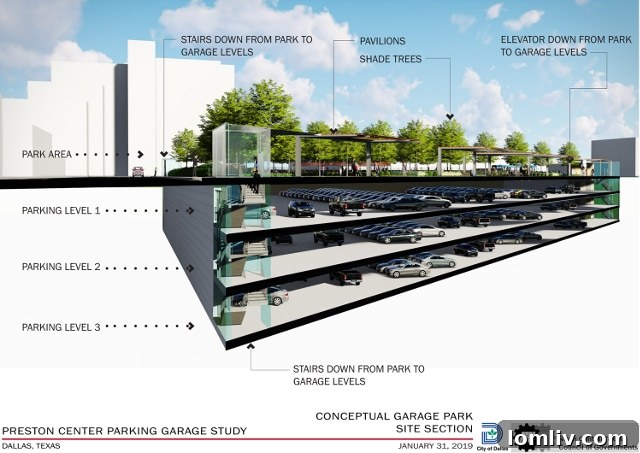
Dozier questions the necessity of additional parks in the area, pointing out, “At the end of the day, how many parks do you need? The city already boasts seven within a mere two-mile radius, and parks inherently require ongoing maintenance.” Crosland further elaborates on the benefits of residential development in Preston Center, envisioning a pedestrian-friendly, corner-greened environment that would proactively address vehicular traffic concerns. He argues that such a transformation would cultivate a vibrant community, particularly appealing to empty nesters seeking to remain close to their families, friends, and cherished churches, fostering a more complete urban ecosystem within Dallas.
In stark contrast to the property owners’ vision, former Dallas mayor Laura Miller, now a candidate for District 13, served on the task force responsible for drafting the area plan. She has vocally expressed her disapproval of the apartment tower concept, arguing that it fundamentally misunderstands the complex real estate dynamics at play. Miller believes the apartment building “will have the opposite effect of a beautiful green space that would completely transform Preston Center into a walkable gathering place surrounded by new development and new customers.” She has vowed, “If I am elected, I will secure the funding for the park concept; if I’m not elected, there will be an apartment building there instead,” signaling a clear electoral choice for voters.
However, the property owners remain resolute in their opposition to a park, firmly stating, “No way.” Luke Crosland offers a creative alternative to resolve the impasse, suggesting, “My suggestion is that Darwin Deason buy the proposed St. Michael office tower parcel, build underground parking for the church, and put a ground level park on that site to preserve his view. That way all parties win! Laura gets a park, Darwin gets his forever view, and the church gets a huge donation plus parking.” Crosland’s proposal hints at a deeper political undercurrent, referencing ongoing discussions in District 13 debates and local media outlets. There are speculations that Miller’s campaign is motivated, in part, by a desire to assist Darwin Deason’s father in protecting the panoramic views from his Preston Center penthouse, views that would be obstructed by the commercial development St. Michael and All Angels Episcopal Church hopes to have approved by the city.
St. Michael and All Angels Episcopal Church is actively pursuing plans to develop an office tower and a shared parking garage on the northeast corner of its Douglas Avenue property. Collaborating with a commercial developer, the church aims to lease land for an office project spanning up to 250,000 square feet, potentially incorporating retail spaces on the ground floor. The proposed parking garage would serve both the church and the new office development, seamlessly connected to the main church building via an air-conditioned skybridge. This ambitious real estate venture by a religious institution raises questions about its motivations.
The church’s foray into commercial real estate is driven by practical considerations. St. Michael’s campus currently hosts the lower school of the Episcopal School of Dallas (ESD), a school previously attended by the author’s son. With ESD consolidating its lower school with its upper school campus on Merrell Road in 2020, St. Michael’s faces the prospect of losing significant lease revenue. The church finds itself with a valuable parcel of land, currently zoned residential, and an urgent need to ensure its long-term financial stability and relevance for its 7,000 members. St. Michael’s has openly expressed its anticipation of the decisions from the Preston Road and Northwest Highway Area Plan task force, exploring various options for its future, including establishing a farmers’ market, relocating the St. Michael’s Women’s Exchange from Highland Park Village, and maximizing the utility of office parking on Sundays.
Further deepening the political intrigue, Councilwoman Gates has disclosed that a park donation enthusiastically promoted by Miller was contingent upon Miller’s opposition to the St. Michael’s zoning request. Gates states, “When I met with the donor (Deason) to discuss the idea, it was clear that the gift was conditioned upon opposing an upcoming zoning case on property owned by St. Michaels.” She firmly concluded, “The offer was, at the very least, unethical and did not move forward,” casting a shadow of impropriety over the park proposal and Miller’s perceived motives. Luke Crosland reinforces the property owners’ stance, unequivocally declaring, “Even if there is a ten million dollar donation, there will be no park.” He recounts an earlier encounter: “Laura Miller was in my office and gave verbal approval to the apartment high rise. Suddenly she is running for city council, we ask to meet with her, then hear nothing.”
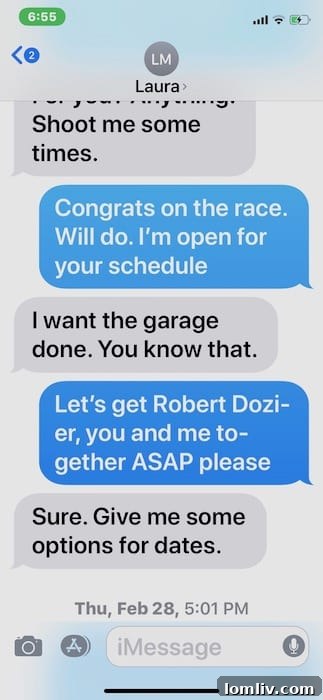
Crosland further suggests that the Deasons, known for their strong ties to former President Trump, represent a political antithesis to Laura Miller and her husband, former Democratic state representative Steve Wolens. He struggles to conceive of any other rationale for their newfound alliance than a shared objective: to thwart the St. Michael’s development deal. In Crosland’s view, “Laura’s ‘no towers’ stance is merely an old political ploy designed to stir up emotions over a nonexistent issue, solely to garner votes. It’s a very old-school and non-progressive approach, much like her historical record of governance in Dallas.” This election, therefore, is not just about real estate; it is a profound reflection of competing visions for urban development, political strategies, and the very identity of Dallas’s District 13. Voters face a pivotal choice that will undoubtedly shape the landscape and community dynamics of these crucial neighborhoods for decades to come.