Reimagining Urban Living: Doug Chestnut on StreetLights Residential’s Vision for Dallas
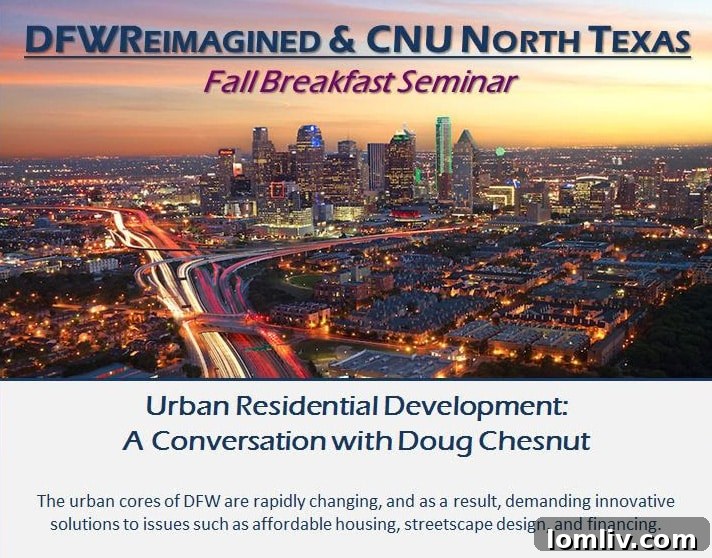
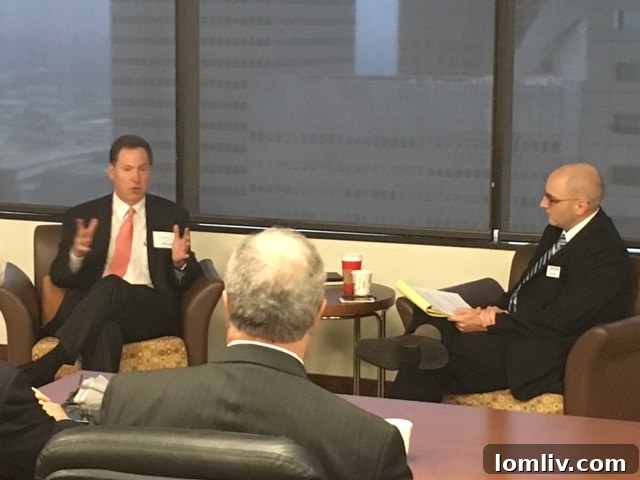
The dynamic world of urban development is continually shaped by evolving demographics and a growing demand for integrated, community-centric living spaces. At a recent Fall Breakfast Seminar, an event meticulously organized by DFW Reimagined and CNU North Texas, attendees were presented with invaluable insights from a pivotal figure in this transformative landscape: Doug Chestnut, the visionary CEO and Founder of StreetLights Residential. His firm has become a recognized leader in crafting innovative, high-quality residential and mixed-use projects, making a significant impact not only across the nation but particularly within the rapidly expanding Dallas-Fort Worth metroplex. This exclusive interview offered a deep dive into the strategic principles that underpin StreetLights Residential’s remarkable growth and provided Chestnut’s forthright perspectives on the future trajectory of urban design and the complex challenge of affordable housing in major metropolitan centers like Dallas.
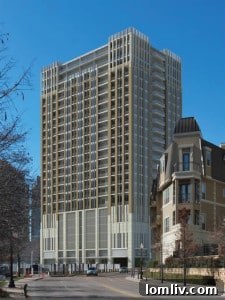
StreetLights Residential is a formidable force in today’s real estate market, known for its impressive portfolio of developments that are actively reshaping city skylines and contributing to vibrant urban cores. With a total of eight prominent projects either recently completed or currently in progress within Dallas alone, their influence on the city’s urban fabric is undeniable. Residents of Dallas are likely familiar with these distinctive contributions, which showcase the company’s dedication to creating sophisticated, amenity-rich urban environments. These key Dallas real estate ventures vividly illustrate their commitment to excellence and thoughtful city planning:
- The Jordan on McKinney Ave at Pearl St: A landmark luxury residential offering, strategically positioned at a prime urban intersection, that sets a new standard for sophisticated living in a highly desirable district.
- The McKenzie just off Knox St: An elegant and exclusive apartment tower that significantly enhances the upscale residential character near Highland Park, providing refined urban residences for discerning tenants.
- The Case Building in Deep Ellum: A pivotal high-rise apartment project that plays a crucial role in the ongoing revitalization and cultural vibrancy of Dallas’s historic and eclectic Deep Ellum district.
- The Taylor on Carlisle St in Uptown: A premier residential development advantageously located in the dynamic Uptown area, offering residents unparalleled access to entertainment, dining, and business opportunities.
- Trinity Green on Singleton in West Dallas: A comprehensive and forward-thinking residential community that contributes substantially to the exciting growth and rapid transformation of the West Dallas area, particularly near the popular Trinity Groves.
- The Union at Field and Cedar Springs: A monumental mixed-use development expertly integrating luxury residential units with cutting-edge office and retail spaces, thereby creating a vibrant and self-sufficient urban hub.
- Residences next to Deep Ellum’s Knights of Pythias building: A thoughtful project that skillfully blends contemporary residential offerings with the crucial preservation of historical landmarks, enriching Deep Ellum’s unique heritage.
- Additionally, an exciting, yet-to-be-announced residential project in Deep Ellum is specifically designed to cultivate a living environment conducive to artistic endeavors and to support local artisan shops, further cementing the neighborhood’s distinctive cultural identity and appeal.
The Irreversible Tide: Demographic Shifts Fueling Urbanization
Doug Chestnut unequivocally confirmed that the current surge in demand for urban residential properties is far from a transient phenomenon; it represents a profound and enduring demographic trend poised to continue for the foreseeable future. This potent “demand wave” is primarily driven by the converging forces of two influential generations: Baby Boomers and Millennials. Many Baby Boomers, having navigated the complexities of the 2008 financial downturn, strategically opted to liquefy their home equity. This decision often coincided with a desire for a more convenient, less maintenance-intensive lifestyle, leading many to enthusiastically embrace the ease, vibrancy, and community atmosphere of urban apartment living. This allows them to downsize their living situation without compromising on essential amenities or opportunities for social engagement.
Concurrently, the Millennial generation stands as an equally powerful catalyst for this urban shift. With approximately two million Millennials reaching the age of 22 annually for the next eight years, a substantial wave of young professionals is entering the housing market. For a significant portion of this demographic, traditional suburban homeownership is either financially unattainable or simply less desirable. Many Millennials face the challenge of securing sufficient income to purchase a home in increasingly expensive urban centers. More critically, they often aspire to a lifestyle that minimizes reliance on personal vehicles. These young urbanites prioritize immediate accessibility, pedestrian-friendly environments, and a rich array of close-at-hand amenities over extended commutes and the inherent responsibilities of property maintenance. Their definition of a high quality of life centers on urban convenience, diverse cultural experiences, and seamless connectivity within their chosen neighborhoods.
StreetLights Residential has astutely built its entire business philosophy on a foundational principle: that superior building design, meticulously integrated with a thoughtfully planned neighborhood, inherently cultivates enduring value and significantly enhances the quality of life for its residents. Chestnut articulates this philosophy with remarkable clarity, stating, “Endearing neighborhoods have activated streets, parks, and entertainment nearby. You go to bed exhausted and can’t wait to get up early and do it all over again.” This vision transcends the notion of opulent theme parks or multi-million dollar museums; instead, it emphasizes the simple, everyday pleasures that make urban living rich and deeply fulfilling. “Entertainment doesn’t have to be Six Flags or million-dollar museums, it can be as simple as having a glass of wine on a patio,” he suggests. This perspective underscores the belief that truly great cities possess a natural “flow”—an organic interaction where various urban elements seamlessly connect to create a cohesive, engaging, and enjoyable living experience.
Each building meticulously planned by StreetLights Residential is designed to contribute positively to the public realm, fostering a humanizing urban experience. This foundational principle begins at the street level, where people naturally encounter each other, stepping out onto sidewalks and interacting within shared spaces. The street, in this vision, is not merely a conduit for cars. Pedestrians on the sidewalk require thoughtful buffers—whether provided by parked cars, mature trees, or dedicated bike lanes—to ensure comfort and safety. We instinctively feel good when there’s an outdoor dimension that offers a sense of comfort and enclosure, akin to well-designed “outdoor rooms.” This holistic approach ensures that every StreetLights Residential project is more than just a standalone structure; it becomes an integral and vital component of a thriving, people-centric urban ecosystem, enriching the lives of its inhabitants and the broader community.
The Foundation of Flourishing Cities: Walkability and Intelligent Urban Planning
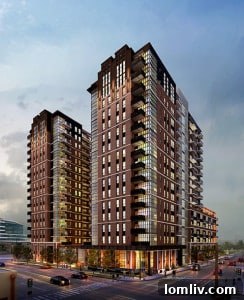
Another pivotal principle vigorously championed by StreetLights Residential in their urban development projects is the deliberate cultivation of highly walkable neighborhoods. While traffic congestion might be an inherent and growing challenge in burgeoning cities, the profound advantage of a truly walkable urban environment is that residents are not perpetually tethered to their automobiles for even short journeys. When urban neighborhoods are intentionally designed for higher density and maximum pedestrian convenience, the benefits ripple far beyond individual ease. Denser urban cores can effectively sustain and justify the implementation of superior mass transit systems, which in turn, exponentially enhance the overall quality of life for all residents by dramatically reducing reliance on private vehicles, significantly lowering carbon footprints, and actively fostering greater community interaction and cohesion.
Chestnut highlighted an intriguing observation gleaned from some of the most successfully developed cities where StreetLights Residential has operated: residents often voice more concern about the construction of an aesthetically displeasing building across the street than they do about the mere presence of a new high-rise. This sentiment profoundly underscores a deeper, more sophisticated appreciation for thoughtful urban design, architectural harmony, and visual continuity within a neighborhood. Yet, despite this prevailing preference for good design, Chestnut candidly conceded that one of the most relentlessly time-consuming and design-intensive aspects of virtually any urban project is, without a doubt, devising effective parking solutions. “No one says, ‘I love that city, it has great parking.’ Mostly we’ll say we love it despite the parking problem,” he quipped, perfectly capturing the universal frustration yet undeniable necessity of urban parking. He drew compelling parallels from forward-thinking cities like Austin and San Diego, where developers can face financial penalties if they provide more than a single parking space per residential unit. These progressive cities actively encourage the maximum utilization of floor-area ratio (FAR) development, acknowledging their need to accommodate a growing population while simultaneously recognizing that they simply cannot afford for every single resident to own a car and drive everywhere. Such innovative policies represent a strategic and vital shift towards more sustainable, transit-oriented development models.
Dallas’s Crossroads: Growth, Design, and the Imperative for the Future
“Do we want to be a well-planned urban city? Do we want to grow or not?” Chestnut posed these incisive rhetorical questions, directing a pointed and critical assessment at Dallas’s current urban planning trajectory. He issued a stark warning: if Dallas fails to embrace thoughtful, integrated urban development, other rapidly burgeoning cities, such as Frisco, will readily capture the valuable talent and high-paying jobs that Dallas might otherwise attract. Chestnut underscored a critical and urgent need for the city to “revamp what they’re allowing – not a single developer does good design.” This bold statement suggests a systemic issue where individual projects are often conceived in isolation, lacking a cohesive, overarching vision for the broader urban fabric. He drew striking parallels to recent developments like the new Trulucks restaurant or the Convention Center restaurants in Dallas, observing that “each building seems to be its own castle. It doesn’t flow.” This fragmented, insular approach to development, he argued, invariably results in an urban environment that feels disjointed, uninviting, and ultimately detrimental to the pedestrian experience. “It’s painful to see a building that’ll be poor to walk by for decades,” Chestnut lamented, passionately advocating for designs that prioritize pedestrian engagement and actively contribute positively to the public realm, rather than creating imposing, disconnected structures.
Addressing the Urban Challenge: The Future of Affordable Housing in Dallas
The conversation inevitably progressed to one of the most pressing and inherently complex issues confronting contemporary urban development: affordable housing. Doug Chestnut readily acknowledged the critical importance of socio-economically diverse neighborhoods as a fundamental component that significantly enhances a city’s overall value, vitality, and resilience. However, he presented a clear-eyed and pragmatic assessment of the prevailing financial realities, explaining that it is not always financially feasible to integrate a substantial number of low market-rate homes within a building primarily designed to offer luxury apartments priced at $3,000 per month. This highlights the inherent and often significant tension between market demand for high-end urban living and the pressing societal need for accessible housing across all income brackets.
It is imperative to clearly define “affordable” within this critical context. The discussion primarily refers to housing specifically tailored for the middle class – individuals who earn approximately 80 percent of the median income. In many major urban areas, this often translates to an annual income of around $48,000. This crucial demographic includes essential community members such as dedicated teachers, brave firefighters, and indispensable administrative assistants, who might typically earn salaries in the range of $35,000 per year. For these vital professionals, securing quality, accessible housing in an increasingly expensive urban core presents a profound and persistent challenge, threatening the social fabric of the city.
Chestnut meticulously elaborated on the severe financial predicament developers often encounter. If a developer is engaged in constructing 300 market-rate apartments projected to rent for $3,000 per month, the debt service alone for each individual unit can easily amount to at least $1,700 per month. When a city then mandates that a certain percentage of these units must be designated as “affordable,” with rents capped, for example, at $990 per month, the financial model for the entire project can quickly become unsustainable. Even with the introduction of incentives like Tax Increment Financing (TIF), the substantial gap between the high debt service and the capped affordable rent frequently results in significant financial losses for the developer on those particular units. This considerable financial burden acts as a strong disincentive for voluntary participation in mixed-income projects, making developers hesitant to incorporate affordable units.
While developers might reasonably opt for less luxurious finishes in affordable units compared to their market-rate counterparts, the core issue remains the disproportionate cost structure. It appears economically irrational to heavily invest in the premium amenities and luxurious finishes that market-rate tenants explicitly expect, without the corresponding rental income to adequately justify those expenditures on the affordable units. This financial disconnect underscores the profound complexity of achieving truly mixed-income housing within a single development without robust, alternative, and often public funding mechanisms or innovative policy frameworks.
“If Dallas has an affordability problem, the developers need to figure out that problem – we need to be invited to the team, not just as a punitive measure,” Chestnut asserted with conviction. His call to action is unequivocally clear: instead of imposing mandates that inadvertently penalize developers, cities should actively collaborate with them to cultivate an environment where building affordable housing is an attractive, viable, and socially responsible business proposition. “Let’s make it attractive to build!” he urged, advocating passionately for proactive and collaborative solutions that genuinely foster sustainable development rather than hindering it through punitive measures.
A Progressive Solution: The Affordability Fund Model for Sustainable Growth
Doug Chestnut presented a compelling and innovative solution to the pervasive urban affordable housing conundrum: the establishment of a city-managed affordability fund. Under this forward-thinking model, developers would be required to contribute a predetermined amount of money into this central fund. Crucially, the city would then match these contributions dollar-for-dollar, effectively doubling the available capital. This aggregated fund would then be strategically utilized to support and incentivize developers who are specifically committed to building dedicated affordable housing complexes. By having direct access to this fund, developers could acquire land at significantly lower costs – potentially less than $200 per foot – and subsequently construct a less expensive, yet high-quality product, precisely tailored for affordability. The key and transformative outcome of this strategic approach is the successful creation of genuinely mixed-income *neighborhoods* across the city, rather than attempting to force a mix of income-level units throughout every single building. This intelligent strategy allows for a wider array of diverse housing options distributed across different areas, providing a more sustainable, financially viable, and socially equitable pathway to effectively addressing the city’s pressing housing affordability challenges.
The profound insights and forward-thinking proposals shared by Doug Chestnut offer a vital and comprehensive roadmap for Dallas and numerous other rapidly growing cities grappling with the multifaceted complexities of urban development, enhancing the quality of life for all residents, and achieving true housing equity. His vision champions a holistic approach where thoughtful and people-centric design, robust walkability, meaningful community engagement, and innovative financial models converge harmoniously to create thriving, inclusive, and resilient urban environments. The fundamental challenge remains: How do we, as a collective society and urban planners, effectively foster the development of truly great, diverse, and accessible neighborhoods that genuinely benefit and uplift all residents?