Every week, the meticulous professionals at Green Scene Home Inspections bring Daltxrealestate.com readers an invaluable education in property assessment. Eager to gain insight into what our experts uncover? Make sure to tune in for “Upon Closer Inspection.”
In today’s fiercely competitive Dallas-Fort Worth real estate market, home buyers often find themselves in a challenging position when it comes to negotiating for repairs. Facing multiple offers, the leverage to demand extensive fixes might be limited. However, this competitive landscape makes the home inspection process more crucial, not less. While it might not always serve as a primary tool for negotiation, a thorough inspection is paramount for understanding the property’s true condition, identifying potential safety hazards, and strategically planning for future maintenance and financial commitments. Our focus today is on critical home systems, particularly the “big five”: foundation, plumbing, HVAC, roof, and, critically, the electrical system.
Among these vital components, the electrical system warrants particularly close scrutiny. It’s imperative for prospective homeowners to ascertain whether they are moving into a dwelling with existing dangerous conditions, improper installations, non-functional elements, or an outdated system that will inevitably require a complete overhaul. Understanding the immediate costs of moving in versus the long-term expenses for necessary upgrades and repairs is essential for sound financial planning and, more importantly, ensuring the safety of your new home. Unaddressed electrical issues can range from minor inconveniences to severe fire hazards or electrocution risks, underscoring the necessity of expert evaluation.
Consider the following scenario, which vividly illustrates why prompt action on electrical deficiencies is non-negotiable. This is a clear-cut case of an incident — be it a fire or electrocution — waiting to happen, highlighting the grave dangers posed by substandard electrical work.
The Perils of Unlicensed Work: When “My Cousin Said He Knows a Guy…” Leads to Disaster
During a recent home inspection, our team at Green Scene Home Inspections encountered a property riddled with a series of alarming electrical modifications. This house was a veritable tapestry of patched-together electrical hackery, each discovery screaming the all-too-familiar refrain, “My cousin said he knows a guy…” While the temptation to save money by hiring unqualified individuals for home repairs can be strong, especially in a tight real estate market, the potential consequences, particularly with electrical systems, are simply too high to ignore. These shortcuts rarely save money in the long run and frequently introduce significant safety risks.
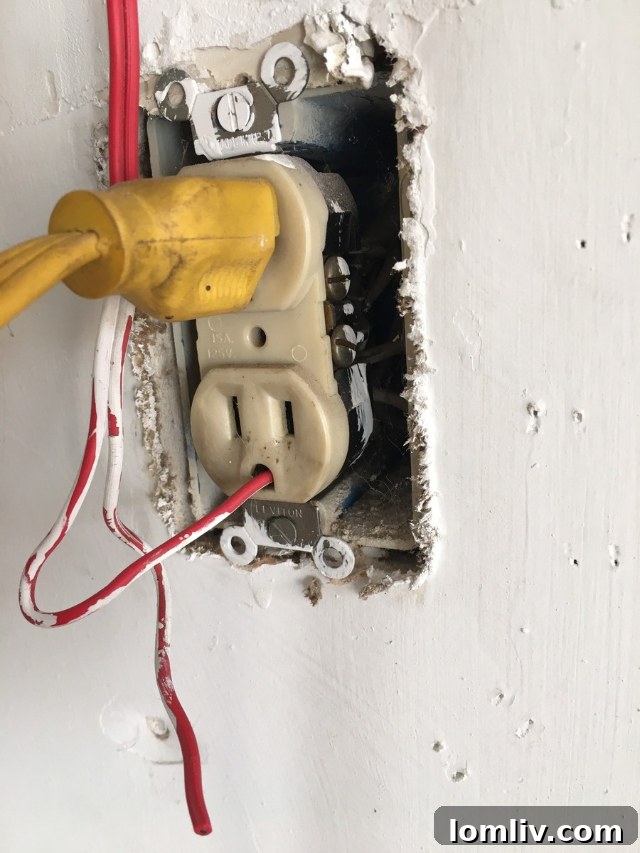
A prime example of such dangerous amateurism was an attempt to ground a wire by crudely sticking it into the grounding prong hole of an electrical outlet. This isn’t just incorrect; it’s profoundly hazardous. Proper grounding is a critical safety feature of any electrical system, designed to protect occupants from electrical shock by providing a safe path for fault currents to dissipate into the earth. When grounding is compromised or improperly improvised, as seen in this instance, it renders the entire system vulnerable. Such a setup dramatically increases the risk of electrocution, fire, and damage to appliances. The takeaway here is unequivocal: for all electrical work, without exception, always engage the services of a qualified, licensed, and insured electrician. Their expertise ensures that installations meet stringent safety codes and function correctly, providing genuine peace of mind and protecting your investment.
Unearthing a Dangerous Relic: Exposed Wiring and Outdated Hazards
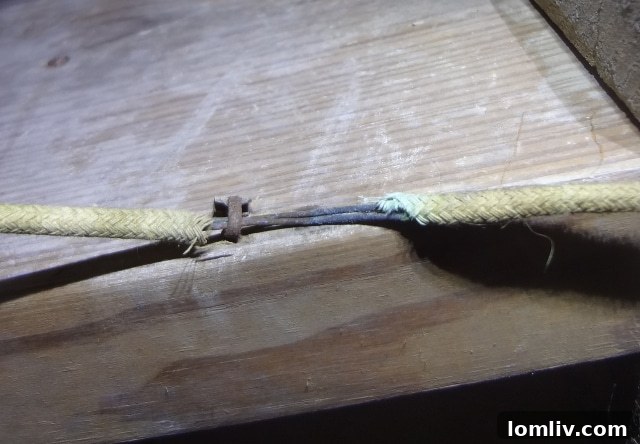
Venturing into older homes, especially those that have not undergone significant modern updates, frequently unveils an array of unsettling discoveries. Among the most concerning are outdated and improperly installed electrical components, like the example pictured here: an exposed electrical wire, further compounded by a metal connector affixed directly onto a combustible wood surface. This isn’t merely unsightly; it’s a catastrophic accident in waiting. Exposed wiring presents an immediate risk of electrical shock or electrocution to anyone who comes into contact with it. Furthermore, the combination of exposed conductors, potential arcing, and proximity to flammable materials like wood creates an ideal environment for an electrical fire to ignite, posing a severe threat to both property and life.
Beyond this specific image, older homes often harbor other “dangerous relics” within their electrical systems. Common issues include:
- Knob-and-Tube Wiring: An antiquated wiring method from the late 19th to mid-20th century. While not inherently dangerous if undisturbed and in good condition, it lacks a ground wire, making it incompatible with modern grounded appliances and increasing shock risk. It’s also susceptible to damage, insulation degradation, and often incorrectly covered with insulation, leading to overheating.
- Aluminum Wiring: Used in some homes from the mid-1960s to early 1970s, aluminum wiring can pose fire hazards due to its tendency to oxidize and expand/contract at different rates than copper, leading to loose connections, overheating, and arcing at outlets and switches.
- Outdated Electrical Panels: Some older panels, like Federal Pacific Electric (FPE) Stab-Lok or Zinsco panels, are known for design flaws that prevent breakers from tripping when they should, failing to protect circuits from overcurrents and increasing fire risk.
- Lack of Ground-Fault Circuit Interrupters (GFCIs) and Arc-Fault Circuit Interrupters (AFCIs): Modern safety devices, GFCIs protect against severe electrical shock in wet areas (bathrooms, kitchens, outdoors), while AFCIs protect against fires caused by arcing faults in wiring. Older homes often lack these crucial safeguards, making them less safe by current standards.
- Insufficient Amperage: Older homes might only have 60-amp or 100-amp service, which is often inadequate for today’s power-hungry appliances and electronics, leading to overloaded circuits and tripped breakers, or worse, overheating.
Addressing these issues is not merely about adhering to modern codes; it’s fundamentally about ensuring the safety and long-term viability of the home. A comprehensive home inspection will meticulously identify such hazards, providing a clear roadmap for necessary electrical upgrades and repairs.
The Indispensable Value of a Professional Home Inspection in a Hot Market
In the current hot, hot, hot Dallas-Fort Worth real estate market, some eager home buyers might feel pressured or tempted to forgo the professional home inspection in an attempt to make their offer more attractive or to expedite the closing process. However, this is arguably one of the riskiest decisions a buyer can make. At what other point in the home-buying journey do you get the unique opportunity to have a highly trained, unbiased expert go over your prospective property with a fine-toothed comb? Skipping an inspection is tantamount to buying a major asset blindfolded.
A professional home inspection offers far more than just a list of defects for negotiation. It provides a comprehensive health report of the property, equipping you with critical information to make an informed decision. This knowledge empowers you to:
- Identify Major Safety Hazards: As detailed with the electrical examples, inspections uncover immediate dangers that could put your family or investment at risk.
- Understand Future Costs: Beyond immediate repairs, an inspector can highlight systems nearing the end of their lifespan (e.g., HVAC, roof, water heater), allowing you to budget for future replacement costs.
- Uncover Hidden Problems: Many issues, like minor leaks, foundation cracks in less visible areas, or pests, are not apparent during a casual walkthrough but can escalate into costly problems if not addressed.
- Gain Peace of Mind: Even if minor issues are found, knowing the home’s condition allows you to move forward with confidence, or back out if the risks are too high.
- Protect Your Investment: A home is often the largest financial investment an individual makes. Protecting that investment starts with understanding its true condition.
While negotiation leverage might be limited in a seller’s market, the information gleaned from an inspection is still invaluable. It allows you to prioritize necessary repairs, factor potential costs into your budget, or even renegotiate the price to reflect significant, unforeseen expenses. Furthermore, knowing about potential issues upfront can help you plan for future maintenance and ensure the longevity of your home’s critical systems.
At Green Scene Home Inspections, we pride ourselves on delivering detailed, actionable reports that go beyond simply listing problems. We educate our clients, helping them understand the implications of each finding so they can make the best decision for their future home in the DFW area. Do not let market pressures compromise your safety or financial security. Invest in a professional home inspection – it’s an investment in your future.