Uncovering a Hidden Gem: The Story of a Newly Discovered Charles Dilbeck Masterpiece in Dallas
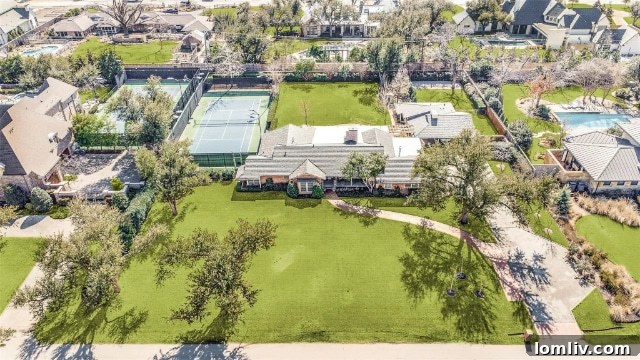
In a significant moment for architectural preservation in Dallas, a previously undiscovered Charles Dilbeck home at 5414 Ursula Lane in Preston Hollow was recently brought to light. On February 22nd, Preservation Dallas and The Charles Stevens Dilbeck Architecture Conservancy hosted an exclusive, members-only event to celebrate and explore this remarkable find, a discovery that our organization had a direct hand in facilitating.
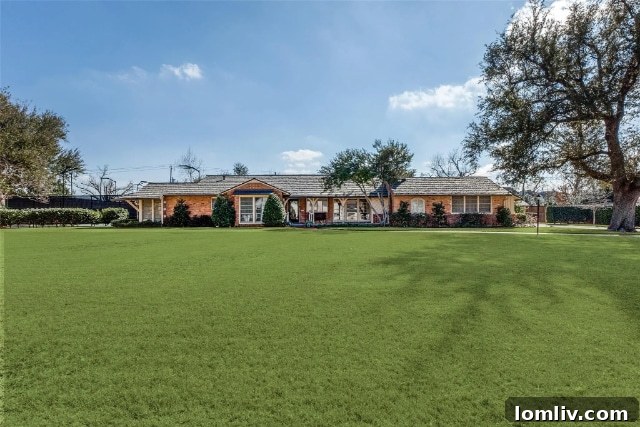
Many might wonder how such an architecturally significant house could remain overlooked for so long. The answer lies in a confluence of factors, each contributing to its subtle disguise within the bustling landscape of Dallas architecture. This understated elegance, characteristic of many Dilbeck creations, often belies their profound historical and artistic value.
The Enigmatic Charm of Dilbeck’s Texas Ranch Style
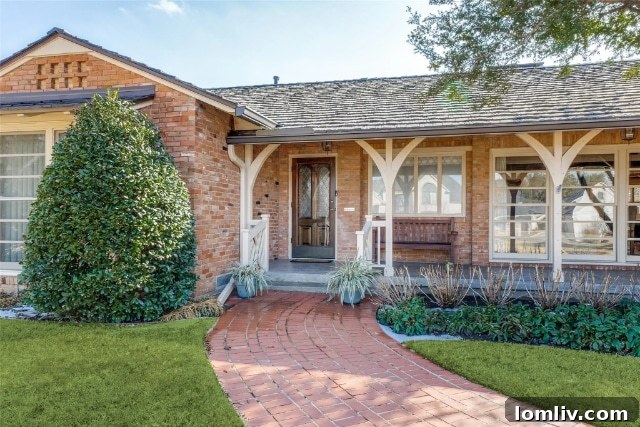
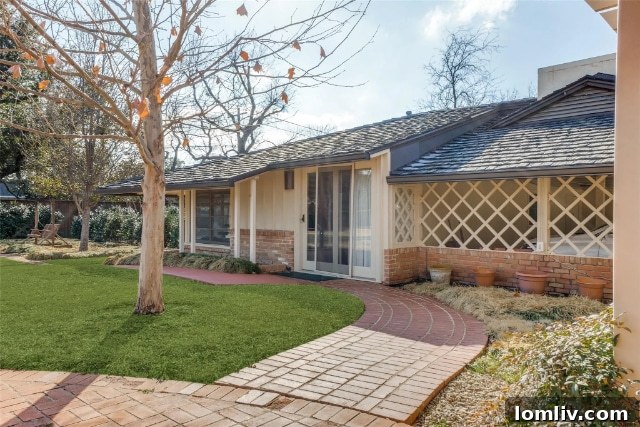
Built in 1949 for prominent developer Sam Lobello Jr., this residence was designed in Dilbeck’s distinctive Texas Ranch style. Charles Dilbeck, celebrated for his ability to blend regional influences with whimsical touches, was incredibly prolific, designing over 600 homes in Dallas alone during his active career. This abundance, coupled with the widespread imitation of his designs, meant that many “faux Dilbecks” emerged, making authentic identification a challenge for the untrained eye. Furthermore, while many are familiar with Dilbeck’s more flamboyant “storybook” homes, characterized by steep gables, ornate chimneys, and medieval-inspired details, his custom Texas Ranch style homes often present a more modest, yet equally sophisticated, facade from the street. These homes emphasize horizontal lines, natural materials, and a seamless integration with the Texas landscape, allowing them to blend subtly into their surroundings rather than overtly declaring their architectural pedigree. The Ursula Lane home perfectly exemplifies this understated genius, contributing to its prolonged anonymity.
The Lobello Legacy: Developers Shaping Dallas
The Lobello family played an instrumental role in shaping the physical and economic landscape of Dallas during the mid-20th century. Sam Lobello Jr., the original owner of the 5414 Ursula Lane home, alongside his father, Sam Lobello Sr., and Louis Hexter, were truly prolific developers in the 1950s. Their vision and hard work were responsible for the creation of numerous vibrant neighborhoods and commercial centers across the city. Notable among their developments were Cochran Heights and Lobello Heights, residential areas that still thrive today. Beyond residential ventures, the family was also central to the development of iconic commercial hubs such as Preston Center, a testament to their profound impact on Dallas’s urban fabric. Sam Jr. himself was also a prominent restaurateur, diversifying the family’s business interests.
The breadth of their influence is further illustrated by the fact that the City of Dallas acquired Lobellos Drive-In in 1944 as part of the ambitious Love Field expansion. Another enduring example of their foresight is their development at the intersection of McCommas and Greenville, which today houses the popular Corner Market Cafe and Buffalo Exchange. Remarkably, the original architectural integrity of this development remains largely intact, offering a glimpse into the Lobello family’s enduring commitment to quality and thoughtful design. Their daughters even attended Ursuline together, weaving a personal connection that further cemented the family’s ties within the community.
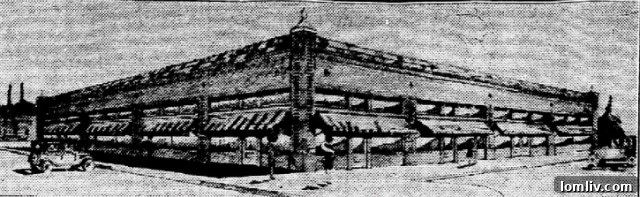
The Lobello family were undeniably movers and shakers in the Dallas real estate industry, consistently seeking innovative designs and quality construction. It comes as no surprise, then, that Charles Dilbeck was their architect of choice. His unique ability to create custom homes that felt both grand and intimately personal resonated deeply with the Lobello’s vision for their properties and communities.

A Realtor’s Diligence: The Catalyst for Discovery
This significant discovery would likely have remained hidden were it not for the extraordinary diligence and keen insight of a committed real estate agent. The journey to uncovering this Dilbeck masterpiece began with a phone call just a few weeks prior to the event, a call that set a chain of events in motion.
Marty Marks of Ebby Halliday, a truly exceptional Realtor, reached out with an intriguing proposition. “Karen,” she said, “I have this house at 5414 Ursula Lane, and I strongly suspect it’s a Dilbeck.” This news was exhilarating, a potential breakthrough in cataloging Dallas’s rich architectural history. Recognizing the immense potential of her lead, I immediately connected Marty with Willis Winters, the foremost authority on Charles Dilbeck’s work and the visionary founder of The Charles Stevens Dilbeck Architecture Conservancy. I also directed her to Norman Alston at Preservation Dallas, ensuring all the right experts were involved in verifying this exciting prospect.
Confirming Authenticity: The Signature Dilbeck Elements
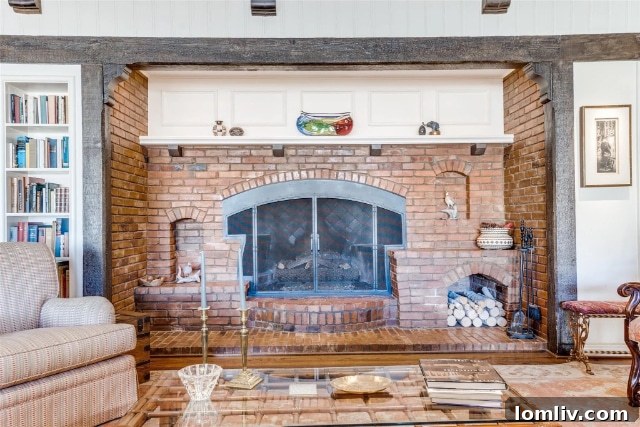
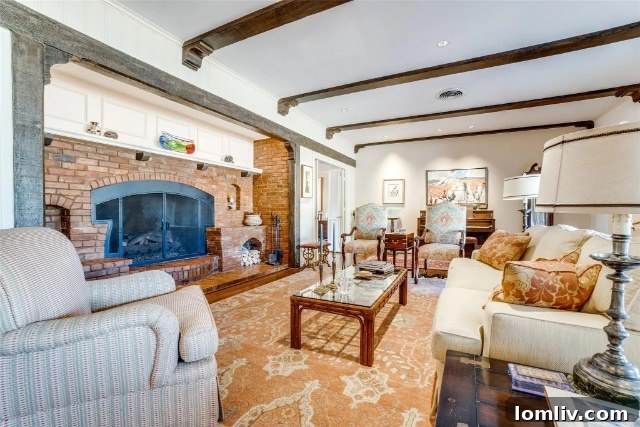
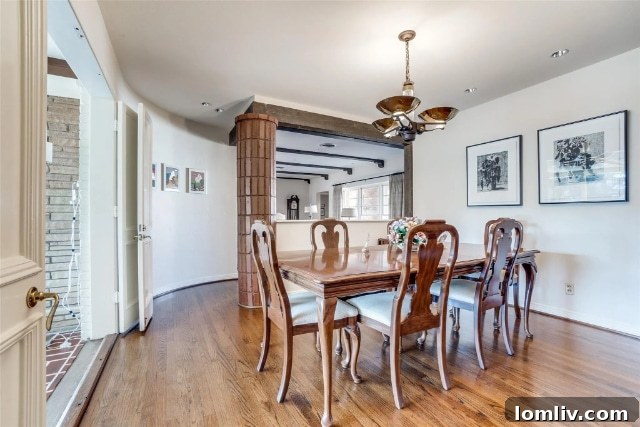
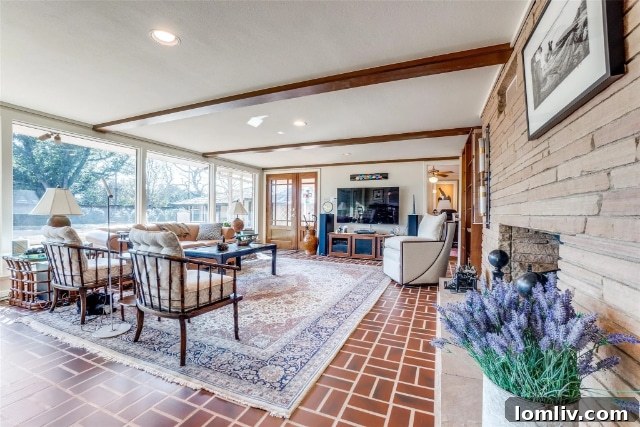
The current owner of the Ursula Lane home, who had purchased it directly from Sam Lobello, had long suspected its Dilbeck origins. Her intuition was based on certain tell-tale features: a distinctively designed fireplace and an interior brick column, elements that are classic signatures of the architect. However, without official records, definitive proof remained elusive. The crucial piece of circumstantial evidence was its history as a Lobello family home, a family known for their patronage of Dilbeck.
Upon visiting the property, Willis Winters, with his unparalleled expertise, quickly identified several characteristic features of Dilbeck’s early 1930s work, despite the home being constructed in 1949. This continuity in design elements, even over a span of years, is a hallmark of Dilbeck’s consistent vision. The craftsmanship, the unique material choices, and the thoughtful layout all pointed to an original Dilbeck design. Winters’ confirmation provided the definitive proof needed, cementing the home’s place in Dallas’s cherished architectural heritage.
Why Charles Dilbeck Remains an Indispensable Figure in Dallas’s Built History
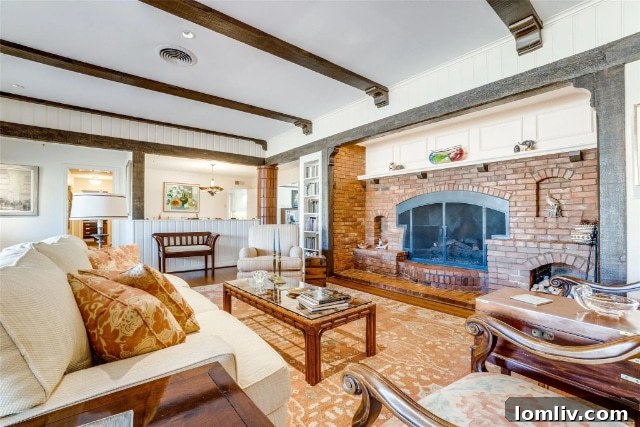
Charles Dilbeck’s enduring importance in Dallas’s architectural narrative cannot be overstated. As Willis Winters eloquently states, “His houses are unique and cherished among Dallas residents and buyers. I’ve never seen any homes that inspire people like his and that feel as if there is something special here. Each has details and signature elements you don’t find in homes designed by other architects. For example, the fireplaces on his ranch houses are unique. People perceive and cherish the differences and the individuality.”
Dilbeck’s genius lay in his ability to infuse each project with a distinct personality, creating homes that were not merely structures but living works of art. His designs often incorporated elements of Spanish Colonial, French Provincial, and Storybook styles, all filtered through his unique Texas sensibility. This blend resulted in homes that felt simultaneously grand and inviting, meticulously detailed yet effortlessly charming. The signature fireplaces, often crafted from rugged brick or stone, serve as the focal point of many living spaces, radiating warmth and character. Similarly, his innovative use of interior brick columns, as seen in the Ursula Lane home, subtly divides and defines spaces while maintaining an open, fluid feel. These are not merely decorative elements; they are integral to the home’s functional and aesthetic narrative, a testament to Dilbeck’s holistic approach to design. Owners of Dilbeck homes often speak of a profound connection to their residences, an appreciation for the bespoke craftsmanship and the undeniable sense of place that these unique dwellings evoke.
Tragically, out of the more than 600 homes Dilbeck designed in Dallas, only approximately 200 remain standing today. This alarming attrition highlights the urgent need for greater appreciation and protection of his architectural legacy. Many historically significant properties have fallen victim to demolition, often due to a lack of awareness regarding their intrinsic value. However, thanks to the tireless efforts of Willis Winters and The Charles Stevens Dilbeck Architecture Conservancy, this narrative is beginning to change. Through education, advocacy, and collaborative initiatives, there is a growing movement to recognize and preserve these irreplaceable contributions to Dallas’s cultural heritage.
Smart Realtors: The Guardians of Architectural Heritage
This entire discovery underscores a profoundly important lesson: the pivotal role that informed real estate agents play in historic preservation. It is impossible to overstate how crucial it is for our Realtors to possess a foundational education in historic preservation. Such knowledge is not only easily accessible through organizations like Preservation Dallas and the Dilbeck Conservancy but is also invaluable in identifying and protecting architecturally significant properties.
Marty Marks exemplifies this ideal. Her dedication went beyond a simple transaction; she meticulously “dug for information, used all of her resources, and did the research.” This proactive approach is what transformed a routine listing into a monumental discovery. As Marks herself articulated, “I thought the value of this home, if it is an original Dilbeck, is important to me and probably will be to a buyer. I don’t think most buyers know what it means to have a Dilbeck-designed home.” Her insight into the potential intrinsic value of the home, even before its full authentication, speaks volumes about the impact a knowledgeable agent can have.
Willis Winters further emphasizes this point, stating, “That basic decision on the part of a real estate agent changed the path of the home. It’s a great success story because she communicated the value to buyers and did not market an architecturally significant house as a tear-down.” In a city where older homes are frequently acquired for demolition to make way for new construction, an agent’s ability to identify and articulate the historical and architectural value of a property is a powerful tool for preservation. The Charles Stevens Dilbeck Architecture Conservancy is actively committed to working with and educating Realtors, helping them understand the unique characteristics of Dilbeck homes and, crucially, how to effectively market them as treasured pieces of Dallas history, worthy of thoughtful renovation rather than destruction.
This is a major success story for our organization and a great example of the value the Conservancy can offer to other agents in the future to assist them in understanding the intrinsic value of Dilbeck’s work and how this knowledge can be utilized to effectively market the property as a residence worthy of appropriate renovation/updating rather than demolition.
We should be grateful to Karen Eubank, of daltxrealestate.com, for putting us in contact with Marty, and to Marty, for providing us with the first opportunity to test our goal and desire as an organization to establish relationships with real estate agents to ensure the preservation of Charles Dilbeck’s works for future generations.
Willis Winters
The discovery of the 5414 Ursula Lane Dilbeck home is a vibrant testament to the power of collaboration between dedicated individuals, preservation organizations, and informed real estate professionals. It highlights that the fight for architectural preservation is ongoing and that every identified historic home is a victory. This collective effort ensures that the unique genius of Charles Dilbeck, and the rich history embedded in his designs, will be appreciated and safeguarded for generations to come. Daltxrealestate.com was absolutely thrilled to be a part of this journey and extends its warmest wishes that the new buyers will cherish this extraordinary home as much as past generations have, continuing its legacy of beauty and timeless design.