“Candace, do they even care how property taxes affect small businesses? Property taxes are by far my biggest expense. I pay over $100,000 a year in property taxes. I would love to hire another $45,000 employee, but I am holding off until I know what our property taxes and other taxes will do.”
Dallas Property Tax Debates: Unpacking the Impact on Small Businesses and Homeowners
The poignant words of a local business owner echo a growing sentiment across Dallas County. Facing an annual property tax bill exceeding $100,000, this entrepreneur’s dilemma highlights a critical issue: the escalating cost of property ownership is directly stifling job creation and economic growth. This challenge, often overlooked in the broader scope of local governance, was a central theme during a recent Dallas County Commissioner’s Court hearing – an illuminating experience for even long-time residents.
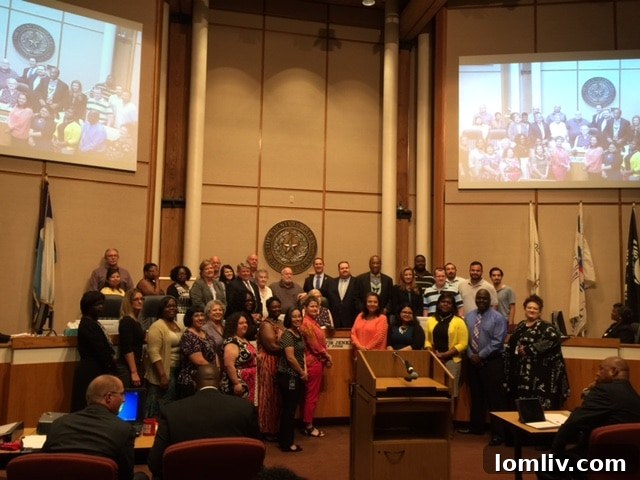
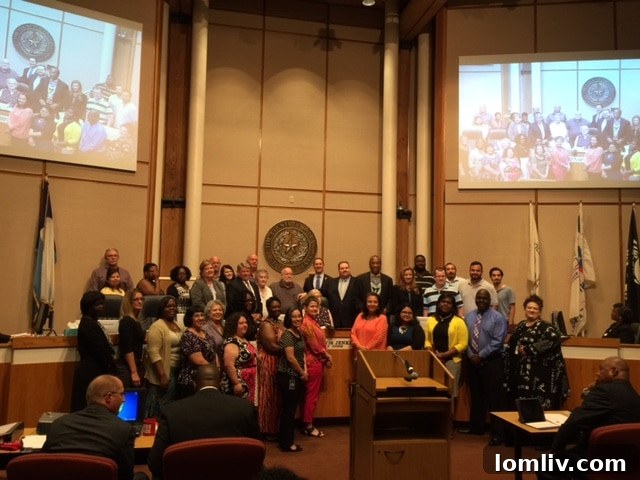
Despite living in Dallas for 36 years, my recent attendance at a Dallas County Commissioner’s Court hearing on a Tuesday morning was a first. It proved to be an invaluable insight into the machinery of local government. Not only was the court itself a surprisingly well-maintained and orderly environment, but the proceedings quickly revealed the challenging realities faced by taxpayers. Most notably, amidst discussions of the county budget, our elected officials controversially approved a 6 percent pay raise for themselves, while county employees were slated for a more modest 3 percent increase. This decision immediately cast a shadow over the financial deliberations and ignited widespread public concern.
The System Under Scrutiny: Property Taxes as the Foundation
Observing the discussions unfold, my long-standing skepticism towards the property tax system, which funds our vital county services, cities, schools, and even the renowned Parkland Hospital, only intensified. It became abundantly clear that a significant disconnect exists between those making the financial decisions and the taxpayers footing the bill. The pervasive impression within the court seemed to be that property owners are akin to affluent land barons, effortlessly capable of absorbing ever-increasing tax burdens. While I refuse to believe this sentiment is universal, it certainly permeated the atmosphere at 411 Elm Street that Tuesday morning.
The scene itself was telling. From the outset, the room was notably populated by numerous constables and Dallas County Sheriff’s deputies. Their strong presence suggested a unified front, primarily aimed at advocating for their own salary increases. While one can understand their desire for better compensation, especially given the perceived economic buoyancy fueled by Dallas’s robust real estate market, their arguments warranted closer examination. Many asserted that they had diligently served through “lean times” and hadn’t received a raise since the 2008 recession, framing their request as a long-overdue necessity.
Fact-Checking Pay Raises: Dispelling Misconceptions
However, a crucial fact check reveals a different reality. According to reports from the Dallas Morning News, county employees, both hired staff and elected officials, have indeed received raises in recent years. Specifically:
Staffers — both hired and elected — have received the following raises in the past years: 3 percent this year, 5 percent in fiscal year 2015, 2 percent in 2014, and 4 percent in 2013. They missed pay raises from 2010 through 2012.
This clarification underscores a significant point: while some years undoubtedly presented financial challenges, the narrative of consistent sacrifice since 2008 doesn’t fully align with the documented pay increases. This discrepancy fueled further questions about the justification for the proposed raises, especially when considering the broader economic pressures on Dallas County residents.
The Ripple Effect: Property Taxes Impacting Everyone
The discussion around employee raises took an interesting turn when many county employees present revealed they lease their homes rather than own them. This detail highlights a critical, yet often overlooked, aspect of the property tax debate: its indirect impact on renters. It would be highly beneficial to illustrate to these employees how their hard-won pay raises, particularly if they reside in Dallas County, will likely be eroded by higher rental costs. Landlords, faced with escalating property tax bills, invariably pass these increased expenses onto their tenants through higher rents. Thus, the burden of property taxes is not exclusive to homeowners; it’s a pervasive economic force affecting the entire community.
During the hearing, Commissioner John Wiley Price, a notably articulate orator, often cited that Dallas County’s tax rate is the sixth lowest in Texas. While this statistic might seem reassuring at first glance, it omits a crucial component: the separate tax dedicated to Parkland Hospital. Once Parkland Hospital’s tax is factored in, the true tax burden on Dallas County residents becomes significantly higher, painting a less favorable picture of affordability and further exacerbating the financial strain on the middle class.
County Needs vs. Taxpayer Capacity
The county’s “to-do” list is, without a doubt, extensive and vital for public welfare. It includes essential services such as fixing cars for county operations, improving public buildings, maintaining jails, and enhancing road infrastructure. Proponents argued that an 8 percent raise, which was initially discussed, would not only support lower-level employees but also aid in recruiting and retaining skilled personnel for these crucial tasks. However, the pressing question remains: at what cost to the already strained taxpayers?
One of the most striking takeaways from the hearing was the palpable sense of irrelevance felt by ordinary taxpayers. With speakers allotted a mere three minutes on “county turf” to voice their concerns, the atmosphere suggested that many decisions were predetermined. The short speaking slots and the often-unresponsive demeanor of some officials left little room for genuine dialogue or the feeling that public input genuinely shaped outcomes. It felt less like a public hearing and more like a formality before an inevitable conclusion.
A Narrow Vision vs. The Big Picture of Tax Burden
This feeling was amplified by the reactions to Dr. Theresa Daniel, a highly intelligent former university professor and commissioner, who inquired about Dallas County’s percentage of the total property taxes homeowners pay. Upon being informed it was 9 percent, her immediate reaction was dismissive: “that’s peanuts.” This perspective, however, dangerously overlooked the cumulative burden on taxpayers.
Judge Jenkins commendably attempted to broaden the perspective, emphasizing that the issue wasn’t just the county’s 9 percent, but the aggregation of all taxes. He explained that when you include Parkland Hospital, the county’s share jumps to 18 percent of the total property tax bill. Add in Dallas city taxes and school taxes, and the total financial impact on homeowners, particularly the squeezed middle class, becomes a significant and often crippling burden. Unfortunately, Dr. Daniel seemed to remain focused solely on the county’s 9 percent, asserting that their job was to “focus on that 9 percent and manage it well,” effectively limiting her scope to her own “turf.”
The Human Cost of Escalating Property Taxes
The real-world consequences of this narrow vision were starkly illustrated by homeowner Lisa Marie Gala. She bravely shared her personal struggle, explaining the profound conundrum created for middle-class homeowners by ever-increasing property taxes. Her situation was so dire that the substantial chunk taken from her budget by property taxes on her 1,300-square-foot M Streets home compelled her to lease it out and move into an apartment just to afford the tax payments. Yet, her plea met with little empathy from a segment of the audience. They fixated solely on the “$600,000 value” of her home, failing to grasp the crucial detail that her property tax bill consumed a staggering 10 percent of her income. The harsh, dismissive shouts of “Sell your house” and “Hashtag white privilege” from the crowd painfully underscored the deep divisions and lack of understanding surrounding the issue.
Indeed, balancing the needs of 5,800 county employees with the responsibility to the 2.6 million citizens who ultimately fund all 5,800 salaries is a formidable task. Lt. Fonda Boyd, advocating for the employees, powerfully stated, “All we’re asking is you do the right thing. There are single females that have children and they need to meet their children’s need.” This plea for compassion is entirely understandable. However, it’s crucial to remember that there are also single mothers with children in the private sector who face similar struggles, battling to pay property taxes either on homes they own or indirectly through rent. Their needs, too, deserve equal consideration in the quest for equitable local governance.
A Divided Court: Votes on Raises and the Path Forward
At the hearing, the voices advocating for a reduction in tax rates were few but impactful: myself, Lisa Marie Gala, and Peter Urrutia, a Political Affairs Specialist at MetroTex, a prominent real estate association. In contrast, two other speakers supported maintaining the current rate and distributing raises, while the deputies’ passionate pleas for increased compensation arguably captured the most attention.
The court itself revealed a clear ideological split. Judge Jenkins, a staunch advocate for taxpayers, pushed to lower the tax rate, confidently asserting that even with a reduction, there would still be sufficient funds for a 3 percent raise for county employees. He, along with Dr. Elba Garcia, firmly believed that elected officials should receive no pay raise at all. However, Commissioners Mike Cantrell, John Wiley Price, and Theresa Daniel ultimately voted in favor of giving themselves a 6 percent raise. Judge Jenkins has publicly declared he will not accept this raise, and it is doubtful Dr. Garcia will either, highlighting the ethical stance taken by some officials amidst public outcry.
From a conservative standpoint, my preference would be for a complete halt to all pay raises and a rollback of current tax rates. Any unexpected revenue or “windfall” should be prudently set aside for future emergencies or rainy-day funds. If raises were deemed absolutely necessary, a more equitable approach would have been to grant the 6 percent increase exclusively to county employees, leaving elected officials’ salaries untouched.
Upcoming Decisions and the Call for Taxpayer Engagement
While the recent hearings resulted in significant raises for 23 elected county officials (specifically constables, not their staff, and the aforementioned commissioners, excluding judges who are not considered elected in this context), the fiscal debate is far from over. Another critical hearing is scheduled for September 6th, where the commissioners will vote on the proposed 3 percent employee raises. Following this, on September 20th, the pivotal decision will be made to set the final tax rate for Dallas County.
In essence, the outcome of these discussions translates directly to your wallet: elected officials will receive a 6 percent salary increase, and county employees a 3 percent boost, both funded directly by the increased property taxes that will be due by January 31st. The window for public input is rapidly closing. There is still time to make your voice heard, whether by participating in the remaining hearings – even if you only have three minutes – or by directly responding to Judge Jenkins’ email at [email protected]. Your engagement is crucial in shaping the financial future of Dallas County and ensuring that the concerns of taxpayers, small businesses, and homeowners are not just heard, but acted upon.