Dallas High-Rise Living: Navigating a Sky-High Market of Scarcity
For those dreaming of a Dallas high-rise home, where panoramic cityscapes and elevated living are paramount, the reality of the current real estate market often presents a significant challenge. Aspiring residents seeking to embrace life above the bustling city streets must be prepared for a competitive landscape, often characterized by premium price tags and limited living space. Securing a coveted Dallas high-rise condo, particularly one that meets specific desires for height, size, and location, requires a strategic approach and a deep understanding of market dynamics.
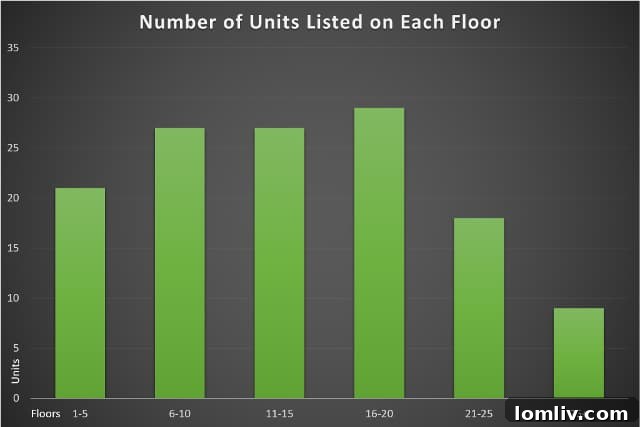
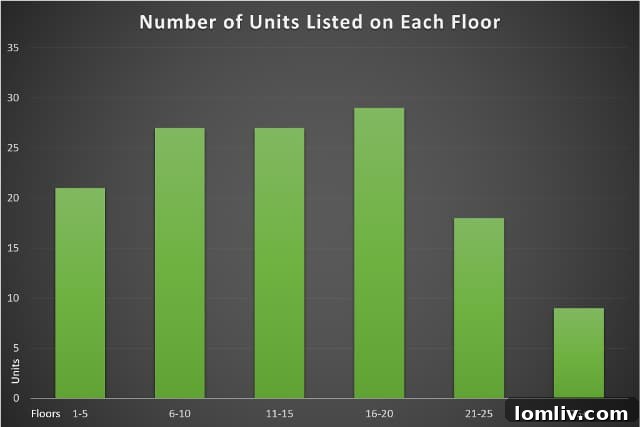
In previous analyses, we’ve highlighted the persistently tight inventory within Dallas’s high-rise sector. Unlike some rapidly expanding urban centers, Dallas has seen a relative dearth of new high-rise condo construction. Instead, the focus has largely shifted towards rental developments, further exacerbating the scarcity of ownership opportunities in the sky. This trend means that the existing pool of high-rise condos remains largely static, with no significant influx of new buildings anticipated in the near future. This final installment delves deeper into the available inventory, dissecting the 133 active units and 11 units currently under contract, meticulously analyzed by their floor levels.
The distribution of high-rise units below the 20th floor shows a relatively balanced inventory, with each segment typically offering between 21 and 29 units. This range provides a reasonable selection for buyers who prioritize high-rise living but aren’t necessarily fixated on extreme heights. However, for those with aspirations of living above the 20th floor, the inventory experiences a notable decline. This drop-off is largely due to the fact that a substantial number of Dallas high-rise buildings simply do not exceed this height. Once you venture into the 30th floor and beyond, options become exceedingly rare, often narrowing down to iconic, ultra-luxury properties like the Museum Tower. While offering unparalleled views and prestige, such residences often come with a price tag that places them well beyond the reach of the average high-rise buyer.
Yet, beyond the allure of height, the most critical criteria for prospective buyers frequently revolve around practical considerations: the unit’s size and its overall financial commitment. This “overall cost” encompasses not only the mortgage but also significant recurring expenses such as Homeowners Association (HOA) dues, property insurance, and taxes. For example, a sleek studio apartment on the 20th floor, while offering an elevated perspective, provides little solace or utility to a buyer specifically seeking a two-bedroom unit to accommodate a growing family or simply desire more expansive living quarters. The perfect high-rise home is a delicate balance of desired attributes and financial realities.
Understanding Dallas High-Rise Inventory: A Deep Dive into Scarcity
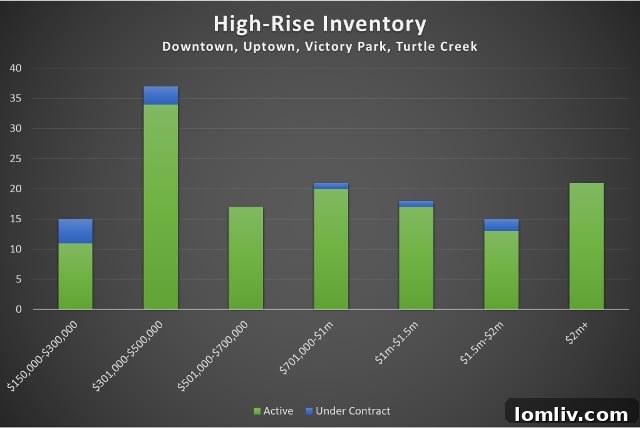
When examining the interplay between floor level, price, and unit size, the stark reality of Dallas’s high-rise market becomes unequivocally clear. A comprehensive comparison of available units reveals that finding a home that precisely aligns with a buyer’s needs often means sifting through a very limited selection of options. The most active price segment, ranging from $301,000 to $500,000, for instance, currently contains a mere 35 active units. This relatively small number underscores the tight market conditions even in the most accessible price bands.
Delving deeper into this specific price range ($301,000 to $500,000), the scarcity is even more pronounced when considering unit size. Within these 35 active units, there are an astonishingly low two three-bedroom units available. One of these rare gems is situated on the ground floor, while the other is located on the second floor. The bulk of the inventory in this popular price bracket consists of 13 one-bedroom units, with the remaining 20 being two-bedroom residences. This breakdown highlights a significant challenge for buyers seeking more spacious high-rise accommodations.
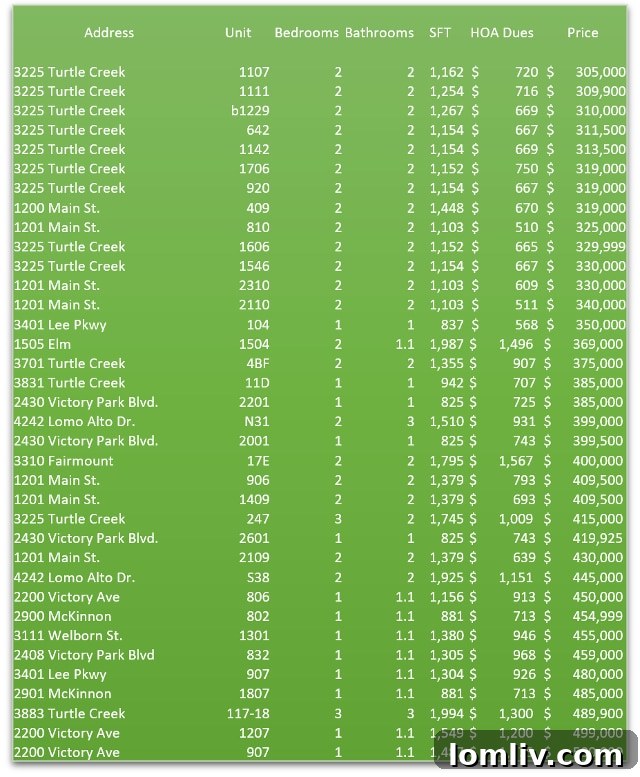
The extreme scarcity of three-bedroom high-rise units is further emphasized by their current status. Of the two available units in the aforementioned price range, one is already under contract at 3883 Turtle Creek, and the other at The Renaissance. This leaves an incredibly slim margin for prospective buyers seeking a larger footprint. High-rises, by their very nature, are not typically designed to offer a large number of bedrooms, nor do they traditionally cater to buyers needing extensive space for a large family. Consequently, the demand for three-bedroom units, while present, is often as scarce as the units themselves, creating a niche market with minimal options.
Demand for Units By Size: The “Bread-and-Butter” Challenge
While three-bedroom units are a rare find, the market for two-bedroom high-rise units, often considered the “bread-and-butter” of the urban condo market, still presents significant limitations. Within the price range of $305,000 to $409,500, there are 15 two-bedroom units available. However, these are concentrated in just two specific buildings: 1200 Main Street in Downtown Dallas and The Renaissance on Turtle Creek. Furthermore, these units are remarkably similar in size, all falling within approximately 200 square feet of each other. This means that if these two buildings or their specific characteristics do not appeal to a buyer, the options for a two-bedroom unit in this popular price band dwindle dramatically to just five choices. Similarly, for the remaining 13 one-bedroom units in a comparable price range, only five options exist outside the immediate vicinity of Victory Park, further illustrating the geographic and building-specific constraints.
This situation becomes even more challenging as buyers venture outside this most populous price band. Imagine the difficulty of searching for a high-rise unit in the next tier up, between $501,000 and $700,000. In this segment, the total number of listings on the market drops to a mere 17—less than half the number available in the lower, more active price range. Conversely, for those looking for more budget-friendly options, the bracket between $150,000 and $300,000 offers an even scarcer selection, with just 11 units on the market. These figures powerfully underscore the overarching theme: finding the perfect Dallas high-rise unit that aligns with specific requirements for price, total monthly expenses (mortgage, HOA, insurance, taxes), and spatial needs is often not just a search, but a prolonged waiting game in a very tight market.
Can You Wait to Move on Up? Personal Insights and Market Trends
The challenges of the Dallas high-rise market are something I’ve experienced firsthand, as highlighted by my own recent transaction. For several years, I had been contemplating a move “upstairs” within my preferred building, the Athena. When a unit finally surfaced in November, it was priced at an unrealistic premium and remains unsold to this day. Without the complex and unconventional deal I structured—purchasing a double unit in my desired Turtle Creek location, subsequently splitting it, and then selling one of the units—the market offered virtually no suitable alternatives. My personal journey is a vivid illustration of the lengths to which buyers must go in such a constricted market to secure their ideal high-rise property.
Adding to this complexity, the trend in desirable, walkable, and closer-in neighborhoods continues to lean heavily towards the construction of rental high-rises rather than condominiums. This ongoing shift suggests that the current scarcity of high-rise condos may well worsen before any improvement is seen. The only future high-rise condo developments I’m aware of are exclusive, boutique listings, with price points comfortably exceeding $1 million. For any of the newer rental high-rises to even consider converting to condos, a significant and sustained market shift from rentals to ownership would be required—a scenario that appears distant at present.
Of course, for buyers whose primary desire is an elevated dwelling, mid-rise buildings do offer a broader selection of inventory. However, the focus of this analysis, and indeed my personal preference, is specifically on true high-rise living. Furthermore, while there are high-rise options in other parts of Dallas, these, too, exhibit limited inventory. For instance, the Bonaventure in North Dallas currently has 23 units for sale, The Cedars offers a mere 5 units, and the Pink Wall area has 15 listings. While these add to the overall count, they do not represent a “shower” of inventory in raw numbers, especially for those seeking the vibrant, walkable urban core.
For discerning buyers who yearn for the dynamism of vibrant, walkable neighborhoods situated close to the city’s action, the primary options remain Downtown, Turtle Creek, Uptown, and to a lesser extent, Victory Park. Crucially, unlike consumer goods, no one appears to be manufacturing more land or developing new high-rise condos at a pace that could alleviate the current demand in these highly sought-after locations. The scarcity is inherent to the urban landscape and current development trends.
Navigating the Dallas high-rise market is undoubtedly challenging. Good luck to all prospective buyers; it’s a competitive environment out there, demanding patience, flexibility, and often, a willingness to act decisively when a suitable opportunity arises.

Remember: High-rises, HOAs, and renovation projects are my dedicated areas of expertise. I also hold a deep appreciation for the delicate balance between modern and historical architecture, often viewed through the lens of the YIMBY movement. My commitment to insightful real estate commentary has been recognized by the National Association of Real Estate Editors, who awarded my writing with three Bronze awards in 2016, 2017, and 2018, along with two Silver awards in 2016 and 2017. If you have a compelling story to share, a challenging real estate question, or even a marriage proposal, feel free to reach out via email at [email protected]. You’re also welcome to search for me on Facebook and Twitter, though finding me there might prove to be a unique challenge.