The Kitchen’s Green Revolution: Why Induction is Replacing Gas Appliances
Is your kitchen about to become the next frontier in the global effort to combat climate change? For decades, natural gas was widely championed as a “cleaner” alternative to other fossil fuels, particularly coal, for residential heating and cooking. This perception was largely accurate when coal dominated electricity generation. However, as the energy landscape evolves and renewable sources become increasingly prevalent, the environmental footprint of natural gas is undergoing a closer, more critical examination. While coal combustion releases between 214 and 228 pounds of carbon dioxide (CO2) for every million BTUs, natural gas, though better, still contributes approximately 117 pounds of CO2, and propane 139 pounds for the same energy output. Yet, the story of natural gas’s impact on our planet extends far beyond just CO2 emissions from burning.
A significant, often overlooked, aspect of natural gas is the problem of methane leakage during its extraction, processing, and transportation. Methane (CH4) is a potent greenhouse gas, with a warming potential dramatically higher than carbon dioxide. Over a 100-year period, methane is considered 34 times more powerful at trapping heat than CO2, and over a 20-year timeframe, its impact surges to an astonishing 86 times stronger. Estimates suggest that as much as 9% of extracted natural gas can leak into the atmosphere as methane. This leakage dramatically undermines any “clean” label, positioning natural gas as a major contributor to short-term global warming and a critical challenge in our pursuit of a sustainable future.
Global Climate Policy Drives a Shift Towards Electrification
For nations and communities committed to the ambitious targets of the Paris climate accord, the imperative to drastically reduce greenhouse gas production is translating into rapid policy shifts. This includes a clear movement away from gas-based appliances and home heating systems. Across Europe, for instance, a decisive trend is emerging: gas appliances are anticipated to be phased out within the next decade, signaling a broad commitment to electrification and renewable energy solutions for residential sectors.
This progressive movement is not confined to Europe; it’s gaining momentum stateside as well. Berkeley, California, made headlines by becoming the pioneering U.S. municipality to enact a ban on new natural gas hookups in new multi-family buildings. This landmark decision has inspired a domino effect, with over 50 cities and counties across California now exploring or implementing similar bans. The state itself is actively deliberating broader regulations on natural gas infrastructure. The rationale behind these sweeping changes is compelling: experts estimate that a quarter of the total greenhouse gas emissions attributable to a typical building originates from its gas-powered appliances and heating systems. Beyond environmental concerns, research increasingly highlights the adverse health impacts of indoor air pollution from gas stoves, including increased risks of respiratory issues, particularly in children, further fueling the transition to electric alternatives.
Induction vs. Gas: A Deep Dive into Modern Cooking Performance
The transition away from gas faces resistance, particularly from high-end developers and homeowners who traditionally associate gas cooktops with premium kitchens and professional-grade cooking. There’s a certain “cachet” that a dancing gas flame has historically engendered in buyers, symbolizing control and culinary prowess. However, it’s worth noting that in truly high-spec kitchens, the only appliance that traditionally relies on an open flame is the cooktop; few, if any, modern upscale kitchens utilize a gas refrigerator. Many premium ranges are already designed as dual-fuel models, combining the perceived benefits of a gas cooktop with the precise, even heat of an electric oven.
The preference for gas over electric was largely solidified during an era when electric cooktops were synonymous with glowing red coils and notoriously poor temperature control. These older radiant models often required constant vigilance to prevent burning or uneven cooking. Fast forward to today, and modern induction technology has entirely revolutionized the electric cooking experience. Induction cooktops generate heat directly within the cookware through electromagnetic fields, offering unparalleled temperature precision and responsiveness that demonstrably surpasses traditional gas cooktops. The only perceived “loss” for some culinary enthusiasts is the aesthetic appeal of the dancing flame and the rugged, industrial look often associated with professional gas ranges. Yet, the functional advantages of induction are rapidly winning over even the most ardent gas devotees.
Unlocking the Power of Induction: Speed, Efficiency, and Safety
Induction cooking operates on a fundamentally different principle than gas or traditional electric radiant cooktops. Instead of heating the cooktop surface or producing an open flame, induction technology uses electromagnetic energy to directly heat the ferrous metal of compatible cookware. This direct heat transfer means minimal energy loss, making induction significantly more energy-efficient than gas. Water boils faster on an induction hob than on a comparable gas burner, saving precious time in the kitchen.
Beyond speed and efficiency, induction offers significant safety advantages. The cooktop surface itself remains relatively cool, reducing the risk of accidental burns. Spills don’t bake onto a hot surface, making cleanup effortless. Furthermore, there are no open flames or combustible gases, eliminating potential fire hazards and improving indoor air quality by preventing the release of combustion byproducts like carbon monoxide and nitrogen oxides. For households with children or pets, these safety features are particularly appealing, contributing to a safer and healthier home environment.
Industry Insights and Personal Experience: Embracing the Electric Future
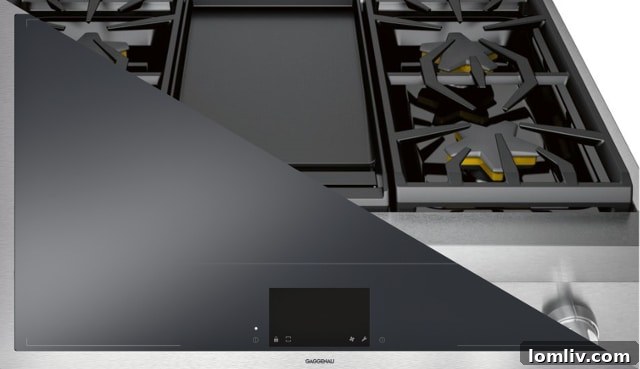
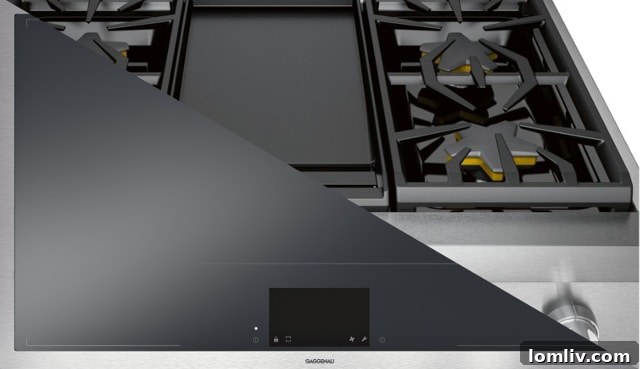
My recent conversation with Charles Pizzeck, District Sales Manager for BSH appliances – the powerhouse behind brands like Bosch, Thermador, and Gaggenau – further underscored the industry’s shift. While discussing my upcoming renovation project and appliance selections, I commented on Gaggenau’s seemingly less “butch” cooktop aesthetic compared to its Thermador or Wolf counterparts. Charles revealed a compelling reason: Gaggenau is strategically channeling significant innovation and “oomph” into its electric offerings, particularly induction technology. He then demonstrated their newest induction cooktop, a marvel that impressively mimics the functionality of a French Top. This advanced feature allows a pan to be moved away from its primary cooking zone, and the heat under the entire pan diminishes proportionally without the need to manually adjust controls. This innovative design not only offers intuitive control but also ensures even heat reduction across the pan, just like a traditional French Top, preventing localized hotspots and making for an incredibly slick cooking experience.
According to Charles, the driving force behind this rapid innovation in efficient electric appliances, especially induction, is a combination of stringent European regulations and a proactive alignment with the Paris climate accord’s objectives. Europe has long been at the forefront of induction adoption, a full decade or more ahead of the United States. This foresight is now paying dividends as the continent accelerates its transition to greener, more sustainable living spaces.
My Journey to Induction and a Call for Change
You can certainly count me among the early adopters. I made the switch to induction six years ago, initially out of necessity as electric was my only available option. However, what began as a pragmatic choice quickly evolved into a profound preference. Even now, with the ability to opt for gas in my next residence, I had already firmly decided to return to induction – a decision made even before I fully grasped the accelerating global movement to phase out gas appliances. For an avid home cook like myself, the precision, speed, and responsiveness of induction are simply unmatched. It truly is that good, transforming the daily cooking experience into something more enjoyable and efficient.
As we increasingly recognize the intricate connections between our daily choices and the health of our planet, it becomes clear that seemingly small decisions, like what powers our kitchen appliances, carry significant weight. So, the next time you’re roasting a delectable beef joint in a gas oven, pause to consider the broader implications: between the methane emissions from livestock and the carbon footprint of natural gas, your culinary efforts might inadvertently be contributing to more than just a perfectly cooked meal. Our collective responsibility to mitigate climate change extends into every corner of our homes. Who knows, perhaps one day soon, the sight of open flames in our kitchens will evoke the same sense of historical curiosity, or even mild alarm, that we now associate with antiquated practices like placing candles on Christmas trees – a symbol of a past era, replaced by safer, more sustainable alternatives.

Remember: My expertise spans high-rises, HOAs, and renovation trends, alongside a keen interest in modern and historical architecture, always viewed through the lens of the YIMBY movement. My writing has been consistently recognized by the National Association of Real Estate Editors, earning me three Bronze awards in (2016, 2017, 2018) and two Silver awards (2016, 2017) in 2016 and 2017. Do you have a compelling story to share, or perhaps a unique proposition? Feel free to reach out via email at [email protected]. While I encourage you to look for me on Facebook and Twitter, you might not find me there – but the invitation stands!