Renting vs. Buying: A Comprehensive Guide to Making Your Best Housing Decision
The age-old question of whether to rent or buy a home is one of the most significant financial dilemmas individuals and families face. It’s a decision fraught with personal implications, financial considerations, and emotional weight. This isn’t a simple choice with a universal answer; rather, it’s a complex equation influenced by a myriad of factors unique to each person’s situation, current market conditions, and long-term aspirations. Navigating this labyrinth requires careful thought, robust research, and a clear understanding of what homeownership truly entails beyond the surface-level appeal.
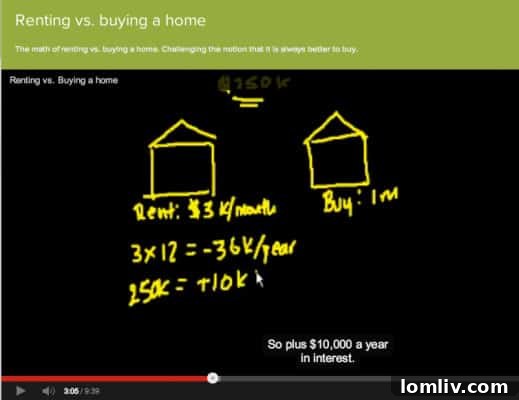
Recently, our team has been deeply immersed in analyzing various demographic groups and their propensity to rent or buy, exploring critical insights from sources like Candace Tharp’s research on 30-to-40-somethings and fresh college graduates, and detailed Census information highlighting trends among young Americans. In light of these discussions, a colleague shared a link to an online lecture from a Khan Academy instructor that aimed to break down the costs associated with renting versus buying. While educational platforms like Khan Academy often provide valuable foundational knowledge, their simplified approach to such a multifaceted topic can sometimes lead to generalizations that don’t fully capture the real-world complexities.
Debunking the “Always Buy” Myth: Why One Size Doesn’t Fit All
The instructor in the aforementioned Khan Academy lecture, based in Northern California’s notoriously expensive Silicon Valley, attempted to draw a comparison between the costs of renting and buying two seemingly identical homes. However, it wasn’t long before a critical alarm bell sounded. Approximately 40 seconds into the presentation, the instructor posed a rhetorical question with an unsettling absolute: “Well, isn’t buying always better than renting?” This sweeping generalization immediately raises concerns, as it discounts the diverse circumstances that dictate individual financial decisions in the real estate market.
To assert that buying is “always” superior to renting is akin to declaring that one brand of champagne is “always” better than another – it might be a personal preference, but it’s far from an objective truth. Such statements often stem from individual biases and fail to acknowledge the dynamic nature of personal finance and real estate. The decision to rent or buy is deeply personal, influenced by factors ranging from current economic stability and future career plans to lifestyle choices and local market conditions. Oversimplifying this monumental decision can lead individuals down a path that is not financially optimal for their unique circumstances, potentially resulting in undue stress or missed opportunities.
The True Costs of Homeownership: Beyond the Monthly Mortgage
One of the significant shortcomings of oversimplified analyses is their tendency to focus predominantly on monthly mortgage payments versus monthly rent. This narrow view ignores a vast array of expenses and responsibilities that come with homeownership. The financial commitment extends far beyond the principal and interest. Prospective buyers must consider property taxes, which can vary wildly by location and often increase over time, and homeowners insurance, a crucial safeguard against unforeseen events but another recurring cost. Moreover, the often-overlooked closing costs – including lender fees, title insurance, and appraisal fees – can amount to thousands of dollars upfront, adding a substantial barrier to entry.
Furthermore, the ongoing costs of home maintenance and repairs are an unavoidable reality for homeowners. From routine upkeep like lawn care and plumbing checks to unexpected emergencies such as roof replacements or HVAC system failures, these expenses can quickly accumulate and significantly impact one’s budget. Renters, in contrast, typically have the luxury of having their landlords shoulder these burdens. The financial implications of homeownership also include potential HOA fees in certain communities, utility costs that can be higher in larger properties, and the opportunity cost of having a significant portion of one’s wealth tied up in an illiquid asset. A thorough comparison must weigh all these factors comprehensively.
Understanding Market Dynamics and Regional Variations
The instructor’s perspective, framed within the context of Silicon Valley’s exceptionally high cost of living, inadvertently highlights another crucial aspect: real estate markets are inherently cyclical and highly localized. What holds true for a homeowner in a booming tech hub might be entirely different for someone in a more stable, affordable market. The real estate market is subject to economic shifts, interest rate fluctuations, supply and demand imbalances, and regional growth patterns. Consequently, making a purchasing decision without considering these market dynamics is a precarious gamble.
Silicon Valley, for instance, is notorious for its exorbitant housing prices and competitive rental market, driven by a high concentration of tech companies and a limited housing supply. In such an environment, the financial calculus for renting versus buying looks very different compared to, say, a growing metropolitan area in Texas. The suggestion to “move to Texas instead” might sound flippant, but it underscores a valid point about geographical arbitrage and the profound impact of location on housing affordability. Areas with lower property taxes, more reasonable home prices, and a healthier rental yield might present a more compelling case for buying, while rapidly appreciating, high-cost areas could make renting a more financially prudent choice for many, allowing for greater flexibility and investment diversification.
The Role of Real Estate Professionals and Peer Pressure
The lecture further ventured into criticizing homeowners for succumbing to “peer pressure” and real estate agents for simply “wanting you to buy so they can make a living.” While societal norms and the perceived status of homeownership can indeed influence decisions, and real estate agents are, understandably, compensated when transactions occur, these critiques oversimplify the valuable role professionals play and the genuine motivations behind homeownership.
A reputable real estate agent does far more than just facilitate a sale; they are knowledgeable local market experts who can guide clients through the complex buying or selling process. They assist with pricing strategies, negotiate on behalf of their clients, navigate legal paperwork, and connect buyers with trusted lenders, inspectors, and other essential service providers. Their expertise is invaluable in ensuring clients get the “best deal possible” and make informed choices. To dismiss their role as purely self-serving overlooks the significant value they bring to a transaction that, for many, is the largest financial undertaking of their lives. Furthermore, the desire for homeownership often stems from legitimate personal aspirations for stability, building equity, customizing living spaces, and establishing roots in a community – not just from external pressure.
Making Your Informed Housing Decision
Ultimately, the decision to rent or buy is a deeply personal one, requiring careful consideration of a wide range of factors. It is a gross oversimplification to declare one option universally superior to the other. Instead, individuals should engage in thorough self-assessment and research. Here are key considerations:
- Financial Stability: Do you have a stable income, a healthy emergency fund, and enough savings for a down payment and closing costs? Can you comfortably afford the ongoing expenses of homeownership (mortgage, taxes, insurance, maintenance)?
- Credit Score and Debt: A strong credit score is crucial for securing favorable mortgage rates. Assess your current debt load and its impact on your borrowing capacity.
- Long-Term Plans: How long do you plan to stay in one location? If your tenure is likely short (less than 3-5 years), the transaction costs of buying and selling might outweigh the benefits of equity appreciation.
- Market Conditions: Research local housing prices, rental rates, interest rates, and future market projections. Is it a buyer’s market, a seller’s market, or balanced?
- Lifestyle and Flexibility: Do you value the flexibility to move easily, or do you crave the stability and freedom to personalize a home? Renting offers fewer responsibilities for maintenance and greater mobility.
- Investment Strategy: Consider the opportunity cost. Would your down payment and monthly savings be better invested elsewhere? Homeownership can be a path to wealth building, but it’s not the only one, nor is it guaranteed.
The Khan Academy lecture, while a starting point, highlights the dangers of bending logic to preconceived assumptions. Rather than seeking simplistic answers, individuals should embrace the complexity of the “rent or buy” conundrum. Consult with financial advisors, real estate professionals, and explore robust online calculators that factor in all relevant variables. By doing so, you can move beyond generalized opinions and make a housing decision that truly aligns with your financial health, personal goals, and long-term well-being. There’s no single “always better” choice; there’s only the best choice for you.