Dallas Dominates: North Texas Leads the Nation in Home Price Appreciation
North Texas has once again solidified its position as one of the nation’s most robust and rapidly appreciating real estate markets. According to the highly respected Standard & Poor’s/Case-Shiller Home Price Index, often regarded as the oracle of nationwide real estate comparisons, the Dallas area continues to set impressive benchmarks. This consistent growth underscores the region’s dynamic economic landscape and its magnetic appeal to residents and businesses alike, driving a housing demand that consistently outstrips supply.
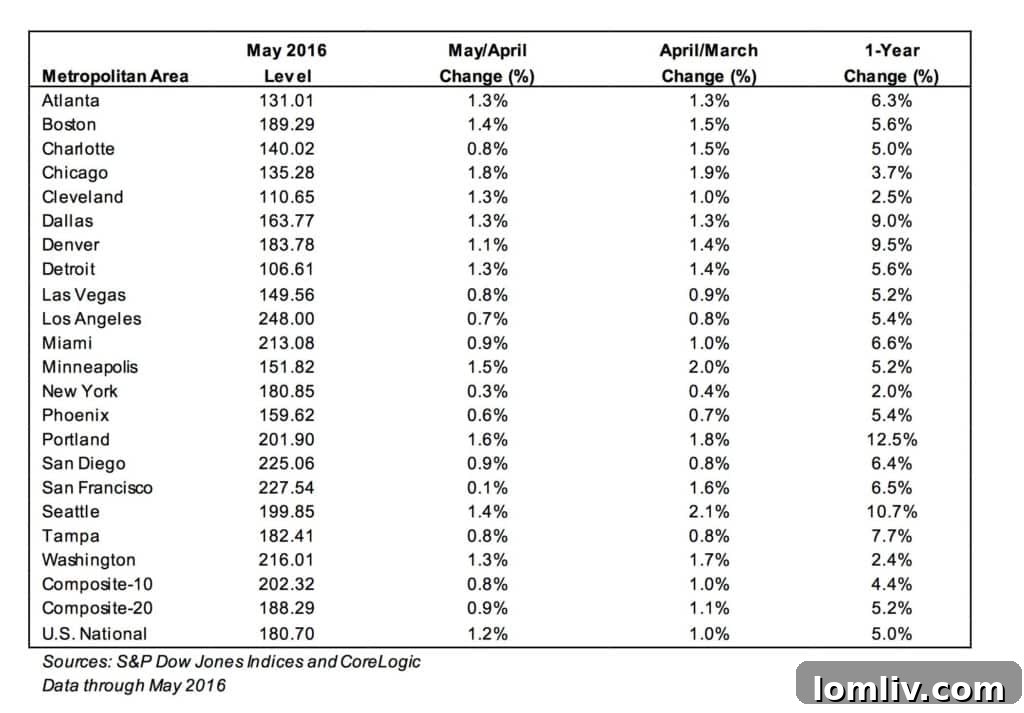
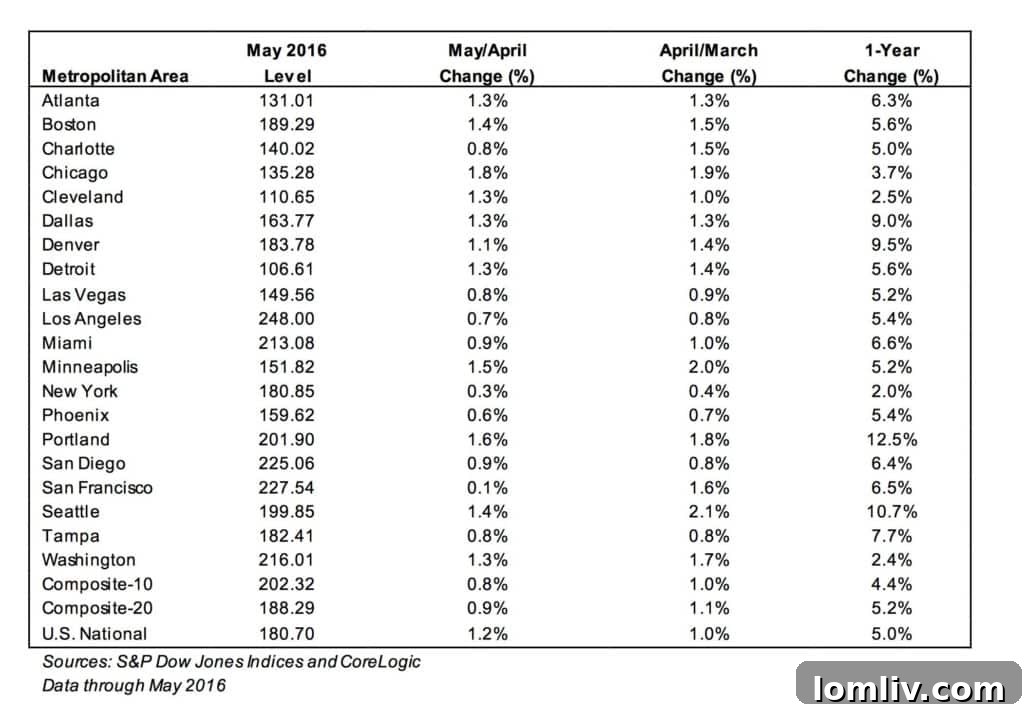
The latest data released revealed a compelling narrative for homeowners and prospective buyers in North Texas. Home prices across the Dallas area surged by a remarkable 9 percent in May 2016 compared to the same period in 2015. This substantial increase wasn’t just a fleeting anomaly; it marked the most significant month-over-month price gain since February, signaling a sustained upward trajectory in property values. This robust appreciation highlights the intense competition and underlying strength characterizing the local housing sector.
Industry experts are taking note of this nationwide trend. David M. Blitzer, Chairman of the S&P Dow Jones Indices Committee, observed in the report, “Home prices continue to appreciate across the country. Overall, housing is doing quite well.” While Blitzer’s assessment points to a generally healthy national housing market, with average home prices rising by 5 percent from May 2015, Dallas’s performance far exceeded this national average, underscoring its exceptional market dynamics.
Understanding the Driving Forces Behind Dallas’s Real Estate Boom
The continuous escalation of Dallas area real estate prices, which have seen annual increases ranging from 8 to 10 percent for over a year, can primarily be attributed to a significant imbalance between supply and demand. A persistent dearth of housing inventory means there are simply not enough homes available to meet the burgeoning demand. This scarcity creates a highly competitive environment where well-priced homes, particularly within certain popular price segments, often sell within mere days of hitting the market, sometimes even before a public listing.
Beyond the inventory crunch, North Texas benefits from a powerhouse economy. The region has become a magnet for corporate relocations and expansions, drawing in major companies and fostering a vibrant job market. This influx of high-paying jobs, coupled with a relatively lower cost of living compared to coastal metropolitan areas, attracts a steady stream of new residents. This population growth directly fuels housing demand, putting sustained upward pressure on prices. The consistent economic expansion and diversification in sectors like technology, finance, and logistics create a stable foundation for the real estate market.
Blitzer further emphasized the positive trends, stating, “In addition to strong prices, sales of existing homes reached the highest monthly level since 2007 as construction of new homes showed continuing gains.” This indicates that not only are prices rising, but market activity, in terms of transaction volumes, is also robust, a dual indicator of a truly thriving market. Despite these gains, the pace of new construction, while improving, has struggled to keep up with the overwhelming demand, perpetuating the tight inventory situation and further bolstering existing home values. The forecast continues to call for home prices to hold strong and maintain their upward trajectory, albeit potentially at a slightly moderated pace as the market matures.
Dallas’s Position in the National Real Estate Landscape
Dallas’s performance isn’t just impressive in isolation; it shines brightly when compared to other major U.S. markets. The city recorded the fourth-largest annual home price gain in the country and led the entire state of Texas in price appreciation. While we celebrate Dallas’s robust growth, it’s worth noting the extraordinary surges elsewhere that underscore a national trend in specific urban centers: Portland, Oregon, witnessed an astounding 12.7 percent jump in home prices from a year ago, while Seattle experienced a 10.7 percent rise, and Denver followed closely with a 9.5 percent increase. These figures highlight a broader trend of significant appreciation in key metropolitan areas, often fueled by strong tech economies, limited geographical expansion, and desirable lifestyles that attract a young, affluent demographic.
What makes Dallas’s current real estate boom even more remarkable is its historical context. The current market has not only surpassed but significantly exceeded the peaks attained during the infamous housing boom of 2005-2007, demonstrating an increase of over 25% beyond those prior highs. This sustained and substantial growth points to fundamental economic strength and demographic shifts rather than speculative bubbles, suggesting a more resilient market foundation. Today, the median sales price of a home in the Dallas area stands at a substantial $237,500, a clear indicator of the significant value appreciation homeowners have experienced and the increasing cost of entry for new buyers.
Navigating Market Peaks: June’s Strong Performance and Future Outlook
June 2016 continued the celebratory mood for the real estate market, akin to a lavish feast. The National Association of Realtors® (NAR) reported that June’s seasonally adjusted pending sales index registered 111.0, a slight but positive increase of 0.2 percent from May’s unrevised 110.8. While this increase was more modest than the consensus expectation of a 1.3 percent rebound, it’s crucial to acknowledge that even with this slight moderation, the market still managed to top the peaks observed during the 2006/2007 boom years. This continued momentum, even if slightly below forecast, speaks volumes about the underlying demand and confidence within the market, especially considering the historical context.
Jonathan Smoke, NAR’s Chief Economist, provided insightful commentary on these trends, offering a nuanced perspective on the market’s trajectory and the forces shaping it:
“Today’s pending home sales figures were the highest for June on a non-seasonally adjusted basis since June 2005 – even higher than in June 2006, the peak of the housing boom. We also saw the second-highest seasonally adjusted pace of sales in the last 12 months. June’s gains in existing, new, and pending home sales closed out a strong spring and first half of 2016 for the housing market.”
“We are now entering the time of the year when sales usually decline because of the real estate market’s highly seasonal nature. Inventory will likely remain tight for the foreseeable future, but buyers in late summer and fall should face less competition compared to the spring. This year is following the normal seasonal pattern with a bit more strength in June, presumably powered by very low mortgage rates.”
Smoke’s analysis underscores that while the market is undeniably strong, it is also influenced by predictable seasonal patterns. The robust performance in June, despite being a precursor to typical summer slowdowns, can be partly attributed to historically low mortgage rates, which continue to incentivize buyers and sustain demand. These rates make homeownership more accessible and attractive, even with rising prices, thereby fueling transaction volumes.
Emerging Trends: A July Slowdown and a Nuanced Luxury Market
Despite the overall positive outlook and strong first-half performance, anecdotal evidence from agents suggests a noticeable shift in market activity during July. Several real estate professionals have reported an uncharacteristically quiet period, indicating a potential cooling from the frenetic pace of previous months. One agent in the bustling Flower Mound office even shared that their July numbers were less than half of what they achieved in June, which incidentally was their office’s most profitable month ever. This sharp contrast suggests that while the market remains fundamentally strong, seasonal shifts or other external factors might be introducing a period of recalibration, prompting industry watchers to closely monitor upcoming data.
Furthermore, a distinct trend is emerging within the higher-end segments of the market. Homes priced above the $700,000 to $800,000 range are not exhibiting the same rapid sales pace seen in more affordable segments. Unlike the entry-level and mid-range properties that often disappear from listings within days, luxury homes are now staying on the market for longer durations, sometimes weeks or even months. A recent Dallas Morning Newschart corroborated this, illustrating declining pricing trends in several higher-priced neighborhoods. This indicates a more discerning buyer pool in the luxury sector, less susceptible to immediate bidding wars, and perhaps a more balanced supply-demand dynamic at the top end, signaling that even in a hot market, premium properties face different conditions.
Reflecting on Market Dynamics and Future Prospects
The current state of the Dallas real estate market presents a fascinating dichotomy: unparalleled growth in many segments contrasted with emerging signs of seasonality and segmentation. This naturally prompts reflection and discussion among industry professionals. Is the recent slowdown merely a typical seasonal adjustment, as Jonathan Smoke suggested, where buyers take summer vacations and activity naturally cools? Or are there deeper, broader influences at play that warrant closer examination?
Could external factors be contributing to shifts in buyer sentiment and purchasing decisions? The highly charged political climate, characterized by a polarized election, or even broader societal concerns such as crime rates, national events, and global economic uncertainties, might subtly impact consumer confidence and major investment decisions like purchasing a home. These are complex questions that real estate professionals grapple with constantly, trying to discern short-term fluctuations from long-term trends and anticipate market shifts. Understanding these variables is key for making informed decisions in an ever-evolving market.
Ultimately, while the Dallas-Fort Worth metropolitan area continues to exhibit robust fundamentals—driven by strong job growth, corporate migration, and an attractive lifestyle—understanding the nuances of its market segments and external influences is crucial for both buyers and sellers. The market remains dynamic, promising continued growth but also requiring strategic navigation as it evolves through its natural cycles and adapts to changing economic and social landscapes. For those looking to enter or exit the market, staying informed about these layered dynamics will be paramount to success.