
Discovering Opportunity: A Comprehensive Look at the Texas Housing Market

Texas has long been heralded as a land of opportunity, a reputation that extends profoundly into its real estate sector. With a robust economy, a burgeoning job market, and an environment conducive to family growth and business development, the Lone Star State consistently ranks among the top destinations for homebuyers across the U.S. This persistent allure is not merely anecdotal; it’s a trend firmly supported by compelling data from authoritative sources within the industry.
As Scott Kesner, a former chairman of the Texas Association of Realtors (TAR), eloquently stated, “Texas is one of the best states to buy a home in the U.S. because it’s one of the best places to work, do business and raise a family. Our state’s lasting job and economic growth continues to bring higher incomes for Texas families and reaffirms new home sales and development as a critical component in meeting market demand.” This sentiment underscores a fundamental truth about Texas’s housing market: it thrives on the state’s broader economic success and population expansion.
The Economic Engine Driving Texas Real Estate
The strength of the Texas economy is undeniably the primary driver behind its dynamic housing market. The state’s diverse industries, ranging from energy and technology to manufacturing and healthcare, consistently create high-quality employment opportunities. This sustained job growth translates directly into higher median household incomes, empowering more Texans to invest in homeownership. The TAR’s 2015 Texas Homebuyers and Sellers Report, a seminal study detailing market trends from July 2013 to June 2014, provides concrete evidence of this economic prosperity.
During this period, the median household income for homebuyers in Texas witnessed an impressive 5.9 percent surge, reaching $97,500. This substantial increase dwarfed the national median household income growth among homebuyers, which saw a more modest 1.4 percent rise to $84,500. This disparity highlights Texas’s unique position, where a favorable economic climate fosters greater purchasing power for its residents, making homeownership more accessible and attractive compared to many other parts of the country. This upward trend in income not only reflects the state’s economic vitality but also supports the underlying demand for both new and existing homes.
Deciphering the Texas Homebuyer Profile
Understanding the characteristics of those actively participating in the Texas housing market offers crucial insights into its overall health and future trajectory. The TAR report provides a detailed snapshot of who is buying, what they are buying, and the evolving dynamics of homeownership in the Lone Star State. While the market continues to expand, certain demographic shifts and purchasing preferences have become evident.
New Homes vs. Existing Inventory: A Distinct Texas Trend
During the reporting period, new home sales constituted 28 percent of all homes purchased in Texas. Although this figure represented a one percent decrease from the preceding year, it remained a remarkably high proportion—twice that of the national average. This robust activity in new construction underscores Texas’s commitment to accommodating its rapidly growing population and expanding urban centers. The prevalence of new homes points to available land, a proactive development sector, and a consistent demand for modern housing options that cater to contemporary lifestyles. This sustained development is a critical factor in managing market demand and preventing severe inventory shortages, which can plague other high-growth states.
Challenges for First-Time Homebuyers
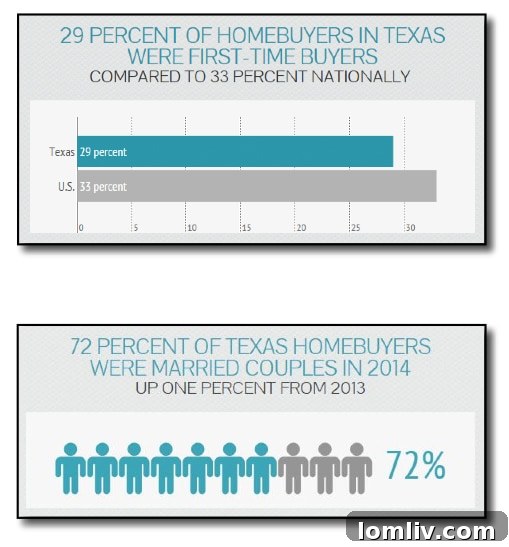
Despite the overall market strength, the report also highlighted challenges for first-time homebuyers. Only 29 percent of home purchases were made by individuals buying their first home, a four percent decrease from the previous year. This decline is largely attributed to tightening lending restrictions and escalating home prices, which create significant barriers to entry for those without substantial equity or savings. The journey to homeownership for new buyers often involves navigating stricter mortgage qualification criteria, saving for larger down payments, and competing in a market where established buyers may have an advantage. Addressing these hurdles is vital for ensuring long-term market inclusivity and supporting the aspirations of younger generations.
Demographic Shifts: An Evolving Buyer Persona
The demographic profile of the typical Texas homebuyer has also seen notable shifts. The TAR report indicates that Texas homebuyers are, on average, older and more likely to be married. The typical homebuyer during this period was 45 years old, an increase of two years from the previous report. Furthermore, 72 percent of these homebuyers were married, up one percent, demonstrating a market largely driven by established families. This contrasts with national numbers, where 65 percent of homebuyers were married, a figure that actually saw a one percent decrease. This suggests that in Texas, financial stability and a life stage conducive to family planning are stronger prerequisites for homeownership, reflecting potentially higher entry costs or a preference for stability before making such a significant investment.
Affordability, Policy, and the Future of Texas Homeownership
The discussion around housing affordability extends far beyond just income levels. As Scott Kesner rightly emphasized, “Housing affordability is not just a factor of income. It’s also dependent upon the buyer’s ability to qualify for a mortgage and to afford the ongoing costs of homeownership.” This broader perspective highlights the multifaceted nature of market accessibility. Mortgage qualification involves not only income but also credit scores, debt-to-income ratios, and loan-to-value requirements. Moreover, the long-term costs of homeownership—including property taxes, insurance, maintenance, and potential homeowners’ association fees—can significantly impact a buyer’s ability to sustain their investment.
Recognizing these complex factors, Texas’s political landscape plays a crucial role in shaping the housing market. Kesner’s call for legislative action to “enforce policies that will continue to protect the rights and quality of life of Texas homeowners” remains a pertinent concern. Issues considered by state legislatures often include property tax reforms aimed at mitigating the burden on homeowners, infrastructure investments that enhance property values and access, and regulations that balance developer interests with consumer protection. These policy decisions are instrumental in maintaining a healthy, equitable, and sustainable housing market for all Texans.
Key Insights from the TAR Report: A Detailed Look
The 2015 Texas Homebuyers and Sellers Report is rich with specific data points that further illuminate the unique characteristics of the Texas real estate market. These statistics offer valuable comparisons to national trends and provide a deeper understanding of the preferences and financial realities of those engaging in home transactions.
-
Median household income among first-time homebuyers increased 5.8 percent year-over-year to $72,000 for first-time homebuyers in Texas and 2.3 percent to $68,300 for first-time homebuyers nationally.
This notable increase in income for first-time buyers in Texas showcases a positive trend, suggesting that new entrants to the market are entering with stronger financial standing. This increased purchasing power is vital in a competitive market, enabling more individuals to overcome initial barriers and invest in their first homes. The Texas increase significantly outpaced the national average, further solidifying the state’s economic advantage for aspiring homeowners.
-
Meanwhile, median household income among repeat buyers decreased, dropping 8.9 percent to $97,500 in Texas and dipping one percent nationally to $95,000 year-over-year.
The decrease in median income for repeat buyers in Texas presents an interesting contrast. While first-time buyers saw an income boost, repeat buyers experienced a decline. This could indicate a variety of market behaviors, such as repeat buyers potentially downsizing, moving to more affordable areas, or a larger segment of repeat buyers with lower incomes re-entering the market. It might also reflect strategic moves by repeat buyers optimizing for specific locations or amenities rather than necessarily seeking a larger or more expensive home.
-
Texans are buying newer, larger homes than homebuyers nationwide. The typical three-bedroom, two-bathroom home in Texas was 2,100 square feet and built in 2002. Nationally, the typical three-bedroom, two-bathroom home was 1,870 square feet and built in 1993.
This statistic strongly reinforces the narrative of growth and modernity in Texas housing. The preference for newer and larger homes speaks to the availability of land for development and the lifestyle aspirations of Texans. Newer homes often come with modern amenities, energy efficiency, and contemporary designs, which are highly attractive to buyers. The significant difference in age and size compared to the national average highlights the dynamic expansion and continued investment in high-quality housing across the state.
-
Sixteen percent of homebuyers in Texas purchased a multi-generational home due to children over the age of 18 or aging parents moving into the house. Nationally this was 13 percent.
The higher prevalence of multi-generational homes in Texas reflects evolving family structures and economic realities. This trend can be driven by a desire for family support, childcare needs, elder care, or pooling financial resources to afford larger or more desirable properties. The slightly higher percentage in Texas compared to the national average suggests a stronger cultural inclination or perhaps more pronounced economic factors encouraging extended family living arrangements.
-
The tenure of owning a home increased one year in both Texas and nationally from July 2013 to June 2014, to nine years in Texas and 10 years nationally.
An increase in homeownership tenure indicates that people are staying in their homes for longer periods. This can be a sign of market stability, with homeowners content in their properties and benefiting from appreciating values. It can also reflect a slower turnover in the market, possibly influenced by transaction costs, interest rates, or a general desire for stability. The slightly shorter tenure in Texas compared to the national average could suggest a more dynamic population with greater mobility or a faster pace of life events prompting moves.
-
For Sale by Owner (FSBO) homes in Texas sold for 30 percent less than homes sold using a Texas Realtor. The average Texas FSBO home sold for $160,000, compared to $228,000 for the average Realtor-assisted home sale.
This is arguably one of the most compelling findings of the report, underscoring the invaluable expertise of a licensed real estate professional. The stark 30 percent difference in sale price clearly illustrates the financial advantage of utilizing a Realtor. Professionals bring market knowledge, negotiation skills, access to a vast network of potential buyers, marketing prowess, and legal acumen. For-sale-by-owner transactions, while seemingly cost-saving on commission, often lead to properties being undervalued or encountering unforeseen complications, ultimately costing sellers significantly more in potential profit. This data serves as a strong testament to the tangible value a Realtor provides in maximizing a home’s market potential.
Conclusion: Texas – A Prime Market with Enduring Appeal
The insights gleaned from the Texas Association of Realtors’ comprehensive report paint a clear picture of a robust and dynamic housing market. Texas continues to distinguish itself with strong economic fundamentals, impressive income growth for homebuyers, and a unique demographic profile that shapes its real estate landscape. While challenges such as affordability for first-time buyers persist, the state’s proactive development and legislative considerations aim to maintain a healthy and accessible market.
From the prevalence of newer, larger homes to the increasing trend of multi-generational living, Texas offers a diverse and evolving real estate ecosystem. The data emphatically highlights the significant value of professional guidance in navigating this complex market, particularly demonstrated by the substantial difference in sale prices between FSBO and Realtor-assisted transactions. As Texas continues to attract new residents and businesses, its real estate market is poised for sustained growth, reaffirming its status as a prime destination for homeowners and investors alike.