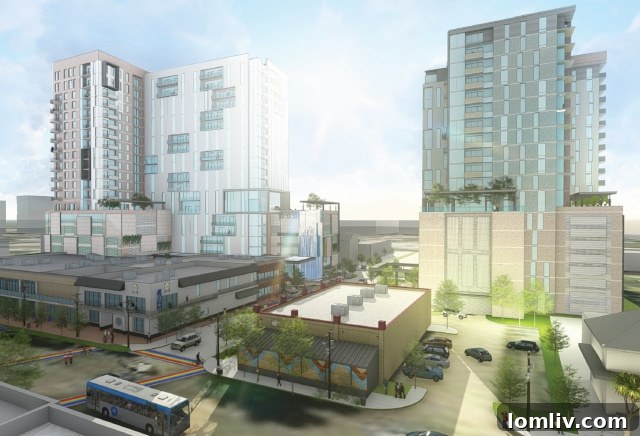
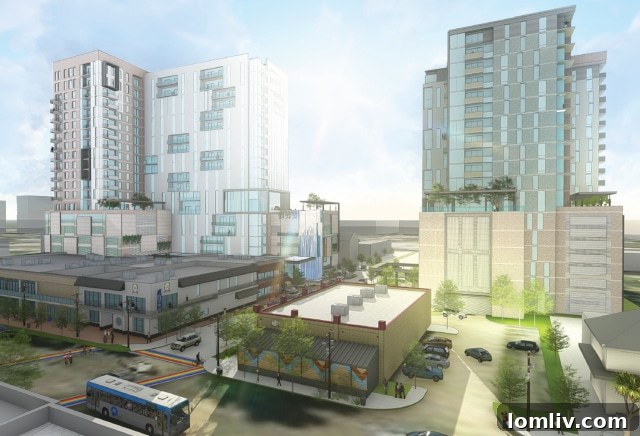
The vibrant fabric of Oak Lawn, a historically significant gay neighborhood in Dallas, stands at a pivotal crossroads. Beyond the academic debates surrounding the evolution and transformation of historically gay enclaves, the physical structures themselves dictate the future of this cherished community. Specifically, the proposed development by Mike Ablon and Caven Enterprises for Oak Lawn’s gay epicenter is prompting deep concern and a call for a more thoughtful, community-centric approach to urban planning.
The forthcoming presentation to the Oak Lawn Committee by Mike Ablon and Caven Enterprises on Tuesday night will unveil renderings and numerical projections that, frankly, leave much to be desired. These proposals, some of which have already surfaced in other forums, paint a picture that seems out of step with the neighborhood’s character and needs.
Drawing parallels to the controversial Streetlights project situated at Oak Lawn and Lemmon Avenues, this new development attempts to justify a massive increase in building height by claiming to shift allowed density from one section of their lots to another. However, a closer examination reveals a significant disparity. While the Streetlights project involved a relatively one-for-one exchange in height movement, the current proposal is far more ambitious and concerning. The existing zoned heights for the combined parcels total approximately 396 feet. Yet, the developers are boldly requesting a staggering 592 feet in total height – an increase of nearly 50 percent above what current zoning permits. This substantial leap in density raises serious questions about the visual impact, urban density, and overall compatibility with the surrounding residential areas.
Compounding these concerns, the developer also seeks to circumvent the crucial Residential Proximity Slope regulations. These vital planning controls are designed to prevent high-rise structures from casting looming shadows and overpowering the adjacent single and multi-family residences. The developer’s stated reason for seeking this exemption is a lack of sufficient land for the required step-backs, indicating an attempt to maximize footprint and height without adequate consideration for neighbor impact. Furthermore, the precise maximum height allowed remains uncertain due to an intricate FAA review process, given the development’s close proximity to Love Field. With the precedent of Toll Brothers’ 21-story high-rise just a few blocks away, itself a point of discussion, the feasibility of a 260-foot structure, let alone 592 feet, is highly questionable and warrants rigorous scrutiny.
To put this proposal into perspective, let’s revisit the Streetlights project. It initially aimed for 240 feet, then scaled down to 199 feet, and ultimately settled at a more modest 175 feet. Even its parking garage underwent design revisions, concluding at five stories above ground. These figures are considerably less than what Ablon and Caven are requesting. Crucially, the Streetlights development demonstrated that it is possible to achieve development goals while making significant concessions for the community, famously managing to save the much-loved Eatzi’s. This established business, a cornerstone of the area, was preserved in a way that benefited both the developer and the neighborhood. This precedent stands in stark contrast to the current proposal, which appears to prioritize developer profits and maximized density over community integration and thoughtful urban design.
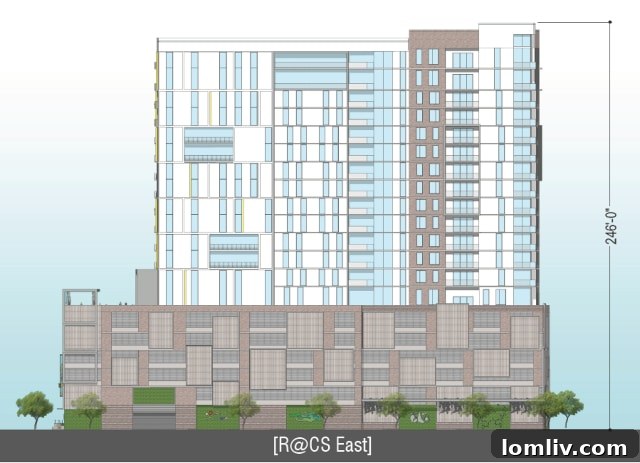
The Problem with Sheer Faces and Inadequate Step Backs in Urban Design
Current zoning mandates a 25-foot step back for any structure exceeding 36 feet in height. This regulation is a cornerstone of responsible urban planning, designed to ensure adequate light, air, and a sense of human scale in densely populated areas. It prevents buildings from becoming monolithic walls that overwhelm the streetscape and adjacent properties. However, the developers behind this project are pushing for an increased step back, allowing structures to rise 75 feet before any setback is applied. The rationale provided is purely functional: their proposed eight-story, entirely above-ground parking garage will be 75 feet tall, and implementing a lower step back would disrupt their internal calculations and maximize parking capacity. This prioritization of parking logistics over established urban design principles is deeply troubling.
The visual consequences of this approach are severe. Observing the base of these proposed buildings, one can envision stark, near-industrial facades rising directly from the street. These “sheer faces” will create a jarring, unwelcome impact on the surrounding residential fabric. The absence of thoughtful transitions between the public realm and the building mass will contribute to a harsh, unwelcoming street environment. Contrast this with the previously mentioned Toll Brothers’ project, also situated on an interior street, which cleverly integrated walk-up units at its base. These units effectively masked the partly-submerged parking garage, contributing to an active and pedestrian-friendly street level. Walk-up units have become an industry-standard, effective solution for softening the visual impact of parking structures and fostering vibrant street life. The conspicuous absence of such design elements in the current proposal suggests a missed opportunity, likely due to the decision to utilize an entirely above-ground parking solution, which consumes valuable ground-level space that could otherwise be activated.
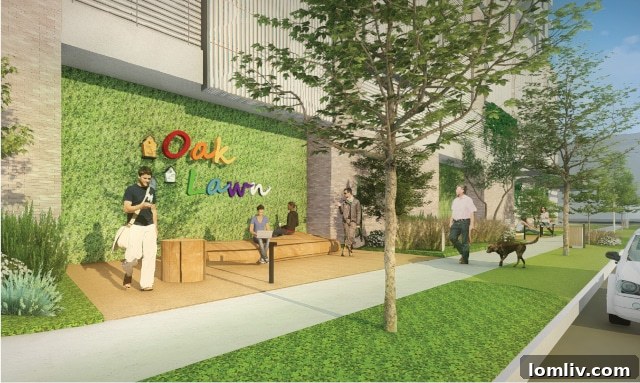
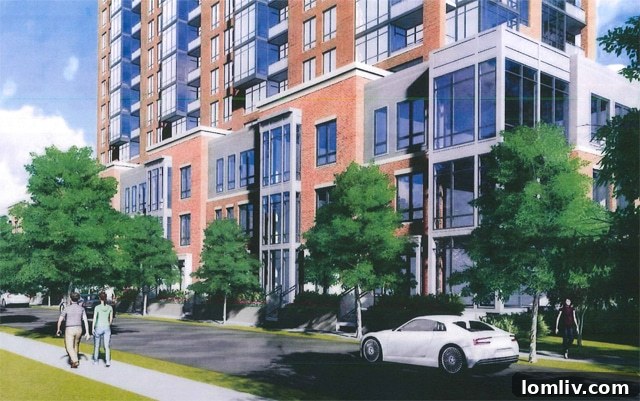
Instead of embracing design solutions that enhance the neighborhood, the current plan for Dickason Avenue offers little more than a few recessed green spaces and benches, perpetually overshadowed by the imposing, sheer face of an eight-story parking garage. This design choice represents an irreparable harm to the residential quality of life along Dickason. Homeowners whose backyards abut this development will be confronted daily with the relentless view of patterned concrete, an aesthetic nightmare that will detract significantly from their property values and overall living experience. The long-term negative consequences of such an uninspired and utilitarian design cannot be overstated, fundamentally altering the residential character of a once charming street.
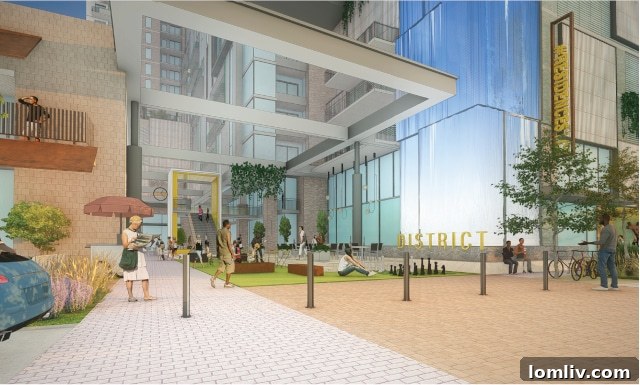
Beyond the structural and zoning concerns, the provided renderings themselves offer scant detail, making it incredibly difficult to conduct a thorough and informed evaluation of the project. Apart from a rather ostentatious waterfall, there’s a distinct lack of care and depth in the visual presentation. This superficial approach to detailing is profoundly concerning, suggesting either an incomplete design or an intentional lack of transparency. A project of this magnitude, poised to reshape a vital part of Oak Lawn, demands meticulous attention to every detail, from material choices to lighting schemes. The more one scrutinizes this plan, the more it appears to be a mere sketch, deferring critical design decisions to a later, less public stage.
Learning from Past Mistakes: Integrating Businesses and Optimizing Density
Reflecting on the Streetlights project, one must question the wisdom of merely “keeping” Eatzi’s in its original, isolated building rather than seamlessly integrating it into a comprehensive, cohesive development. While the temporary relocation during construction posed a logistical challenge, the long-term benefits of a truly integrated design for all stakeholders — the business, residents, and the developer — would have been undeniable. This isolated approach was, in hindsight, a significant missed opportunity for true urban synergy.
Imagine the possibilities if a different strategy had been employed. A substantial portion, if not all, of the parking requirements could have been met through underground garages, effectively reducing the building’s overall height by a remarkable five stories. Furthermore, by expanding the construction footprint to encompass the entire site, or perhaps by designing two distinct buildings on either side of a central alley, the overall height could have been diminished even further, creating a more proportionate and neighborhood-friendly development. Such an approach would have been a testament to innovative and considerate urban planning.
Moreover, Eatzi’s itself could have benefited immensely from such integration. It could have moved into a modern, likely more spacious, purpose-built retail space. This new facility would not only enhance its operational efficiency and customer experience but also significantly bolster its ability to compete effectively against formidable new entrants to the market, such as the Central Market slated for McKinney and Lemmon. This highlights a crucial point: developers like Ablon’s team are currently employing the same height centralization arguments that Streetlights utilized. However, instead of repeating past methodologies, they should be diligently learning from Streetlights’ most significant misstep – the failure to truly integrate and modernize an existing, beloved business into the larger development scheme for mutual, long-term benefit. This isn’t just about preserving a business; it’s about elevating the entire commercial and residential ecosystem.
A Bold Vision for Cedar Springs: Starting with a Blank Slate
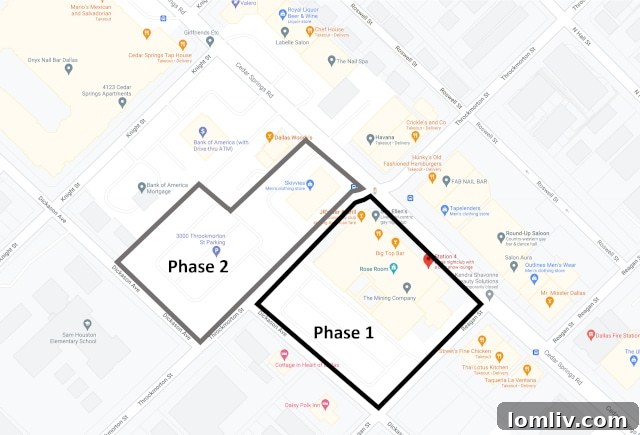
The current proposal, focusing on Phase 1 of the Cedar Springs block between JR’s and TMC (Throckmorton and Reagan Streets), represents a piecemeal approach to a site crying out for comprehensive revitalization. Instead of trying to shoehorn a massive structure around existing, often architecturally uninspired buildings, a bolder, more visionary strategy is imperative: consider a complete demolition of the block’s current structures. This “new sheet of paper” approach unlocks unprecedented potential for thoughtful, integrated development that truly benefits the Oak Lawn community.
Addressing the immediate concern of business disruption, the established bars could be temporarily relocated. Feasible solutions include building temporary pop-up establishments on the back of the Skivvies lot (designated for phase two) or leveraging available nearby rental spaces. Given the significant impact the recent pandemic has had on entertainment venues, securing temporary locations for these businesses should not pose an insurmountable challenge. This short-term inconvenience would pave the way for a transformative long-term gain.
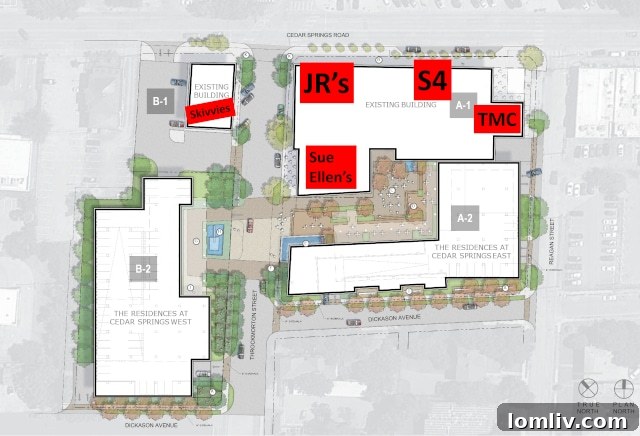
As the map illustrates, the existing bars consume over half of the block’s depth. This spatial constraint is the primary driver behind the proposed building’s excessive 75-foot-tall parking podium and its inability to adhere to appropriate step-back requirements. However, if the entire block were harnessed as a single, unified development site, the design possibilities would expand dramatically. With just two full-block underground levels, more than half of the required parking could be discreetly buried, immediately resolving the issues of oppressive height and inadequate step-backs. This strategic use of subterranean space would free up invaluable above-ground real estate for more desirable uses.
Let’s be candid about the architectural merit of the current structures. There is nothing on the block that is architecturally noteworthy. While institutions like Sue Ellen’s and S4 are popular community hubs, their buildings, constructed relatively recently with split-face concrete block, are hardly masterpieces of design. Similarly, JR’s has undergone so many piecemeal expansions over the years that it bears little resemblance to anything architecturally significant. Their profound history and undeniable importance stem from the cultural and social events that have unfolded within their walls, not from their structural aesthetics. Therefore, a strategic demolition would not erase history but rather pave the way for a new chapter. Any signature items, such as JR’s iconic bar or tin ceilings, could be carefully removed and meticulously reinstalled in a new, purpose-built structure, preserving their sentimental value within a modern context.
The truly transformative step would be to commission visionary architects to design the entire block as a singular, cohesive project. This holistic approach would encompass both the high-rise residential component and new, improved iterations of the beloved bars. Beyond the enormous advantage of burying a significant portion of the parking underground, a full-block design allows for an infinitely more efficient allocation of space, including vital green spaces and pedestrian zones. The resulting development could be a powerful “love letter” to the enduring struggles and vibrant celebrations that define Oak Lawn – a profound articulation of community identity that the current, uninspired proposal utterly fails to deliver. Moreover, concerns often raised by new residents regarding bar noise (potentially leading to their shutdown) can be effectively mitigated through intelligent architectural design. For instance, incorporating a parking level directly above the bars could create a physical buffer, significantly reducing sound penetration into the residential towers, ensuring harmony between entertainment and residential living.
Envisioning a Brighter Future: The Transformative Potential of Thoughtful Design
Imagine a revitalized Cedar Springs, no longer burdened by narrow sidewalks and overhead power lines. Envision expansive, tree-lined sidewalks that invite leisurely strolls, lush landscaping that enhances aesthetic appeal, and the seamless integration of underground power lines that clear the skyline. All of this would unfold in front of a new generation of sophisticated, welcoming bars – establishments that honor the neighborhood’s legacy while embracing modern design and functionality. These are not mere aesthetic improvements; these are essential amenities and a comprehensive streetscape redesign that are simply unattainable within the confines of the current, constrained development plan.
Extend this vision to Dickason Avenue. Instead of a colossal, looming concrete wall, picture a street imbued with the intimate, inviting feel of townhouses, complete with charming front stoops. This reimagined Dickason would transform into a reinvigorated residential street, fostering a strong sense of community and pedestrian vitality. Such a human-centric streetscape, celebrating individual homes and green spaces, is likewise an impossibility under the developer’s present proposal.
Ultimately, a holistic and community-focused project would yield a development that is demonstrably shorter, more harmonious with its surrounding neighborhood, and — crucially — enables the construction of a greater number of apartments on a more efficient and aesthetically pleasing footprint. This represents a substantial win for the entire Oak Lawn neighborhood, preserving its character and enhancing livability, while simultaneously offering significant, albeit different, benefits to the developer through optimized land use and public acceptance. It’s a true win-win scenario, demonstrating that profitability and community welfare are not mutually exclusive.
Once this meticulously planned first phase achieves its glowing success, the blueprint could then be replicated for Phase 2, located across Throckmorton Street. This phased approach would ensure consistent, high-quality development across the entire revitalization area, cementing a legacy of thoughtful urban renewal.
The most plausible reason why such an integrated, full-block plan has not been vigorously pursued thus far likely stems from Caven Enterprises’ inherent conservatism. Perhaps, much like the apprehension observed in many other area high-rise projects, there’s a deep-seated reluctance to risk the demolition of existing, revenue-generating bars, only to face potential stalls or delays in the complex rebuilding process. This fear, while understandable from a business perspective, should not overshadow the immense potential for a truly transformative and enduring development that would elevate Oak Lawn for generations to come.
Tailored Affordable Housing: Addressing Unique Community Needs
Affordable housing requirements, while fundamentally important, often function as a blunt instrument in urban planning. While a universal approach can be beneficial in many contexts, the unique demographics and history of Oak Lawn present a compelling case for a more nuanced strategy. Here, two distinct, specific, and chronic needs within the LGBTQ+ community urgently demand tailored solutions.
It is a stark and unfortunate reality that LGBTQ+ youth continue to be ostracized and even cast out of their homes by bigoted parents. These vulnerable young individuals face disproportionately higher rates of suicide, substance abuse, homelessness, and involvement in prostitution. Their life trajectories are often tragically impacted by early rejection and lack of support. This development offers a profound opportunity to partner with organizations like the Resource Center, or other dedicated community groups, to provide safe, stable housing for at-risk LGBTQ+ teens. Such a targeted initiative would not merely fulfill an affordable housing mandate but would directly address a critical social need, offering hope and a chance at a brighter future for a deeply marginalized population.
At the other end of the spectrum, challenging the pervasive myth of the “suave, wealthy homosexual gentleman,” lies the very real and pressing need for affordable housing catering to an aging, often single, LGBTQ+ population. Historically, facilities like the old Braniff training building on Wycliff served as de facto havens for overwhelmingly gay senior residents. With its proposed two phases, this ambitious project could uniquely offer affordable housing specifically designed for community members aged 55 and older. These seniors frequently report feeling profoundly out of place, or even experiencing outright harassment, in conventional “straight” senior housing environments. This is not an isolated problem but a documented global issue, with countless reports detailing discrimination and hostility in retirement communities: examples here, here, here, here, and here. Therefore, as this project will undoubtedly be required to allocate a portion to affordable housing, there exists an unparalleled opportunity to meticulously tailor these provisions to directly meet the specific, profound needs of the LGBTQ+ community it seeks to serve, transforming a mere requirement into a meaningful, impactful social contribution.
Embrace Reinvention: A Call to Action for Oak Lawn’s Future
The narrative of the gay community is one defined by relentless change, persistent struggle, and ultimately, triumphant reinvention. This proposed development for Oak Lawn presents a critical juncture, an opportunity to embody these very principles. We must leverage the inevitable change that development brings to secure a vibrant, inclusive, and sustainable future for this iconic neighborhood. While there may be a temporary struggle – perhaps an 18-month period of disruption to find alternative spaces for beloved bars and dance venues – this short-term inconvenience pales in comparison to the long-term rewards. It is a struggle worth enduring, for it will ultimately lead to a grand celebration of reinvention.
However, this progressive vision cannot materialize if the currently proposed plan is allowed to proceed. Its deficiencies in design, community integration, and adherence to urban planning principles threaten to undermine the very essence of Oak Lawn. We implore the community, and all stakeholders involved, to heed this crucial warning: do not allow this project to become another instance where we “cement a mistake for another 100 years,” echoing the regrettable outcomes of other recent proposals. Instead, let us demand a plan that truly reflects the spirit, history, and future aspirations of Oak Lawn – a plan that is not just built, but thoughtfully designed for generations to come.