Texas Real Estate Market Reaches New Heights: An In-Depth Look at Surging Home Prices in 2014
The real estate landscape of the Lone Star State is currently experiencing an extraordinary period of growth, with home prices not just recovering but shattering previous records to establish new all-time highs. This powerful upward trajectory is vividly captured in CoreLogic’s most recent Housing Price Index (HPI) report, offering clear reasons why Texas real estate professionals are busier than ever. The market’s dynamism and competitive nature are undeniable, marking Texas as a standout performer in the national housing arena.
Unprecedented Growth: Texas Home Prices Soar to Record Levels in Early 2014
The CoreLogic HPI report, a critical barometer for housing market health, has unveiled compelling statistics that underscore Texas’s exceptional real estate performance. For January 2014, home prices across Texas registered an impressive 10.1 percent increase compared to the same month a year ago. This robust year-over-year appreciation includes all sales, even those involving distressed properties, providing a comprehensive view of the market’s strength. Furthermore, the momentum carried forward from late 2013, with home prices climbing an additional 1.2 percent from December 2013, signaling a consistent and powerful upward trend.
What makes these figures particularly significant is their historical context: Texas home prices have now reached levels higher than those witnessed during the feverish “pre-bubble manic market” peaks. This achievement is a strong indicator of the state’s profound economic resilience and sustained buyer demand, standing in stark contrast to many other regions that are still grappling with recovery from the previous housing downturn.
Dallas-Plano-Irving MSA Leads Regional Home Price Appreciation
While the entire state is demonstrating remarkable strength, certain metropolitan areas are exhibiting even more rapid acceleration. The Dallas-Plano-Irving Metropolitan Statistical Area (MSA) has emerged as a particularly vibrant hub, showcasing outstanding home price gains. In this flourishing region, home prices surged by a substantial 12.2 percent year-over-year when distressed sales are included in the analysis. Even when these distressed properties are excluded, reflecting a more organic market appreciation, the Dallas-Plano-Irving MSA still recorded an impressive 10.4 percent rise. These localized figures not only surpass the statewide average but also contribute significantly to Texas’s overall stellar performance.
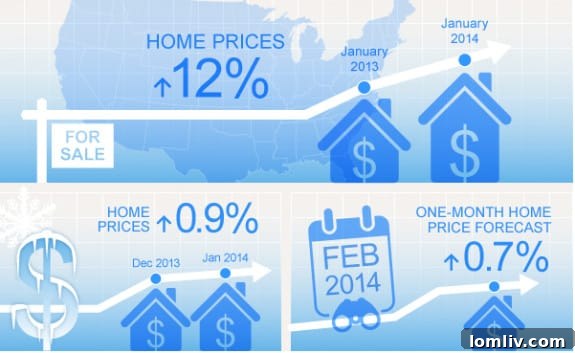
On a national scale, the housing market also demonstrated considerable vitality, with home prices appreciating by 12 percent year-over-year for January. This marks the 23rd consecutive month of home price increases across the country, signaling a broad and sustained recovery after the housing crisis. However, Texas’s achievement is truly exceptional: it stands as one of only three states nationwide that has managed to reach a new peak in home prices following the 2008 housing bust. This remarkable feat underscores Texas’s unique blend of economic drivers and its ability to not only rebound but to thrive beyond its previous market cycles. In a striking comparison, other states experiencing significant appreciation, such as Nevada, still remain considerably below their pre-bust peak prices, with CoreLogic reporting Nevada’s prices 40.1 percent shy of their former highs. Such a disparity vividly illustrates the unparalleled trajectory of the Texas housing market.
Market Resilience: Winter Weather Fails to Slow Down Appreciation
The early months of 2014 were characterized by challenging climatic conditions across much of the United States, including disruptive polar vortices and a succession of snowstorms. Typically, such severe weather might be expected to dampen buyer enthusiasm and curtail market activity. However, as CoreLogic chief economist Mark Fleming insightfully observed, these meteorological obstacles proved insufficient to impede the robust house price appreciation seen in January.
“The last time January month-over-month and year-over-year price appreciation was this strong was at the height of the housing bubble in 2006,” Fleming commented. This expert analysis highlights the extraordinary momentum currently driving the Texas real estate market. It strongly suggests that the underlying economic fundamentals and powerful buyer demand are so entrenched that even significant external factors like harsh winter weather have had minimal impact on the upward trajectory of home values. For regions like Dallas, this resilience points towards a highly competitive and brisk spring selling season, defying the conventional seasonal slowdowns typically associated with winter.
Understanding the Hyper-Local Real Estate Economy in Texas
While broad statewide and metropolitan averages offer a general overview of a booming market, it is vital to recognize that real estate inherently operates as a hyper-local economy. The pace of appreciation and sales activity can vary dramatically from one neighborhood to another, even within the confines of the same city. This granular diversity means that while certain highly sought-after areas are experiencing “hand-over-fist sales” and rapid value appreciation, other locales might register more modest, though still positive, gains.
Within the dynamic Dallas market, for instance, specific neighborhoods like Lake Highlands and University Park are frequently identified as hotbeds of intense activity. These areas are characterized by fierce buyer competition, numerous multiple offer scenarios, and rapidly escalating property values. Such demand is often fueled by factors including highly-rated school districts, attractive local amenities, convenient access to major employment centers, and strong community appeal. Properties in these high-demand micro-markets typically sell swiftly and often above their initial asking price, reflecting both strong desirability and persistently limited inventory.
Conversely, other areas might experience steady but less dramatic growth. This variation does not necessarily signify weakness but rather a different market rhythm influenced by local supply, demand, and demographic shifts. The key to successfully navigating such a diverse landscape, whether one is a buyer or a seller, lies in meticulous market analysis and strategic adaptability. For sellers, accurately pricing a home based on hyper-local comparable sales and remaining flexible to market feedback are paramount. For buyers, a deep understanding of the specific micro-market conditions in their target neighborhoods is indispensable for crafting competitive and informed offers.
Key Drivers Fueling Texas’s Booming Real Estate Market
The exceptional performance of the Texas real estate market is not an isolated phenomenon but rather the culmination of several potent economic and demographic forces. A closer examination of these underlying drivers offers profound insights into the sustainability and future direction of home price appreciation across the Lone Star State.
Robust Economic Growth and Job Creation Attract New Residents
Texas has long been recognized as a formidable economic engine, and its vibrant job market serves as a primary catalyst for real estate demand. The state has consistently drawn major corporations and startups, particularly within high-growth sectors such as technology, energy, advanced manufacturing, finance, and logistics. This continuous influx of new businesses and expansions translates directly into significant job creation, which, in turn, brings a steady stream of residents actively seeking housing across all price segments.
Significant Population Influx from Across the Nation
People are migrating to Texas in unprecedented numbers from various parts of the country. They are drawn by the state’s robust economy, a comparatively lower cost of living (especially when contrasted with expensive coastal metropolitan areas), and a favorable business environment. States like California, New York, and Illinois have observed substantial outflows of residents relocating to Texas in pursuit of enhanced career opportunities and a higher quality of life. This sustained population growth creates an ever-increasing demand for housing, exerting consistent upward pressure on both sales prices and rental rates.
Relative Affordability Advantage Sustains Buyer Interest
Despite the current surge in home prices, Texas traditionally offers a more accessible housing market compared to other major economic centers in the U.S. This relative affordability, coupled with historically competitive interest rates (a significant factor at the time of the original report in 2014), broadened access to homeownership for a diverse range of buyers. While prices are undeniably rising, the initial entry point and property tax structures often remain more attractive than in highly saturated markets, continuing to draw new residents, investors, and businesses to the state.
Persistent Limited Housing Inventory Drives Competition
A recurring challenge in any booming market is often the shortage of available housing units. High buyer demand, combined with a new construction pace that struggles to keep up, leads to critically low inventory levels. When the number of qualified buyers significantly outweighs the available properties, it inevitably fosters a competitive bidding environment that pushes prices upward. This “seller’s market” dynamic is clearly evident and highly influential in many Texas metropolitan areas, contributing significantly to the rapid appreciation.
Navigating the Current Market: Essential Advice for Buyers and Sellers
In such a dynamic and competitive real estate environment, both prospective buyers and sellers require strategic approaches to successfully achieve their property goals.
Strategic Insights for Sellers: Maximizing High Demand
This period presents an exceptionally opportune time for sellers across Texas. However, even in a robust seller’s market, strategic planning is paramount. The importance of accurately pricing a home cannot be overstated; while prices are rising, overpricing can still deter potential buyers and prolong market time. Collaborating with an experienced local real estate agent who possesses a deep understanding of specific neighborhood comparables is crucial. Furthermore, preparing and presenting a home in its optimal condition through professional staging and high-quality marketing materials can significantly enhance its appeal, attracting the strongest possible offers. Flexibility during negotiations can also prove instrumental in securing a swifter, more favorable sale.
Essential Preparation for Buyers: Strategy and Preparedness are Key
Buyers in the Texas real estate market are currently facing substantial competition. To succeed in this environment, thorough preparation is indispensable. Obtaining pre-approval for a mortgage demonstrates seriousness to sellers and establishes a clear budget. Acting quickly when a desirable property enters the market is often a necessity, as homes frequently receive multiple offers within mere days. Crafting competitive offers, potentially with fewer contingencies, can provide buyers with a distinct advantage. Moreover, partnering with a knowledgeable real estate agent who can adeptly guide buyers through competitive bidding situations and identify emerging opportunities is an invaluable asset.
Optimistic Outlook: A Vibrant Spring Selling Season Ahead
With the initial months of 2014 defying traditional seasonal slowdowns and exhibiting such robust growth, the outlook for the upcoming spring selling season in Texas is exceptionally promising. The fundamental pillars supporting this growth—strong job creation, continuous population influx, and persistent buyer demand—remain firmly in place. While the intensity of the market may vary by specific locale, the overarching trend points towards sustained appreciation and a lively period of widespread real estate activity across the state.
The question that continues to resonate among real estate professionals and enthusiasts alike remains pertinent: “Where are you seeing break-neck appreciation and sales pace?” The answers consistently highlight a statewide phenomenon, with particular hot spots driving the compelling narrative of Texas as a true leader in the national housing recovery and growth. The Lone Star State’s real estate market is not merely recovering; it is redefining what a healthy, high-performing market looks like, setting new precedents for years to come.