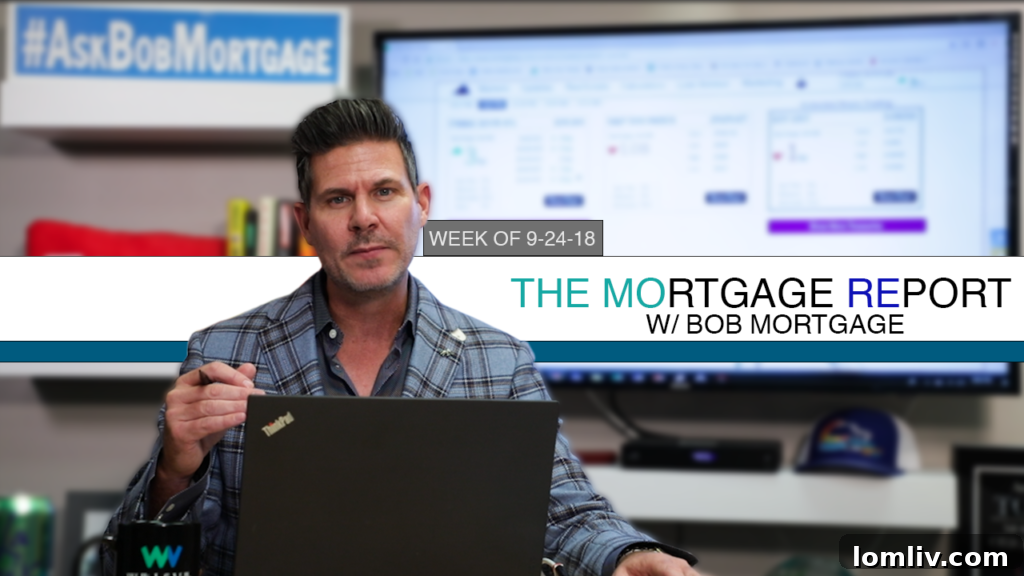
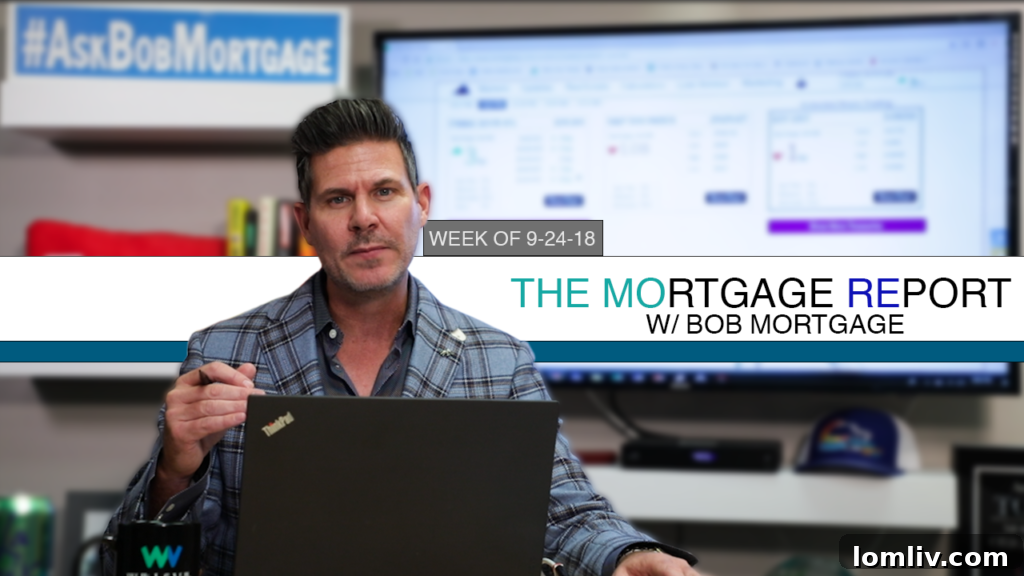
The financial markets are abuzz, poised for a significant announcement from the Federal Reserve this week. This is a crucial moment for anyone involved in real estate, from aspiring homeowners to seasoned investors, and it’s a topic critically addressed by none other than Bob Johnson, widely known as BobMortgage. As a senior mortgage adviser at the nation’s oldest private lender, Wallick & Volk, Bob Johnson brings unparalleled expertise and a calming perspective to market fluctuations. His insights are a cornerstone of the influential Mortgage Report, now in its 74th episode, where he helps demystify complex financial news for a broad audience.
According to BobMortgage, a figure renowned for his accuracy and deep understanding of market mechanics, it’s virtually guaranteed that the Federal Reserve will implement a hike in the Fed Funds rate. This expected move, while significant, should not be a cause for widespread panic. Instead, BobMortgage encourages a clear-headed approach, walking listeners and readers through the intricate cause-and-effect relationship between the Fed’s actions and their subsequent impact on mortgage rates. Understanding these dynamics is paramount, enabling you to not only navigate the current market with confidence but also to effectively educate your clients on how this news will directly affect their financial decisions and homeownership aspirations.
Understanding the Federal Reserve’s Critical Role
To truly grasp the significance of this week’s expected announcement, it’s essential to understand the Federal Reserve’s mandate and its primary tools. The Fed, as it’s commonly known, is the central banking system of the United States. Its dual mandate is to maximize employment and maintain stable prices. In today’s economic climate, where inflation has been a persistent concern, the Fed often resorts to adjusting the Fed Funds rate as a key lever to cool down an overheating economy and bring price stability.
The Fed Funds rate is the target rate for overnight borrowing and lending between banks. When the Fed raises this rate, it essentially makes it more expensive for banks to lend to each other. This cost then trickles down through the entire financial system. The intention behind such a move is to tighten credit conditions, reduce the overall money supply, and thus dampen demand for goods and services, ultimately aiming to bring inflation back within the Fed’s target range. While the logic is straightforward, its implications across various sectors, especially housing, are often misunderstood.
The Ripple Effect: How Fed Rate Hikes Impact Mortgages
One of the most common misconceptions is that a hike in the Fed Funds rate directly translates to an equal increase in mortgage rates. BobMortgage clarifies that this is rarely the case. Mortgage rates, particularly for long-term fixed-rate loans, are primarily influenced by the bond market, specifically the yield on the 10-year Treasury note, and the performance of Mortgage-Backed Securities (MBS). These are complex financial instruments whose value fluctuates based on investor demand, inflation expectations, and the overall economic outlook.
When the Fed raises the Fed Funds rate, it signals a hawkish stance on monetary policy, often leading to higher yields in the bond market. This indirect pressure can push mortgage rates upward. However, the market frequently “prices in” these expected changes well in advance of the actual announcement. This means that by the time the Fed officially raises rates, a significant portion of that increase might already be reflected in current mortgage offerings. Other factors, such as global economic stability, geopolitical events, and even domestic employment figures, also play a crucial role in shaping mortgage rate trends, making them far more dynamic than a simple reaction to a single Fed action.
Therefore, while the Federal Reserve’s decision certainly carries weight and sets a general tone for interest rates, it’s crucial not to view it in isolation. Mortgage rates are a product of a complex interplay of various economic indicators and market sentiments, often moving ahead of official announcements as market participants anticipate future policy moves. This nuanced understanding is what separates informed decision-making from knee-jerk reactions, a distinction BobMortgage consistently emphasizes.
Don’t Panic: BobMortgage’s Expert Advice
Bob Johnson’s unequivocal message, “don’t freak out,” serves as a vital anchor in a sea of often-sensationalized financial news. His advice stems from decades of experience observing market cycles and understanding the psychology behind economic shifts. A Fed rate hike, while newsworthy, is a strategic move designed to manage the economy, not to undermine individual financial stability. The market’s reaction is often built into expectations, meaning the immediate impact on mortgage rates might be less dramatic than many fear.
The true value, as BobMortgage constantly points out, lies in informed preparation and personalized advice. Instead of succumbing to fear, individuals should leverage this information to assess their own financial position, clarify their homeownership goals, and seek professional guidance. A skilled mortgage advisor like Bob Johnson can dissect market trends, explain the subtleties of rate movements, and help individuals understand their options in the context of their unique financial circumstances. This proactive approach, rather than a reactive one, is what empowers clients to make sound decisions regardless of market fluctuations.
What This Means for Homebuyers and Homeowners
The prospect of rising rates naturally brings questions and concerns for those looking to buy a home or refinance an existing mortgage. BobMortgage’s insights provide a roadmap for both groups.
For Prospective Homebuyers: Navigating a Changing Landscape
For individuals on the cusp of purchasing a home, a Fed rate hike might seem daunting. Higher rates can incrementally increase monthly mortgage payments, affecting affordability. However, it’s important to consider the broader market. While rates may rise, a slight cooling of the intense bidding wars seen in recent years could also materialize, creating new opportunities. BobMortgage advises getting pre-approved to lock in a rate for a specified period, if possible, allowing buyers to shop for homes with certainty about their borrowing costs. Exploring different loan products, such as various fixed-rate options or even considering an adjustable-rate mortgage (ARM) for those with short-term plans, can also provide flexibility.
Ultimately, homeownership remains a cornerstone of long-term wealth building. A slight increase in rates doesn’t diminish the fundamental benefits of building equity, enjoying potential appreciation, and the stability of having a place to call your own. The key is to work closely with a trusted mortgage advisor who can analyze your specific financial situation and guide you towards the most suitable loan program, ensuring your monthly payments remain comfortably within your budget.
For Existing Homeowners: Strategic Financial Planning
Existing homeowners might view rising rates with less urgency, but there are still strategic considerations. While refinancing to a lower rate becomes less appealing in a rising interest rate environment, other financial tools might gain prominence. For instance, a home equity line of credit (HELOC) or a cash-out refinance could still be viable options for consolidating high-interest debt, funding home improvements, or financing other significant life events, depending on individual equity and current market rates for these specific products. It’s always prudent for homeowners to periodically review their current mortgage terms and evaluate whether their existing loan still aligns with their long-term financial goals, especially in light of evolving economic conditions. Consulting with a mortgage expert can help uncover opportunities that might not be immediately obvious.
Empowering Your Clients: A Guide for Real Estate Professionals
Real estate agents play a pivotal role in guiding clients through the home buying and selling process. In times of market uncertainty or significant financial news, their ability to provide accurate, reassuring information is invaluable. BobMortgage’s wisdom extends to equipping these professionals with the knowledge they need to be effective communicators.
Key talking points for real estate agents should include emphasizing that mortgage rates are influenced by more than just the Fed, that professional advice is crucial, and that the long-term benefits of homeownership persist. Agents should encourage clients to get pre-approved early, to understand the current market trends beyond just interest rates, and most importantly, to connect with a reputable mortgage advisor like Bob Johnson at Wallick & Volk. This collaborative approach ensures clients receive comprehensive guidance, addressing both their real estate and financing needs seamlessly. By becoming a source of calm and informed perspective, real estate professionals can strengthen client trust and facilitate smoother transactions, even when the financial headlines seem turbulent.
The Bigger Economic Picture and Future Outlook
While the focus is on the immediate Fed decision, it’s also important to consider the broader economic context. Inflationary pressures have been persistent, driven by a combination of supply chain disruptions, strong consumer demand, and global events. The Fed’s actions are part of a larger strategy to bring the economy into balance. Future rate decisions will likely depend on incoming economic data, including inflation reports, employment figures, and global economic stability. Market watchers, therefore, need to remain agile and adaptable, understanding that economic policies are fluid and responsive to changing conditions.
BobMortgage consistently advocates for a long-term perspective. While short-term market fluctuations can create anxiety, focusing on fundamental principles of financial planning and homeownership remains key. The real estate market, like the broader economy, experiences cycles. Understanding these cycles, rather than reacting impulsively to daily news, is the mark of a well-informed individual. Staying connected with trusted advisors and reliable sources like the Mortgage Report provides continuous education and reassurance, enabling sound financial decisions in any economic climate.
Learn more now so you can educate your clients on how this news will affect them: