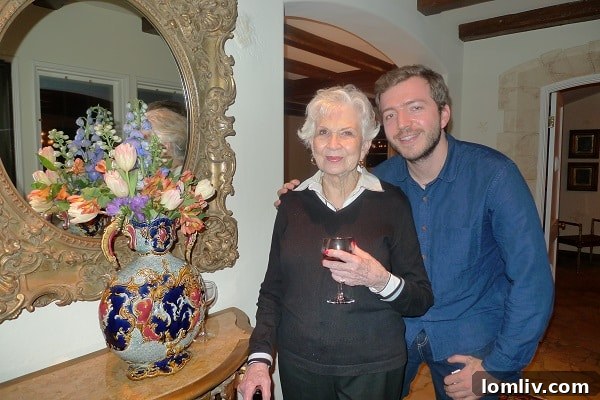
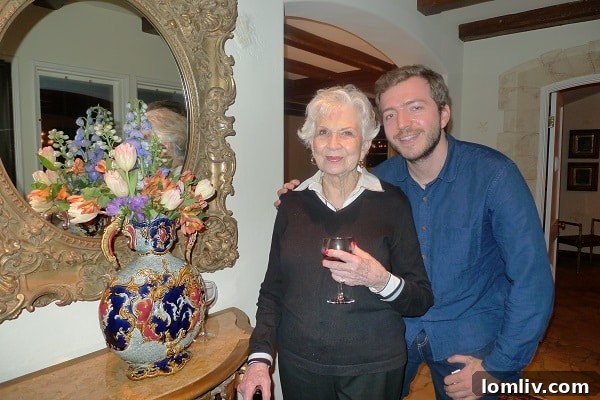
 In the heart of Dallas, within one of the distinctive “four sisters” homes gracing Shenandoah at Douglas, Todd Macintire recently reconnected with his beloved grandmother, Pat Dilbeck. This visit wasn’t merely a family reunion; it was a journey back to the roots of a remarkable architectural legacy, a chance for Todd to immerse himself once more in the world shaped by his grandfather, the legendary architect Charles Dilbeck. Todd, a Dallas native who proudly graduated from Highland Park High School, now thrives amidst the vibrant urban landscape of Brooklyn, New York. His professional life is anchored by 4cimaging.com, a successful retouching business he owns and operates, showcasing his keen eye for detail and artistic precision. At 36, and currently single, Todd embodies a captivating blend of urban sophistication and an enduring appreciation for classic design. His move to New York City in 1996 marked the beginning of his studies at the prestigious Pratt Institute, a path that undoubtedly deepened his inherent passion for architecture. Indeed, Todd openly expresses his profound love for architectural design and the art of photographing homes, a pursuit that now sees him actively searching for a historic building to acquire and restore in Brooklyn, a testament to his desire to contribute to the preservation of architectural heritage.
The conversation naturally turned to the indelible memories Todd holds of his famous architect grandfather, Charles Dilbeck. Growing up with such a creative and influential figure undoubtedly shaped Todd’s perspective, instilling in him an early appreciation for design and the built environment. He recalls vivid moments that paint a picture of a grandfather who was not only a visionary architect but also a warm and engaging family man. “I recall we would go out to eat and my grandfather would draw with us, and tell us stories,” Todd reminisces, highlighting the spontaneous creativity that was a hallmark of Dilbeck’s character. These weren’t just meals; they were informal workshops, moments of shared imagination where the architect’s mind, always at work, inspired his young grandchildren. Dilbeck’s easygoing nature often contrasted playfully with his wife Pat’s more traditional approach to child-rearing. “Then we’d be running around, and my grandmother would be telling us to sit down, and he’d say no, let them be. Let them have fun.” This anecdote perfectly encapsulates Charles Dilbeck’s philosophy: a belief in freedom, exploration, and the joy of discovery, not just in his architectural creations but also in the lives of those he loved. “My grandfather was one of the most easy going people in the world,” Todd affirms, reflecting on a personality that was as fluid and innovative as his designs.
The enduring mystique of Charles Dilbeck’s work continues to captivate enthusiasts and scholars alike, extending far beyond the intimate family memories shared by Todd and Pat. This fascination was particularly evident at SMU’s recent course, “The Houses of Charles Dilbeck,” which provided a deeper dive into the architect’s unique contributions to American architecture. Taught by the insightful Dr. Jann Mackey, this program, part of SMU’s Continuing and Professional Education curriculum, draws homeowners of Dilbeck residences and architecture buffs eager to uncover more about the master’s craft. It was at such an event that fascinating pieces of Dilbeck lore emerged, painting a more complete picture of the man behind the iconic structures. Among the most discussed and delightful quirks was Dilbeck’s penchant for hanging doors upside down in his homes. This peculiar detail, initially baffling to many, speaks volumes about his playful spirit and his desire to challenge conventional norms.
 Curiosity naturally led to the question: why would a meticulous architect engage in such an unconventional practice? Todd, having grown up privy to his grandfather’s whimsical ways, offered a straightforward and endearing explanation when asked about the upside-down doors: “Oh, for fun. He just liked to shock people.” This simple response reveals a profound insight into Charles Dilbeck’s character: he wasn’t merely building houses; he was crafting experiences, injecting personality and unexpected joy into every space. His homes were not just structures but stages for life, designed with a touch of theatricality and a desire to elicit a smile or a raised eyebrow from their inhabitants and visitors. This playful subversion of expectation is a hallmark of Dilbeck’s genius, an architect who understood that beauty could reside not just in grandeur but also in charming eccentricity. It cemented his reputation as a visionary who dared to be different, creating homes that, to this day, spark conversation and delight. The upside-down door became a subtle signature, a whisper of the architect’s fun-loving spirit embedded within the very fabric of his designs, a testament to a man who truly enjoyed his work and wanted others to enjoy it too.
Beyond his existing masterpieces and charming eccentricities, Charles Dilbeck harbored grander, more transformative visions that, while never fully realized, underscore his inventive and forward-thinking mind. One particularly intriguing piece of lore, which continues to spark fascination among admirers of his work, involves a potential partnership with none other than the industrial titan Henry Ford. Imagine a world where every Dilbeck-designed home came not only with architectural distinction but also with a Ford automobile parked conveniently in its garage. This ambitious collaboration would have revolutionized residential development, blending bespoke architectural design with the efficiency of mass production, an incredibly progressive concept for its time. It speaks volumes of Dilbeck’s ability to think beyond traditional architectural confines, envisioning holistic living experiences where design and convenience seamlessly converged. Such a venture would have undoubtedly reshaped the landscape of American housing, offering a unique value proposition that combined quality craftsmanship with modern mobility.
Further illustrating the breadth of Dilbeck’s imaginative scope, his widow, Pat, offers another tantalizing “what if” scenario: “And if only he had met Walt Disney, wow.” This comment, delivered with a touch of wistful admiration, paints a vivid picture of the creative synergy that might have unfolded between two of the 20th century’s greatest visionaries. Both Dilbeck and Disney shared an unparalleled ability to transport people into fantastical worlds – Dilbeck through his Storybook and Ranch style homes that evoked a sense of romance and wonder, and Disney through his immersive theme parks and animated narratives. A partnership between them could have birthed entirely new forms of residential design, perhaps homes that were not just lived in but experienced, imbued with a heightened sense of magic and narrative. One can only speculate on the enchanting villages, whimsical landscapes, or story-driven architectural elements that might have sprung from such a meeting of minds, forever changing the way we perceive and interact with our living spaces. These unrealized dreams, shared through family anecdotes, are not just footnotes; they are powerful testaments to Charles Dilbeck’s boundless imagination and his constant pursuit of innovation, confirming his status as an architect who was consistently ahead of his time, forever dreaming of what could be possible.
 Beyond the grand visions and playful quirks, Charles Dilbeck’s design philosophy was also characterized by deliberate choices in spatial allocation and aesthetic emphasis, particularly evident in the contrasting finishes between the public and private areas of his homes. In many of his celebrated residences, Dilbeck deliberately designed the upstairs, especially the master bedrooms, to be notably stark and unadorned. These private sanctuaries often lacked the elaborate, intricate finish-outs and decorative flourishes that were so lavishly applied to the downstairs public spaces. While the main living areas, dining rooms – with their often breathtaking ceilings that could make one’s “heart beat very fast” – and entertainment zones were replete with rich textures, detailed millwork, and bespoke craftsmanship, the upper levels offered a striking departure into simplicity. This architectural decision wasn’t an oversight; it was a conscious expression of his design ethos, reflecting a pragmatic understanding of how homes were used during his era.
Pat Dilbeck provides a valuable perspective on her late husband’s reasoning behind this distinct contrast. “I think the idea was to spend the money downstairs, because people never went upstairs except to sleep,” she explains. This pragmatic approach highlights Dilbeck’s focus on functionality and intelligent resource allocation. In a time when entertaining largely occurred on the main floor, and bedrooms served primarily as private retreats for rest, it made economic and stylistic sense to concentrate the more opulent and costly embellishments in the areas guests would frequent and admire. The downstairs was a showcase, a reflection of the homeowner’s status and the architect’s artistry, while the upstairs remained a quiet haven, prioritizing comfort and personal space over ostentation. However, Pat, ever the keen observer and a practical voice, often challenged her husband’s austerity in these private quarters. “But I told him, your clients have money, make the upstairs and the master bedrooms a little fancier!” Her playful insistence underscores a subtle tension between an architect’s pure vision and the desires for luxury and indulgence often expressed by discerning clients. This dialogue between pragmatic design and client aspiration is a universal theme in architecture, and Pat’s anecdote beautifully illustrates Dilbeck’s human side – a visionary who was also a partner in life and a listener, even if he held firm to his unique artistic convictions. His homes, therefore, stand as testaments not only to his architectural genius but also to the layered conversations and philosophies that shaped every beam and every finish, creating spaces that continue to inspire and intrigue decades later.