“Historic preservation is the dynamic and deliberate process through which we decide what to keep from the present for the future, and then working to keep it.” —W. Brown Morton
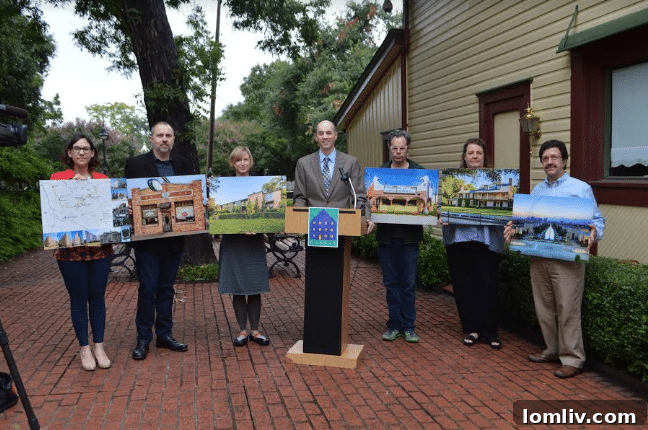
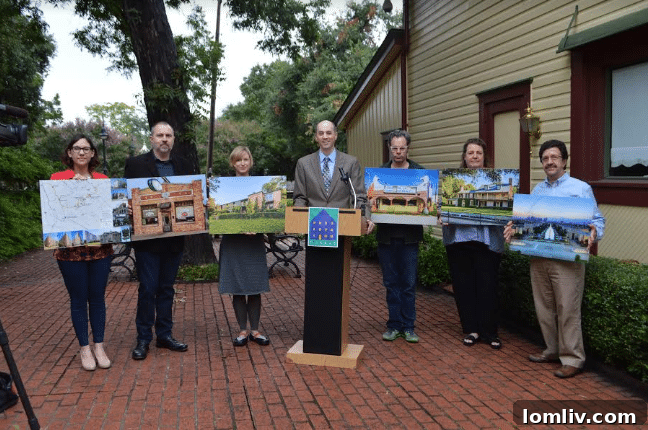
The urban landscape of Dallas, a city celebrated for its dynamic growth and modern development, is also home to a rich tapestry of history, woven into the very fabric of its buildings and neighborhoods. Yet, many of these architectural treasures face an increasingly uncertain future, caught between the march of progress and the vital need to honor the past. Today, Preservation Dallas, a leading advocate for the city’s heritage, held a significant press conference to announce their 2016 “Most Endangered Historic Places in Dallas” list.
This annual compilation is more than just a list; it’s a critical call to action, highlighting properties deemed too important to lose, whose historic integrity is at risk of being diminished, or whose potential to serve the community is threatened. David Preziosi, Executive Director of Preservation Dallas, emphasized that these sites are foundational to Dallas’s unique identity, irreplaceable community assets that collectively narrate the city’s complex development and evolution.
“This list serves as an indispensable roadmap for advocacy, education, and the strategic development of programs within the preservation community,” Preziosi stated, underscoring its role in addressing the urgent needs of these endangered properties. “We bear a collective responsibility to work diligently in protecting the places on this list, for they are integral to the history and cultural fabric of Dallas. Once these invaluable landmarks are lost, they are lost forever, taking with them a piece of our shared heritage.”
Nicky DeFreece Emery, Board President of Preservation Dallas, echoed this sentiment, expressing hope that the list would elevate public awareness regarding the multitude of significant historic buildings teetering on the brink of permanent loss. “Preservation Dallas views this list not merely as a warning, but as a pivotal opportunity for all Dallas citizens and stakeholders to engage in more thoughtful and sustainable planning regarding how our city continues to grow and develop,” Emery added. The importance of these historic places extends beyond their aesthetic appeal; they are essential for understanding our past, shaping our present, and inspiring our future. While some of the properties, like East Dallas’ beloved Elbow Room, might not surprise those familiar with local preservation efforts, others on the list are truly unexpected. Read on to discover the full scope of Dallas’s most vulnerable historic sites and the stories they tell.
1. Historic Buildings Along the Proposed DART D2 Line: A Threat to Downtown’s Heritage
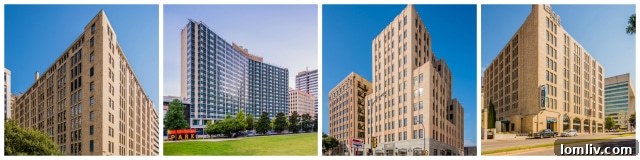
The proposed DART D2 light rail line, envisioned as a second crucial link through downtown Dallas and Deep Ellum, poses a significant and immediate threat to numerous historic buildings situated along its various proposed routes and design options. The locally preferred alternative for this vital transportation artery is slated to traverse several historically significant areas, including the Downtown Dallas National Register of Historic Places Historic District, the City of Dallas Harwood Historic District, and the West End National Register of Historic Places Historic District. This routing places an array of cherished historic properties directly in the path of potential impact.
Among the notable structures facing jeopardy are the Aloft Hotel, SoCo Lofts, Lone Star Gas Lofts, the iconic Statler Hilton, the Continental Building, First Presbyterian Church, the majestic Scottish Rite Temple, the Knights of Pythias building, and many others. Furthermore, the proposed line risks further dissecting Deep Ellum, potentially isolating it even more from the rest of downtown Dallas, thus fracturing a culturally rich and vibrant neighborhood. The ramifications of an above-ground D2 line are extensive, extending far beyond mere inconvenience. Preservation Dallas warns of potential impacts to over $350 million in recently redeveloped historic properties. These impacts include incessant noise and disruptive vibrations emanating from both the construction phase and ongoing train operations, severe disruption or removal of vital access points for building services and parking garages, and, in the most dire scenarios, the outright demolition of portions of historic structures.
Preservation Dallas contends that such a profound level of impact to these historic properties is simply too great, especially considering the immense efforts and investments already poured into revitalizing them and the broader downtown Dallas area. While acknowledging the undeniable benefits of mass transit and the strategic importance of expanding the DART system for the city’s future flexibility, the organization advocates for a critical alternative. They propose that the new line should be fully buried in a subway tunnel. This subterranean solution would effectively shield the historic buildings along the route from adverse effects, allowing them to retain their full use, maintain crucial access, and continue to be viable assets contributing to the vibrant renaissance of Dallas’s urban core for generations to come. Preserving these historic buildings is not just about nostalgia; it’s about maintaining the architectural legacy, cultural identity, and economic vitality of downtown Dallas.
2. Elbow Room: A Local Legend Under Threat
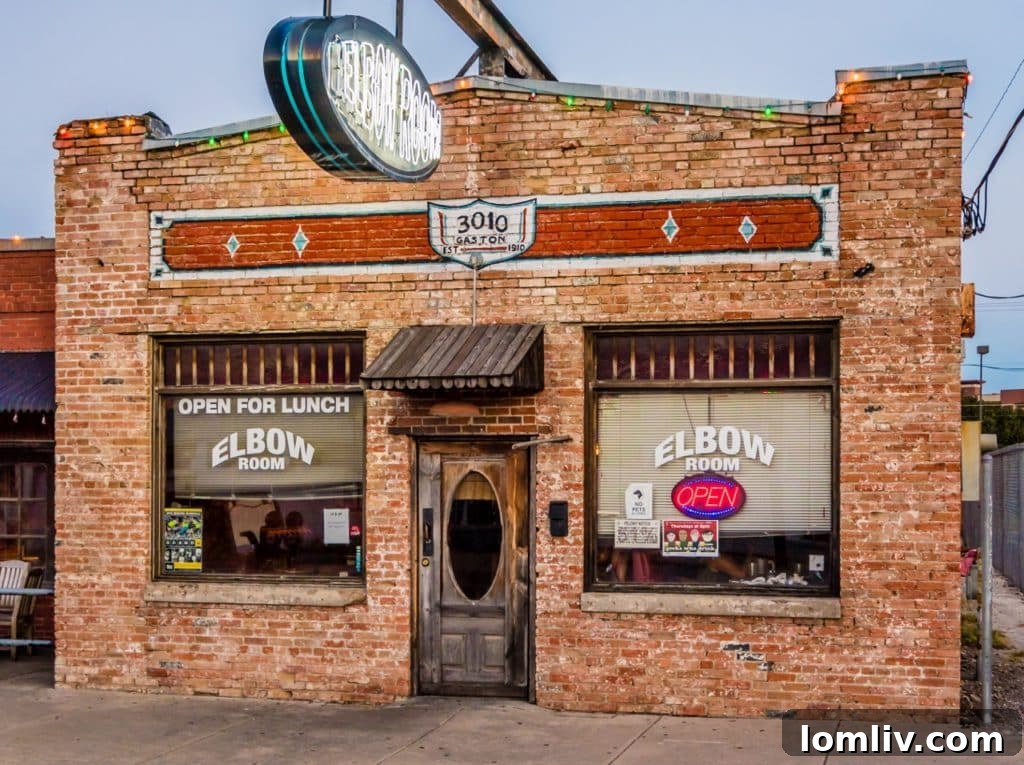
The Elbow Room, an unpretentious yet architecturally significant brick building, has stood as a silent witness to the ebb and flow of Dallas’s Baylor District for nearly a century. Constructed around 1933, this simple, elegant, and incredibly resilient structure first housed Royal Cleaners, quickly followed by the California Flower Shop. Over the decades, the small 1,824 square-foot building saw a rapid succession of businesses, occasionally standing vacant, reflecting the evolving commercial landscape of the area. A turning point arrived around 1940 with the opening of Berta’s Café, which became a beloved and stable neighborhood institution, serving the community faithfully until approximately 1957. Following Berta’s closure, other short-lived restaurants, including Mozelle’s and Grill Thirty-Ten, attempted to fill the void.
However, it was around 1964 that the little brick building found its long-term identity, transforming into the Thirty-Ten Lounge, a name cleverly derived from both its address and its previous café incarnation. This was succeeded in 1968 by the Cabaret Lounge, and finally, in 1998, by the Elbow Room – a name that resonated with locals and became synonymous with community gathering. Located prominently at 3010 Gaston Avenue, the Elbow Room stands today as one of the last remaining historic commercial buildings on its block. Its continued existence is now severely threatened by the Texas A&M University System, which reportedly seeks to purchase or acquire the property through eminent domain. The university’s stated intention is to demolish this historic edifice to clear the lot for a new clinical education building, intended for their dental school.
The proposed demolition of the Elbow Room represents more than just the loss of a building; it signifies the erasure of a tangible link to Dallas’s past, a structure that has served various community functions for generations. Its simple, robust brickwork embodies a utilitarian beauty and a direct connection to the city’s early 20th-century commercial architecture. Preserving the Elbow Room means safeguarding a piece of the Baylor District’s soul, maintaining the unique character that defines this historic corridor. Advocacy efforts are crucial to explore alternative solutions that would allow the university to expand without sacrificing such an integral piece of Dallas’s built heritage, demonstrating that progress and preservation can, and should, coexist.
3. Historic Buildings at Fair Park: A National Treasure in Peril
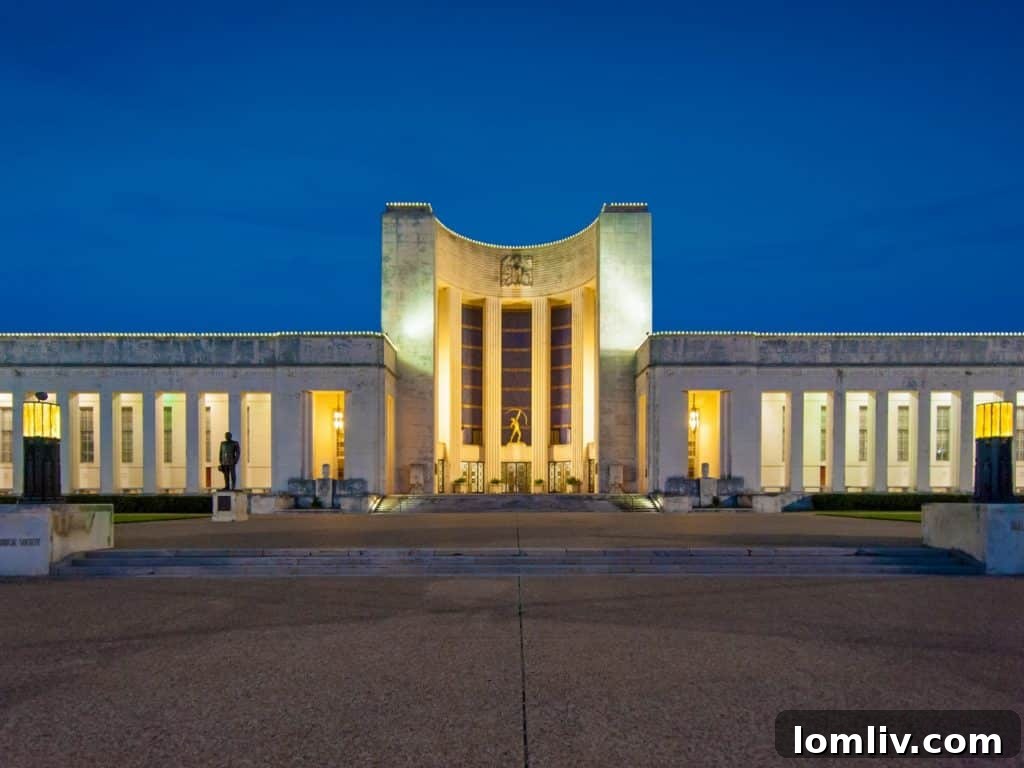
Fair Park, nestled in South Dallas, stands as one of the city’s most significant and universally cherished historic sites, recognized both locally and nationally. Its illustrious history dates back to 1886, evolving from modest beginnings to become the renowned host of the annual Texas State Fair. The park achieved international prominence as the site of the pivotal 1936 Texas Centennial Exposition and the equally important 1937 Pan American Exposition. In 1904, Fair Park was integrated into the Dallas Public Park system, marking a new chapter in its development. The architectural and landscape grandeur that defines Fair Park today was largely shaped during a transformative redesign for the 1936 Texas Centennial. This ambitious undertaking was spearheaded by a consortium of highly talented architects and designers, under the visionary leadership of Dallas architect George Dahl.
Today, Fair Park is celebrated as the nation’s largest and most complete collection of Art Deco exposition architecture and public art, a breathtaking showcase of a bygone era’s artistic and engineering prowess. Its unparalleled significance was formally recognized in 1986 when it was granted National Historic Landmark status, making it one of only two such sites in Dallas, the other being the revered Dealey Plaza. Despite its monumental historical and architectural importance, Fair Park’s magnificent buildings are facing a critical threat: years of deferred maintenance stemming from a persistent lack of adequate resources. This neglect has taken a severe toll, manifesting in leaky roofs, outdated plumbing and electrical systems, and inefficient HVAC units. These fundamental issues compromise the structural integrity and functionality of the buildings, limiting their viability for year-round use and diminishing their potential as vibrant community assets.
Addressing these critical items is not merely about aesthetic restoration; it is essential to making the buildings sustainable and functional for contemporary use. Investing in Fair Park now is paramount to preempting far more costly and extensive repairs in the future. The Fair Park Texas Foundation has diligently identified the myriad needs of these historic structures and has courageously committed to the monumental task of safeguarding Fair Park’s invaluable assets. They have pledged to raise an ambitious $100 million to match potential bond fund money; however, the crucial next step lies with the city, which must secure the necessary bond funding in upcoming bond elections. A properly preserved and meticulously maintained Fair Park – with its iconic landscape, stunning buildings, world-class art, and evocative historic spaces – possesses the capacity to serve the city on countless levels. Thoughtful and careful planning, coupled with broad citywide engagement, will be instrumental in reinvigorating this National Historic Landmark site. A vibrant Fair Park, with its preserved historic structures, will not only instill civic pride but also act as a powerful catalyst for economic development and revitalization in the surrounding South Dallas neighborhoods, ensuring that this irreplaceable treasure continues to inspire and educate for generations to come.
4. Penson House: A Mid-Century Modern Masterpiece at Risk
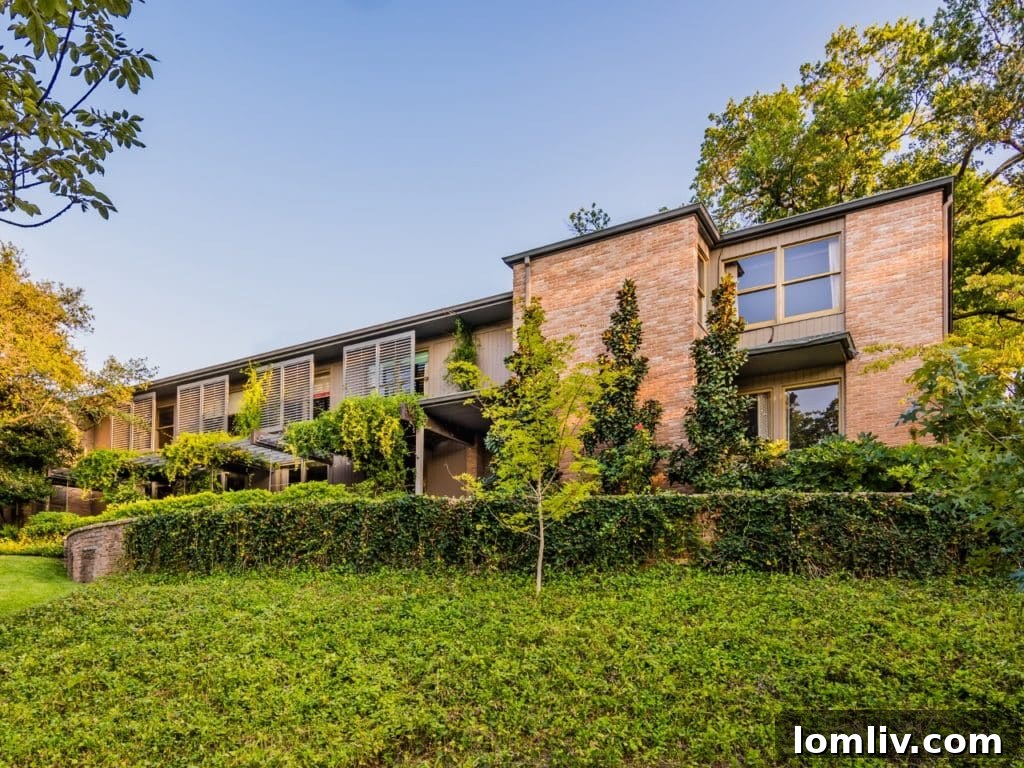
Nestled in the affluent community of Highland Park at 3756 Armstrong Avenue, the Penson House stands as a remarkable testament to mid-century modern architecture and the distinctive vision of one of Texas’s most celebrated architects, O’Neil Ford. Designed in 1954 for Jack and Nancy Penson, this expansive residence is recognized as one of Ford’s largest residential projects and exemplifies his favored architectural style: Texas Regionalism. This style, characterized by its emphasis on local materials, climate-responsive design, and a harmonious integration with the natural landscape, finds a profound expression in the Penson House.
The 9,800-square-foot home boasts an exterior and interior that have remained remarkably true to Ford’s original design over the decades, with only minor modifications such as a discreet second-story addition, a master bath expansion, and the enclosure of a rear porch. These minimal alterations underscore the enduring integrity of its architectural vision. The Penson House is facing an immediate and severe threat as it prepares to go up for auction. The property’s exceptional value is derived not only from its architectural pedigree but also from its impressive corner lot, strategically located with a Turtle Creek tributary just across the street on one corner and the serene expanse of Davis Park directly opposite on the other. This unique combination of an extraordinary piece of land with a magnificent, large-scale O’Neil Ford-designed house creates a highly desirable yet perilous situation.
The property is acutely vulnerable to being acquired by a developer who might prioritize the immense land value over the architectural significance of the structure itself. In such a scenario, the house could be tragically torn down for redevelopment, a common fate for valuable properties in areas lacking robust historic preservation mechanisms. Highland Park, unfortunately, does not currently possess specific ordinances or protections designed to safeguard historic buildings from demolition due to development pressures. The potential loss of the Penson House would represent an irreparable blow to Dallas’s architectural heritage, erasing a premier example of O’Neil Ford’s genius and a cornerstone of the Texas Regionalism movement. Preserving this masterpiece is crucial not only for its inherent beauty but also for its educational value as a living archive of a pivotal era in Texas architecture.
5. Polar Bear: A Quirky Landmark from Dallas’s Car Culture Era
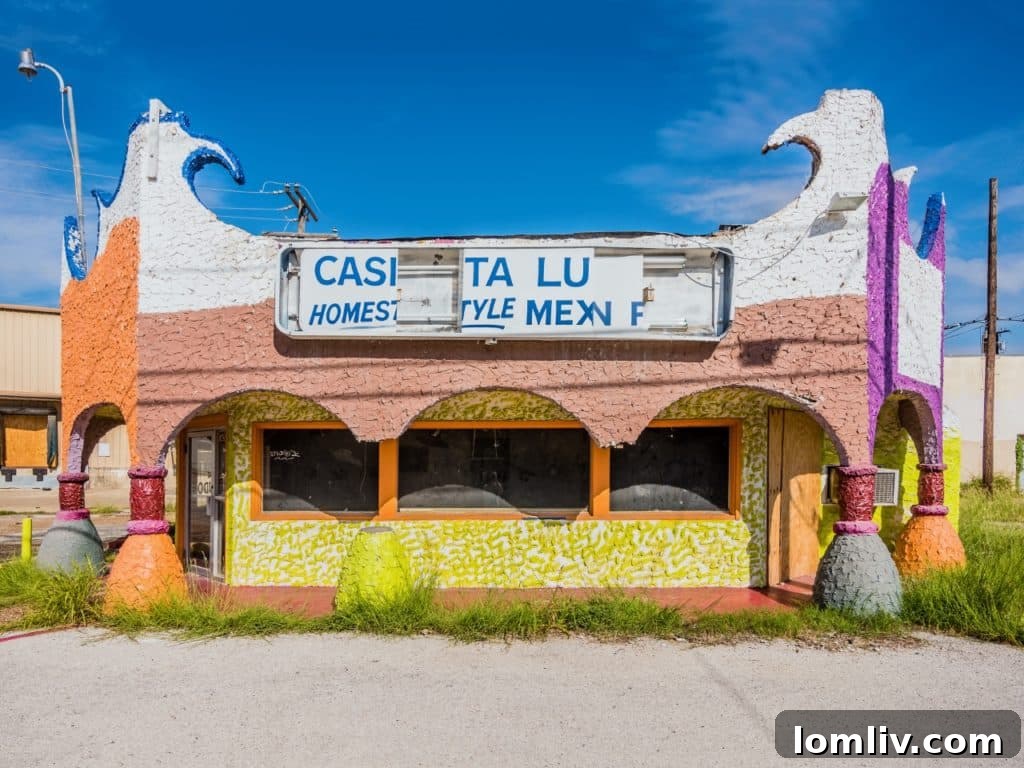
Across from the scenic Lake Cliff Park in North Oak Cliff stands a small yet undeniably unique building, instantly recognizable by its extraordinarily whimsical façade. Commonly known as the Polar Bear, this charming structure, located at 1207 N. Zang Boulevard, derives its affectionate moniker from its longest and most beloved tenant, the Polar Bear Ice Cream shop. Built in the early 1930s, the building initially housed the U.S. Sandwich Shop and the Schell Grill before the Polar Bear Ice Cream shop opened its doors in 1946, quickly becoming a cherished community institution. Most residents associate the building’s distinctive “frosty” design with the Polar Bear brand, often imagining its façade as a stylized glacier or an igloo, a perfectly fitting aesthetic for an ice cream parlor.
This quirky architectural gem is a tangible link to a vibrant era of Dallas history, particularly the burgeoning 1950s teenage car culture. The area surrounding Lake Cliff Park and the historic Bankhead Highway (which once traversed Houston Street to Zang Boulevard) was a bustling hub of small, independent restaurants and drive-ins, catering to this burgeoning automotive lifestyle. Nearby establishments included iconic names like Pig Stand #2, A&W Root Beer Stand, and the Pig ‘n Whistle Restaurant, all integral to the social fabric of the time. Unfortunately, the Polar Bear building has been vacant since 2014, leaving it vulnerable to the elements and neglect. A severe wind storm in early 2015 tragically toppled a portion of its unique parapet, further highlighting its precarious state.
The building’s plight has not gone unnoticed. It has been prominently featured on the Old Oak Cliff Conservation League’s “Architecture at-risk list” for some time. More recently, its significance has been formally recognized within the newly created PD 830 Gateway ordinance, where it has been singled out as one of four priority buildings the city considers for landmark designation within the ordinance area. Despite these protective measures, the property faces significant pressure from development due to its prime location. The parcel of land upon which the building sits is currently zoned for eight-story mixed-use development, making it an incredibly attractive target for developers eager to capitalize on increasing land values in the rapidly gentrifying Oak Cliff neighborhood. Protecting the Polar Bear is vital not just for its architectural uniqueness but for preserving a cultural touchstone that speaks to the social history and beloved memories of generations of Dallasites, ensuring its quirky charm remains part of the city’s future landscape.
6. Williams House: The Pinnacle of Texas Regionalism in Jeopardy
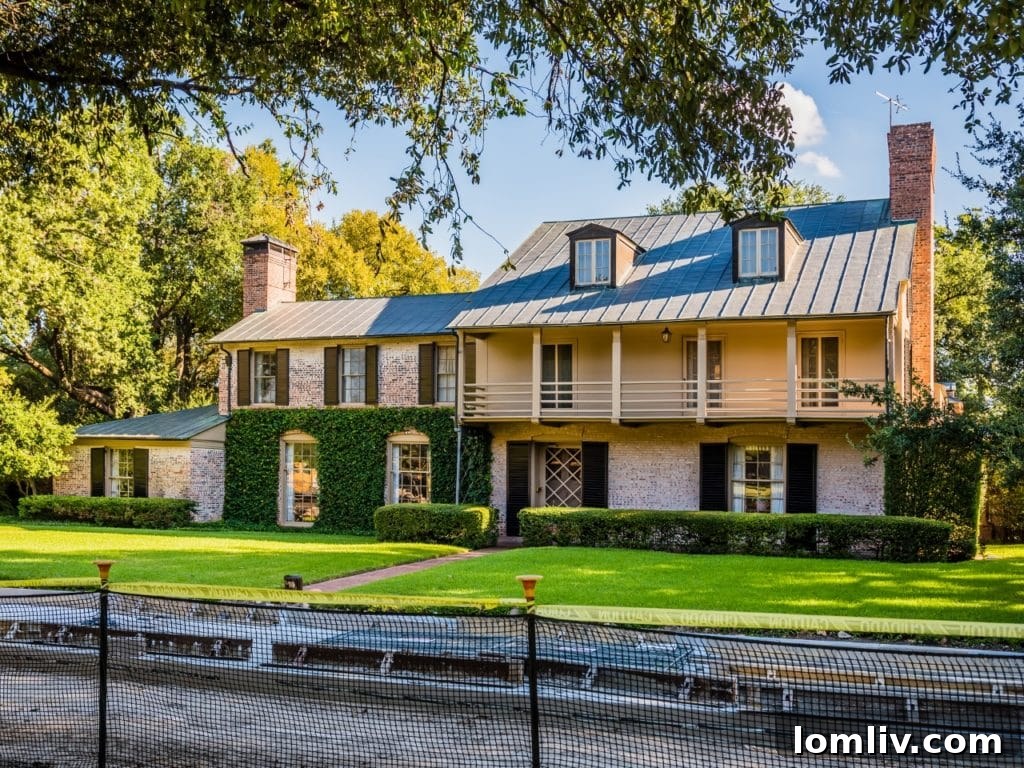
The Williams House, majestically situated at 3805 McFarlin Boulevard in the prestigious enclave of University Park, represents an unparalleled architectural masterpiece and a cornerstone of Texas modernism. Designed in 1932 by the visionary architect David R. Williams for University Park Mayor Elbert Williams, this residence is not merely a house; it is considered the premier example of the Texas Regionalism style, a movement largely pioneered by David R. Williams himself, earning him the moniker “father of Texas Regionalism.” This distinguished home was Williams’ last residential project of its particular type, encapsulating all the hallmarks and innovative principles that defined his groundbreaking architectural philosophy.
The 6,000-square-foot Williams House is a treasure trove of artisanal craftsmanship and distinctive design elements. It boasts exquisite hand-carved interior woodwork, meticulously executed by Lynn Ford, the talented brother of the equally renowned O’Neil Ford. Complementing this artistry is a captivating mural painting by the celebrated Texas artist Jerry Bywaters, further cementing the house’s status as a collaborative work of regional masters. Abundant lone star ornamentation throughout the property subtly weaves in a powerful sense of Texas identity and pride. Sprawling across a generous 1.15 acres of prime University Park property, the Williams House has been exceptionally well-preserved, having had only two owners in its lifetime. As a result, both its exterior and interiors remain remarkably intact, retaining original details, finishes, and the precise layout envisioned by its architect, offering an authentic glimpse into Williams’s original intent.
However, the very factors that make the Williams House so desirable also place it under severe threat. The particular plat of land upon which it sits is exceptionally valuable, not only because it traces along the picturesque Turtle Creek shoreline but also because it directly abuts the immaculately maintained Dallas County Club golf course. This confluence of prime location, expansive acreage, and unparalleled architectural significance creates a property ripe for redevelopment. With the house slated for auction soon, there is a very real and pressing danger that it could be acquired by a buyer solely interested in the land’s immense value, leading to the tragic demolition of this irreplaceable architectural gem. University Park, much like Highland Park, currently lacks comprehensive mechanisms or historic overlay districts to protect its significant historic buildings from such pressures, leaving masterpieces like the Williams House vulnerable to “tear down and rebuild” scenarios. The loss of the Williams House would be a devastating blow to the architectural legacy of Texas, eradicating the definitive example of a style that fundamentally shaped the region’s built environment. Its preservation is not just a local issue; it is a matter of national architectural heritage, demanding urgent attention and proactive measures to ensure its survival for future generations.