Understanding Property Appraisals: A Deep Dive into Dallas County Valuations and the Unforeseen
The world of property appraisals can often feel like a complex labyrinth, shrouded in mystery and governed by factors not always apparent to the average homeowner. This complexity is magnified when an appraisal figure takes an unexpected and drastic turn. We embark on a journey to demystify this process, using a compelling case study from Dallas County involving a prominent figure whose property valuation experienced a significant, albeit tragic, adjustment.
For many residents of Dallas County, the name John R. Ames is synonymous with diligence and dedication in public service. As the Dallas County Tax Assessor, Mr. Ames plays a crucial role in determining the taxable value of properties across the region. His office’s work directly impacts the financial well-being of countless homeowners and the funding for essential public services. Personally, I hold a great deal of respect for John R. Ames. Having had the pleasure of meeting him and supported his campaigns, I believe he performs an excellent job overseeing the tax office’s intricate operations. Beyond his professional acumen, he strikes me as someone who would bring a vibrant energy to any social gathering.
The Enigma of Property Valuation: What Drives Appraisal Numbers?
Despite the critical function of the tax assessor’s office, the methodology behind property appraisals often remains a “secret sauce” to most citizens. Homeowners frequently grapple with understanding how their property’s value is assessed and why these figures fluctuate. This perceived opaqueness can lead to frustration, especially when a property’s appraisal deviates significantly from expectations or market trends. Factors such as location, square footage, age of the property, and its overall condition are undoubtedly considered. However, the exact weighting and interpretation of these elements can feel subjective, prompting homeowners to question the fairness and accuracy of the final appraisal.
Consider the typical homeowner’s perspective: we all strive to maintain our homes, yet unexpected issues constantly arise. A broken dishwasher, discovered wood rot from relentless rain—these mundane yet costly problems remind us that even the most cherished homes are in a perpetual state of upkeep and, at times, decline. This personal experience underscores a universal truth: maintaining a home is an ongoing battle against the elements and entropy, often feeling like a losing one despite our best efforts. Such personal anecdotes highlight the emotional and financial investment tied to our properties, making appraisal figures particularly sensitive.
A Closer Look at the Dallas County Case: John Ames’s DeSoto Residence
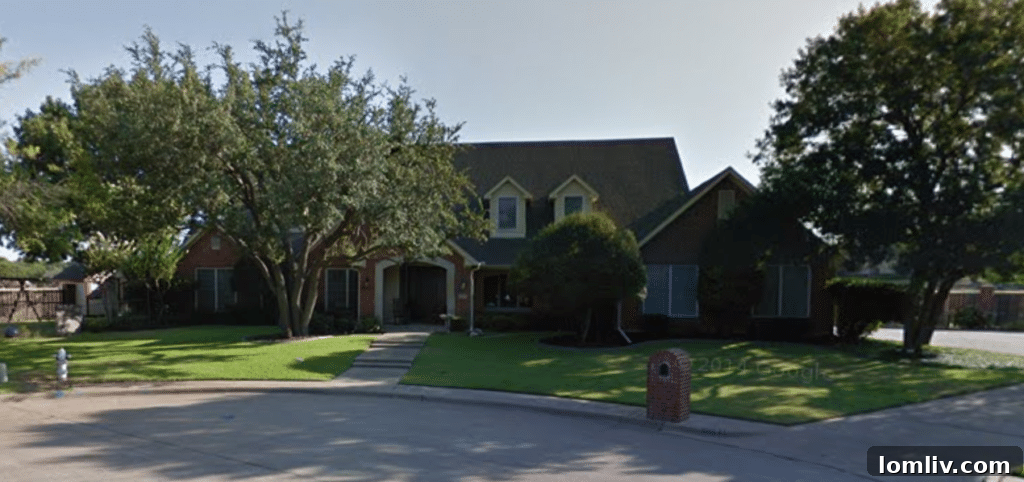
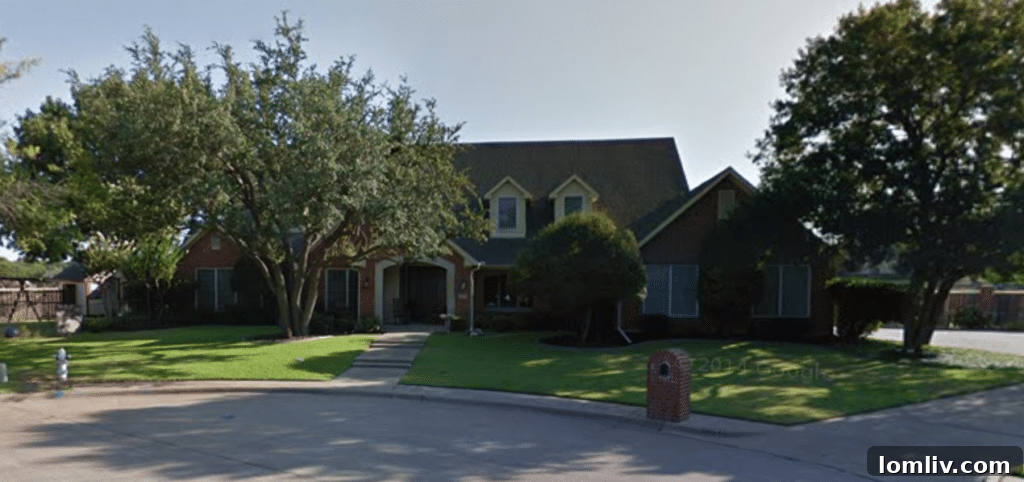
Our focus now shifts to a specific property that exemplifies the dramatic shifts an appraisal can undergo. John Ames’s personal residence in DeSoto, Texas, is a charming, albeit mature, home dating back to the mid-1980s. Situated on a serene cul-de-sac, the house boasts a substantial footprint of 5,199 square feet. At the time of a recent assessment, its general condition was noted as “very poor,” a detail that initially raised eyebrows given the typical expectation of property values.
The appraisal figures for this property presented a striking contrast over two consecutive years, sparking widespread discussion and curiosity about the underlying reasons for such a significant drop. In the preceding year, the home was appraised at a value of $254,380. However, the subsequent year saw a drastic reduction, with the appraisal plummeting to $177,270. This represented a substantial decrease of over $77,000, a figure that is hard to ignore in any real estate market. Diving deeper into the specifics, the land value remained constant at $36,000 from 2015 to the proposed 2016 valuation. The entire reduction was absorbed by the “improvement” value, which fell from $218,380 in 2015 to $141,270 in the proposed 2016 assessment.
The Tragic Revelation: A Home Scorched by Fire
What could possibly account for such a precipitous decline in a property’s appraised value, especially when the land itself retained its worth? The answer, tragically, lies in an unforeseen and devastating event. It has been confirmed that John Ames’s home suffered a catastrophic fire, a truly dreadful reason for such a low appraisal. This tragic incident fundamentally altered the property’s condition, rendering the previous valuation obsolete and necessitating a drastic reassessment. The news of the fire casts a new light on the seemingly inexplicable figures, transforming an initial mystery into a somber understanding of the realities of property valuation in the face of disaster.
Catastrophic Events and Their Profound Impact on Property Valuation
A house fire is one of the most destructive events a homeowner can experience, and its impact on property valuation is immediate and severe. When a home is destroyed or extensively damaged by fire, its market value plummets. The “improvement” aspect of the property, which includes the structure itself, is either completely lost or requires extensive, costly repairs to become habitable again. This directly explains the dramatic drop in the “improvement” value of John Ames’s home, while the land value, untouched by the blaze, remained stable.
Such events trigger a complex process involving insurance claims, structural assessments, and often, a complete rebuilding effort. The appraisal system must reflect this new reality. A tax assessor’s office, therefore, must adjust its valuations to accurately reflect the post-catastrophe state of the property. This is not merely about fairness to the homeowner, who is already grappling with immense personal loss, but also about maintaining the integrity and accuracy of the tax roll. The property, in its damaged state, no longer offers the same utility or market appeal, and its appraised value must reflect that diminished reality. This unfortunate event serves as a stark reminder of the vulnerability of physical assets and the various, sometimes tragic, factors that influence property valuations.
Navigating External Valuation Tools: The Zillow Perspective and Its Limitations
In today’s digital age, platforms like Zillow have become popular tools for homeowners and potential buyers alike to get a quick estimate of property values. These “Zestimates” leverage sophisticated algorithms that analyze publicly available data, recent sales, and market trends to provide an automated valuation. While convenient, it’s crucial to understand that Zestimates are precisely that—estimates—and often come with significant disclaimers regarding their accuracy.
A notable example highlighting the potential discrepancies of automated valuations involved no less than the co-founder of Zillow himself, Spencer Rascoff. Reports indicated that on February 29, Rascoff sold his Seattle home for $1.05 million. This figure was a staggering 40 percent less than the Zestimate of $1.75 million displayed on the property’s page just a day later. The gap between the Zestimate and the actual sales price for Rascoff’s former property only modestly decreased over time, further emphasizing the variability. Zillow openly acknowledges that Zestimates can be inaccurate, yet many consumers still take them at face value, which can create considerable headaches for real estate agents and homeowners trying to price properties accurately or understand their true worth.
On February 29, Rascoff sold a Seattle home for $1.05 million, 40 percent less than the Zestimate of $1.75 million shown on its property page a day later.
The gap between the Zestimate of Rascoff’s former property and its sales price has decreased only modestly since then.
Zillow readily acknowledges that Zestimates can be inaccurate, but some consumers can still take them at face value, causing headaches for agents.
Bringing this back to John Ames’s situation, it’s enlightening to note that Zillow’s “Zestimate” for his property, likely based on pre-fire data, stood at $298,373. This figure, while significantly higher than the post-fire appraisal, now appears completely disconnected from the current reality of the property’s condition. It serves as a stark illustration of how automated systems, while useful for general market trends, cannot account for unforeseen catastrophic events or the granular, on-the-ground assessments that professional appraisers undertake, especially in the wake of significant damage. The “secret sauce” of appraisal, in this unfortunate instance, was not DeSoto’s charm, but the devastating power of a house fire.
The True “Secret Sauce”: Unpredictable Realities and Appraisal Adjustments
Initially, one might have whimsically pondered if DeSoto held some magical “secret sauce” for lower appraisals, perhaps hinting at a desire to move to the area for a potentially lighter tax burden. However, the revelation of the house fire entirely reshapes this narrative. The true “secret sauce” behind John Ames’s drastically reduced appraisal was not a geographical anomaly or a hidden loophole, but a profoundly unfortunate real-world event that fundamentally altered the property’s value. This situation underscores that while geographical location and market dynamics play significant roles, catastrophic incidents can instantaneously and irrevocably change a property’s standing in the eyes of an appraiser.
The lessons from this case are multi-faceted. For one, it highlights the importance of transparent communication from appraisal offices, especially when significant adjustments are made. Providing context, even for sensitive personal matters, helps the public understand the rationale behind official valuations. Secondly, it serves as a powerful reminder for homeowners about the unpredictable nature of property ownership and the critical role of insurance in mitigating financial disaster. Finally, it reinforces the distinction between automated online estimates and the rigorous, often on-site, evaluations performed by professional tax assessors, which must account for every material change to a property’s condition.
Conclusion: The Dynamic Nature of Property Value and the Role of the Assessor
The journey through John Ames’s property appraisal offers a poignant glimpse into the intricate and sometimes tragic forces that shape property values. It transforms a perceived mystery of appraisal methodology into a clearer understanding of how real-world events, particularly devastating ones like a house fire, necessitate dramatic re-evaluations. The Dallas County Tax Assessor’s office, in its essential role, must adapt to these realities, ensuring that property valuations accurately reflect current conditions for equitable taxation. This case emphasizes that while we may seek simplicity in understanding our home’s worth, the factors at play are often complex, dynamic, and occasionally, profoundly personal. Ultimately, understanding property appraisals requires looking beyond the numbers to the underlying circumstances that shape them.