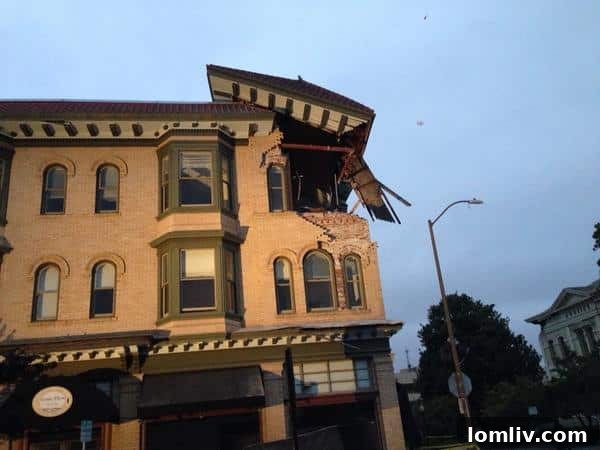
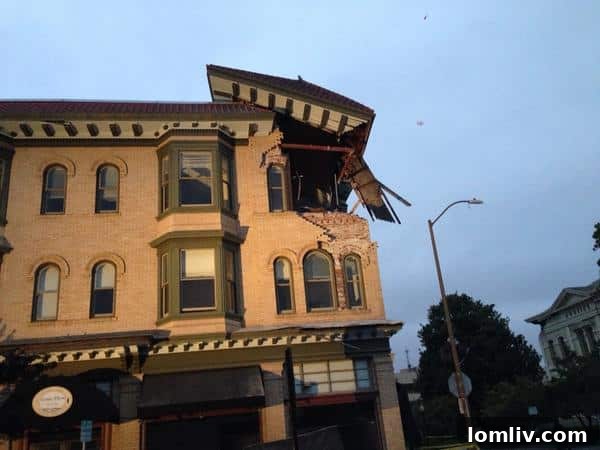
The ground beneath Texas, long considered seismically stable, has been stirring unexpectedly, prompting a significant re-evaluation of natural disaster preparedness across the state. In recent years, the Dallas-Fort Worth metroplex and other regions have experienced a noticeable increase in seismic activity, challenging historical perceptions and raising pertinent questions for homeowners and the insurance industry. This surprising shift has brought a once-obscure topic—earthquake insurance—to the forefront of discussions, as Texans grapple with the potential implications for their properties and financial security.
The Evolving Landscape of Texas Earthquakes and Homeowner Concerns
For generations, the concept of earthquake damage was largely irrelevant to Texas residents. Unlike states in the Pacific Rim, Texas has historically experienced very few natural seismic events of significant magnitude. This long period of geological tranquility meant that earthquake insurance was an anomaly; insurance carriers were not required by state law to offer it, and veteran agents consistently reported never encountering a genuine need to write such policies. The focus remained on more common perils like hail, windstorms, and floods, which are far more prevalent in the Lone Star State.
However, the narrative began to change dramatically in the mid-2010s. A discernible uptick in tremors, particularly in North Texas, including areas around Dallas, and in West Texas near oil and gas drilling operations, sparked widespread concern. While many of these quakes were relatively minor, ranging from 2.0 to 4.0 on the Richter scale, their frequency and proximity to populated areas caused unease. Homeowners, previously unaccustomed to feeling the ground shake, suddenly faced new anxieties about potential structural damage to their homes, cracked foundations, and disruptions to their daily lives. This unexpected seismic shift initiated a critical conversation about the adequacy of existing homeowner’s insurance policies and the often-overlooked threat of earthquake damage.
Following notable seismic events, local media outlets frequently report a surge in calls to insurance agencies. This immediate reaction highlights a critical gap in public understanding: standard homeowner’s insurance policies, almost without exception, do not cover damage caused by earthquakes. This fundamental exclusion often comes as a shock to property owners who assume their comprehensive policies will protect them against all natural disasters. As a result, the question of earthquake insurance has moved from an academic discussion to a pressing practical concern for a growing number of Texans.
Navigating Earthquake Insurance in a Newly Active State
The sudden increase in homeowner inquiries about earthquake coverage has compelled the insurance industry in Texas to revisit its long-standing practices. What was once an unheard-of product is now becoming a subject of active consideration by major carriers. However, the introduction of earthquake insurance in Texas is unlikely to mirror policies found in more seismically active regions. Instead, industry insiders suggest that any future offerings will likely come with specific stipulations designed to manage risk for insurers while potentially offering limited protection to policyholders.
Pamela Yip, a respected columnist at the Dallas Morning News, recently explored this evolving landscape, sharing insights from financial experts. She quoted Randall Guttery, director of real estate programs at the University of Texas at Dallas’ Jindal School of Management, whose candid perspective resonates with many who advocate for a balanced approach to financial risk:
“At some point, you have to self-insure some stuff in your life or you’ll be broke.”
This statement encapsulates a crucial aspect of insurance decision-making. Not every potential peril warrants a dedicated policy, especially when the probability of a catastrophic event is low, or the cost of coverage outweighs the practical benefit. For Texans, who are experiencing relatively infrequent and generally moderate seismic activity, deciding whether to invest in earthquake insurance becomes a careful balance of risk assessment, financial prudence, and peace of mind.
The Fine Print: Understanding Potential Policy Structures
As insurance carriers explore adding earthquake coverage to their portfolios for the Texas market, homeowners should anticipate policies that reflect the state’s unique risk profile—low historical risk with a recent uptick. The emerging consensus suggests that these policies might be structured in ways that some could perceive as “fluff coverage,” similar to how highly specialized or limited mold coverage is sometimes viewed. Key characteristics to expect:
- High Magnitude Thresholds: It is highly probable that any new earthquake policies will only activate coverage for events reaching a specific intensity, such as 5.0 on the Richter scale or higher. This means that the numerous smaller tremors (e.g., 2.0 to 4.9 magnitude) that cause widespread anxiety and potentially minor, cumulative property damage would not trigger a claim. For many Texans who have experienced smaller quakes, this threshold could mean their policy offers no protection for the events they are most likely to encounter.
- Significant Deductibles: A defining feature of future Texas earthquake policies is expected to be high deductibles, typically ranging from 5% to 10% of the dwelling’s insured value. To illustrate the impact, consider a home insured for $300,000. A 5% deductible would require the homeowner to pay the first $15,000 of covered damage out-of-pocket, while a 10% deductible would mean a $30,000 initial expense. These figures are substantially higher than the typical flat-dollar deductibles (e.g., $1,000 or $2,500) or lower percentage deductibles common in standard homeowner’s policies. Such high deductibles significantly shift the financial burden to the homeowner for all but the most catastrophic damage.
Given these anticipated parameters, the appeal of earthquake insurance in Texas becomes a complex proposition. While the author deeply values the comprehensive protection offered by a robust homeowner’s insurance policy, the current outlook for earthquake-specific coverage suggests it might not be a universally worthwhile investment. The combination of high deductibles and strict magnitude triggers could mean that a policy only provides relief for truly devastating, yet exceedingly rare, seismic events, leaving homeowners to self-insure against the more common, albeit less severe, tremors that stir concern.
Making an Informed Decision: Is Earthquake Insurance Right for Your Texas Home?
For Texas homeowners contemplating the addition of earthquake insurance, an informed decision requires a thorough assessment of several critical factors. It’s not merely about whether the ground has shaken, but about understanding the practical implications of a policy designed for a unique risk environment.
- Assess Your Local Seismic Risk: While Texas’s overall seismic risk is low compared to other states, activity is concentrated in certain regions. Research historical and recent seismic data for your specific area. Consider your property’s proximity to known fault lines or areas that have experienced increased activity, particularly those linked to industrial operations.
- Evaluate Your Home’s Vulnerability: The construction type and age of your home can significantly impact its susceptibility to earthquake damage. Older homes, especially those with unreinforced masonry or foundations not built to modern seismic codes, may be more vulnerable. Conversely, newer constructions might offer greater inherent resistance.
- Scrutinize Policy Details Rigorously: If you decide to explore earthquake insurance, delve deep into the policy’s terms and conditions. Pay meticulous attention to the deductible structure—understanding exactly how a percentage deductible translates into out-of-pocket expenses. Clarify the magnitude threshold for coverage activation and precisely what types of damage (e.g., foundation cracks, collapsed walls, personal property damage) are included or explicitly excluded.
- Financial Preparedness for Deductibles: Honestly evaluate your financial capacity to cover a substantial deductible, potentially 5% to 10% of your home’s value, in the event of a significant earthquake. If you have robust emergency savings, this might be a manageable risk. If not, even a policy with a high deductible might offer some peace of mind by capping your maximum out-of-pocket expense, preventing total financial ruin in a catastrophic scenario.
- Long-Term vs. Short-Term Perspective: Reflect on what type of seismic event concerns you most. Are you primarily worried about frequent minor tremors that might cause cosmetic damage, or are you preparing for a rare, devastating earthquake that could render your home uninhabitable? The anticipated policies in Texas appear to be geared towards the latter, leaving the financial burden of minor events largely with the homeowner.
Ultimately, the choice to purchase earthquake insurance in Texas boils down to an individual’s personal risk tolerance and financial strategy. For some, the peace of mind offered by even limited coverage, despite potentially high premiums and substantial deductibles, may be a justifiable expense. For others, particularly those in areas of extremely low risk or with ample financial reserves, adhering to Randall Guttery’s advice and self-insuring against seismic events might remain the most rational and cost-effective approach.
Perhaps, in a broader sense, these surprising Texas earthquakes are nature’s unexpected way of encouraging us to minimize, to re-evaluate our priorities, and to critically assess what truly warrants extensive financial protection versus what we can reasonably absorb ourselves. It’s a call to greater financial literacy and a deeper understanding of the risks that truly matter to our peace of mind and our pocketbooks in an ever-changing world.