Revolutionizing Laundry in Small Spaces: The Rise of Compact, Eco-Friendly Washing
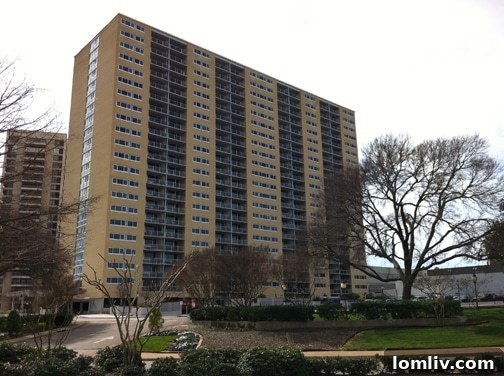
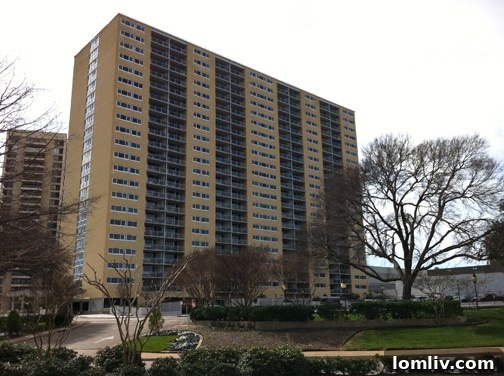
For many, the convenience of an in-home washer and dryer is a non-negotiable amenity when searching for a new residence. It streamlines daily chores, saves precious time, and offers a level of privacy that public laundromats simply cannot match. This personal preference often shapes housing decisions, making certain properties less appealing, no matter how otherwise desirable they may be. Such was the case with the distinctive “21” high-rise, located at the prestigious 3883 Turtle Creek. This iconic building, steeped in history and known for its unique style, maintains a strict policy prohibiting in-unit washing machines. A significant deterrent for those of us who value the ease of at-home laundry, it quickly fell off my list of potential dream homes. However, recent innovations in laundry technology are challenging conventional restrictions and might just open up new possibilities for urban dwellers facing similar limitations. Could these new solutions transform the landscape of apartment living, even for buildings like “21”?
The quest for efficient, space-saving, and eco-conscious laundry solutions has led to some truly remarkable inventions. Enter the Drumi and the BiWa – two groundbreaking devices designed to tackle the common challenges of urban living, offering sustainable alternatives to traditional washing methods. These innovations are not just about cleaning clothes; they represent a shift towards greater self-sufficiency, environmental responsibility, and a reimagining of how we integrate daily chores into our compact living spaces.
The Drumi: A Compact Revolution in Laundry Care
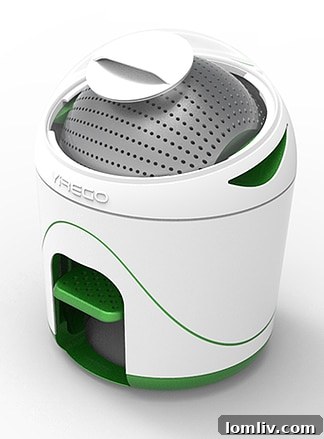
Imagined and brought to life by the innovative team at Toronto-based Yirego, the Drumi is more than just a washing machine; it’s a statement in sustainable living. This award-winning design addresses a critical need for those in apartments, dorms, or even off-grid environments who desire the convenience of washing small loads without relying on bulky, energy-intensive appliances or inconvenient public facilities. Its sleek, minimalist aesthetic belies its powerful capabilities, making it a stylish yet practical addition to any small home.
Unmatched Efficiency and Environmental Friendliness
One of the Drumi’s most compelling features is its incredible resource efficiency. It operates on a mere 2.5 gallons of water per wash cycle, a staggering reduction compared to the dozens of gallons consumed by conventional washing machines. But perhaps its most celebrated attribute is its complete independence from electricity. Yes, you read that right – zero electricity. The Drumi is ingeniously powered by a simple pedal mechanism, transforming human effort into clean clothes. This makes it an ideal choice for emergency preparedness, camping trips, RV living, or simply for anyone looking to drastically cut down on their carbon footprint and utility bills.
The process is remarkably straightforward and requires minimal effort. With just about five minutes of gentle toe-tapping on the integrated pedal, your clothes are thoroughly cleaned. This short burst of activity is enough to wash approximately three days’ worth of small items – think undergarments, shirts, or delicate baby clothes. The Drumi uses an impressive 80% less water than traditional washing methods and requires only a dollop of detergent, further minimizing its environmental impact. While the temptation might be to favor one foot, a quick tip for users: alternate your feet to ensure an even workout and prevent any imbalance in your leg muscles!
The Drumi’s commitment to sustainability extends beyond its operational efficiency. The machine itself is constructed from 40% recycled materials, demonstrating Yirego’s holistic approach to eco-conscious design. Moreover, it comes in a vibrant palette of five colors – green, blue, orange, pink, and gray – allowing users to choose a model that best fits their personal style and home decor, proving that eco-friendly solutions can also be aesthetically pleasing.
Addressing the Needs of Modern Urbanites
The Drumi directly targets a demographic often overlooked by large appliance manufacturers: urban dwellers. As highlighted on the Drumi website, one of their key target groups includes city residents who “often buy new undergarments instead of going to a public laundry facility.” This speaks volumes about the inconvenience and perceived lack of hygiene associated with communal laundromats. The Drumi offers a dignified, private, and efficient alternative for those quick washes, delicate items, or simply when those “lucky” knickers need an urgent refresh. It eliminates the need for carrying heavy laundry bags, waiting for machines, or dealing with potentially unhygienic environments. Priced at CA$169, with pre-orders available and a US summer release planned, the Drumi is poised to become a staple in many urban apartments, potentially even finding its way into residences at “21” this holiday season.
The BiWa: Combine Fitness with Freshness
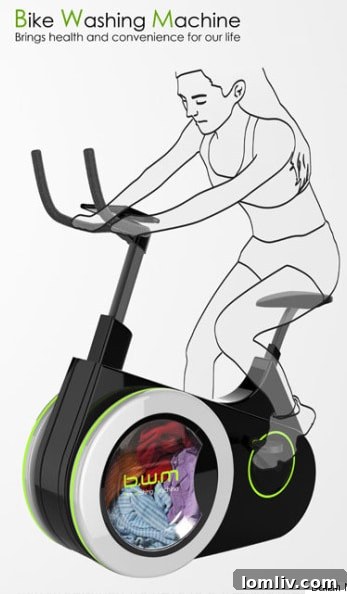
For those who crave a more vigorous approach to their laundry routine – perhaps a solution that tackles both cleanliness and cardio – the BiWa, short for Bike Washing Machine, presents an ingenious option. This innovative concept merges two daily activities into one efficient, health-conscious system. Imagine a stationary bicycle, but in place of the front wheel, there’s a fully functional washing machine drum. As you pedal, not only do your muscles get a workout, but your clothes are also getting a thorough wash. This brilliant design transforms mundane chores into an opportunity for physical activity, perfect for anyone looking to incorporate more movement into their day, especially after those New Year’s resolutions may have started to waver.
Dual Purpose: Fitness and Energy Generation
The BiWa’s design is truly forward-thinking. As you pedal, the motion drives the washing drum, cleaning your garments without any external power source. Even more impressively, the excess electricity generated by your pedaling is harnessed to power the bike’s display screen or is stored in a battery for future use, demonstrating a complete closed-loop system for energy. This makes the BiWa an exemplary model of human-powered energy generation, contributing to an even lower carbon footprint and promoting active sustainability. While it is larger than the compact Drumi, requiring a dedicated spot, its multi-functional nature justifies the space for fitness enthusiasts and eco-conscious individuals alike. Depending on load size and individual needs, you might need to perform multiple washes per person per week, but the added benefit of a daily workout makes this a worthwhile trade-off.
The BiWa was conceived and designed by a group of talented Chinese students at Dalian Nationalities University, an institution renowned for its focus on technology and applied sciences. Their creation is a testament to the power of interdisciplinary thinking, combining mechanical engineering, sustainable design, and human factors to address modern challenges. This kind of innovation not only solves practical problems but also inspires a new generation of designers and engineers to think creatively about resource management and sustainable living.
The Broader Impact of Sustainable Laundry Innovations
The emergence of devices like the Drumi and BiWa signifies a broader trend towards sustainable living and mindful consumption. In an era where environmental concerns are paramount, and urban spaces are becoming increasingly compact, these innovations offer tangible solutions to everyday challenges. They empower individuals to reduce their water and energy consumption, lessen their reliance on public utilities, and contribute to a healthier planet, one wash at a time.
These pedal-powered solutions go beyond mere convenience; they represent a philosophy. They cater to a growing segment of consumers who are actively seeking ways to minimize their ecological footprint without sacrificing modern comforts. By offering alternatives to conventional, resource-intensive appliances, they encourage a shift in behavior and highlight the potential for human ingenuity to create a more sustainable future. Moreover, they address a critical gap in the market, providing viable options for high-rise residents, students, and anyone living in small spaces where traditional laundry facilities are either impossible or impractical.
The Lingering Question: What About Drying?
While the Drumi and BiWa present fascinating and effective solutions for washing clothes, a key piece of the laundry puzzle remains: drying. So far, the innovations in pedal-powered laundry have focused almost exclusively on the washing phase, leaving the drying process to more traditional, often passive, methods. This poses a continuing challenge, especially for apartment dwellers. Without access to electric dryers, residents must resort to alternatives such as good old-fashioned clotheslines strung across a shower rod, collapsible drying racks, or, for those fortunate enough, an outdoor balcony. Air drying, while highly eco-friendly, can be time-consuming and can introduce humidity into indoor environments, particularly in smaller, less ventilated apartments. The next frontier in sustainable laundry innovation undoubtedly lies in developing equally efficient and compact drying solutions that align with the low-resource consumption ethos of products like the Drumi and BiWa.
Redefining “Home Laundry” for Buildings Like “21”
The restrictive policies of buildings like “21” at 3883 Turtle Creek, which prohibit in-unit washing machines, were established for valid reasons, often pertaining to plumbing integrity, noise reduction, and the prevention of water damage in a multi-story dwelling. However, these new, self-contained, and non-plumbed washing solutions might just bypass those traditional concerns. The Drumi, for instance, requires no plumbing modifications, produces minimal noise, and processes water in a contained manner that could easily be drained into a sink or bathtub without risk to the building’s infrastructure. The BiWa, while larger, also operates as a standalone unit. This brings us back to the fundamental question posed at the outset: how about it, “21”? Will these innovative, self-sufficient, and environmentally benign laundry marvels finally pass muster and offer a much-desired amenity to your discerning residents? The advent of compact, eco-friendly washing solutions like Drumi and BiWa could very well pave the way for a more flexible interpretation of “home laundry,” enhancing the quality of life for residents in high-rises across the globe and truly redefining what’s possible within the confines of urban living.