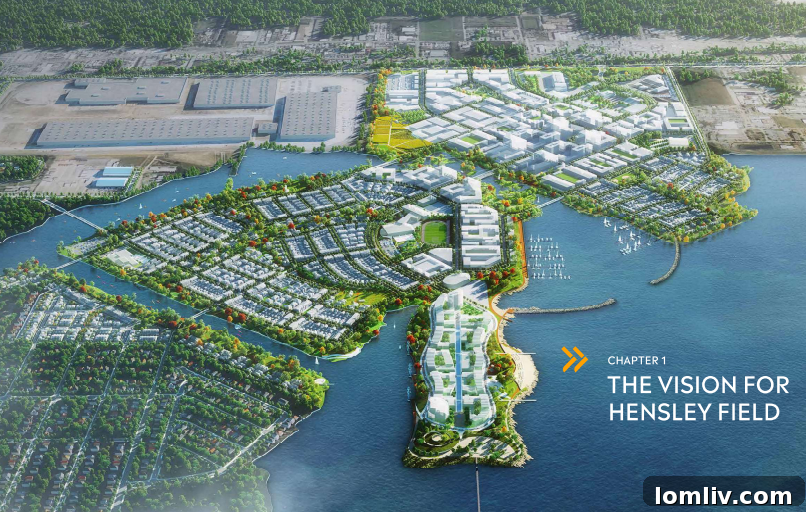
In a pivotal decision shaping the future of Dallas, the City Council, during its final meeting of 2022, enthusiastically approved the comprehensive Hensley Field Master Plan. This visionary project is poised to transform a vast, underutilized expanse into a vibrant, mixed-use community, promising much-needed homes, thriving businesses, and enhanced transportation networks for District 3. Spearheaded by District 3 Councilman Casey Thomas, who passionately refers to it as his “legacy project,” Hensley Field is envisioned as a groundbreaking model for urban development and sustainable growth across Dallas.
Hensley Field: From Vacant Land to Dallas’s Crown Jewel
The 738-acre Hensley Field site, a former naval air station near Grand Prairie, has remained largely vacant for many years, presenting both a challenge and an unparalleled opportunity for Dallas’s urban planners. Its dormant state has been a subject of various discussions over the past decades. Notably, in 2018, an initial proposal to convert the expansive area into a homeless encampment was met with widespread opposition from the community, underscoring the public’s desire for a more integrated and beneficial use of this valuable land.
Councilman Thomas eloquently captured the essence of the site’s potential, declaring it “District 3’s crown jewel.” He emphasized the unique chance to craft something truly exceptional from this blank slate. “We have an opportunity to make something beautiful at this location,” Thomas stated, highlighting the boundless possibilities that a vacant, well-located parcel of land offers for innovative urban design. This sentiment was echoed by District 8 Councilman Tennell Atkins, who envisions the forthcoming mixed-use development as nothing less than a “city inside the city,” implying a self-sustaining and comprehensive urban environment that caters to a multitude of needs within its boundaries.

The unanimous support for the Hensley Field Master Plan reflects a broad consensus among Dallas’s leadership. District 11 Councilwoman Jaynie Schultz lauded the project as one of the most significant undertakings during the tenure of the current Dallas City Council. “This is such a treasure in our city, and to have this master plan move forward with the idea of this being almost an ideal community, that’s what Hensley Field can be for our generation,” Schultz remarked, emphasizing its potential to set new benchmarks for community planning and development. The Dallas City Council formally adopted the extensive 60-page master plan on December 14, 2022, marking a significant milestone in the city’s journey towards sustainable growth and community enrichment.
Addressing Dallas’s Housing Crisis: A Transformative Approach at Hensley Field
The Hensley Field Master Plan represents a substantial investment of $390 million, partially funded through federal allocations and the vital 2017 city bond issue. Beyond its ambitious scope, which includes modern entertainment venues and a picturesque marina on the adjacent Mountain Creek Lake, the plan’s most impactful element for the Dallas real estate community is its robust commitment to housing. This aspect is particularly crucial given Dallas’s persistent housing deficit, estimated to be around 80,000 units, which has challenged the city for years.
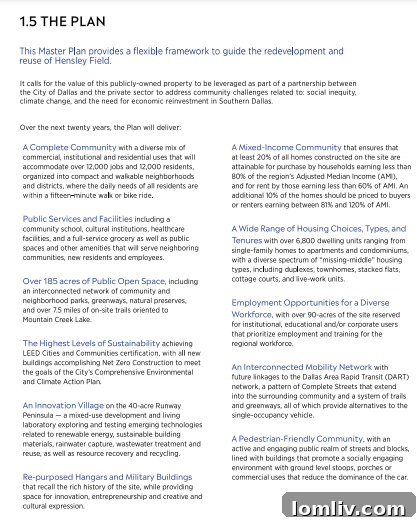
District 1 Councilman Chad West particularly underscored the innovative housing solutions embedded within the Hensley Field development. The blueprint outlines a diverse array of residential options designed to cater to a broad spectrum of Dallas residents. This includes traditional single-family homes, modern apartments, and condominiums, alongside a thoughtful inclusion of “missing-middle housing types.” This critical category bridges the gap between single-family homes and large apartment complexes, offering diverse options like duplexes, townhomes, stacked flats, charming cottage courts, and dynamic live-work units. These housing types are crucial for creating vibrant, walkable neighborhoods and fostering a stronger sense of community.
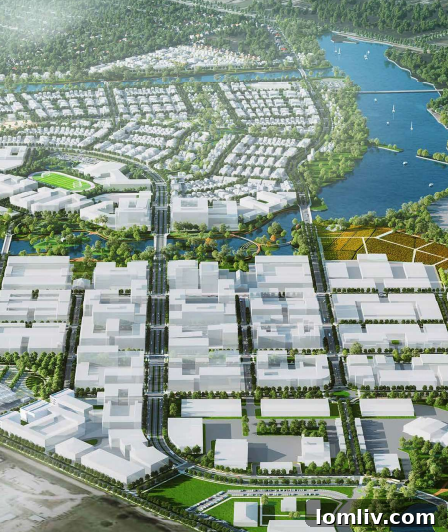
“This is a way we can use modern ways of living to make sure people enjoy where they’re living and not have to always be correcting the mistakes of infrastructure that we made 50, 60 years ago,” West explained, highlighting the forward-thinking approach to urban planning. He hailed the project as “a big win for housing,” presenting a significant opportunity to substantially reduce Dallas’s housing gap and create livable, sustainable communities from the ground up.
Crucially, the Hensley Field Master Plan incorporates a strong commitment to affordable housing, ensuring that the development serves all segments of the Dallas population. At least 20 percent of the new homes will be designated for households earning below 80 percent of the Area Median Income (AMI) for purchases, and for renters earning less than 60 percent of AMI. Furthermore, an additional 10 percent of the homes will be meticulously priced to accommodate buyers and renters falling within the 81 percent to 121 percent AMI bracket. This layered approach to affordability is designed to create a truly inclusive community, offering opportunities for diverse income levels to live and thrive within this new urban oasis.
District 14 Councilman Paul Ridley encapsulated the magnitude of this endeavor, describing it as a “transformational project” and a “once-in-a-lifetime opportunity” for the City Council to approve a master plan for a largely vacant site. The vision includes a remarkable 6,800 units of housing, with a significant percentage dedicated to affordability. This commitment is vital for Dallas, a city grappling with an estimated deficit of approximately 80,000 housing units. By providing a substantial influx of diverse and affordable housing, Hensley Field aims not just to build structures, but to build a more equitable and resilient Dallas.
A Blueprint for a Connected and Green Future: Beyond Housing
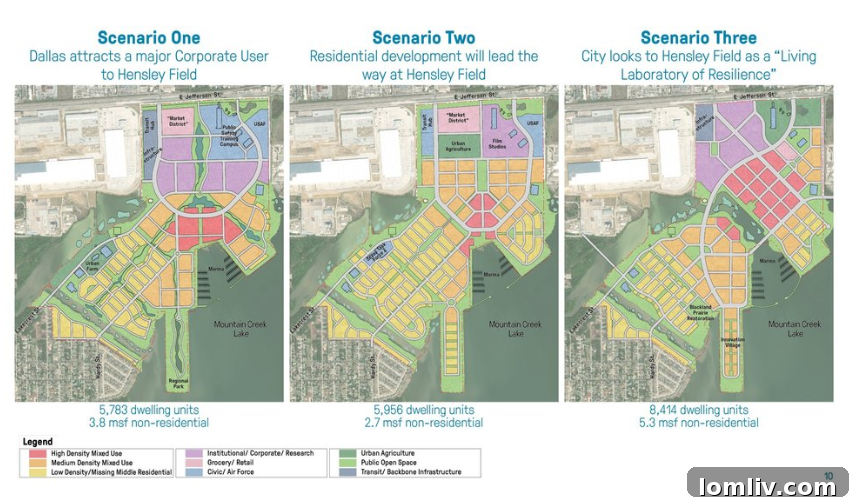
The 20-year Hensley Field Master Plan is an intricate blueprint that extends far beyond residential development, envisioning a holistic community experience. It outlines three distinct mixed-use development scenarios, one of which thoughtfully includes an option for a major corporate user, signaling the potential for significant job creation and economic growth within District 3. This flexibility ensures the plan can adapt to future market demands and opportunities, maintaining its relevance and vitality over its long implementation period.
At the heart of the plan is a strong emphasis on sustainability, recreation, and community well-being. The design incorporates extensive waterfront greenways, creating natural corridors for leisure and environmental preservation. A dedicated loop trail system will encourage active living, offering residents and visitors ample opportunities for walking, jogging, and cycling. Numerous neighborhood parks are strategically placed throughout the development, providing essential green spaces for relaxation, play, and community gatherings. Adding an innovative touch, a working urban farm is also outlined in the plan, promoting local food production, educational opportunities, and a deeper connection to nature within the urban fabric.
The possibilities for Hensley Field were described by council members as “endless,” a testament to the comprehensive and imaginative approach taken by its designers. The master plan was a collaborative effort, meticulously crafted by the city’s Planning and Urban Design department staff in conjunction with the renowned Austin-based firm, McCann Adams Studio. Their combined expertise has yielded a vision that is both grand and grounded in practical urban planning principles.
Further enriching the plan’s scope, Meg Gould, Assistant Director of the Dallas Film and Creative Industries Office, voiced strong support for integrating a state-of-the-art film studio within the site. Gould articulated Dallas’s strategic advantages, stating, “Being centrally located and easily accessible from both coasts, Dallas is an ideal location for filming projects.” A film studio at Hensley Field would not only diversify the local economy but also bolster Dallas’s burgeoning creative industries, attracting talent and investment to the region.
The Road Ahead: Phased Implementation and Enduring Legacy
While the approval of the Hensley Field Master Plan marks a significant victory, the journey ahead is a long-term commitment. Officials estimate that the completion of the first segment of this ambitious three-phased project could span a decade. This extended timeline underscores the complexity and scale of transforming 738 acres into a vibrant urban center. Each phase will be carefully managed to ensure sustainable growth, integrating infrastructure, residential units, commercial spaces, and green amenities seamlessly.
The ultimate goal is to create more than just buildings; it is to forge a cohesive, thriving community that stands as a testament to thoughtful urban planning. The Hensley Field redevelopment is poised to become a cornerstone of District 3, providing a diverse economic base, fostering social equity through widespread affordable housing, and promoting environmental stewardship through its integrated green spaces. Councilman Casey Thomas’s vision of a “legacy project” is set to materialize as a vibrant hub of activity, a place where people can live, work, and thrive. This master plan is not just about reimagining a vacant site; it is about building a better, more inclusive, and sustainable future for Dallas, serving as an inspiring example for cities across the nation on how to approach large-scale urban revitalization.