Unbelievable Housing Market: Charred Home Listed for $399,000 in Suburban Boston
The current real estate landscape is a tapestry of bewildering paradoxes, and nowhere is this more evident than in the tale of a fire-damaged home in Melrose, Massachusetts. In a housing market so intensely competitive that scarcity drives demand to unprecedented levels, a property reduced to a charred shell has not only hit the market at a staggering $399,000 but has already gone under contract. This striking scenario underscores the extreme conditions gripping certain metropolitan areas, particularly in sought-after suburban enclaves around Boston, making a compelling case for the sheer desperation and investment hunger defining today’s housing narrative.
While prospective homebuyers in many parts of the United States struggle to find a decent property for under $400,000, let alone one ready for immediate occupancy, the story from Melrose, Massachusetts, paints a stark picture of a market pushed to its absolute limits. Here, a residential property, severely compromised by fire, commands a price tag that would secure a move-in-ready home in less frenzied markets. This dichotomy highlights the fierce competition, limited inventory, and soaring property values that characterize the Boston suburban real estate scene.
Melrose’s Scorching Hot Market: A Deep Dive into the Burnt Property Phenomenon
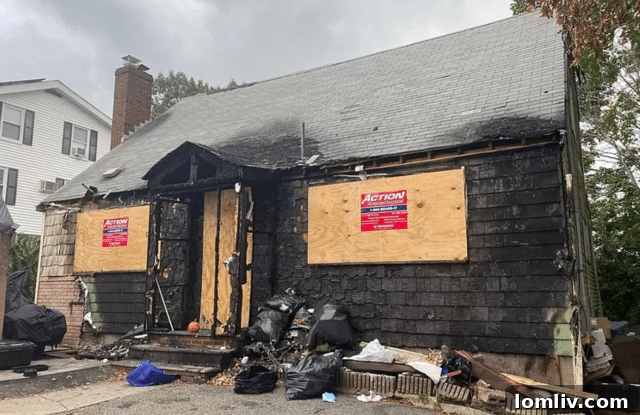
The property in question, a 1,857-square-foot, three-bedroom house located in the desirable community of Melrose, Massachusetts, suffered extensive damage from a fire on August 27. The incident left the home significantly compromised, necessitating a complete overhaul or even a total rebuild. Despite the grim condition, the Marrocco Group with Coldwell Banker Realty promptly listed the property, and its availability was widely advertised on platforms like Zillow. What followed was a swift response from the market, with the property quickly moving to “under contract” status, a testament to the unyielding demand in the area.
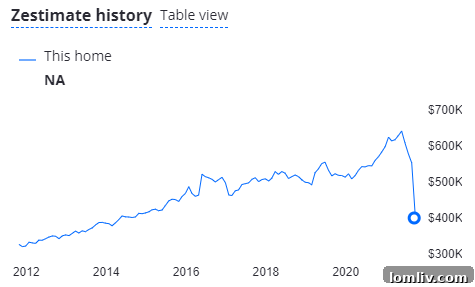
The asking price of $399,000, while seemingly high for a fire-damaged structure, actually reflects the intrinsic value of the land and the strategic location within Melrose. According to Zillow’s home-price estimate, the house was valued at $640,700 prior to the fire in June, indicating a substantial discount due to the damage. Furthermore, the property’s price point is considerably below the median price for a single-family home in Massachusetts, which stood at $552,000 in August, as reported by the Massachusetts Association of Realtors. This pricing strategy, targeting a specific segment of the market, effectively capitalized on the prevailing conditions.
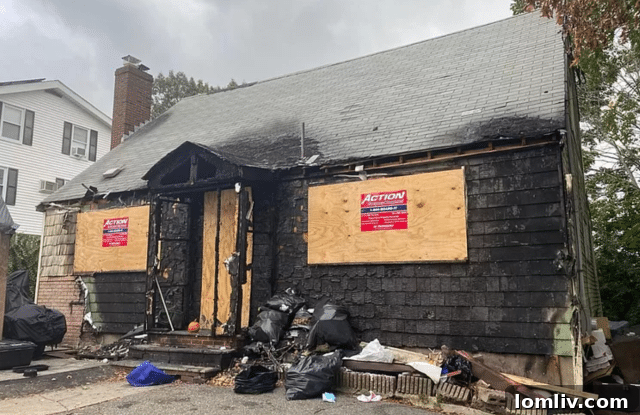
Firefighters battling the blaze were forced to undertake destructive measures to contain the fire, ripping out walls and ceilings, and the force of the fire also blew out the windows. While it may be an exaggeration to say only the front facade was damaged, the visuals certainly portray a severely compromised structure that, for the average homeowner, would represent an insurmountable project. The current state of the property leaves much to the imagination, lacking any semblance of curb appeal and presenting a daunting challenge for even the most experienced renovation experts.
The Investor’s Gaze: Zillow’s Strategic Listing and the Allure of Distressed Properties
The listing description provided by Zillow for the Melrose property was remarkably candid and acutely aimed at a specific buyer demographic: contractors, developers, and real estate investors. It meticulously framed the property not as a home ready for living, but as a blank canvas—or rather, a challenging project—with immense potential. The description skillfully highlights the “desirable Melrose” location, emphasizing its rising property values, thriving downtown, convenient commuter rail access to Boston, excellent schools, and a vibrant array of local amenities including restaurants, coffee houses, and boutiques.
ATTENTION CONTRACTORS! This home suffered a fire that damaged the front facade. House is in need of a complete renovation or potential tear down and rebuild. Buyer to do due diligence. House being sold as is. Great potential to build a new and adorable home in desirable Melrose, a town where property values continue to rise, boasting a thriving downtown, a commuter rail to Boston, excellent schools and multiple restaurants, coffee houses and local boutiques.
Zillow Overview
This explicit call to action for contractors and investors reveals the underlying strategy: to sell the “land value” and “location potential” rather than the existing structure. For seasoned investors, a distressed property in a prime location like Melrose presents a unique opportunity. The lower acquisition cost for the damaged property, coupled with the high demand and appreciation rates in the area, allows for a potentially lucrative “fix and flip” or “tear down and rebuild” project. However, such ventures come with inherent risks, including unforeseen structural issues, escalating construction costs, and the complexities of obtaining permits and adhering to local building codes. Despite these challenges, the rapid acceptance of an offer for this property speaks volumes about the aggressive investment climate in the Boston metropolitan area, where finding any available lot or undervalued property is seen as a win.
A Tale of Two Markets: Boston Suburbs vs. Dallas-Fort Worth Housing Challenges
The extraordinary situation in Melrose offers a sharp contrast to the housing market dynamics observed in other major U.S. metropolitan areas, such as Dallas-Fort Worth (DFW), Texas. While both regions are experiencing “hot” markets, the nature of the challenge for homebuyers and investors differs significantly. In DFW, the difficulty lies not in finding a fire-damaged property for a premium, but in the sheer scarcity of conventionally affordable single-family homes, particularly in the $300,000 to $400,000 range. This price bracket, often considered the “sweet spot” for first-time homebuyers and middle-income families, has become increasingly elusive.
Dr. Luis Torres, a research economist from the Texas A&M Real Estate Research Center, highlighted this challenge in a recent interview with CBS11. “That sweet spot of $300,000 to $400,000 it’s still difficult to find homes,” Torres stated, attributing the problem to “low months of inventory.” Low inventory levels mean that there are simply not enough homes available for sale to meet the existing buyer demand. This scarcity leads to rapid sales, bidding wars, and upward pressure on prices, effectively pushing many potential buyers out of their desired price range or forcing them to compromise on location, size, or condition.
The DFW market, characterized by robust population growth, a strong job market, and a steady influx of new residents, is experiencing immense pressure on its housing supply. While new construction is ongoing, it often struggles to keep pace with demand, especially for more affordable segments. The implications for DFW buyers are that even without the dramatic visual of a burnt-out shell, finding any property that meets their budget and needs is a significant undertaking, leading to similar levels of frustration and market competitiveness, albeit for different reasons than in Melrose.
Broader Implications of a Sizzling Real Estate Landscape
The instances in both Melrose and Dallas-Fort Worth are symptomatic of broader national and regional housing trends. Factors such as historically low interest rates, a surge in demand driven by millennials entering peak homeownership years, the rise of remote work prompting moves to larger homes or suburban areas, and ongoing supply chain issues impacting new construction have all contributed to a highly competitive environment. This confluence of factors has inflated property values and drastically reduced available inventory across many desirable markets.
For average homebuyers, these conditions translate into a challenging, often disheartening, journey. In markets like Melrose, the scarcity of move-in-ready homes at reasonable prices means that even severely damaged properties become viable investment opportunities, driving up the baseline cost of entry. In DFW, the problem is more about the sheer absence of listings within an attainable price range, pushing buyers into extended searches, multiple offers, and often, higher loan amounts than initially planned.
The role of real estate agents in such markets becomes even more critical, acting as strategic advisors who must navigate these extreme conditions for their clients. For investors, the potential for significant returns from distressed properties in prime locations remains a powerful motivator, albeit one accompanied by substantial risk and required expertise in renovation and market analysis. As long as demand continues to outstrip supply, and interest rates remain relatively attractive, such incredible and often bewildering market anomalies are likely to persist, reshaping what constitutes “value” in the eyes of buyers and investors alike.
The Melrose property stands as a powerful symbol of the current real estate frenzy, where location and potential often outweigh the immediate condition of a home. It illustrates how listing agents in aggressively competitive markets, especially those with severe inventory shortages, are compelled to move any available property, regardless of its state. This phenomenon prompts an ongoing debate about housing affordability, market sustainability, and the evolving landscape of real estate investment in the 21st century.