Highland House Dallas: Navigating Development, Zoning, and Community in Preston Center
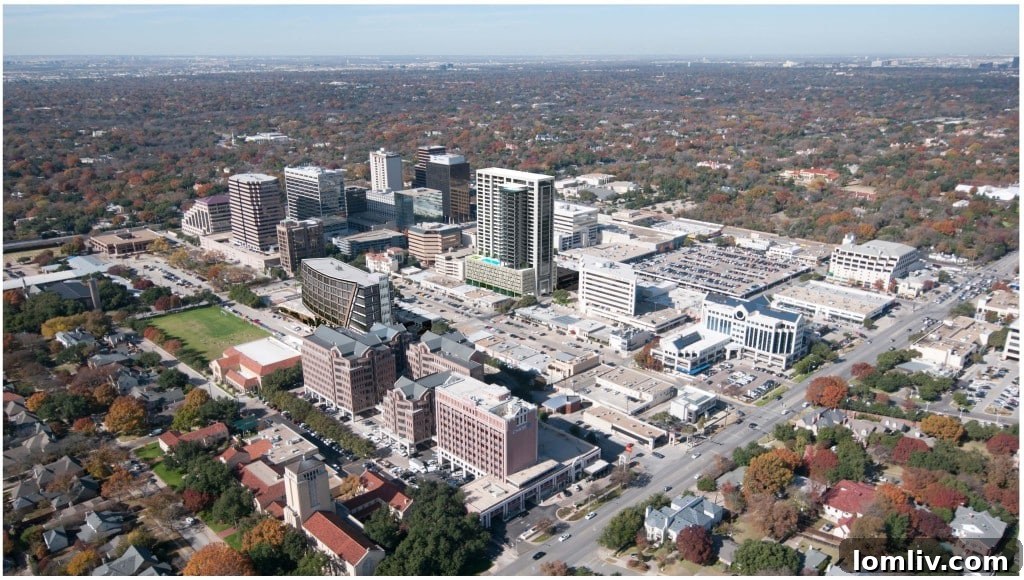
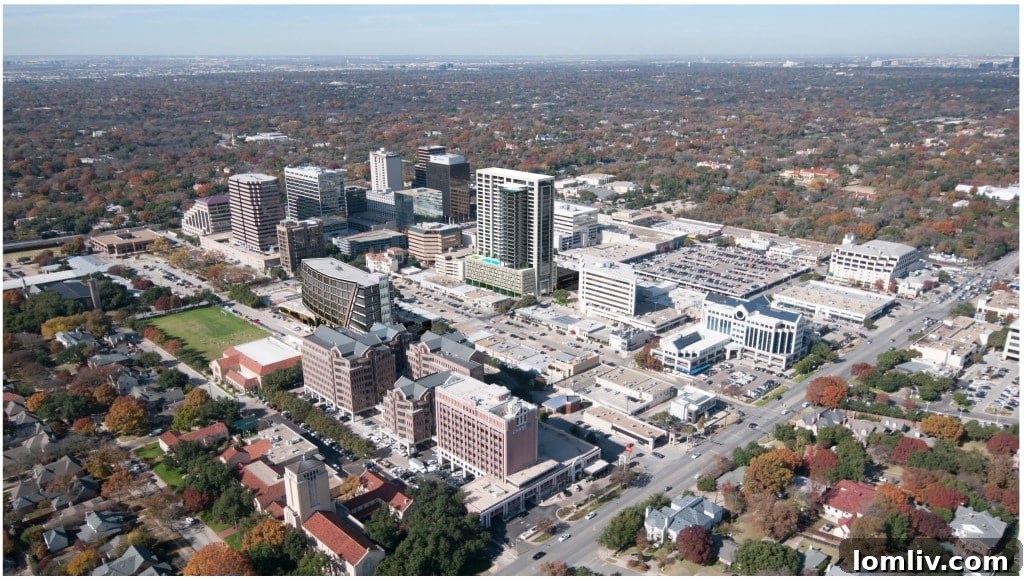
Preston Center, a dynamic and highly sought-after district in North Dallas, is currently at the heart of a significant urban development debate surrounding Crosland Development’s proposed Highland House project. This ambitious residential tower, earmarked for 8216 Westchester, has sparked considerable discussion among local residents, city officials, and planning bodies. The journey of Highland House through the city’s complex approval process highlights the intricate balance between urban growth, community preservation, and the evolving landscape of Dallas.
The initial proposal for Highland House envisioned a substantial 29-story structure. However, in a swift response to palpable community feedback gathered during a recent Town Hall Meeting, Crosland Development proactively adjusted its plans. Sources close to District 13 City Councilperson Jennifer Gates indicate the developer’s willingness to scale back the project significantly, reducing the proposed height to 23 stories above grade level, reaching an approximate height of 270 feet. This early concession demonstrates the developer’s awareness of public sentiment and the critical role community input plays in shaping major urban projects.
The Stakes for Preston Center: A Critical Crossroads
Councilperson Jennifer Gates has been actively involved in the ongoing dialogue, serving as a key intermediary between the developer, the community, and other stakeholders. Her discussions extend to the current owners of the property, a 60-year-old stucco medical office building that has long been a fixture in the Preston Center landscape. Interestingly, these owners have revealed that they have multiple prospective buyers lined up should Crosland Development’s deal not materialize. This introduces a fascinating layer of complexity to the situation: a fallback scenario that could see a different kind of development emerge.
One of the most pressing concerns in this alternative future, as articulated by Councilperson Gates, is the potential for a commercial office structure to be erected under existing zoning regulations. This outcome, she warns, could exacerbate the already significant traffic challenges in the congested Preston Center area. The current property owner, while not having binding contracts, confirmed a robust interest from numerous parties. Gates emphasizes the urgency of the situation, noting that “The Crosland contract expires at the end of June, so come July 1 if he doesn’t close, someone else will buy that building, potentially raze and could develop it within the existing zoning, which would possibly lead to more crazy traffic in an already congested area.”
This statement underscores a critical dilemma: while the Highland House proposal presents its own challenges, developing under current commercial zoning might yield an even less desirable outcome for traffic. Gates elaborates on this point, stating, “If a new owner maximizes the current zoning with an office building, I believe it would have a greater traffic impact then a residential building of the same size. And you can be sure that those offices will be leased.” Her perspective suggests that a well-conceived residential project, even a high-rise, could potentially integrate into the existing infrastructure with less overall strain on traffic than a new commercial office building that would draw a different pattern of daily commuters.
Deciphering Traffic Studies: Beyond Simple Counts
Traffic impact assessments are often contentious, and the Highland House project is no exception. The traffic study presented by the Deshazo group on behalf of the developer faced scrutiny from Councilperson Gates, who noted that its accuracy regarding current conditions at 8216 Westchester was not absolute. However, Gates also clarified a common misunderstanding about how these crucial studies are conducted. She explains, “It’s not a matter of counting people going in and out of a building. You look at the square foot utilization of a building using formulas.” This means that traffic consultants employ sophisticated models that analyze land use, square footage, and standard trip generation rates to project future traffic patterns, rather than simply monitoring existing vehicle movements.
In fact, Gates suggested that the Deshazo traffic study might more accurately predict the traffic implications of redeveloping the site under its *current zoning* — potentially for a commercial office building — rather than solely reflecting the impacts of the proposed residential tower. This nuance is crucial for the public and planning officials to understand when evaluating development proposals, as it shifts the focus from simple observations to a more complex projection of land-use changes.
Community Voices and the Path Forward
Reflecting on the Town Hall meeting, Councilperson Gates turned the question back to the community, asking about the prevailing sentiment. The consensus among many attendees was a desire for residential development in the area, provided it was scaled back from the initial, more imposing proposal. The overriding concern, without a doubt, was traffic congestion, attributed to a combination of new development, ongoing road construction, and re-routing from major thoroughfares like LBJ Freeway.
Gates, ever mindful of her role as a representative, has maintained a neutral stance on the current, revised proposal. She emphasized, “I would like to make it clear at this time I am not taking a position on this case, and I am still looking at impact of the new proposal.” Her approach is deeply rooted in the belief that community involvement is paramount: “I want to hear the vision of the community. I think if the community feels like they’re involved in the process, they are more willing to accept changes along the way. People don’t want to go into the reaches of an unknown.” This philosophy underscores the importance of transparency and public participation in navigating complex urban development issues, fostering a sense of ownership and understanding among residents.
The City’s Scrutiny: City Plan Commission and Zoning Challenges
The Highland House project, even in its reduced form, faces significant hurdles, particularly with the City of Dallas Plan Commission (CPC) and concerns from single-family residents in neighboring University Park. The CPC has already denied the original Highland House proposal, citing several key issues. Reaching back to a comprehensive 1989 study of Preston Center, city staff generally agrees that a residential complex of 240 to 260 units could indeed have a minimal impact on traffic. However, their primary concern revolves around the dramatic increase in the Floor Area Ratio (FAR) — a crucial planning metric that dictates the total floor area of a building relative to the size of its plot.
The proposed jump in FAR from 2.0 to an astonishing 11.0 is a red flag for planning officials. While the CPC’s initial denial is a significant setback, it does not signify the absolute end for Highland House. Instead, it signals a need for more in-depth investigation and a more compelling justification for such a substantial deviation from established planning norms. The planning staff’s detailed recommendation for denial outlines four primary areas of concern:
Staff recommendation of denial is based upon:
1. Performance impacts upon surrounding property – The request to create a new Tract within Tract IV portion of Planned Development District No. 314 will allow for the redevelopment of a portion of the site to accommodate a 29-story, 240-unit multifamily development. The proposed development could have a potential negative impact on the surrounding area due to the proposed floor area ratio, height and density. The request site is located within the center of the Preston Center Planned Development District and is surrounded by a mix of retail and personal service uses and office uses. The proposed development will significantly increase the development rights within a small area and is not consistent with the overall development in Planned Development District No. 314, the Preston Center Special Purpose District.
2. Traffic impact – The Engineering Section of the Department of Sustainable Development and Construction has determined that the request to construct a multifamily development will have minimal impact on the street system. However, since the proposal includes a provision to dramatically increase the FAR on the site relative to any existing zoning in the area, planning staff believes a broader study is necessary to determine what development intensity can ultimately be supported in the area, prior to approving individual requests to dramatically increase development rights within the Planned Development District.
3. Comprehensive Plan or Area Plan Conformance – The forwardDallas! Comprehensive Plan shows that the request site in located in a Business Center or Corridor and is in compliance with the Comprehensive Plan. The only specific study for the area was the Preston Center Special Study Area Report completed in 1989 as part of the city wide zoning transition from Chapter 51 to Chapter 51A zoning districts which resulted in the creation of Planned Development No. 314. That study recommended zoning consistent with MU-2 zoning with an FAR of 2:1 and maximum height of 120 feet.
4. Justification for PD Planned Development District Zoning as opposed to a straight zoning district – The new creation of a Tract within Tract IV will allow the applicant to increase the development rights to permit the construction of a 29 story, 260-unit multifamily development. Under the current development rights within Tract IV, the applicant is permitted to construct an office or residential use that does not exceed 120 feet in height, or 9 stories and a 2.0 floor area ratio. The applicant is proposing to increase the floor area ratio from 2.0 to 11.0. Since Planned Development 314 grew out of a special study of the area, staff cannot support the substantial increase in FAR and height on this site without there first being a more comprehensive reexamination of appropriate development for the Preston Center area.
Delving Deeper into Planning Staff Concerns
The staff’s objections provide critical insight into the rigorous review process for major developments in Dallas. The first point regarding “Performance impacts” highlights how a project’s scale, density, and height can significantly alter the character and functionality of its immediate surroundings. Preston Center, already a dense mixed-use area with retail, personal services, and offices, relies on a delicate balance. A proposal that dramatically increases development rights within a small parcel could disrupt this equilibrium and set a precedent inconsistent with the established framework of Planned Development District No. 314.
While the Engineering Section of the Department of Sustainable Development and Construction initially assessed the multifamily development as having “minimal impact” on the street system, the planning staff’s concern over the unprecedented FAR increase (point 2) overrides this. They recognize that such a fundamental change in development intensity demands a broader, more holistic study of what the entire Preston Center area can sustainably support, rather than evaluating individual requests in isolation. This proactive stance aims to prevent a piecemeal approach that could lead to unintended consequences for urban infrastructure.
Point 3, focusing on “Comprehensive Plan or Area Plan Conformance,” grounds the discussion in established city-wide and area-specific planning documents. While the forwardDallas! Comprehensive Plan generally aligns with a Business Center/Corridor designation for the site, the 1989 Preston Center Special Study Area Report offers more specific guidance. This historical document, instrumental in creating Planned Development No. 314, recommended zoning consistent with MU-2 (Mixed-Use) with a conservative FAR of 2:1 and a maximum height of 120 feet (approximately 9 stories). The proposed 29 stories and an 11.0 FAR represent a stark departure from these foundational recommendations, prompting staff to question the project’s adherence to the area’s original planning vision.
Finally, point 4, addressing the “Justification for PD Planned Development District Zoning,” zeroes in on the mechanism by which the developer seeks to circumvent existing limitations. Planned Development Districts are designed to allow flexibility for unique projects, but they are not intended to grant carte blanche for dramatic increases in density without thorough justification. Under current development rights in Tract IV, the applicant is limited to an office or residential use not exceeding 120 feet in height and a 2.0 FAR. The leap to an 11.0 FAR and significantly greater height fundamentally redefines the property’s potential. The staff’s inability to support this without a “more comprehensive reexamination of appropriate development for the Preston Center area” underscores their commitment to safeguarding the area’s long-term planning integrity.
The Future of Development in Preston Center
The situation surrounding Highland House is a microcosm of the challenges facing rapidly growing urban centers like Dallas. The demand for housing, particularly in desirable, transit-accessible locations, is immense. Developers naturally seek to maximize the value of prime real estate. However, existing residents and city planners are tasked with preserving neighborhood character, managing infrastructure strain, and adhering to established planning principles. The dialogue around Highland House forces all parties to confront these competing interests directly.
The path forward for Crosland Development, and indeed for the future of the 8216 Westchester site, remains uncertain. Whether the developer can further refine the Highland House proposal to satisfy the City Plan Commission’s concerns, or if another buyer will ultimately pursue a different kind of development under existing zoning, are questions that will significantly shape Preston Center for decades to come. The process highlights the critical importance of public discourse, the technical rigor of urban planning, and the dynamic interplay between vision, regulation, and community sentiment in shaping the urban fabric of Dallas.