The Digital Revolution in Real Estate: Reshaping How We Buy and Sell Homes
The landscape of real estate has undergone an extraordinary metamorphosis over the past few decades. What was once a process deeply rooted in physical exploration and print media has dramatically shifted into an interconnected digital experience. A recent insightful report in D CEO by Phil Harvey delves into this profound evolution, tracing the journey of home search from the mid-20th century to today’s hyper-digital age. While some statistics might spark debate, the core message remains undeniably clear: technology has fundamentally redefined how buyers and sellers navigate the complex world of property.
From Classifieds to Clicks: A Rapid Transformation
Fifty-one years ago, if you were looking for a new home, you had to get in your car and actually go look for one. The National Association of Realtors (NAR) surveyed homebuyers in 1964 and found that about 40 percent said they read the newspaper for home listings, and 7 percent drove through neighborhoods looking for “open house” or “for sale” signs.
In 2015, my homebuying experience began with a visit to the app store. My wife and I downloaded apps, looked at photos, bookmarked homes we liked, and used Google Maps to tour neighborhoods.
NAR survey data shows that these days, more than 40 percent of consumers looked online first when trying to find a home. But even with all the technology at our fingertips, homebuying can still be a confusing process, and real estate agents are very much in demand—especially in a hot market like Dallas-Fort Worth.
The transformation highlighted by these statistics is truly remarkable. While the NAR’s 40% figure for online-first searches in 2015 might seem modest to some (many in the industry, including us at daltxrealestate.com, believe that number is now closer to 90% for initial discovery), it nonetheless illustrates a pivotal shift. For us, embracing the digital experience in real estate has been central to our mission since the very dawn of online property search. The anecdote about the author’s personal homebuying journey—starting with an app store visit, meticulously reviewing photos, bookmarking favorites, and using Google Maps for neighborhood tours—perfectly encapsulates the modern buyer’s initial steps.
This digital empowerment has given consumers unprecedented access to information, transforming what was once an opaque process into a transparent one. Buyers can now conduct extensive research from the comfort of their homes, explore diverse properties, and even get a feel for neighborhoods long before stepping foot in a physical property. However, this wealth of information, while empowering, also introduces new complexities. The sheer volume of data, coupled with varying degrees of accuracy across platforms, can be overwhelming. This dynamic underscores why, even in an age of advanced technology, the expertise and guidance of skilled real estate agents remain more crucial than ever, particularly in competitive markets like Dallas-Fort Worth.

Navigating the MLS Maze: Challenges of Traditional Real Estate Data
At the heart of real estate transactions lies the Multiple Listing Service (MLS), a private database system that allows brokers to share property listings in a standardized and efficient manner. With over 800 MLSs operating across the U.S., and several often overlapping in expansive regions like Dallas-Fort Worth, it forms the backbone of how properties are officially listed and marketed. Access to an MLS is a privilege reserved for licensed real estate agents who are members of local realtor associations, such as the MetroTex Association of Realtors, which boasts a rich history dating back to 1917.
For independent agents, affiliating with an established real estate brokerage like Ebby Halliday Realtors is often the gateway to this coveted MLS access. Beyond listings, brokerages provide a comprehensive support system, including vital technology support, administrative assistance, training, and ongoing education—all in exchange for a percentage of the agent’s sales. This established structure, while effective for decades, now faces new pressures from rapidly evolving consumer expectations and technological advancements.
Real estate agents typically reach the market via a multiple listing service (MLS), a private database of brokers sharing home listings in a standardized, predictable way. There are more than 800 MLSs across the U.S. and, in large regions like Dallas-Fort Worth, a few overlap with one another.
To access an MLS, a real estate agent must be a member of the local realtor’s association, like the MetroTex Association of Realtors, which was established in 1917. For agents, becoming affiliated with a real estate brokerage, like Ebby Halliday Realtors, allows an independent agent to get that coveted MLS access, along with technology support, administrative help, training, education, and so on—in exchange for a percentage of their sales.
With so many MLSs, real estate consumer apps are a mixed bag. Some MLSs feed limited listing information to various consumer apps and websites. But two different apps could get a different level of depth of information about DFW listings, and each one might compile and display the data in a different way. The younger, more Internet-savvy buyers are armed with more information from a greater number of sources than ever before. And a lot of it is wrong.
This “mixed bag” scenario perfectly illustrates one of the core challenges facing the modern real estate consumer. The limited listing information often referenced is what populates many popular third-party portals like Zillow and Trulia. While immensely popular, these platforms sometimes display incomplete or even outdated data, creating frustration for buyers. Realtor.com, being owned by the National Association of Realtors, operates under a slightly different model, often drawing more directly from MLS data, but the overall complexity remains. The central theme here, eloquently articulated by Phil, is that our consumption of real estate information has shifted dramatically, and the rapid pace of technological innovation is outpacing the traditional, established structures of the industry. This disparity creates opportunities for disruptive technologies and underscores why platforms focused on improving this flow are so vital.
HipPocket: Bridging the Communication Gap in Real Estate
Enter HipPocket, a Dallas-based real estate technology startup that is directly addressing the industry’s burgeoning “communications problem.” According to James Bohan-Pitt, co-founder and CEO of HipPocket, the traditional reliance on large, centralized databases for all communications feels outdated. “They’ve sat back on their laurels and everything has to go through a big database. That’s so 20 years ago,” he asserts, highlighting a critical need for modernization.
For those familiar with the Dallas real estate scene, the mention of James Bohan-Pitt immediately brings to mind his impactful work alongside Clay Stapp, a broker extraordinaire whom we have frequently featured and celebrated. Their collaboration on HipPocket is a testament to their foresight and deep understanding of the real estate market’s evolving needs. It’s incredibly rewarding to see innovative local talent gain broader recognition, proving that the digital world can often outpace traditional print media in identifying and championing groundbreaking solutions.
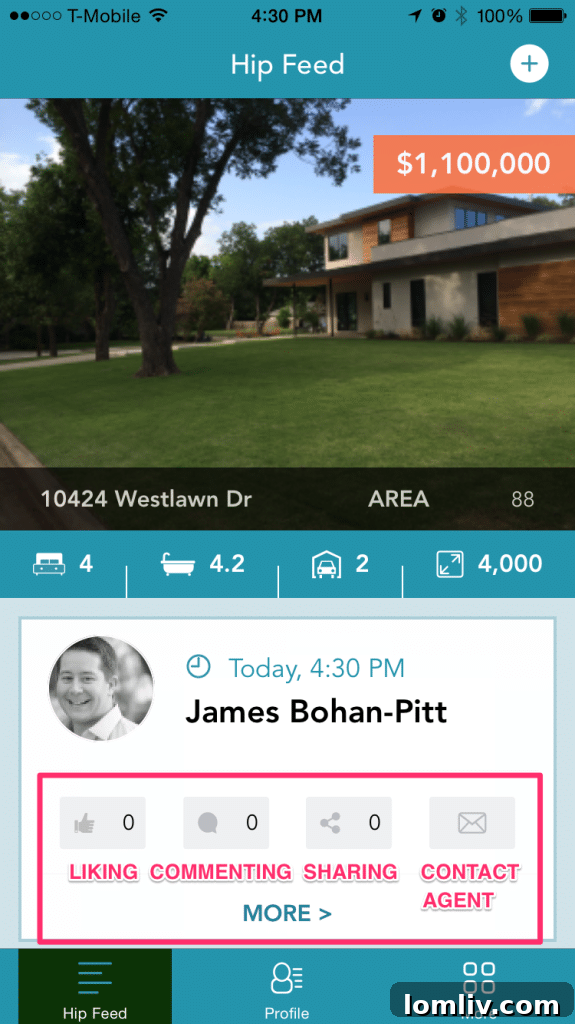
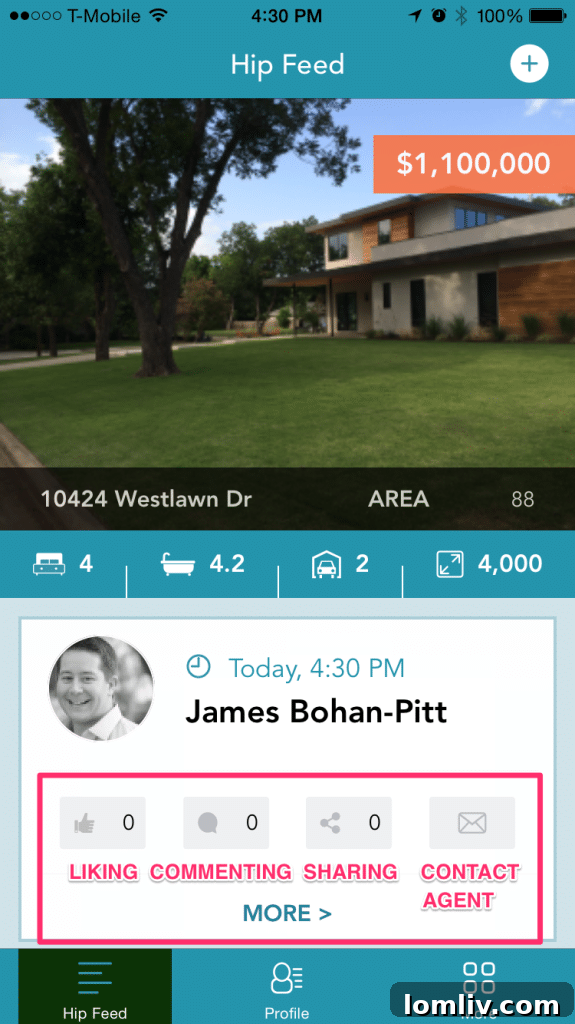
So, what exactly is HipPocket? As we’ve enthusiastically shared before, HipPocket is an innovative social network and mobile application designed to empower real estate agents. It allows them to post listings immediately from their phones, even before they officially hit the MLS. This “pre-MLS” capability is revolutionary, fostering rapid, clean, and efficient connections between agents, ultimately streamlining the sales process.
“The realtor community should be able to generate leads and business with one another very quickly; they have qualified sellers and buyers,” he says. “But they’re simply not connected to one another.”
HipPocket also aims to provide a way for agents to feed the various social networks with their new listings so they’ll spend less time re-posting the same info over and over. Eventually, the HipPocket app could even feed an MLS, since the info is coming right from the agents. In the future, Bohan-Pitt imagines matching algorithms that pair a buyer’s needs with new listings. He also envisions the capability to connect one agent with others who have a track record selling the kind of properties that buyers are seeking.
The vision behind HipPocket is truly inspiring. By facilitating direct agent-to-agent communication, it addresses a fundamental inefficiency in the traditional system. Agents with qualified buyers can quickly connect with agents representing suitable properties, cutting down on wasted time and accelerating transactions. Furthermore, HipPocket streamlines the marketing process by allowing agents to effortlessly syndicate their new listings across multiple social networks, saving valuable time previously spent on repetitive manual posting. The potential for the app to eventually feed directly into the MLS, pulling information straight from the source—the agents themselves—represents a groundbreaking shift towards a more integrated and efficient ecosystem. Bohan-Pitt’s long-term vision extends to sophisticated matching algorithms, intelligently pairing buyer needs with listings and connecting agents based on their proven expertise in specific property types. This forward-thinking approach promises to make the home search experience not just faster, but also more personalized and effective.
The success of HipPocket is already evident, with Bohan-Pitt reporting that over 700 licensed agents in the DFW area have signed up. Their participation at prominent industry events like Inman Connect in San Francisco, showcasing the app to agents nationwide, solidifies its growing impact. It’s clear that this innovation is poised to make significant waves, and we couldn’t be prouder of these trailblazers.
Beyond HipPocket: A Flourishing Ecosystem of Real Estate Innovation
While HipPocket stands out as a prime example of local ingenuity, it’s just one piece of a broader, exciting trend in real estate technology originating right here in Dallas. The entrepreneurial spirit is vibrant, constantly seeking to improve every facet of the property transaction.
Consider Realocator, an ingenious “Uber-like” application also conceived locally by the exceptional agent David Maez. Realocator offers an on-demand solution for buyers to view homes quickly and efficiently, mirroring the instant gratification expected in other service industries. This app streamlines the showing process, connecting buyers with available agents in real-time, effectively eliminating traditional scheduling headaches and accelerating the decision-making process for eager home seekers. Such innovations underscore a commitment to making real estate services more responsive and consumer-centric.
And then there’s The Unlisted, another groundbreaking platform that reimagines how properties can be discovered. In an age where privacy and exclusive opportunities are highly valued, The Unlisted caters to a specific niche by offering properties that may not be publicly listed on the MLS. This platform provides an invaluable resource for discerning buyers and sellers who prefer discretion or are seeking unique, off-market opportunities. It broadens the scope of property discovery beyond conventional channels, offering a compelling alternative for those looking for something truly distinctive.
These local ventures, alongside HipPocket, represent a powerful wave of innovation transforming the real estate industry. They address diverse pain points, from agent connectivity to instant showings and exclusive listings, collectively pushing the boundaries of what’s possible. Their success highlights a crucial shift: the future of real estate is not just about technology, but about how technology can be leveraged to create more efficient, transparent, and ultimately, more human-centric experiences for everyone involved.
The Future is Now: A Seamless Real Estate Journey
The evolution of real estate search from classified ads and Sunday drives to sophisticated mobile apps and digital networks is not merely a trend; it’s a fundamental paradigm shift. The digital transformation has empowered consumers with unprecedented access to information, yet it has also revealed inherent inefficiencies in traditional structures. Companies like HipPocket, Realocator, and The Unlisted are not just building new tools; they are reimagining the entire ecosystem, fostering better communication, greater efficiency, and more personalized experiences for agents and consumers alike.
The real estate industry is moving towards a future where technology seamlessly integrates with human expertise, enhancing every step of the home buying and selling journey. While the initial search might begin with a tap on a screen, the complex decisions and intricate negotiations still benefit immensely from the guidance of skilled professionals. These innovations are not replacing agents, but rather equipping them with more powerful tools to serve their clients better. The exciting innovations emerging from communities like Dallas-Fort Worth are proving that the future of real estate is bright, dynamic, and perpetually evolving to meet the demands of a connected world.