Protecting Your Home: A Comprehensive Guide to Yard Grading and Drainage
As spring officially arrives, bringing with it the promise of refreshing rains followed by long, dry spells, it’s a crucial time to consider the health of your home’s foundation. Your yard’s grading and drainage system acts as your first line of defense against the elements. Without proper measures in place, your home could be vulnerable to significant and costly foundation damage, turning seasonal weather into a serious structural threat.
Understanding how water interacts with your property and implementing effective drainage strategies are vital steps in safeguarding your investment. This guide will walk you through the essentials of yard grading and drainage, highlighting key issues and providing actionable solutions to ensure your home remains dry, stable, and protected year-round.
Understanding Negative Drainage: A Silent Threat
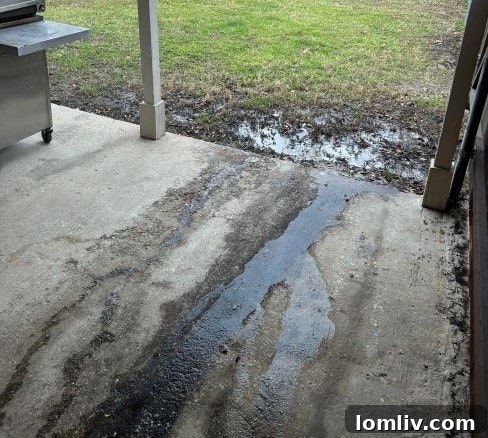
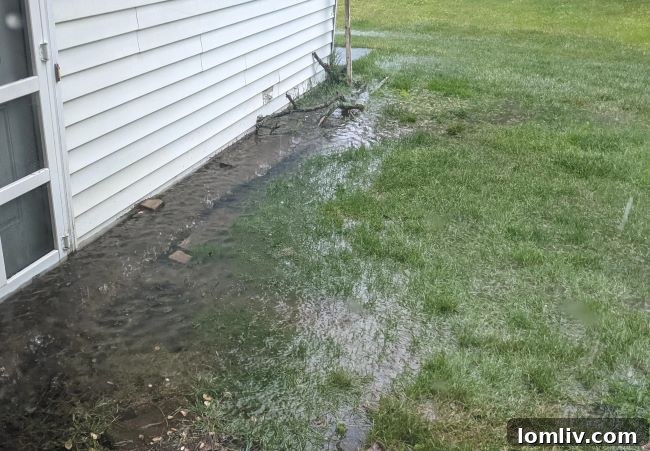
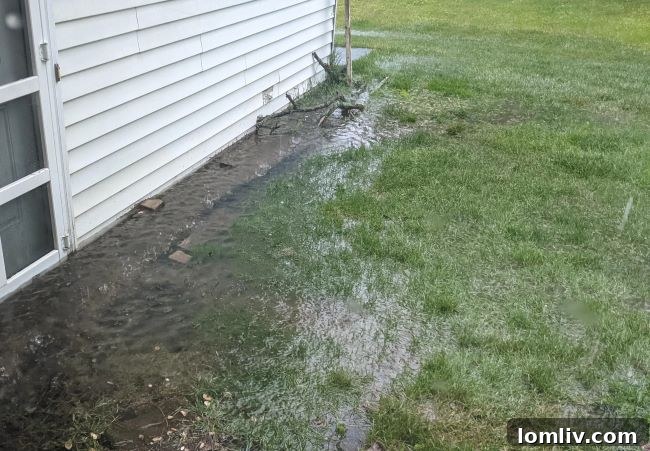
At its core, “grading and drainage” refers to the engineering of your lot to manage water runoff efficiently. The ideal scenario involves water being directed away from your home’s foundation. However, when the terrain around your house slopes incorrectly, leading water from rain or your sprinkler system to drain towards the structure, you have what’s known as “negative drainage.” This seemingly minor issue can initiate a cascade of severe problems for your property.
The consequences of negative drainage are far-reaching. The most immediate concern is damage to your home’s foundation. Persistent moisture can lead to soil expansion and contraction, placing immense stress on the foundation walls and slab. This stress often manifests as cracks—from hairline fractures to significant structural breaks—or can cause the foundation to settle unevenly, compromising the entire integrity of your home.
Beyond the foundation, negative drainage can foster conditions for rust and corrosion on metal components, such as pipes and utility lines buried near the house. It also increases the risk of flooding in your yard, creating muddy, unusable spaces, and can even lead to water ingress at vulnerable entry points like doors, windows, and vents, or through utility pipe penetrations. Such flooding can cause interior water damage, leading to mold growth, ruined flooring, and damaged personal belongings.
To identify potential negative drainage issues, take a proactive walk around the perimeter of your home. Observe the landscape closely, noting any high or low points. Pay particular attention after a rain shower to see where water accumulates or how it flows. Any areas where the ground visibly slopes towards the structure, or where water consistently pools rather than draining away, are critical problem areas that require immediate attention. Addressing these points promptly can save you from extensive repairs down the line.
Effective Drainage Solutions: Swales, French Drains, and Professional Regrading
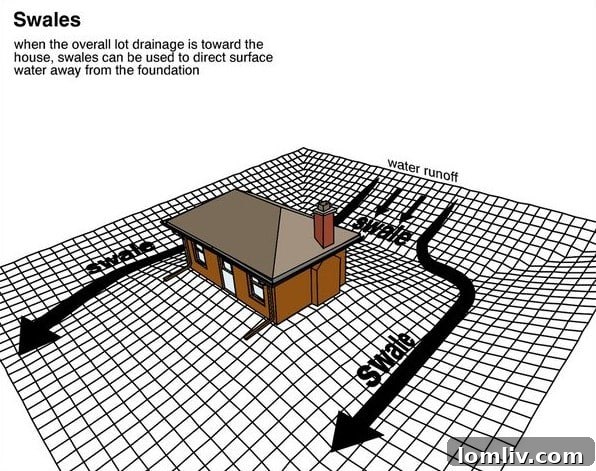
Once you’ve identified problem areas, the next step is to implement effective drainage solutions. One common and highly effective method, particularly if your lot features an incline, is the creation of a drainage swale. A swale is essentially a shallow ditch with gently sloping sides, designed to create a defined path for water runoff. It helps with irrigation by guiding water to desired areas and is crucial in preventing soil erosion by slowing down and redirecting water flow.
There are different types of swales you can consider. A vegetated swale, planted with grass or native plants, not only directs water but also helps filter pollutants and promote groundwater recharge. A dry swale, often lined with gravel or decorative rocks, offers a more aesthetic solution while still efficiently channeling water. For the enthusiastic DIY-er, minor adjustments to your yard’s slope can be achieved by purchasing bags of dirt or topsoil to build up low spots and reshape the land. There are numerous online resources and guides, such as a useful WikiHow guide, that can assist you if you choose to tackle smaller projects yourself.
However, for more complex or extensive drainage issues, hiring a professional landscaper or a civil engineer specializing in drainage solutions is often the wisest course of action. They can assess your property comprehensively, design an optimal drainage plan, and execute the necessary grading and landscaping work. Beyond swales, other professional-grade solutions include French drains – trenches filled with gravel and a perforated pipe that redirects subsurface water – and catch basins, which collect surface water from specific areas and channel it away through underground pipes.
If you suspect existing foundation damage, it is imperative to consult with a foundation repair professional or a certified home inspector. These experts can accurately diagnose any current issues and provide recommendations for both repair and preventative drainage measures, ensuring a holistic approach to your home’s structural health.
Breaking the Cycle of Damage: The Perils of Persistent Moisture
The insidious nature of poor drainage often leads to a persistent “cycle of damage.” Consider a property built below street level, plagued by negative drainage and often shaded, keeping the ground around the foundation perpetually moist. This constant saturation can lead to relentless stress on the home’s foundation. Over time, this stress manifests as visible signs of wear and tear, from cracks in the foundation walls to issues with door and window frames. Evidence of previous repair work might be present, yet new or recurring damage continues to appear, indicating that the root cause—the drainage problem—has not been adequately addressed.
This cycle is primarily driven by the interaction between soil and water. Clay-rich soils, common in many regions, expand significantly when they absorb water and contract drastically when they dry out. This repeated swelling and shrinking, known as “soil heave” and “soil consolidation,” creates immense pressure on the foundation. When the soil pushes against the foundation walls or pulls away from the slab, it can lead to shifting, cracking, and structural instability. Shade exacerbates the problem by preventing sunlight from evaporating moisture, thus prolonging the period of soil saturation.
Without correcting the underlying grading and drainage issues, any repairs made to the foundation are merely temporary fixes. The same environmental factors will continue to exert pressure, causing new damage or re-aggravating old problems. This leads to a continuous need for costly repairs and a constant threat to your home’s structural integrity. Breaking this cycle requires a comprehensive approach: identifying the specific points of water accumulation and flow, and then implementing permanent solutions like proper grading, swales, or French drains to redirect water effectively away from the foundation.
It Starts at The Top: The Crucial Role of Gutters and Downspouts
While discussions about yard grading often focus on the ground level, an equally vital component of your home’s drainage system begins much higher: your rain gutters and downspouts. These often-overlooked elements play a critical role in collecting rainwater from your roof and channeling it safely away from your home’s foundation. A well-maintained gutter system can prevent thousands of gallons of water from cascading directly onto the soil around your house during a single storm, thereby averting the issues associated with negative drainage.
Ensuring your gutters are free of leaves, twigs, and other debris is paramount. Clogged gutters overflow, defeating their entire purpose and dumping water precisely where you don’t want it – right next to your foundation. This concentrated deluge can quickly erode soil, create pooling water, and lead to the very foundation problems you’re trying to avoid. Regular cleaning, ideally twice a year (in spring and fall), is essential. For homes with many trees, more frequent checks might be necessary. Installing gutter guards can also significantly reduce the frequency of cleaning by preventing large debris from entering the system.
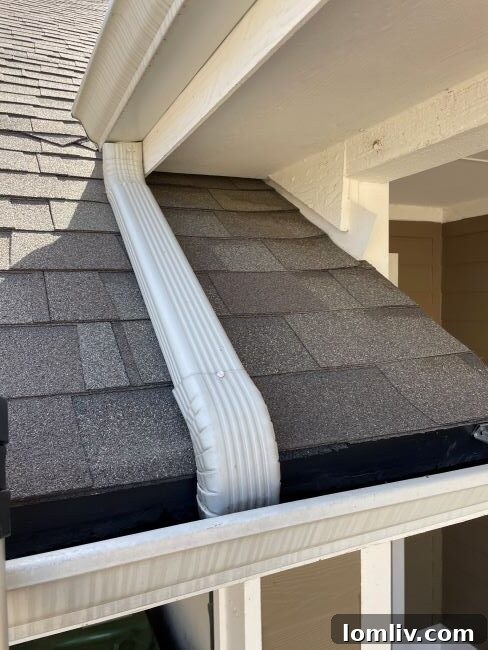
Equally important is the proper installation and direction of your downspouts. Downspouts should extend at least five to ten feet away from the foundation, directing water to a properly graded area or into a dedicated drainage system. Simple splash blocks can help, but more effective solutions include flexible downspout extensions or even underground pipes that carry water to a storm drain, a dry well, or an area far from the house. It’s surprisingly rare to see a perfectly installed gutter-to-downspout system that truly maximizes water diversion, often due to aesthetic concerns or oversight during construction. Many homes suffer from downspouts that end too abruptly, merely depositing water a foot or two from the foundation, or even worse, directing it towards walkways or other structures.
By investing time and effort into maintaining and optimizing your gutter and downspout system, you provide an indispensable layer of protection for your home. The better your system is at collecting and directing water away this spring, the better protected your entire property will be against the long-term effects of moisture and water damage.
Conclusion: Proactive Steps for a Protected Home
Protecting your home from water damage is an ongoing endeavor that begins with a deep understanding of your property’s unique drainage needs. From the initial splash of rain on your roof to the way water flows across your yard, every element plays a role in safeguarding your foundation. Identifying and rectifying issues like negative drainage, implementing solutions such as swales or French drains, and meticulously maintaining your gutter and downspout systems are not merely chores—they are crucial investments in your home’s longevity and your peace of mind.
Being proactive about yard grading and drainage can save you from the immense financial burden and emotional stress associated with foundation repairs, mold remediation, and internal water damage. Take the time this season to walk your property, observe water flow, and address any vulnerabilities. Whether you embark on a DIY project for minor adjustments or consult with professionals for more extensive solutions, taking decisive action now will ensure your home remains a stable, dry, and secure haven against the inevitable forces of nature. A well-drained yard isn’t just a matter of aesthetics; it’s the bedrock of a healthy home.